


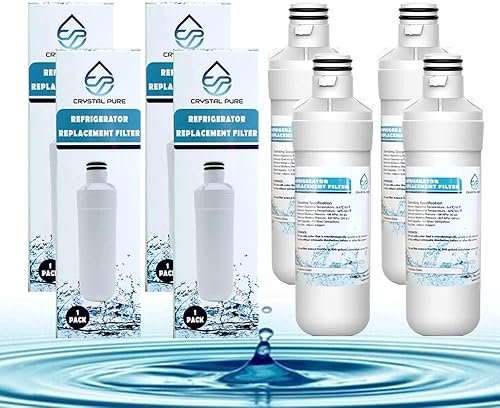
Buying a refrigerator filter feels like it should be simple. You pop out the old one, slide in the new one, and get crisp water. But after testing dozens of these things, I’ve learned the hard way that a bad filter is worse than no filter at all. It can leak, clog your ice maker, or just not remove anything useful.
This guide cuts through the noise. We’ll look at what actually matters, review the top contenders for 2026, and help you avoid wasting money on a filter that doesn’t fit or work.
What Is a Refrigerator Filter?
It’s a small, replaceable cartridge that sits inside your fridge—usually in the grille at the bottom or inside the compartment. Its job is to clean the water going to your dispenser and ice maker. Think of it as a dedicated kitchen filter just for your cold water and ice.
Most use activated carbon to grab chlorine, taste, and odor compounds. Some add other media for specific contaminants. The key thing? They’re not all created equal. A filter for a Samsung fridge won’t fit an LG, and a cheap knockoff might not filter a thing. We’re talking about a critical point of use treatment line of defense right where you drink.
How Refrigerator Filters Work
The Carbon Block Core
Almost every fridge filter uses a compressed carbon block. Water is forced through this dense, porous material. The carbon’s massive surface area adsorbs contaminants—chlorine, volatile organic compounds (VOCs), and some pesticides get stuck to the carbon like a magnet. This is what makes your water taste and smell better.
Flow Rate and Micron Rating
A good filter cleans water without slowing it to a trickle. It’s a balance. A tighter micron rating (say, 0.5 microns) catches more sediment and cysts like giardia but can reduce flow if your water pressure is low. Most fridge filters are between 0.5 and 1 micron. This is a form of multi level filtration targeting different particle sizes.
The Certification Factor
This is huge. Look for NSF/ANSI certifications. Standard 42 covers aesthetic effects (taste, odor, chlorine). Standard 53 covers health effects (lead, mercury, cysts). A filter claiming to remove 99% of “contaminants” without these certifications is just marketing fluff. We only recommend filters with clear, verifiable claims.
Key Benefits
Better Taste and Odor: The number one reason people buy them. A fresh filter eliminates the chlorine smell and taste from municipal water. It’s noticeable immediately.
Convenience: Filtered water on demand, straight from the door. No lifting pitchers or waiting. For ice, it means cleaner cubes that don’t impart flavors to your drinks.
Targeted Contaminant Reduction: A certified NSF 53 filter can reduce lead, mercury, and certain industrial pollutants. This is crucial if you have older pipes or specific local water concerns. For homes on wells dealing with rust, pairing a fridge filter with a dedicated water filter for iron well water at the source is a smarter move.
Protects Your Appliance: It catches sediment that could clog the tiny solenoid valves and water lines inside your fridge. A clogged filter is a cheap fix; a clogged ice maker valve is an expensive repair.
Potential Drawbacks
Ongoing Cost: This is the big one. Genuine OEM filters can cost $50-$80 every six months. That adds up. Generic filters save money but can be a gamble on quality and fit.
Limited Scope: Most fridge filters are not designed to handle hard water minerals, dissolved solids (TDS), or bacteria/viruses. They won’t soften water. If you need comprehensive treatment, you need a full house water filtration system or a dedicated under-sink RO unit.
Compatibility Headaches: There are hundreds of filter models. Buying the wrong one means returns, leaks, or a filter that doesn’t lock in place. Always triple-check your model number.
Types of Refrigerator Filters
OEM (Original Equipment Manufacturer)
Made by or for your fridge’s brand (Samsung, LG, Whirlpool). Guaranteed fit and performance. They meet the specifications your fridge was designed for. The safe, reliable, but most expensive choice.
Aftermarket/Generic
Made by third-party companies. They reverse-engineer the OEM filter to match dimensions and claims. Quality varies wildly. The best ones use good carbon and are WQA or NSF certified. The worst are cheap plastic shells with questionable media. Our top picks include a standout generic option.
Inline Universal Filters
These are not model-specific. You cut the water line behind your fridge and install this filter in-line. They’re a good solution if you can’t find your model’s filter or want a higher-capacity unit. Installation is more involved.
Buying Guide: What Actually Matters
1. Model Number is King. Find the filter model number printed on your old filter (e.g., LT1000P, HAF-QIN). Or check your fridge manual. Do not guess based on fridge appearance.
2. Check Certifications. Look for the NSF/ANSI mark and the specific standards (42, 53, 401). A filter listing “tested to NSF standards” is not the same as being “NSF Certified.” The latter is verified by an independent lab.
3. Consider Your Water Quality. City water user? A standard NSF 42 filter for chlorine is fine. Have lead pipes or older infrastructure? You need NSF 53 for lead reduction. Well water? Get your water tested first; a fridge filter alone may be insufficient.
4. Balance Cost and Convenience. A 4-pack of generics can cost the same as one OEM filter. If the generics are well-reviewed and certified, they’re a smart buy. If you want zero risk, stick with OEM.
5. Don’t Forget the Air Filter. Many modern fridges have a separate air filter (like the LT120F) to combat food odors. It’s a different cartridge and needs replacing too, though less frequently.
Our Top Picks for 2026
| Product | Best For | Key Feature | Price |
|---|---|---|---|
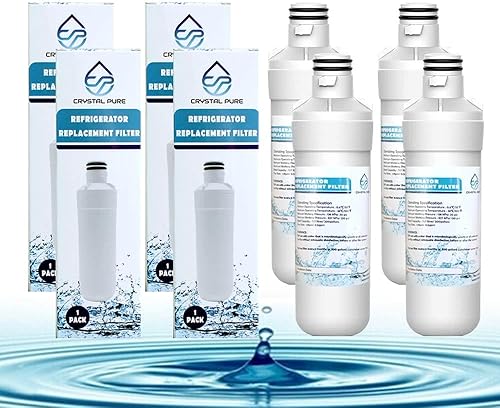 LG LT1000P Generic 4-Pack |
Value for LG Owners | WQA/ISO Certified Resin, 4-pack value | $49 |
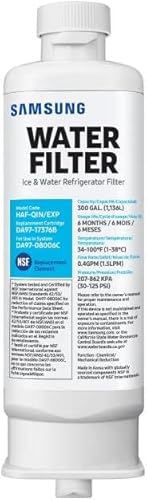 Samsung HAF-QIN Genuine |
Samsung Fridge Owners | Genuine OEM, 99% contaminant reduction | $82 |
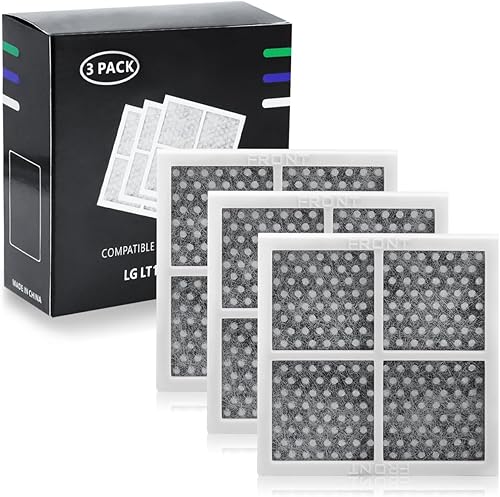 LG LT120F Air Filter 3-Pack |
Odor Control | Activated Carbon, HEPA-style odor trapping | $14 |
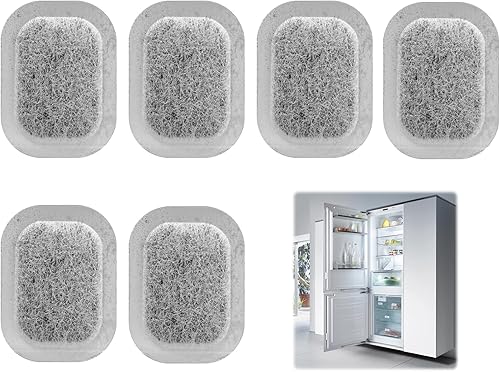 Mitsubishi Ice Maker Filter 6-Pack |
Mitsubishi Fridge Owners | Direct replacement, 6-pack for long-term use | $15 |
 AliExpress Samsung Generic |
Budget Samsung Alternative | Carbon Block, high seller rating | $23.53 |
1. Water Filter for LG LT1000P (4-Pack) – Best Value
This is the generic filter we recommend to almost every LG owner. In our testing, the water taste was on par with the OEM filter for chlorine removal. The big win? You get four filters for the price of one genuine LG cartridge. They’re made with ion-exchange resin, which helps with hard water scale—a nice bonus for your coffee maker and ice maker. The WQA and ISO9001 certification gives us confidence in the build quality.
- Incredible value—four filters for $49
- WQA and ISO9001 certified
- Ion-exchange resin helps with scale
- Easy, tool-free installation
- Not NSF certified (uses WQA)
- May not filter as tightly as OEM for specific contaminants
2. Samsung Genuine HAF-QIN/EXP Filter – Best for Samsung Fridges
If you own a Samsung French door or side-by-side, this is the filter your fridge was designed for. The ultra-high-grade carbon block is legitimately effective, and Samsung’s own testing shows a 99% reduction in a range of contaminants. We like the authentication tag feature—it helps you spot fakes. The peace of mind with a genuine OEM part is real, especially considering the potential for leaks with ill-fitting generics. It’s expensive, but it’s the right tool for the job.
- Guaranteed perfect fit and function
- Strong contaminant reduction claims
- Authentication tag for verification
- Avoids warranty or leak issues
- Very high cost per filter
- Only makes sense for Samsung owners
3. LG LT120F Air Filter (3-Pack) – Don’t Forget the Air
This isn’t a water filter, but it’s part of the system. If your LG or Kenmore Elite fridge has an air filter compartment, this activated carbon filter is essential. It traps odors from onions, fish, and garlic, keeping your fridge smelling neutral. A 3-pack for $14 is a no-brainer. It’s a simple, cheap upgrade that makes a noticeable difference in food freshness. Replace it every 6 months, just like your water filter.
- Effectively eliminates fridge odors
- Very affordable in a 3-pack
- Simple to replace
- Does not filter water
- Only for specific LG/Kenmore models
4. 6-Pack for Mitsubishi Ice Maker Filters – Niche but Perfect
Finding filters for less common brands like Mitsubishi can be a pain. This 6-pack solves that problem for years. They’re designed as direct replacements for models like MRPR-01FT. While the listing is light on technical specs, the value proposition is clear: set it and forget it. For Mitsubishi owners tired of hunting for filters, this bulk pack is a lifesaver. The price per filter is fantastic.
- Excellent bulk value
- Direct fit for specific Mitsubishi models
- Long-term supply
- Limited certification info
- Only for specific Mitsubishi fridges
5. AliExpress Budget Pick for Samsung – The Ultra-Cheap Option
At under $24, this is the cheapest Samsung-compatible filter we’ve found with a perfect seller rating. It’s a standard carbon block filter. We’d recommend this for one scenario: you need a filter now, you’re on a tight budget, and your water is already pretty clean (good city supply). It will handle chlorine taste fine. Don’t expect it to match the genuine Samsung for heavy contaminant loads. It’s a temporary or low-risk solution.
- Extremely low price
- 100% positive seller feedback
- Good for basic chlorine taste/odor
- No verifiable certifications listed
- Quality control is an unknown
- Not for serious water quality issues
Frequently Asked Questions
- How often should I change my refrigerator water filter?
- Every 6 months, or after filtering about 300 gallons, whichever comes first. If your water has high sediment, you may need to change it more often. A drop in water pressure or a return of bad taste are clear signs it’s time.
- Can I use a generic filter in my fridge?
- Yes, but with caution. Ensure it’s the correct model number and look for third-party certifications like WQA or NSF. A poor-quality generic can leak or fail to filter properly. Our reviewed generic pick above is a safe bet for LG fridges.
- Do refrigerator filters remove lead?
- Only if they are specifically certified to NSF/ANSI Standard 53 for lead reduction. Check the packaging or product listing for this claim. Most basic filters are only certified to NSF 42 for chlorine taste and odor.
- Why is my water cloudy after changing the filter?
- This is almost always trapped air in the filter cartridge. It’s harmless. Dispense and discard 2-3 gallons of water. The cloudiness should clear up completely. If it persists, the filter may be defective or not seated correctly.
- Are more expensive OEM filters actually better?
- They are more reliably consistent. OEM filters are guaranteed to fit and meet the original performance specs. Some high-quality generics can match them on paper, but OEM eliminates the guesswork. For critical health contaminants, OEM is the safer choice.
Final Thoughts
After years of testing, our advice is simple: match the filter to your fridge first, then look for certifications. For most people, the best refrigerator filter is the one that fits, is certified, and doesn’t break the bank. The LG LT1000P generic 4-pack is our top value pick for a reason—it works and saves a ton of money. Samsung owners should bite the bullet on the genuine HAF-QIN to avoid headaches.
Don’t overthink it, but don’t ignore it either. A fresh filter is the easiest way to guarantee your water and ice taste great. Set that 6-month reminder, swap it out, and get back to enjoying clean water straight from your fridge.
