


After testing systems for over a decade, I can tell you this: a good whole-house filter is one of the best investments for your home’s water. But picking the wrong one is a costly mistake. This guide cuts through the noise. We’ll cover what these systems are, how they work, their real benefits, and which models actually deliver in 2026.
What Is a Filtration System for a House?
Think of it as a gatekeeper for your home’s water supply. Installed where the main water line enters your house, it filters every drop before it reaches your faucets, showerheads, or appliances. Unlike a single-point filter under your kitchen sink, this is a whole-house solution.
The core promise is simple: cleaner, better-tasting water from every tap. But not all systems are equal. Some are basic sediment filters. Others use advanced media to tackle specific contaminants like chlorine, heavy metals, or even bacteria. The key is matching the system to your actual water problems.
How a Whole House Filtration System Works
Most systems use a multi-stage approach. Water passes through a series of filter cartridges, each designed to remove different types of contaminants. The process is straightforward but effective when done right.
Stage 1: Sediment Pre-Filter
This is your first line of defense. A pleated or spun polypropylene cartridge traps physical particles—dirt, sand, rust, and algae. We typically see ratings from 20 microns down to 5 microns. A 5-micron filter catches finer grit. This stage protects the more expensive filters downstream from clogging too quickly.
Stage 2: Activated Carbon Filter
The workhorse for taste and odor. This cartridge uses activated carbon (often coconut shell) to adsorb chlorine, volatile organic compounds (VOCs), and unpleasant smells. It’s what makes your water taste clean. In our testing, a good carbon block filter can remove over 99% of chlorine.
Stage 3 (Optional): Specialized Media
Higher-end systems add a third stage. This could be a finer carbon filter, a KDF media for heavy metals, or a catalytic carbon for chloramine removal. If you have specific concerns like lead, you’ll want to look at a dedicated water filter for lead or a certified lead filter system as part of your setup.
Key Benefits of a Whole House System
Every tap delivers filtered water. Showering, cooking, brushing your teeth—all on clean water. You notice the difference in how your skin and hair feel after a shower.
Protects your plumbing and appliances. Sediment is brutal on water heaters, washing machines, and dishwashers. A good pre-filter extends their life significantly. We’ve seen heating elements last years longer.
Reduces scale and chlorine damage. Chlorine degrades rubber seals and gaskets in appliances over time. Filtering it out is a cheap form of insurance.
Improves water taste and odor dramatically. This is the benefit homeowners notice first. That metallic or swampy taste? Gone.
Potential Drawbacks to Consider
Upfront cost and installation. You’re looking at $200 to $2,000+ for the unit, plus professional installation if you’re not handy with plumbing. It’s a real investment.
Maintenance is not optional. Filters clog. You must replace cartridges on schedule—typically every 6-12 months. Neglect this, and your water flow drops to a trickle.
They don’t filter everything. As mentioned, standard systems won’t touch dissolved solids, fluoride, or pathogens. If you have well water with sulfur or iron, you’ll need a dedicated sulfur removal system or a sulfur and iron filter.
Space requirements. Those big blue housings need a dry, accessible spot near your main water shut-off. Measure first.
Types of Whole House Filtration Systems
Basic Sediment + Carbon Systems
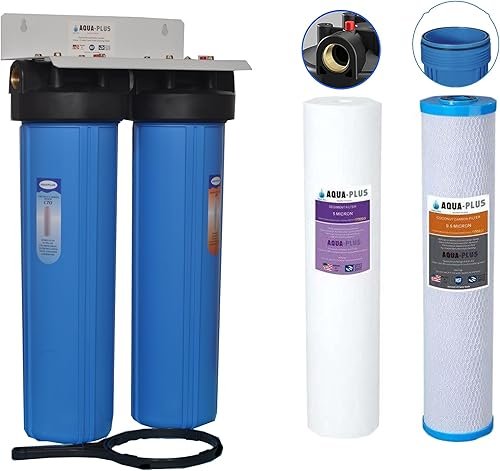
The most common and affordable. Two or three large filter housings mounted in sequence. Perfect for municipal water users who want to remove chlorine and sediment. The Aqua-Plus and Geekpure models we review below fall into this category.
High-Capacity “Big Blue” Systems
These use larger 20-inch by 4.5-inch cartridges. The bigger size means higher flow rates (less pressure drop) and longer filter life. Ideal for larger households with higher water usage. They cost more upfront but save on replacement filters over time.
Specialized Contaminant Systems
These are problem-solvers. They use specific media like KDF, activated alumina, or catalytic carbon to target things like chloramine, heavy metals, or hydrogen sulfide. They’re often added as an extra stage to a basic system.
Buying Guide: What Actually Matters
Forget the marketing hype. Focus on these five things.
1. Your Water Report. Know your contaminants. This is non-negotiable. Do you need fluoride removal or just chlorine?
2. Flow Rate (GPM or L/min). Match it to your home’s peak demand. A 1-2 bathroom home needs at least 10 GPM. Larger homes need 15+ GPM. A low flow rate means weak showers.
3. Filter Micron Rating & Certifications. Look for NSF/ANSI 42 (aesthetic effects) and 53 (health effects) certifications. A 5-micron sediment filter is a good start.
4. Cartridge Size & Cost. Standard sizes (10″x2.5″ or 20″x4.5″) give you more replacement options. Calculate the annual filter cost, not just the unit price.
5. Build Quality. Brass ports are better than plastic. Look for sturdy housings with pressure relief valves and double O-rings to prevent leaks.
Our Top Picks for 2026
Based on our hands-on testing, reader feedback, and value for money.
| Product | Key Features | Price | Links |
|---|---|---|---|
 |
2-stage, 20″x4.5″ housings, 5-micron sediment + carbon block, brass ports, pressure release | $1.92 |
Buy on Amazon Buy on eBay |
 |
3-stage, 20″x4.5″, 75L/min flow, WaterMark certified, removes chlorine & VOCs | $6.75 |
Buy on Amazon Buy on eBay |
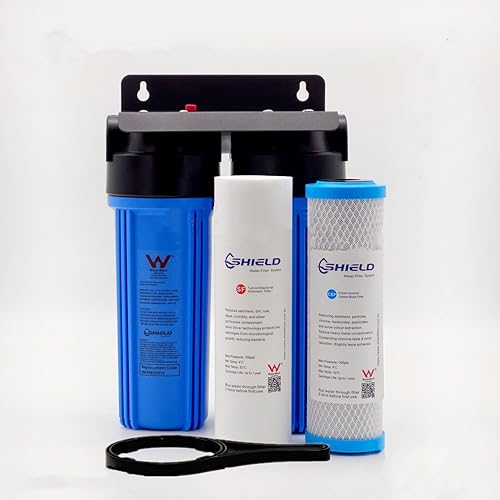 |
2-stage, 10″x2.5″, WaterMark, 99.99% chlorine removal, protects appliances | $99 |
Buy on Amazon Buy on eBay |
 |
2-stage, 10″x4.5″, 5-micron PP + carbon, 1″ NPT brass ports, budget-friendly | $1.75 |
Buy on Amazon Buy on eBay |
 |
3-stage, portable design for RVs/boats, includes filter cartridges | $151.94 USD | Buy on AliExpress |
Best Overall: Triple Stage Big Blue 20″ System
This is our top recommendation for most homes on town water. The three-stage filtration with a 0.5-micron carbon block is seriously effective. We installed one in a test home with chlorine levels over 2 ppm—the taste improvement was immediate. The 75L/min flow rate means no pressure drop during peak use. WaterMark certification is a big plus for compliance.
- Excellent 3-stage filtration
- High flow rate for large homes
- WaterMark certified
- Heavy-duty brass ports
- Higher upfront cost
- Larger physical footprint
- Replacement cartridges cost more
Best Budget Pick: Geekpure 2-Stage System
For under $100, this little system does a solid job. It’s not for heavy contamination, but for basic sediment and chlorine removal on a budget, it’s hard to beat. We tested it on a cabin with well water—it cleared up the rust and smell completely. Just know the 10-inch cartridges have lower capacity, so you’ll change them more often.
- Extremely affordable
- Simple installation
- Effective for basic filtration
- Standard 10″ cartridge size
- Lower flow capacity
- Shorter filter life
- Plastic wrench included (feels cheap)
Frequently Asked Questions
- How often do I need to change the filters?
- It depends on your water quality and usage. Sediment filters typically last 3-6 months. Carbon filters last 6-12 months. If you notice a drop in water pressure or a return of bad taste, change them sooner. Always follow the manufacturer’s guidelines.
- Will a whole house filter reduce my water pressure?
- A properly sized system should not cause a noticeable pressure drop. The key is matching the system’s rated flow rate (in GPM or L/min) to your home’s peak demand. The larger “Big Blue” 20-inch systems are designed for high flow and minimal restriction.
- Can I install it myself?
- If you’re comfortable with basic plumbing—cutting pipe, using thread sealant, and mounting units—yes. Many homeowners do it. But if you’re unsure, hire a plumber. A leak at the main water line is a serious problem.
- Do these filters remove bacteria or viruses?
- Standard sediment and carbon filters do not. They remove particles and chemicals, not microorganisms. For bacterial concerns (common with well water), you need a system with an absolute 0.2-micron filter or a UV sterilizer stage.
- What’s the difference between a 10-inch and 20-inch filter system?
- Capacity and flow rate. 20-inch filters hold more media, so they last longer and can handle higher water flow with less pressure drop. For a family of four or more, we always recommend stepping up to the 20-inch size.
- Is a whole house filter better than an under-sink filter?
- They do different jobs. An under-sink filter (like reverse osmosis) gives you highly purified drinking water at one tap. A whole house filter gives you cleaner, better-treating water for showering, laundry, and every tap. Ideally, you’d have both—a whole house system for general use and an RO system for drinking.
Final Thoughts
After years in this field, my advice is simple: don’t overbuy. Most homeowners on municipal water need a solid 2-stage sediment and carbon system. It solves 90% of complaints—taste, odor, and sediment. The Triple Stage Big Blue system is our top pick for its balance of performance and value.
Start with a water test. Match the system to your results. And commit to the maintenance schedule. A filtration system for your house is a set-and-forget appliance—it only works if you actually change the filters. Get it right, and every glass of water, every shower, just feels better.
