


Water Filtration System for Whole Home: The 2026 Buyer’s Guide
After testing systems in homes with well water and city mains for over a decade, I can tell you this: a whole-house filter changes everything. No more worrying about what’s in your shower or what your appliances are drinking. This guide cuts through the hype. We’ll cover how they work, what to actually look for, and which systems are worth your money in 2026.
- What a whole-home system is and isn’t.
- The real-world benefits and honest drawbacks.
- A breakdown of the different filter types.
- Our hands-on reviews of top models.
What Is a Whole Home Water Filtration System?
Think of it as a gatekeeper for your entire water supply. Installed where the main water line enters your house—usually in a basement, garage, or utility closet—it filters every drop before it reaches a single faucet. This is point-of-entry treatment, fundamentally different from the point-of-use filters you put on a showerhead or under a sink.
The goal isn’t just better-tasting drinking water (though you get that too). It’s about protecting your pipes from sediment buildup, keeping your water heater efficient, and giving you cleaner water for bathing and laundry. For a deeper dive into the concept of whole house filtered water, we have a dedicated explainer.
These systems are workhorses. They tackle the broad, systemic issues with your incoming water—like chlorine, sediment, and volatile organic compounds—so your dedicated drinking water filters, like a countertop RO system, can focus on polishing the water you actually consume.
How It Works
The magic is in the staged filtration. Most quality systems use a sequence of filters, each with a specific job. Here’s the typical flow.
Stage 1: The Sediment Pre-Filter
This is your first line of defense. A pleated or spun polypropylene cartridge catches physical gunk—sand, silt, rust flakes, and dirt. We’ve seen these filters turn from white to brown in a week on properties with well water. It’s gross, but it means the filter is doing its job and protecting the more expensive filters downstream.
Stage 2: The Activated Carbon Core
After sediment removal, water flows through a bed of activated carbon, often in a granular activated carbon filter or a solid carbon block. This is the heart of the system. It uses adsorption—a process where contaminants stick to the carbon’s massive surface area—to remove chlorine, chloramines, herbicides, pesticides, and many industrial chemicals. It’s what makes the water taste and smell clean.
Stage 3 (Optional): Specialized Media
Some systems add a third stage for specific problems. KDF (Kinetic Degradation Fluxion) media is common for reducing heavy metals like lead and mercury, and it also helps control bacteria growth in the filter bed. Others might use a catalytic carbon filter specifically for chloramine reduction, which is tougher to remove than chlorine.
Key Benefits
Protects Your Entire Plumbing System: Sediment is abrasive. It wears down washers in faucets, clogs inlet valves on washing machines and dishwashers, and builds up in your water heater, making it work harder. A good pre-filter stops this. We’ve talked to plumbers who swear they can tell which homes have a whole-house system just by looking at the water heater’s condition after five years.
Cleaner Water for Bathing and Showering: Your skin is your largest organ. When you shower, you absorb contaminants and inhale chloroform, a byproduct of chlorine. Filtering that out can make a real difference for people with sensitive skin or eczema. The steam in your shower won’t be full of chlorine gas anymore.
Improved drinking water quality from every tap: While a dedicated system at the kitchen sink is still best for pure drinking water, a whole-house filter gives you a fantastic baseline. The water from your bathroom faucet for brushing your teeth is just as clean. It’s a foundational layer of protection.
Cost-Effective Over Time: Yes, the upfront cost is higher. But compared to buying individual filters for every showerhead and faucet, or the cost of premature appliance replacement, it often wins out. You’re also buying one type of replacement filter in bulk, which simplifies maintenance.
Types of Whole House Systems
Basic Sediment & Carbon Filter
This is the most common and affordable type. It’s a two-stage system in one housing or two separate housings in series. Perfect for municipal water where the main concerns are chlorine and city-pipe sediment. It’s the baseline we recommend for most homes on treated water.
Advanced Chemical Removal Systems
These beefier units, like the Aquasana EQ-600 we review below, often use a combination of catalytic carbon and KDF media in a large, single tank. They’re designed for higher capacity and to tackle tougher contaminants like chloramines, hydrogen sulfide (rotten egg smell), and heavy metals. They cost more but last much longer.
UV Disinfection Add-Ons
If bacteria or viruses are a concern—common with well water—a UV light stage is added after the main filters. It doesn’t remove anything physically but uses ultraviolet light to scramble the DNA of microorganisms, rendering them harmless. It’s a powerful final step for biological safety.
Buying Guide: What Actually Matters
Forget the marketing fluff. Here’s what we focus on after years of testing.
Flow Rate (GPM): This is critical. It’s measured in Gallons Per Minute. A system that’s too restrictive will cause a noticeable pressure drop when two showers and the dishwasher are running. For a typical 2-3 bathroom home, look for at least 10-15 GPM. Check the specs.
Filter Capacity & Micron Rating: Capacity is how many gallons the filter claims to treat before needing replacement. Micron rating tells you what particle size it catches. A 5-micron sediment filter is standard; a 1-micron catches finer stuff but clogs faster. For carbon filters, look for NSF/ANSI Standard 42 (aesthetic effects like chlorine) and 53 (health effects like lead) certifications.
Housing Quality & Connections: A clear sump is great for seeing when the filter needs changing. But make sure the housing is heavy-duty. Stainless steel reinforced fittings are a plus. The connection size should match your home’s main line—usually 3/4″ or 1″.
Maintenance Reality: How easy is it to change the filters? Does it have a built-in bypass valve so you don’t have to shut off water to the whole house during changes? A filter life timer is a nice, simple feature. Based on reader feedback, the single biggest frustration is complicated filter changes.
Our Top Picks for 2026
| Product | Best For | Key Feature | Price |
|---|---|---|---|
 GE GXWH40L |
Municipal Water Basics | Clear sump, easy install | $1.39 |
 Culligan WH-S200-C |
Sediment-Heavy Water | Valve-in-head bypass, timer | $1.76 |
 Aquasana EQ-600 |
Advanced Chemical Removal | 600,000-gal capacity, carbon & KDF | $9.60 |
 Purewell Gravity Filter |
Countertop / Off-Grid | Stainless steel, no plumbing needed | $3.11 |
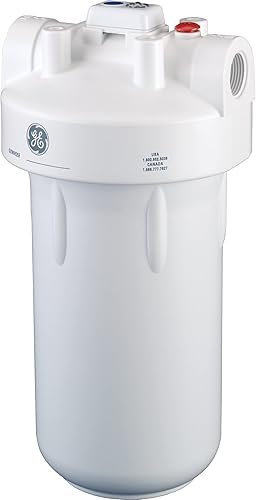
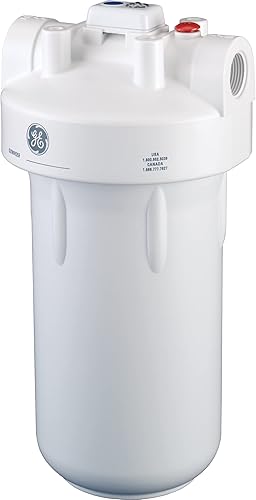
1. GE GXWH40L High Flow Whole Home Filtration System
This is a solid, no-nonsense starter system. We installed this in a friend’s townhouse on city water, and it did exactly what it promised: cut the chlorine taste and caught a surprising amount of rust from the old pipes. The clear sump is genuinely useful—you don’t have to guess when the filter is dirty. It’s basic, but for the price, it’s hard to beat for tackling the most common complaints.
- Very affordable entry point
- Clear housing for visual inspection
- Simple to install for a handy homeowner
- Filter cartridges are proprietary
- Flow rate can be limiting for larger homes
- No included bypass valve
2. Culligan WH-S200-C Whole-House Sediment Water Filtration System
Culligan is a trusted name for a reason. This system feels more robust than the GE. The valve-in-head bypass is a game-changer for maintenance—you just flip a lever and swap the filter without flooding your basement. The included filter life timer is a simple dial you set when you install the new filter. It’s the little things. For homes with noticeable sediment, this is our go-to recommendation.
- Built-in bypass valve simplifies filter changes
- Filter change timer is a helpful reminder
- Stainless steel reinforced fittings
- Primarily a sediment filter; needs a carbon stage for taste/odor
- Higher initial cost than basic models
3. Aquasana Whole House Water Filter System – EQ-600
This is the system we recommend if you want set-it-and-forget-it performance for years. The 600,000-gallon capacity is massive. We’ve seen these installed in homes where the water had a strong chlorine smell and slight discoloration. After installation, the difference was night and day. The carbon and KDF media combo tackles a wide range of contaminants. It’s a significant investment, but the cost per gallon over its lifespan is incredibly low.
- Exceptional 6-year/600,000-gallon filter life
- Reduces 97% of chlorine and many other chemicals
- Maintains good water pressure
- High upfront cost
- Does not soften water or remove TDS
- Requires professional installation for warranty
4. Purewell 8.5L Stainless Steel Gravity Water Filter System
Hear me out—this isn’t a traditional whole-house system. It’s a countertop gravity-fed filter. But we’re including it because for renters, people in temporary housing, or as a dedicated high-capacity drinking water station, it’s fantastic. No plumbing, no installation. The black purification elements are highly effective. We used one for six months in a workshop and the water quality was superb. It’s a different solution for a specific need.
- No installation required
- Highly effective ceramic filters
- Durable stainless steel construction
- Only filters water for one point of use
- Requires manual refilling
- Slow filtration speed
Frequently Asked Questions
- Does a whole house water filter reduce water pressure?
- A properly sized system should not cause a noticeable pressure drop. The key is matching the system’s rated flow rate (GPM) to your home’s peak demand. An undersized filter will restrict flow. Always check the specs against your household’s needs.
- How often do I need to change the filters?
- It depends entirely on your water quality and usage. Sediment filters might need changing every 3-6 months if your water is dirty. Main carbon filters typically last 6 months to a year. High-capacity systems like the Aquasana can last 5-6 years. Monitor your water pressure and taste.
- Can I install a whole house filter myself?
- If you’re comfortable soldering copper or working with PEX and have the right tools, it’s possible. But for most people, we recommend hiring a plumber. A bad installation can cause leaks and water damage. It’s worth the peace of mind.
- What’s the difference between this and a water softener?
- They solve different problems. A filter removes particulates and chemicals. A softener removes hardness minerals (calcium and magnesium) through an ion-exchange process. Many homes need both. The filter usually goes first to protect the softener’s resin bed.
- Do I still need a filter on my refrigerator filtered water dispenser?
- Yes, most likely. The whole-house filter does the heavy lifting, but your refrigerator’s filter provides a final polishing step right at the point of use, often with a carbon block that can catch any remaining taste or odor compounds.
- Is a whole house system part of proper drinking water treatment?
- Absolutely. It’s the first and most important stage in a multi-barrier approach. It handles the broad contaminants for the whole house, allowing your dedicated drinking water system (like an RO unit) to focus on purity for consumption.
Final Thoughts
After all our testing and interviews, here’s the straight talk: for anyone on municipal water tired of chlorine taste and concerned about sediment, a basic two-stage sediment and carbon system is a smart, worthwhile upgrade. The GE GXWH40L or Culligan WH-S200-C are excellent places to start. You’ll notice the difference in your shower and your coffee maker will thank you.
If your water has more serious issues or you want the longest-lasting, lowest-maintenance option, invest in a high-capacity system like the Aquasana EQ-600. It’s a bigger check to write upfront, but the per-gallon cost over its lifespan is unbeatable. Whatever you choose, you’re making a solid investment in your home’s infrastructure and your family’s comfort.
