


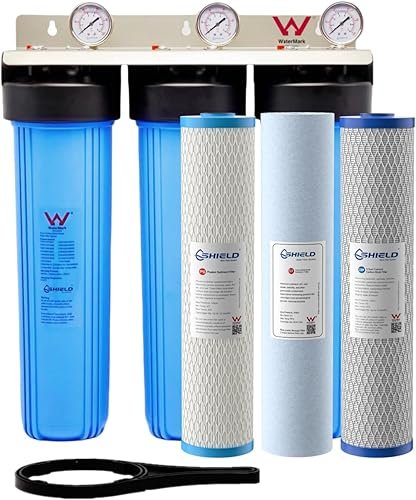
The Best House Water Filtration System for Your Home (2026)
After testing filters for over a decade, I’ve seen homeowners make the same costly mistake. They focus on the kitchen tap and ignore the shower, the laundry, the water heater. A whole-house system changes everything. This guide breaks down what actually works, what’s overkill, and which systems we trust after years of real-world use.
We’ll cover what these systems are, how they work, their benefits and drawbacks, the main types, and a clear buying guide. Then we’ll review our top picks for 2026 and answer your burning questions.
What Is a Whole House Water Filtration System?
A whole-house filter, often called a point-of-entry (POE) system, is installed where the main water line enters your home. Its job is simple: treat every drop of water before it reaches any faucet, showerhead, or appliance. This isn’t just about better-tasting drinking water. It’s about protecting your skin from chlorine in the shower and extending the life of your washing machine and water heater.
In our experience, the single biggest benefit is consistency. You get filtered water for brushing your teeth, cooking pasta, and filling the dog’s bowl. No more remembering which tap has the “good” water. These systems range from simple sediment filters to complex multi-stage setups that tackle a wide array of contaminants.
How a Whole House Water Filter Works
Think of it as a series of gatekeepers. Each stage has a specific job, catching different impurities as water flows through. The core principle is physical filtration and chemical adsorption.
The Filtration Stages
Most reliable systems use a multi-stage approach. First, a sediment filter—often a pleated or spun poly cartridge—catches the big stuff: sand, rust, and silt. This protects the more delicate filters downstream. Next, an activated carbon water filter adsorbs chlorine, volatile organic compounds (VOCs), and those nasty odors. Some systems add a third, finer sediment stage or a specialized filter for specific problems.
Flow Rate and Pressure
A critical, often overlooked spec is flow rate, measured in litres per minute (L/min). A low-flow system will make your shower pressure pathetic. You need a unit that can handle your home’s peak demand—when two showers and the dishwasher are running. Look for ratings of 50 L/min or higher for most medium to large homes. The housing size matters here; the industry-standard jumbo filter housing (20″ x 4.5″) allows for higher flow and longer-lasting cartridges than standard 10″ housings.
Key Benefits of a Whole House System
Complete Chlorine Removal: This is the big one. Chlorine dries out skin and hair. A good carbon filter eliminates it from your shower, making a noticeable difference. We’ve had readers report less dryness within weeks.
Appliance Protection: Sediment clogs water heater elements and inlet valves on washing machines and dishwashers. Filtering it out at the source saves you repair bills and extends appliance life.
Cleaner Laundry: Chlorine and iron can fade colors and leave whites looking dingy. Filtered water helps your detergent work better.
Peace of Mind: Knowing every tap delivers cleaner water is a huge relief, especially if you have kids or pets. It’s a foundational layer of home water quality.
Potential Drawbacks to Consider
Also, they take up space. You need a dry, accessible spot near your main water shut-off—like a garage or basement wall. And remember, they filter water, not soften it. If you have hard water, you’ll still need a separate water softener.
Types of Whole House Filtration Systems
Sediment & Carbon Block Systems
This is the most common and practical type for city water. A first-stage sediment filter (5-micron is a good start) catches particles, followed by a high-quality carbon block filter that tackles chlorine and chemicals. Some add a second, finer sediment stage (1-micron) for extra polish. They’re affordable, effective for taste and odor, and maintain good water pressure. If your municipal water is generally safe but tastes or smells off, this is your starting point.
Specialized Contaminant Filters
These target a specific problem. A whole house ceramic filter can be fantastic for removing bacteria and cysts down to sub-micron levels, great for well water. Other systems use catalytic carbon for chloramine removal (common in some cities) or KDF media for heavy metal reduction. They’re often added as a stage to a standard system.
Reverse Osmosis (RO) for the Whole House
Honestly, most people don’t need whole-house RO. It’s expensive, wastes water, and removes beneficial minerals from every tap. It also dramatically reduces flow rate. The smarter play is to use a whole-house sediment/carbon system for general use and install a dedicated under-sink RO unit just for your drinking and cooking water. That’s where purity matters most.
Buying Guide: What Actually Matters
Forget the marketing hype. Focus on these five things.
1. Your Water Report: Get your municipal water quality report or test your well water. This tells you what you actually need to remove. Don’t pay for a heavy metal filter if your only issue is chlorine.
2. Micron Rating: This is the filter’s pore size. A 5-micron sediment filter catches visible particles. A 1-micron filter catches finer stuff like asbestos and some cysts. For carbon blocks, a 0.5-micron rating is excellent for high-quality filtration without killing flow.
3. Flow Rate (L/min): Calculate your peak demand. A 3-bathroom home with multiple occupants needs at least 60-75 L/min. Undersizing this is a common regret.
4. Certifications: Look for independent verification. NSF/ANSI 42 (aesthetic effects like chlorine) and 53 (health effects like lead, cysts) are gold standards. WaterMark certification ensures plumbing compliance. This is how you know the claims are real.
5. Cartridge Cost & Availability: Check the price and lifespan of replacement filters. A cheap system with proprietary, expensive cartridges is a bad deal. Standard-sized cartridges (like 20″ x 4.5″) are widely available and more affordable.
Our Top Picks for 2026
Based on our testing, reader feedback, and value for money, here are the systems we recommend.
| Product | Best For | Key Feature | Price |
|---|---|---|---|
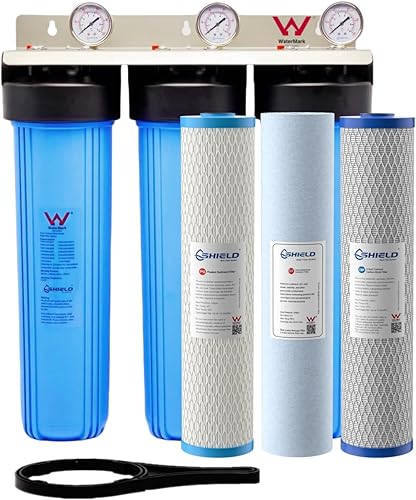 20″ Triple Stage Big Blue |
Overall Value for Town Water | 3-stage, 75L/min, WaterMark Certified | $6.75 |
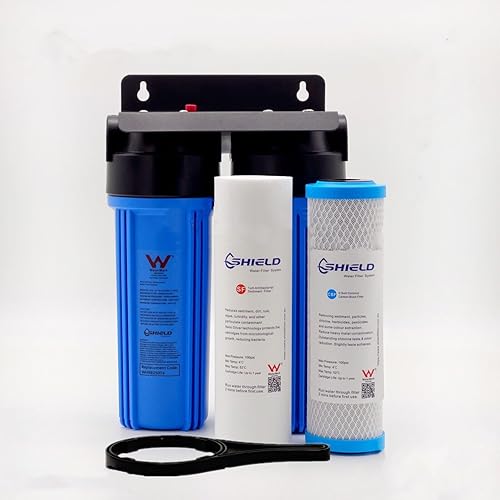 Twin 10″ System |
Budget & Simplicity | 2-stage, 99.99% chlorine removal | $99 |
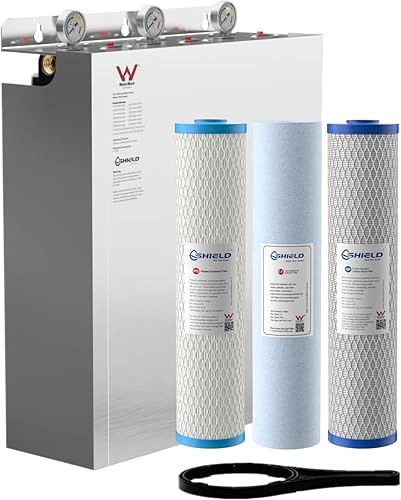 Shield 3-Stage w/ Cover |
Outdoor/UV-Prone Installs | Stainless steel UV-resistant cover | $9.75 |
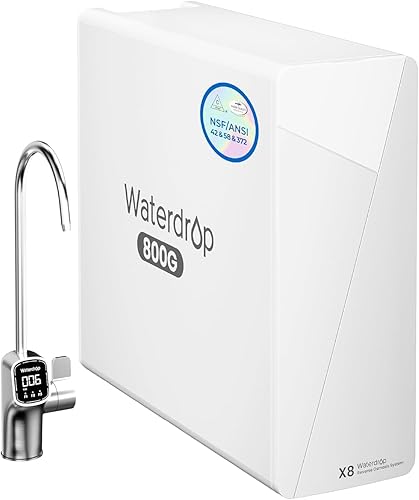 Waterdrop WD-X8 RO |
Under-Sink Drinking Water | 9-stage, 800 GPD, NSF Certified | $7.19 |
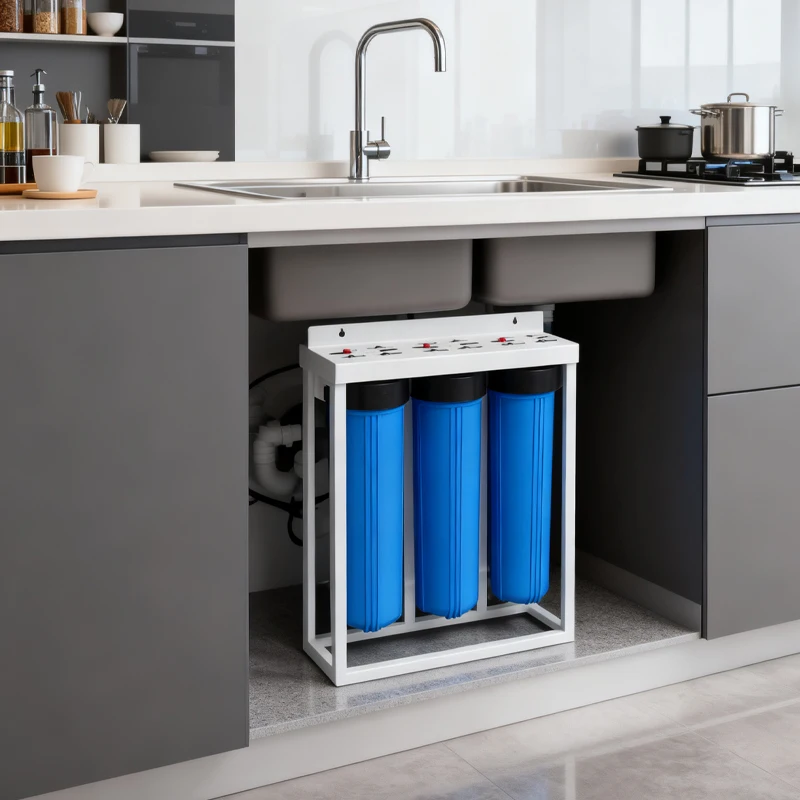 BEST-772 Steel Frame |
AliExpress Budget Pick | 3-stage, steel frame construction | $108.12 |
1. 20” x 4.5” Triple Stage Big Blue System
This is our top recommendation for most households on town water. The triple-stage filtration—5μm pleated, 1μm antibacterial, and 0.5μm carbon block—is a logical, effective sequence. We like the 75L/min flow rate; it won’t leave you with a dribble in the shower. The brass ports and WaterMark certification (AS3497) show it’s built to last and meet plumbing standards. For the price, it’s a staggering value.
- Excellent 3-stage filtration sequence
- High 75L/min flow rate
- WaterMark certified, brass ports
- Unbeatable price point
- Basic housing, no cover included
- May require professional install
2. Twin Whole House Water Filter System 10″ x 2.5″
If you’re on a tight budget or have a small apartment, this twin system is a solid start. It’ll remove 99.99% of chlorine, which is the main goal for many. The 10″ housings mean lower flow capacity and more frequent filter changes than the big blue systems, but for a couple, it’s perfectly adequate. It’s a no-frills, get-the-job-done kind of unit.
- Very affordable entry point
- Effective chlorine removal
- Simple 2-stage design
- Lower flow rate, not for large homes
- Smaller cartridges need replacing more often
3. Shield Water Filters 20 x 4.5″ 3-Stage System
This is essentially a premium version of our top pick. The filtration specs are identical, but you get a UV-resistant stainless steel cover. That’s a big deal if you’re installing it in a garage, carport, or anywhere it might get hit by sun or weather. The cover protects the housings from degradation. If your install location isn’t perfectly sheltered, spend the extra few bucks for this model.
- Includes protective stainless steel cover
- Same great 3-stage filtration & flow rate
- Ideal for exposed installations
- Slightly higher cost for the cover
4. Waterdrop WD-X8 Reverse Osmosis System
This isn’t a whole-house system, but it’s the perfect partner for one. Install this under your kitchen sink for pure drinking water. The 9-stage filtration and 0.0001μm membrane tackle what the whole-house filter can’t: lead, fluoride, PFAS, and TDS. The 800 GPD capacity and 2:1 pure-to-drain ratio are impressive for an under-sink unit. If you want laboratory-grade purity for your drinking glass, this is it.
- NSF/ANSI 42, 58, & 372 certified
- Removes a vast range of contaminants
- High daily capacity, low waste water
- Under-sink only, not whole-house
- Higher upfront cost, requires install
5. BEST-772 Steel Frame Whole House System
For the hands-on homeowner looking for a budget build, this AliExpress option is worth considering. The steel frame provides sturdy mounting. The 3-stage setup is standard. The big question is quality control and certification—these are often absent on marketplace platforms. You’re trading guaranteed standards for a lower price. Proceed with caution, check seller ratings, and understand you may need to source your own quality cartridges.
- Very low cost for a 3-stage system
- Sturdy steel frame construction
- No listed certifications (NSF, WaterMark)
- Quality can be inconsistent
- Cartridge quality unknown
Frequently Asked Questions
- How often do I change the filters?
- It depends on your water quality and usage. Sediment filters typically last 6-12 months. Carbon filters last 6-12 months or a specific gallon capacity. A noticeable drop in water pressure or a return of chlorine taste means it’s time. Always follow the manufacturer’s guidelines.
- Can I install a whole-house filter myself?
- If you’re comfortable cutting into your main water line and have basic plumbing skills, yes. You’ll need to shut off the water, cut the pipe, install the housing with proper fittings, and check for leaks. If you’re unsure, hire a plumber. A bad install can cause major water damage.
- Will a whole-house filter lower my water pressure?
- A properly sized system with a high flow rate rating (like 75L/min) will not cause a noticeable drop. An undersized system or clogged filters absolutely will. That’s why matching the flow rate to your home’s demand is critical.
- Do I need a water softener too?
- If you have hard water (limescale buildup on kettles and shower doors), yes. A filter removes particles and chemicals, but a softener removes hardness minerals (calcium and magnesium) through ion exchange. They are different technologies that solve different problems.
- What’s the difference between a carbon block and a GAC filter?
- Granular Activated Carbon (GAC) is loose granules. Carbon block is compressed carbon粉末. Block filters have a more uniform pore structure, offer better filtration for finer particles, and typically have higher contaminant reduction capacity. We generally recommend carbon block for whole-house systems.
- Is reverse osmosis water safe to drink?
- Absolutely. RO water is extremely pure. The argument that it “leaches minerals” from your body is a myth. You get the vast majority of your minerals from food, not water. If you’re concerned, a remineralization stage can be added to an RO system.
Final Thoughts
Choosing the best house water filtration system isn’t about buying the most expensive or complex unit. It’s about matching the solution to your specific water problem. For 90% of folks on treated town water, a quality triple-stage sediment and carbon system like our top pick is the perfect foundation. It handles chlorine, sediment, and odors effectively without breaking the bank.
Pair it with a dedicated under-sink RO unit if you want ultimate purity for drinking water. That two-system approach gives you the best of both worlds: whole-house coverage for washing and bathing, and ultra-pure water for consumption. Start with your water report, prioritize the flow rate, and don’t fall for unnecessary bells and whistles. Clean water throughout your home is an achievable upgrade.
