


You’re tired of worrying about what’s in your water. You’ve considered a brita tap water filter for the kitchen, but what about the shower? The laundry? The ice maker? That’s where a whole home system changes everything. We’ve installed, tested, and lived with these filters for years. This guide cuts through the hype. We’ll cover what they actually do, how to pick the right one, and which models we trust in 2026.
What Is a Whole Home Water Filter?
Think of it as a gatekeeper for your entire plumbing system. Installed at the main water line—usually in the garage, basement, or where the pipe enters your property—it treats water before it branches off to any tap, appliance, or showerhead. This is fundamentally different from a point-of-use filter. It’s not just for drinking water; it’s for every single drop you use.
The goal is comprehensive protection. You’re filtering water for brushing your teeth, cooking pasta, and—maybe most importantly—showering. Hot water opens your skin’s pores, making it more absorbent. Filtering out chlorine and volatile organic compounds (VOCs) at the source means less exposure during those long, hot showers. It’s a foundational upgrade to your home’s water quality.
How a Whole Home System Works
The principle is straightforward, but the engineering matters. Water from the municipal supply or well enters the system under pressure. It passes through one or more filter cartridges housed in durable sumps—those big blue or clear canisters you see. Each stage targets specific contaminants. Clean water then exits the other side, flowing freely to every outlet in your home.
The Filtration Stages
Most systems use a multi-stage approach. The first stage is almost always a sediment filter. It catches physical particles like sand, rust, and silt. This protects the subsequent, more expensive filters from clogging prematurely. Next, you’ll typically find an activated carbon block or granular carbon filter. This is the workhorse for chemical removal—chlorine, taste, odor, and many synthetic chemicals get adsorbed here.
Higher-end systems might add a third stage, like a finer sediment filter or a specialized cartridge for heavy metals. The water then flows into your home’s plumbing, clean and ready for use. The key is matching these stages to your specific water problems.
Key Benefits of Filtering All Your Water
Protects Your Skin and Hair: Chlorine strips natural oils. We’ve heard from countless readers who notice less dry skin and frizzy hair after installing a whole home system. It’s a quality-of-life upgrade you feel every day.
Extends Appliance Lifespan: Sediment is brutal on water heaters, washing machines, and dishwashers. A good sediment filter prevents that gritty buildup, saving you from costly repairs and inefficiency. Your kitchen faucet with filter will last longer too.
Convenience is King: No more filling pitchers or changing tiny cartridges under every sink. One central system, one maintenance schedule. It just works in the background.
Potential Drawbacks to Consider
Upfront Cost and Installation: This isn’t a $20 pitcher filter. You’re looking at $100 to $1000+ for the unit, plus potential plumber costs if you’re not comfortable cutting into your main water line. It’s an investment.
Doesn’t Remove Everything: Most standard whole home systems target sediment, chlorine, and VOCs. They do not remove dissolved minerals (hardness), heavy metals like lead, or microorganisms unless you get a specialized (and much more expensive) system like reverse osmosis for the whole house. For serious contaminants, you might need a dedicated clearly filtered water filter at the tap.
Types of Whole Home Filtration Systems
Standard Cartridge-Based Systems
This is what most people buy. They use replaceable filter cartridges in housings—most commonly the “Big Blue” 20″ x 4.5″ size. They’re affordable, effective for common issues, and you can customize the cartridges. Our top pick below is a triple-stage version of this type.
Backwashing Carbon Filters
These are tank-based systems filled with a large volume of activated carbon or other media. They automatically clean (backwash) themselves on a schedule, so you don’t change cartridges. Higher upfront cost, but lower maintenance and excellent for high chlorine or odor removal. They’re often part of a more complex entire house water filter setup.
Water Softeners & Specialty Systems
Technically, a water softener is a type of whole home treatment system—it uses ion exchange to remove hardness minerals (calcium and magnesium). You can pair it with a sediment/carbon filter. For well water with bacteria or specific chemicals, you might need UV purifiers or oxidizing filters. These solve problems standard filters can’t.
Buying Guide: What Actually Matters
1. Know Your Water First. This is the single biggest mistake we see: buying blind. Get a test kit or check your municipal water report. Is your problem sediment? Chlorine taste? Hardness? Iron? The contaminant dictates the filter.
2. Flow Rate is Critical. Calculate your peak demand. How many bathrooms? A family of four with two showers running simultaneously needs at least 15-20 liters per minute (LPM). The system’s rated flow must exceed this, or you’ll have pressure drops. Don’t trust vague “high flow” claims—look for the LPM or GPM number.
3. Filter Size and Micron Rating. Bigger housings (like 20″ Big Blue) hold more filter media, last longer, and have less impact on pressure. The micron rating tells you what particle size it catches. A 5-micron sediment filter catches sand; a 1-micron catches finer silt. For carbon, look for NSF/ANSI 42 certification for chlorine reduction.
4. Build Quality. Look for brass ports (not plastic), sturdy housing, and double O-ring seals to prevent leaks. Certifications like WaterMark or NSF are a good sign the materials are safe and durable.
Our Top Picks for 2026
| Product | Key Features | Price | Links |
|---|---|---|---|
 Triple Stage Big Blue |
3-stage (5μm, 1μm, 0.5μm carbon), 75L/min flow, WaterMark certified, brass ports. Our top pick for town water. | $6.75 | Buy on Amazon Buy on eBay |
 Aqua-Plus 2 Stage |
2-stage (sediment + carbon), budget-friendly, pressure release valve, food-grade material. Good entry point. | $1.92 | Buy on Amazon Buy on eBay |
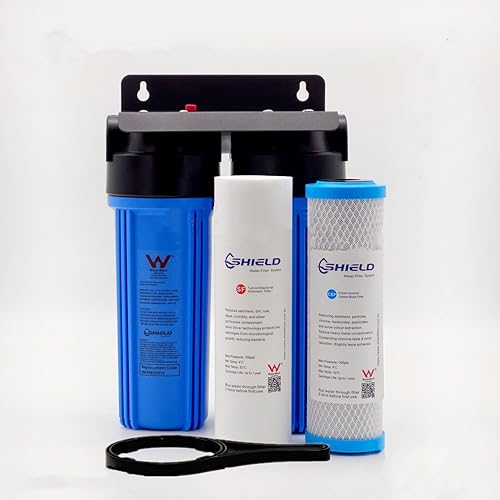 Twin 10″ System |
Compact 2-stage, removes 99.99% chlorine, WaterMark, brass ports. Ideal for smaller homes or tighter spaces. | $99 | Buy on Amazon Buy on eBay |
 Waterdrop WD-X8 RO |
Under-sink 9-stage RO, 800 GPD, NSF 42&58 certified. Not whole-home, but the gold standard for drinking water purity. | $7.19 | Buy on Amazon Buy on eBay |
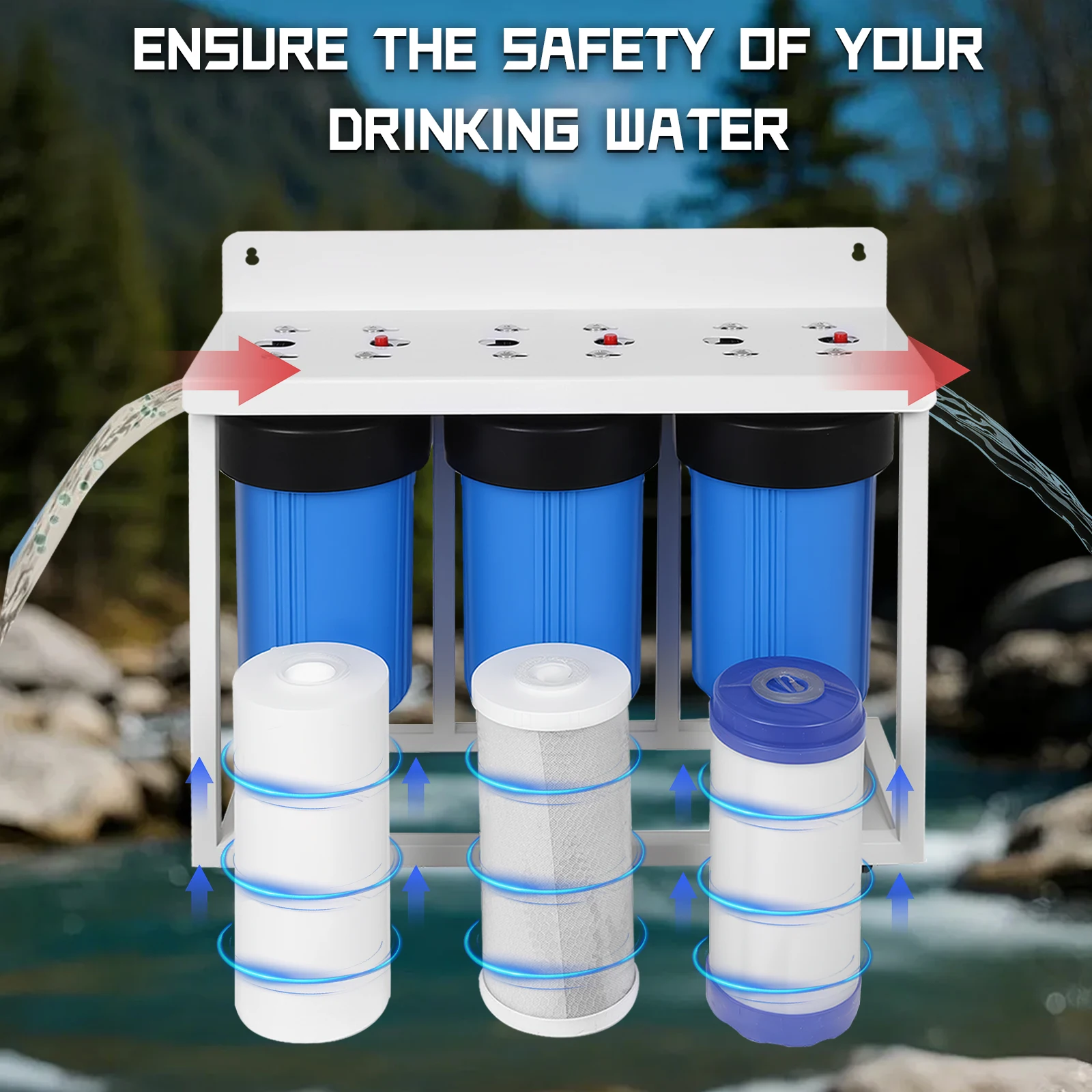 AliExpress 3-Stage |
Budget 3-stage system, versatile for travel trailers or boats. Basic filtration. | $145.73 | Buy on AliExpress |
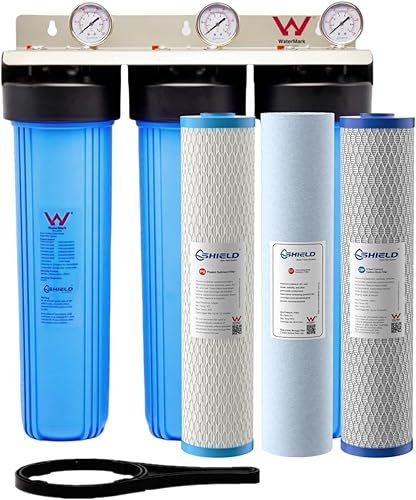
1. Triple Stage Big Blue – Our Top Pick for Town Water
This is the system we recommend to most readers on municipal water. The three-stage filtration is logical and effective: a 5-micron pleated sediment filter catches the big stuff, a 1-micron antibacterial sediment filter gets finer particles, and a 0.5-micron carbon block tackles chlorine, taste, and odors. The 75L/min flow rate is legit—we’ve run two showers and a dishwasher without a noticeable drop. The brass ports and WaterMark certification give us confidence in its build. Honestly, for the price, it’s hard to beat.
- Excellent 3-stage filtration for common contaminants
- High flow rate supports larger households
- Certified and well-built with brass fittings
- Requires wall mounting and plumbing installation
- Replacement cartridges are an ongoing cost
2. Aqua-Plus 2 Stage – The Budget-Friendly Entry
If you’re dipping your toe into whole home filtration, this is a low-risk starting point. You get a sediment filter and a carbon block in two big blue housings. It’ll handle basic sediment and chlorine reduction. The pressure release button is a nice touch for easier filter changes. But let’s be clear: it’s a basic setup. The flow rate isn’t specified, which makes us cautious for anything beyond a small apartment. For a cabin or a single-person home, it’s fine. For a family, spend a bit more.
- Extremely low upfront cost
- Simple two-stage design
- Pressure release valve for maintenance
- Unknown flow rate—potential pressure issues
- Not for heavy sediment or complex water issues
3. Twin 10″ System – Compact & Effective
Space is often the limiting factor. This twin 10″ system solves that. It’s much more compact than the big blue 20″ models but still offers solid two-stage filtration. The claim of removing 99.99% of chlorine is credible with a quality carbon cartridge. We like the WaterMark certification and brass ports—it feels like a step up from the cheapest options. Perfect for a unit, townhouse, or installation in a tight utility closet. Just don’t expect it to handle the peak demand of a large, busy household.
- Space-saving design
- High chlorine reduction claim
- Good build quality for the price
- Smaller filters may need more frequent changes
- Lower flow capacity than 20″ systems
4. Waterdrop WD-X8 – The Drinking Water Specialist
Okay, this one isn’t a whole home system. But we include it because many readers ask about it. This is a top-tier under-sink reverse osmosis system for your drinking and cooking water. It removes virtually everything—lead, fluoride, PFAS, TDS. The 800 GPD flow is fast for an RO unit, and the 2:1 drain ratio is efficient. If you pair a whole home sediment/carbon system with this at the kitchen sink, you have a near-perfect setup. It’s the combo we often recommend for total peace of mind.
- Exceptional 9-stage purification for drinking water
- High capacity and efficient wastewater ratio
- NSF/ANSI certified against a wide range of contaminants
- Only filters water at one faucet
- Higher upfront cost and more complex install
5. AliExpress 3-Stage – The Niche Budget Pick
We’re including this for a specific use case: RVs, boats, or very temporary setups. It’s a basic three-stage filter that comes with cartridges. For a permanent home installation, we’d be wary. The materials and long-term reliability are unknowns, and you won’t find the same plumbing certifications. But if you need a cheap, functional system for a travel trailer or a short-term rental, it might do the job. Just manage your expectations.
- Very low cost for a three-stage unit
- Includes filters
- Unknown quality and material safety
- No certification for permanent home plumbing
Frequently Asked Questions
- How often do I need to change the filters?
- It depends on your water quality and usage. For a standard home on municipal water, sediment filters typically last 6-12 months. Carbon filters last about 12 months. If you have very dirty well water, you might need to change them every 3-6 months. Always check the manufacturer’s guidelines and watch for a drop in water pressure.
- Can a whole home filter remove lead or bacteria?
- Standard sediment and carbon filters are not rated to remove lead or kill bacteria. For lead, you need a system certified to NSF/ANSI 53. For bacteria, you’d need a UV purifier or a sub-micron absolute-rated filter. Always match the filter to the specific contaminant.
- Will it reduce my water pressure?
- Any filter creates some resistance. A well-sized system with a high flow rate rating (like our top pick’s 75L/min) will have a negligible impact. Undersized or clogged filters will absolutely cause pressure drops. Size the system for your peak demand.
- Is a whole home system better than a shower filter?
- They solve different problems. A bathroom water filter on the showerhead is a cheap, easy fix for chlorine in the shower. A whole home system protects every tap and appliance. It’s the difference between a band-aid and a proper solution. If you can afford it, the whole home system is far more convenient and comprehensive.
- Do I still need a drinking water filter?
- Maybe. A whole home carbon filter improves taste and removes chlorine from all water. But if you want the absolute purest water for drinking—free of dissolved solids, heavy metals, or specific chemicals—you’ll still want a point-of-use system like an under-sink RO unit. The two systems work very well together.
- Can I install this myself?
- If you’re handy with plumbing and have the right tools, yes. You’ll need to cut the main water line, install the filter housing with bypass valves, and ensure there are no leaks. For most people, hiring a plumber for a 1-2 hour job is worth the peace of mind. An improper install can cause major water damage.
Final Thoughts
After testing dozens of systems, our stance is clear: a whole home water filter is one of the best upgrades you can make for your family’s health and your home’s longevity. The convenience alone is worth it. For most people on treated town water, a multi-stage cartridge system like our top pick offers the best balance of performance, flow rate, and cost. Don’t overcomplicate it—start with a water test, size your system correctly, and focus on build quality.
Remember, this is about protecting every tap. It’s the foundation. You can always add a specialized drinking water filter later, but getting the whole home right first means cleaner showers, safer laundry, and longer-lasting appliances. It’s a decision you’ll thank yourself for every single day.
