


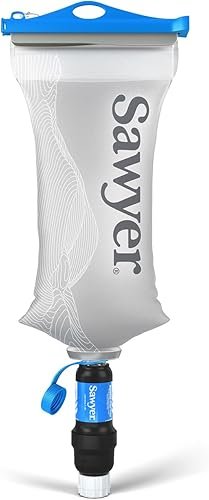
Choosing a water filtration system feels overwhelming. I get it. After testing dozens of systems and talking to countless plumbers, I’ve seen the same mistakes over and over. This guide cuts through the noise. We’ll cover what these systems actually do, the different types available, and how to pick the right one for your home without wasting money.
- What a filtration system is and how it works
- The real benefits and the honest drawbacks
- A breakdown of all the major types
- A practical buying guide and our top picks for 2026
What Is a Filtration System?
A filtration system is any device or setup designed to remove unwanted particles, chemicals, and organisms from your water. It’s not one single thing. The term covers everything from a simple brita tap filter pitcher to a complex reverse osmosis unit installed under your sink. The goal is always the same: make your water cleaner, safer, and better tasting.
Here’s the key distinction most people miss. A filter and a purifier are not the same. A filter physically blocks particles above a certain size, measured in microns. A purifier, like a UV light or advanced RO system, also inactivates or removes microscopic threats like viruses. Your municipal water is already purified at the plant. Your home system’s job is to handle what happens in the pipes between there and your glass—things like chlorine taste, lead from old solder, or sediment.
How a Filtration System Works
Think of it like a series of nets, each with a different mesh size. Water passes through, and each stage catches something different. No single technology catches everything. That’s why the best systems use multiple stages.
Physical Filtration
This is the simplest concept. It’s a physical barrier with tiny holes. Sediment filters are the classic example. They’re rated by a micron rating—the smaller the number, the finer the particles they catch. A 5-micron filter stops sand and rust. A 0.2-micron filter can trap bacteria. It’s brute force, but it works.
Adsorption (Activated Carbon)
This is where taste and odor magic happens. Activated carbon is incredibly porous—just one gram has the surface area of a football field. As water flows past, contaminants like chlorine, volatile organic compounds (VOCs), and some pesticides stick to the carbon in a process called adsorption. It’s not catching particles; it’s grabbing dissolved chemicals. This is the workhorse in most pitcher and faucet filters.
Reverse Osmosis (RO)
RO is the heavyweight champion. It forces water through a semipermeable membrane with pores so tiny (about 0.0001 microns) that only water molecules can pass. It strips out nearly everything: dissolved salts, lead, fluoride, and even some microorganisms. The downside? It’s slow and wastes water. For every gallon of pure water, it might send two or three gallons down the drain as waste. A good modern system, like the Waterdrop X8, has improved this ratio significantly.
Key Benefits
Better Taste and Odor. This is the number one reason people buy a filter. Removing chlorine and sulfur compounds makes water taste fresh. It makes your coffee and tea taste better, too.
Removal of Specific Contaminants. Got a lead service line? Worried about PFAS “forever chemicals”? A targeted system can address your exact problem. You’re not just buying generic “clean water”—you’re buying targeted protection.
Cost Savings Over Bottled Water. The math is simple. A family spending $20 a week on bottled water spends over $1,000 a year. A good $300 filtration system pays for itself in months. Plus, you’re not adding plastic to landfills.
Convenience. Having filtered water on tap from every faucet—or just your kitchen sink—is a luxury you get used to fast. No more lugging cases of water from the store. If you’re looking for a convenient store-bought option, you can check our guide on a water filter walmart option, but an installed system is almost always more economical long-term.
Potential Drawbacks
Maintenance is Non-Negotiable. Filters clog. Cartridges expire. If you don’t change them on schedule, your system becomes useless—or worse, a breeding ground for bacteria. Set a calendar reminder.
Upfront Cost. A quality under-sink system isn’t cheap. You’re looking at $200 to $800 for the unit, plus installation if you’re not handy. It’s an investment.
Water Waste (for RO). Traditional reverse osmosis systems are water hogs. If you’re on a meter or in a drought-prone area, this matters. Look for systems with a low drain ratio.
Removal of Beneficial Minerals. This is a common concern with RO. It strips out the bad stuff, but also the good stuff like calcium and magnesium. Honestly, for most people, this isn’t a health issue—you get plenty of minerals from food. But if it bothers you, look for a system with a remineralization stage. Some systems, like the Frizzlife gravity filter, are specifically designed to keep minerals in. It can also pair nicely with a hot cold water cooler for instant mineralized hot or cold drinks.
Types of Filtration Systems
Pitcher & Faucet-Mount Filters
The entry point. Cheap, easy, no installation. They use activated carbon to improve taste and reduce chlorine. Fine for renters or light use. But they’re slow, have small capacities, and won’t touch heavy metals or microbes. The classic example is a Brita pitcher.
Under-Sink Systems
The sweet spot for most homeowners. Installed out of sight, they provide high-quality water directly from a dedicated faucet. You can get simple carbon filters or full multi-stage RO systems. This is where you get the most performance for your money.
Countertop & Gravity-Fed Systems
These are great for renters, travelers, or as a backup. They sit on your counter and often use gravity to push water through ceramic or carbon filters. No plumbing needed. The Sawyer Squeeze is a legendary portable filter for hikers that uses this principle.
Whole-House Systems
Installed at your main water line, they treat every drop of water entering your home. They’re ideal for removing sediment, chlorine, and hardness (if you have a water softener). But they’re expensive and not designed to remove specific drinking water contaminants like lead. For that, you still need a point-of-use system at the kitchen sink. Commercial-grade options, like an everpure water filtration system, are often used in restaurants and can be adapted for homes.
Buying Guide
Forget brand hype. Focus on these four things.
1. Test Your Water. This is step one. Non-negotiable. Get a lab test or use a reliable home test kit. It tells you exactly what you need to remove. No point paying for an RO system if your only issue is chlorine taste.
2. Match the Tech to the Threat. Chlorine and taste? Activated carbon. Sediment? A sediment filter. Lead, PFAS, or nitrates? You need reverse osmosis or a specialized carbon block filter certified to NSF 53.
3. Check Certifications. I can’t stress this enough. Look for the NSF mark and the specific standard number. It’s your guarantee of performance. An everpure water filter system is often NSF certified, which is a big reason for their professional reputation.
4. Calculate Long-Term Cost. Look at the price of replacement filters and how often they need changing. A cheap system with expensive, short-lived filters is a bad deal.
Top Picks for 2026
| Product | Type | Key Feature | Price |
|---|---|---|---|
| Sawyer Squeeze + Cnoc Bladder | Portable Squeeze | Removes 100% of microplastics, lasts 100k gallons | $81 |
| Frizzlife G210-PRO | Gravity-Fed | NSF certified, keeps beneficial minerals | $1.89 |
| Waterdrop TSA 8-Stage | Under-Sink Carbon | Reduces PFAS, NSF/ANSI 42 certified | $1.91 |
| Waterdrop X8 RO System | Under-Sink RO | 800 GPD, 2:1 pure-to-drain ratio | $7.19 |
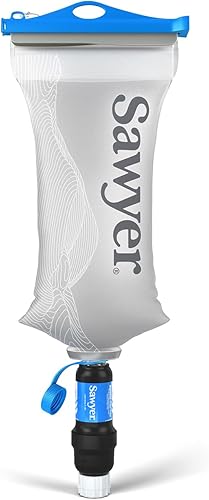
Sawyer Squeeze + Cnoc Premium 2L Bladder
This is the gold standard for hikers and preppers. We’ve used this system on dozens of backcountry trips. The hollow fiber membrane is tougher than competitors, allowing for aggressive backwashing to restore flow. It’s not for your kitchen sink, but for a portable filter, nothing beats its reliability and insane 100,000-gallon lifespan. Perfect for bug-out bags or travel to places with questionable water.
- Absurdly long lifespan
- Removes bacteria, protozoa, microplastics
- Lightweight and field-maintainable
- Requires squeezing effort
- Not for chemical treatment
- Can clog with very silty water
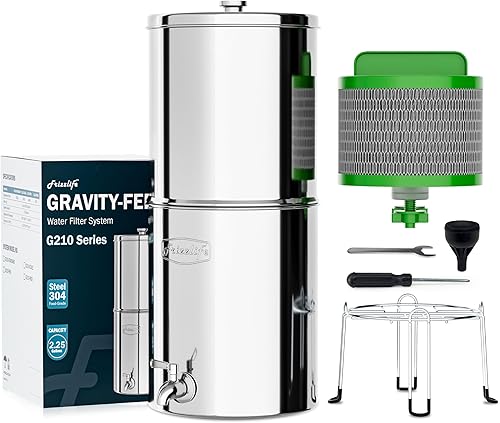
Frizzlife G210-PRO Gravity System
This is a clever countertop option for people who hate the idea of removing healthy minerals. It uses a gravity-fed, multi-element filter to reduce lead, chlorine, and heavy metals while leaving calcium and magnesium intact. The stainless steel build feels premium. It’s not going to match an RO system for TDS reduction, but for improving taste and safety from common city water contaminants, it’s a solid, no-installation choice.
- Retains beneficial minerals
- NSF certified for lead reduction
- No installation needed
- Does not reduce TDS
- Slower filtration than pressurized systems
- Requires counter space
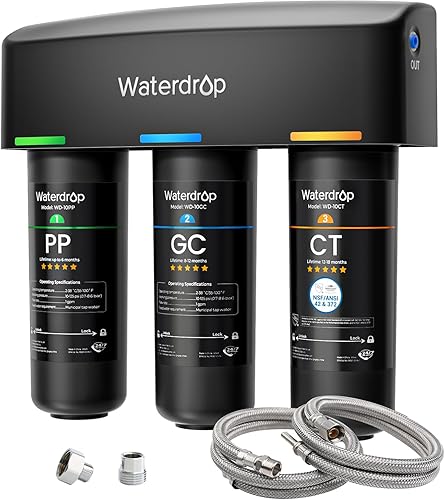
Waterdrop TSA 8-Stage Under Sink Filter
This is our top recommendation for most city water users who don’t need full RO. The 8-stage carbon block filter tackles a huge range of issues: chlorine, PFAS, fluoride, and bad taste. The upgraded filtration area is a real engineering win—it dramatically reduces clogging compared to older designs. It’s certified to NSF/ANSI 42, so you know it works. Installation is straightforward for anyone with basic DIY skills.
- Excellent contaminant reduction range
- NSF/ANSI 42 certified
- Anti-clog design
- No water waste
- Does not remove dissolved solids
- Requires under-sink installation
- Filter replacements are an ongoing cost
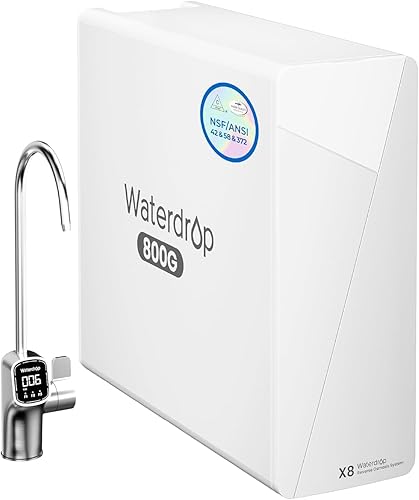
Waterdrop X8 Reverse Osmosis System
If your water test shows high TDS, lead, or nitrates, this is the system to get. The 9-stage filtration with a 0.0001μm RO membrane is the real deal. What sets it apart is the efficiency—an 800 GPD flow rate means no waiting for a tank to fill, and the 2:1 pure-to-drain ratio is among the best we’ve seen. It’s NSF/ANSI 42, 58, and 372 certified, which covers aesthetics, health, and lead-free materials. This is a serious system for serious water problems.
- Removes virtually all contaminants
- High flow rate, low waste ratio
- Triple NSF certified
- Tankless design saves space
- Highest upfront cost
- Removes beneficial minerals
- Requires under-sink installation and a dedicated faucet
FAQ
- How often should I change my filter cartridges?
- It depends entirely on the filter type and your water quality. Carbon filters typically last 6-12 months. RO membranes can last 2-4 years. Always follow the manufacturer’s schedule, but if your water flow slows dramatically or taste returns, change it sooner.
- Do I need a plumber to install an under-sink system?
- Not necessarily. Many modern systems, like the Waterdrop models, are designed for DIY installation with quick-connect fittings. If you’re not comfortable drilling a hole for a dedicated faucet or connecting to your cold water line, hire a plumber. It’s usually a 1-hour job.
- Will a filtration system lower my water pressure?
- All filters create some pressure drop. A simple sediment filter might cause a small, unnoticeable drop. A whole-house system or a clogged filter can cause a significant reduction. RO systems need a minimum pressure (often 40-60 psi) to work correctly.
- What’s the difference between a water softener and a filter?
- They do different jobs. A softener removes hardness minerals (calcium, magnesium) through an ion-exchange process to prevent scale buildup. A filter removes contaminants like chlorine, lead, and bacteria. Many homes with hard water need both: a softener for the whole house and a drinking water filter at the kitchen sink.
- Can I install a filtration system if I rent my home?
- Yes! Look at countertop gravity filters, faucet-mount filters, or pitcher filters. These require no permanent modification to plumbing. You can take them with you when you move.
- Are expensive filtration systems always better?
- No. The best system is the one that targets your specific contaminants. A $200 carbon filter might be perfect for your chlorinated city water, while a $700 RO system would be overkill. Test your water first, then buy accordingly.
Final Thoughts
After all my years testing these systems, here’s my honest take: most people overbuy. They get scared by marketing and end up with an expensive RO system they don’t need. Start with a water test. If you’re on treated city water with decent pipes, a high-quality multi-stage carbon filter like the Waterdrop TSA will handle 95% of your concerns—taste, odor, chlorine, and many common chemicals—at a fraction of the cost and complexity.
Save the reverse osmosis for when you have a documented problem with dissolved solids, heavy metals, or specific contaminants like nitrates or fluoride. And never, ever forget to change your filters. The world’s best system is worthless with a spent cartridge. Your water, your health, and your wallet will thank you for making an informed choice.
