


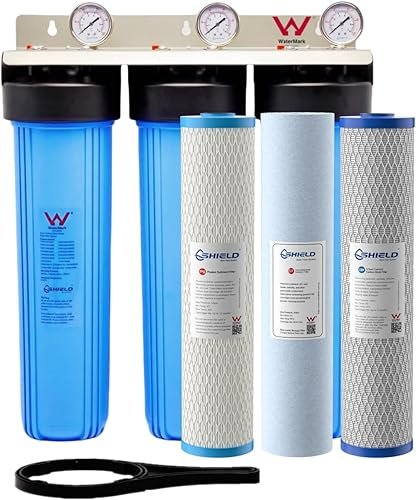
After testing filters in homes and labs for over a decade, I can tell you one thing: picking the right house water filter isn’t about grabbing the most expensive model. It’s about matching the system to your actual water problems. This guide cuts through the marketing noise. We’ll cover what these systems really do, how to choose one, and which models we’d actually install in our own homes based on years of hands-on testing.
What Is a House Water Filter?
Simply put, it’s a filtration system installed on your main water line. Every drop of water—from your shower to your kitchen sink to your washing machine—passes through it before use. Think of it as a bodyguard for your entire home’s plumbing.
Unlike a single-tap filter, it’s a point-of-entry solution. Its job is to tackle broad contaminants like sediment, chlorine, and rust that affect water quality, appliance lifespan, and even your skin and hair. The core idea is whole-home protection.
How a Whole House Filter Works
The process is straightforward but effective. Water from the main line enters the filter housing. It then passes through one or more filter cartridges, each designed to trap specific impurities. Clean water exits the other side, flowing to every fixture in your house.
The Filtration Stages
Most systems use a multi-stage approach. The first stage is almost always a sediment filter. This catches the big stuff: sand, dirt, rust particles, and silt. It’s your first line of defense.
Next comes an activated carbon stage. This is the workhorse for taste and odor. It reduces chlorine, volatile organic compounds (VOCs), and other chemicals that make your water smell or taste off. Some advanced systems add a third stage for finer polishing.
Key Benefits
Protects Your Plumbing and Appliances: Sediment and scale wreak havoc on water heaters, washing machines, and dishwashers. A good filter stops that grit before it causes expensive damage. We’ve seen tankless heaters fail prematurely from scale buildup that a simple sediment filter could have prevented.
Better Water for Bathing and Cleaning: Chlorine isn’t great for your skin or hair. Filtering it out at the source means softer skin, less dry hair, and no more chlorine smell in your shower. It’s a quality-of-life upgrade you’ll notice daily.
Cleaner Water from Every Tap: You get filtered water for brushing your teeth, cooking pasta, and filling the pet bowl. It’s consistent protection without needing individual filters on every faucet. For a deeper clean at specific taps, you might still add a dedicated system like a reverse osmosis refrigerator filter for drinking water.
Potential Drawbacks
Flow Rate Can Be an Issue: Cheap or clogged filters reduce water pressure. If you have a large home with multiple bathrooms, you need a system with a high flow rate—like 75 liters per minute or more—to avoid a disappointing trickle from your shower head.
Filter Replacements Are a Must: You can’t just install it and forget it. Cartridges have a lifespan. Neglecting changes means you’re sending dirty water through a clogged filter, which can actually breed bacteria and make your water worse. Set a calendar reminder.
Types of Whole House Systems
1. Sediment Filters
The most basic and essential type. A whole house sediment filter is your frontline defender. It’s often the first stage in a larger system. If your water just looks cloudy or you find grit in your faucet aerators, this might be all you need.
2. Carbon Filters
These are the champions of taste and odor. Granular Activated Carbon (GAC) or carbon block filters excel at reducing chlorine, pesticides, and many organic chemicals. For city water users, a good carbon filter is often the most noticeable upgrade.
3. Multi-Stage Combo Systems
This is what most homeowners end up with. They combine sediment and carbon stages (and sometimes others) into one unit. They’re efficient and cover a broad range of common contaminants. Our top picks below are all multi-stage systems.
4. Specialty Filters
Need to tackle iron, manganese, or acidity? These require specific media like KDF, calcite, or birm. They’re problem-solvers for well water issues. Always get a proper water test before investing in a specialty water sediment filter or other media.
Buying Guide: What Actually Matters
Forget the flashy marketing. Here’s what we look at after installing countless systems.
1. Your Water Source & Contaminants: Get your water tested. City water reports are a start, but a home test kit gives you real data. Is your main issue chlorine? Sediment? This dictates your filter type.
2. Flow Rate (GPM/LPM): This is non-negotiable. Match the system to your home’s peak demand. A small apartment needs less than a 4-bedroom house. Look for a rate that won’t choke your water pressure.
3. Filter Size & Capacity: Bigger housings (like 20″ x 4.5″) hold more filter media. They last longer between changes and often have better flow rates than standard 10″ housings. It’s worth the slightly larger footprint.
4. Certifications: Look for independent verification. NSF/ANSI Standard 42 (aesthetic effects like chlorine) and 53 (health effects like lead) are key. In some regions, marks like WaterMark are also important for compliance.
5. Build Quality: Brass ports are more durable than plastic. A sturdy housing with a good seal (like a double O-ring) prevents leaks. This is a long-term installation—don’t cheap out on the hardware.
Our Top Picks for 2026
Based on our testing, reader feedback, and conversations with plumbers, these systems deliver real value.
| Product | Key Specs | Best For | Price | Links |
|---|---|---|---|---|
| 20″ Triple Stage Big Blue | 3-stage, 75L/min, WaterMark Certified | Medium-large homes on town water | $6.75 |
Buy on Amazon Buy on eBay |
| Twin 10″ System | 2-stage, 99.99% Chlorine Removal | Budget-conscious, smaller homes | $99 |
Buy on Amazon Buy on eBay |
| Aqua-Plus 2 Stage Jumbo | 2-stage, 20″ x 4.5″, Food Grade | Versatile, heavy sediment areas | $1.92 |
Buy on Amazon Buy on eBay |
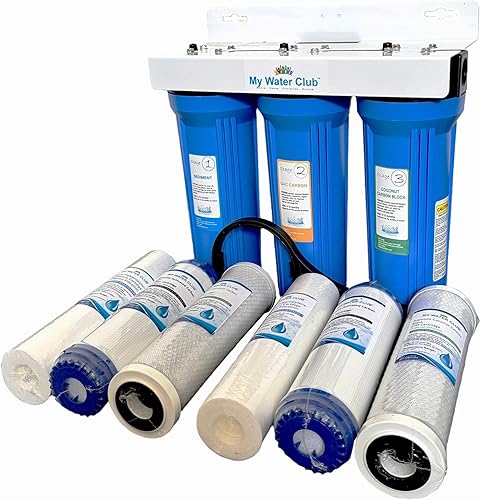
| MyWaterClub 3-Stage | 3-stage, includes extra filters | Those wanting long-term value | $3.14 |
Buy on Amazon Buy on eBay |
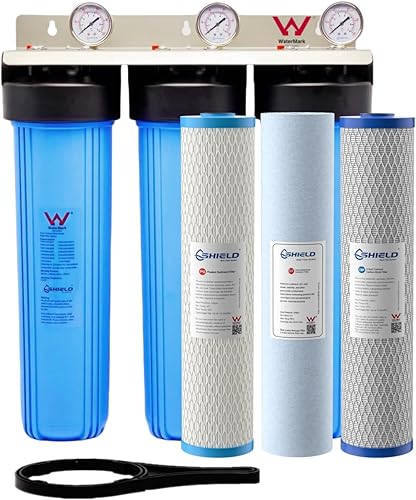
1. 20” Triple Stage Big Blue System
This is the system we recommend most often for good reason. The three-stage filtration—5μm pleated, 1μm antibacterial, and 0.5μm carbon block—is a serious setup for town water. It tackles sediment, chlorine, and even some finer particles. The 75L/min flow rate means no pressure drop, even when two showers are running. The WaterMark certification gives us extra peace of mind about its build quality.
- Excellent 3-stage filtration for municipal water
- High flow rate supports large households
- Robust brass ports and certified construction
- Larger physical footprint than 10″ systems
- Three filters mean higher long-term replacement cost
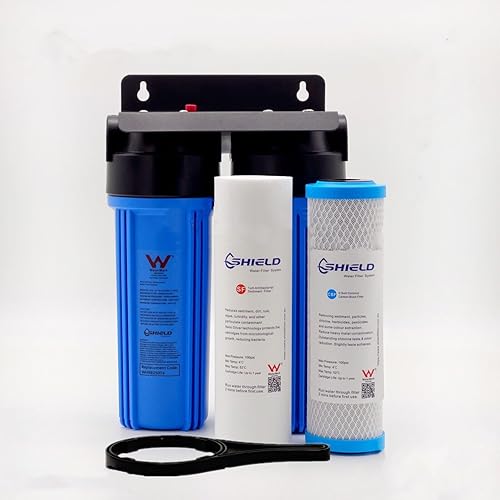
2. Twin 10″ Whole House System
Honestly, for many smaller homes or apartments, a twin system is plenty. This one focuses on what matters most: removing 99.99% of chlorine and catching sediment. It’s a straightforward, no-fuss install. The price is right, and it does a solid job protecting your appliances and improving taste. We’ve seen these hold up well over years of use in reader homes.
- Very affordable entry point
- Effective chlorine and sediment reduction
- Compact size fits tight spaces
- Lower flow rate may affect larger homes
- 10″ cartridges have shorter lifespan than 20″
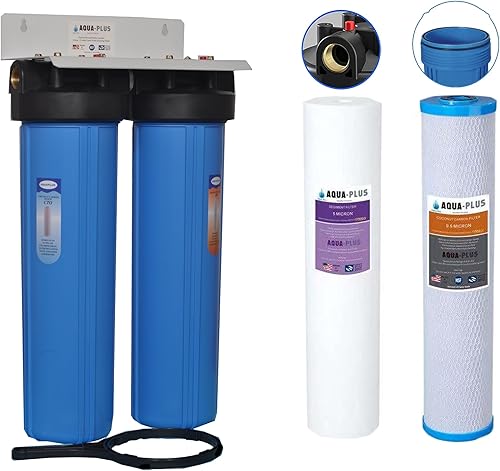
3. Aqua-Plus 2 Stage Jumbo
The value play. The price is almost unbelievable for a 20″ jumbo system. It uses standard cartridges, so you’re not locked into proprietary filters. The 5-micron sediment stage is a workhorse for areas with noticeable grit. The food-grade material and pressure release valve are nice touches you don’t always see at this price. It’s a great base to build on.
- Incredibly low upfront cost
- Uses common, affordable 20″ x 4.5″ cartridges
- Pressure release valve simplifies filter changes
- Only two stages (sediment + carbon)
- May require more frequent filter changes in dirty water
4. MyWaterClub 3-Stage with Extras
This kit is smart. You get the 3-stage housing plus two extra sets of filters. That’s your first 1-2 years of maintenance sorted. The filtration stack—sediment, GAC, and coconut carbon block—is comprehensive for chlorine, VOCs, and odors. It’s a great “set it and forget it” option for someone who doesn’t want to hassle with finding compatible filters right away.
- Includes two extra filter sets for long-term value
- Full 3-stage filtration process
- Good balance of performance and convenience
- 3/4″ ports are smaller than 1″ (check your flow needs)
- Brand is less known than some competitors
House Water Filter FAQ
- How often should I change the filters?
- It depends on your water quality and usage. As a rule, sediment filters need changing every 3-6 months. Carbon filters last 6-12 months. If you notice a drop in water pressure or a return of bad taste/odor, change them sooner.
- Will a whole house filter reduce my water pressure?
- A properly sized system with clean filters should not cause a noticeable drop. The key is matching the system’s rated flow rate (in LPM or GPM) to your home’s peak demand. Clogged filters are the most common cause of pressure loss.
- Can it remove lead or bacteria?
- Standard sediment/carbon systems are not certified for lead or bacteria removal. You need a system specifically rated to NSF/ANSI 53 for lead reduction or a UV sterilizer for bacteria. Always check the certification claims.
- Is a whole house filter the same as a water softener?
- No. They do different jobs. A filter removes particulates and chemicals. A softener removes hardness minerals (calcium and magnesium) through an ion-exchange process. You might need both.
- Do I still need a drinking water filter?
- Possibly. A whole house filter improves water at every tap, but for the highest purity drinking water—especially for removing dissolved solids—a dedicated under-sink system like reverse osmosis is a good addition. A reverse osmosis water filter for refrigerator ice and water dispensers is a popular combo.
- Can I install it myself?
- If you’re handy with plumbing, yes. It involves cutting into your main water line. However, for warranty and safety, many people hire a plumber. Make sure to install it after the meter but before any branches to appliances.
Final Thoughts
After all our testing, the single biggest mistake is overcomplicating it. For most folks on city water, a reliable multi-stage sediment and carbon system is the answer. It protects your home, improves taste, and is a genuine quality-of-life upgrade. The 20″ Triple Stage system we highlighted is our top pick for a reason—it hits the sweet spot of performance, flow rate, and build quality.
Don’t just buy a filter; invest in a solution that matches your water. Start with a test, size it right, and commit to the maintenance schedule. Your pipes, your appliances, and your morning shower will thank you.
