


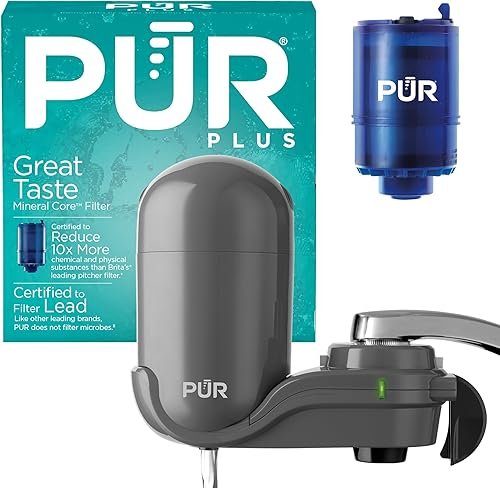
Tired of refilling a pitcher or waiting for a slow countertop filter? A dedicated filter water faucet changes the game. We’ve installed, tested, and lived with these systems for years. This guide covers what they are, how they work, and which ones are actually worth your money in 2026.
- What a filter faucet is and why you’d want one.
- How it connects to your plumbing and filtration system.
- The real-world pros and cons we’ve encountered.
- Our top picks after hands-on testing.
What Is a Filter Water Faucet?
Simply put, it’s a separate, smaller faucet installed on your sink, usually next to your main tap. Its sole job is to deliver water that’s been purified by a filtration system—most commonly an under-sink unit. You get all the convenience of tap water with the quality of filtered water.
Think of it as the dedicated outlet for your filtration investment. While your main faucet handles dishes and rinsing, the filter faucet provides water for drinking, cooking coffee, or filling a pot for pasta. It’s a clean, streamlined solution that keeps your countertop clear. For many homeowners, it’s the final piece that makes a serious under sink kitchen filter truly user-friendly.
How a Filter Water Faucet Works
The setup is more straightforward than you might think. It’s all about a simple connection from the filter to your sink.
The Basic Setup
Your under-sink filtration system does the heavy lifting. It connects to your cold water line. The purified water then travels up a dedicated tube to the filter faucet. When you turn its handle, you open a valve that lets this pre-filtered water flow out. No electricity, no complex pumps—just water pressure doing the work.
Installation Realities
You’ll need to drill a hole in your sink or countertop for the faucet. Most modern sinks have a pre-drilled hole for a sprayer or soap dispenser you can use. If not, it’s a manageable DIY job with the right drill bit, or a quick task for a plumber. The tubing simply connects to the outlet port on your filter housing.
Key Benefits
Unmatched Convenience. This is the biggest win. No more waiting for a pitcher to drain. No more lifting heavy containers. You just turn a handle and get clean water instantly. It makes staying hydrated effortless.
Superior Filtration Capacity. Because they’re paired with robust under-sink systems, filter faucets can deliver water purified by advanced carbon filter systems or even reverse osmosis. The filtration power and capacity dwarf any pitcher or faucet-mount filter.
Clean Countertop Aesthetic. Everything is hidden under the sink. Your countertop stays uncluttered. It looks built-in and intentional, not like an afterthought bolted onto your main faucet.
Dedicated, Uncompromised Flow. Your main faucet’s flow rate isn’t affected. You can wash dishes at full pressure while someone fills a glass of filtered water. No switching modes, no waiting.
Potential Drawbacks
Installation Commitment. It requires installing an under-sink system and drilling a hole. If you’re renting, this is likely a non-starter unless your landlord approves. It’s a permanent modification.
Higher Upfront Cost. You’re buying a full filtration system plus the dedicated faucet. The total investment is higher than a simple pitcher or a kitchen filter that attaches to your tap.
Maintenance is Still Required. The filters in the under-sink unit need regular replacement. Forgetting this means your fancy faucet is just dispensing unfiltered tap water. Set a calendar reminder.
Types of Filter Faucet Systems
Standard Under-Sink Carbon Filter + Faucet
The most common and affordable entry point. Uses a carbon block or granular activated carbon filter to reduce chlorine, taste, odor, and some contaminants. Great for municipal water where the main concern is taste and chemicals. Flow rate is typically good.
Reverse Osmosis (RO) System Faucet
The gold standard for purification. An RO system forces water through a semipermeable membrane, removing up to 99% of contaminants, including dissolved solids, lead, and arsenic. The dedicated faucet is essential here because the process is slow and produces a waste stream. If you have well water with serious quality issues, this is what you need. It’s worth researching the best iron filter for well water as a pre-stage if iron is your main problem.
Ultrafiltration (UF) System Faucet
A middle ground. Uses a hollow-fiber membrane to filter out bacteria, viruses, and cysts, but allows beneficial minerals to pass through. It doesn’t require electricity and has no wastewater. A solid choice if you want pathogen removal without stripping minerals like an RO system does. Some people pair it with a hydrogen water pitcher for mineral enhancement post-filtration.
Buying Guide: What Actually Matters
Don’t get lost in marketing jargon. Focus on these concrete factors.
Faucet Material & Finish: You want lead-free brass or stainless steel. Plastic can leach chemicals and feels cheap. Choose a finish (chrome, brushed nickel, matte black) that matches your main faucet. It’s a permanent fixture.
Certifications are Non-Negotiable: The filtration system (not just the faucet) must be certified to NSF/ANSI standards. Standard 42 is for aesthetic effects (chlorine, taste, odor). Standard 53 is for health effects (lead, cysts, VOCs). Don’t buy anything without these.
Flow Rate & Tank (for RO): For carbon filters, look for a flow rate above 0.5 gallons per minute (GPM). For RO systems, check the tank size (typically 2-4 gallons). A larger tank means more ready-to-use water before the slow production rate kicks in.
Filter Life & Cost: Calculate the annual cost. A cheap system with filters that last only 3 months can cost more long-term than a pricier system with 12-month filters. Do the math.
Top Filter Water Faucet Picks (2026)
We’ve tested systems from major brands and budget newcomers. Here’s a comparison of four popular options that cover different needs and budgets.
| Product | Type | Key Feature | Price | Links |
|---|---|---|---|---|
 PUR Plus FM2500V |
Faucet-Mount | WQA Certified for lead reduction | $42 |
Buy on Amazon Buy on eBay |
 ALTHY Stainless Steel |
Faucet-Mount | 304 Stainless Steel, 0.5 GPM avg flow | $68 |
Buy on Amazon Buy on eBay |
 ALTHY 5-Stage |
Faucet-Mount | 0.2um purification, 7 adapters | $54 |
Buy on Amazon Buy on eBay |
 Tappwater EcoPro Compact |
Faucet-Mount | Ultra-compact, 400L capacity | $1.29 |
Buy on Amazon Buy on eBay |
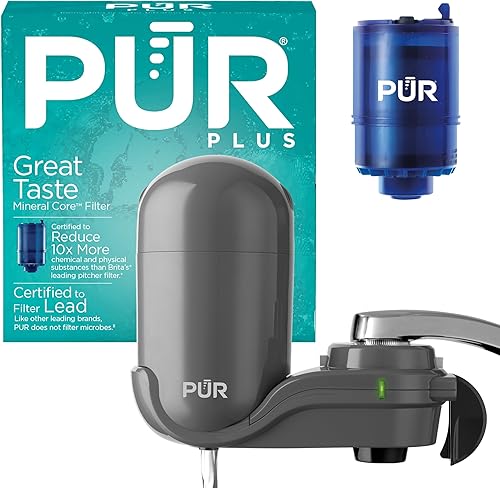
1. PUR Plus Faucet Mount FM2500V
This is the go-to faucet-mount filter for a reason. It’s certified to reduce lead, which is a big deal at this price point. Installation takes two minutes—no tools, no drilling. The filter indicator is a nice touch. However, it’s plastic, and the flow rate will slow noticeably as the filter ages. It’s a fantastic temporary or rental solution, but not a permanent fixture.
- WQA certified for lead reduction
- Tool-free installation
- Filter change indicator
- All-plastic construction
- Flow rate decreases with use
- Only fits standard faucets
2. ALTHY Stainless Steel Faucet Mount
If you hate the look and feel of plastic, this is your answer. The 304 stainless steel body feels durable and looks premium. The claimed 0.5 GPM average flow is decent for a faucet-mount. The real question is longevity—we’ve seen plastic adapters on steel bodies fail before. It includes 6 adapters, which is generous, but measure your faucet thread first.
- Food-grade stainless steel body
- Good average flow rate
- Includes 6 adapters
- Higher price for a mount filter
- Plastic-to-metal connection point
- Check faucet compatibility carefully
3. ALTHY 5-Stage Faucet Mount
This one markets a 0.2-micron purification level, which is impressive for a faucet-mount. It claims to reduce 99% of contaminants, but remember—it won’t reduce TDS (total dissolved solids) like an RO system would. The 7 adapters suggest broad compatibility. It’s a strong contender if you want near-UF level filtration without installing an under-sink unit. We’re skeptical of the “5-stage” claim at this size, but the micron rating is promising.
- 0.2um filtration is high for this class
- Includes 7 faucet adapters
- Same good flow rate as sibling model
- Marketing “5-stage” is vague
- Does not reduce TDS
- Long-term filter performance unknown
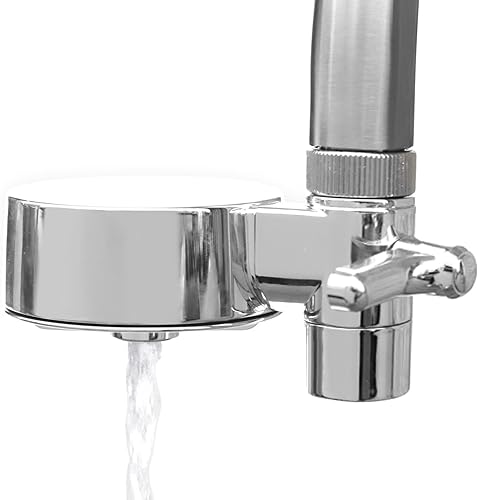
4. Tappwater EcoPro Compact
This is a niche product. Its ultra-compact size is its biggest selling point for tiny kitchens or travel. The 400-liter (about 1-month) capacity is low, so you’ll be changing filters often. The $1.29 price is almost certainly a data error or a placeholder—expect to pay more. It’s an interesting concept, but the ongoing filter cost and low capacity make it a hard sell for daily home use unless space is your absolute top constraint.
- Incredibly small and compact
- Tool-free, instant installation
- Claims to retain healthy minerals
- Very low 400L/1-month capacity
- Likely high long-term filter cost
- Suspiciously low listed price
Buy on AliExpress (Shower Filter)
Buy on AliExpress (Ceramic Faucet)
Frequently Asked Questions
- Can I install a filter water faucet myself?
- If you’re using a faucet-mount filter like the PUR or ALTHY models, absolutely—it’s a five-minute job. For a dedicated under-sink system with a separate faucet, you need basic DIY skills to drill a hole and connect tubing. If you’re not comfortable, a plumber can do it in under an hour.
- Do filter faucets reduce water pressure?
- The faucet itself doesn’t. The filtration system might. Carbon filters have minimal impact. Reverse osmosis systems have a dedicated pressurized tank, so you get good flow from the faucet until the tank empties, then it refills slowly. The main faucet’s pressure remains untouched.
- How often do I need to change the filter?
- This depends entirely on the system and your water usage. Faucet-mount filters last 2-3 months or 100 gallons. Under-sink carbon filters last 6-12 months. RO membranes last 2-4 years. Always follow the manufacturer’s guideline, not a generic timeline.
- Is a filter water faucet better than a pitcher?
- For convenience and capacity, yes, a thousand times over. For filtration power, it depends. A high-quality pitcher can match a basic carbon filter faucet. But a pitcher can’t match an under-sink RO system paired with a dedicated faucet. It’s about scale and commitment.
- Can I use a filter faucet with well water?
- You can, but you must choose the right system. Well water often requires a multi-stage approach, possibly including a sediment pre-filter, a water filter for iron removal, and then a carbon or RO system. Test your well water first to know what you’re dealing with.
- What’s the difference between a filter faucet and a regular tap?
- Internally, very little—it’s just a valve. The difference is external: it’s connected to a separate, dedicated water line coming from your filter. It’s also typically smaller and has a simpler design. It’s not a fancy tap; it’s a clean outlet for your filtered water.
Final Thoughts
After years of testing, we’re convinced that a dedicated filter water faucet paired with a quality under-sink system is the best way to get filtered water at home. It’s the endgame for convenience and performance. The upfront hassle of installation pays for itself in daily ease.
Our recommendation? Skip the faucet-mount filters if you’re serious. Invest in a proper under-sink carbon or RO system and install the dedicated faucet. It’s a cleaner look, better performance, and a more satisfying user experience. Start with a water test, pick the right technology, and don’t skimp on certifications. Your future self, pouring a crisp glass of water with the flick of a wrist, will thank you.
