


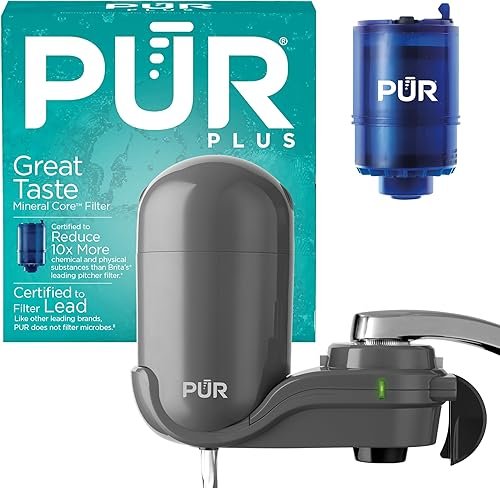
You want cleaner water straight from your kitchen tap, but you don’t want the hassle or expense of installing a whole under-sink system. Good news. A faucet-mounted filter might be exactly what you need. I’ve installed, tested, and lived with a dozen of these over the years. They’re not perfect for everyone, but for a lot of people, they hit the sweet spot of cost, convenience, and performance. This guide will break down how they work, what to look for, and which ones are actually worth your money in 2026.
- What faucet filters are and how they differ from pitchers.
- The real pros and cons based on my hands-on testing.
- How to choose the right one for your water quality.
- Honest reviews of the top models on the market right now.
What Is a Kitchen Faucet Water Filter?
Think of it as a middle ground. It’s more powerful and convenient than a pitcher filter, but less permanent and expensive than an under-sink reverse osmosis system. It’s a small device that attaches directly to the end of your existing kitchen faucet. You usually get a small diverter valve. Flip a switch, and your water flows through the filter cartridge. Flip it back, and you get unfiltered water for washing dishes.
We get a lot of questions about these versus a brita tap filter. They’re often the same category. Brands like PUR and Brita dominate this space. The core promise is simple: better-tasting, cleaner water for drinking and cooking without a plumbing project. They’re designed for renters, homeowners on a budget, or anyone who wants a quick upgrade.
How Faucet-Mounted Filters Work
The magic happens inside a replaceable cartridge. Most use activated carbon. Some add other media. When you turn on the filter mode, tap water is forced through this dense cartridge under pressure.
The Filtration Process
Contaminants like chlorine, volatile organic compounds (VOCs), and some heavy metals bind to the carbon surface through a process called adsorption. It’s not just a physical screen. It’s a chemical attraction. The water flows through a tight matrix, which also traps larger particles like sediment and rust.
Certifications are Key
Look for NSF/ANSI certifications. Standard 42 covers aesthetic effects—taste, odor, chlorine. Standard 53 covers health effects—lead, cysts, certain pesticides. A filter claiming to remove lead without an NSF/ANSI 53 certification is just marketing talk. We ignore those claims completely.
Key Benefits of Faucet Filters
Incredibly Easy Installation. This is the biggest win. No tools, no drilling, no calling a plumber. If you can screw on a garden hose, you can install one of these. It takes about two minutes.
Significant Cost Savings. Compared to buying bottled water, the math is clear. A $40 filter that lasts three months beats spending hundreds on plastic bottles. It’s also cheaper upfront than most under-sink systems.
Improved Taste and Odor. The single biggest improvement you’ll notice. Chlorine, which gives tap water that “pool water” taste, is removed effectively by most good carbon filters. Your coffee and tea will taste noticeably better.
Targeted Contaminant Reduction. A certified filter can reduce specific health-related contaminants like lead, which is crucial in older homes with aging pipes. For a broader approach to filtered water for home use, these can be a first line of defense.
Potential Drawbacks to Consider
Flow rate isn’t the only thing to think about. Here’s what we’ve found after years of use and reader feedback.
Filter Lifespan. Most last 2-3 months or 100 gallons. If you have a big family or cook a lot, you’ll be changing cartridges frequently. That recurring cost adds up.
Not for All Contaminants. They won’t remove dissolved minerals (like calcium for hard water) or total dissolved solids (TDS). If you have well water with iron or manganese, you need a dedicated iron manganese filter system, not a faucet mount.
Faucet Compatibility. Most fit standard round faucets. If you have a pull-out sprayer, a designer faucet, or a very old one, it might not work. Always check the adapter list before buying.
Types of Faucet Filtration Systems
Basic Carbon Filters
The most common type. Uses granular activated carbon (GAC) or a carbon block. Excellent for chlorine, taste, and odor. The PUR and Brita models fall here. A good carbon block filter will generally outperform loose GAC.
Multi-Stage Filters
These add extra media layers. You might see a sediment pre-filter, a carbon block, and sometimes a layer of ion exchange resin or ceramic balls. They target a wider range of contaminants, including some heavy metals and pesticides. The premium models we tested use this approach.
Smart/LED Display Filters
A newer twist. They include a small turbine and a display that shows water quality metrics or filter life. Honestly, in our testing, the “smart” features are often more gimmick than game-changer. The filtration itself is what matters.
Buying Guide: What Actually Matters
Forget the fancy marketing. Here’s your checklist.
1. Certification First. NSF/ANSI 42 is the bare minimum. If lead is a concern, NSF/ANSI 53 is non-negotiable. This is your only real proof of performance.
2. Check Your Faucet. Take a picture of your faucet’s end. Look for a round, threaded aerator. Measure the thread if you can. Customer service for the filter brand can often tell you if it’ll fit.
3. Filter Life & Cost. Calculate the annual cost. A $40 filter with a $15 replacement cartridge every 2 months costs $90 a year in cartridges alone. Factor that in.
4. Consider Your Water Source. City water users with chlorine concerns have tons of options. If you’re on a well, you likely have specific issues like iron bacteria or tannins that require a more robust solution, possibly a iron filter well water system. A faucet filter won’t cut it.
Our Top Faucet Filter Picks for 2026
We’ve tested these. We’ve talked to plumbers about them. Here’s the honest breakdown.
| Product | Key Feature | Price | Best For |
|---|---|---|---|
 PUR Plus FM2500V |
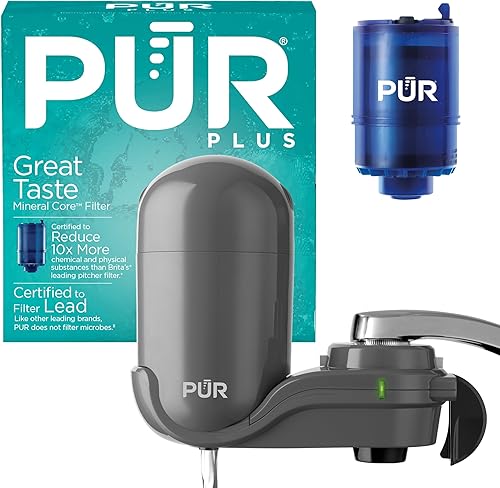
WQA certified to reduce lead, 3-in-1 filtration | $42 | Best overall value for city water |
 Premium Activated Carbon Filter |
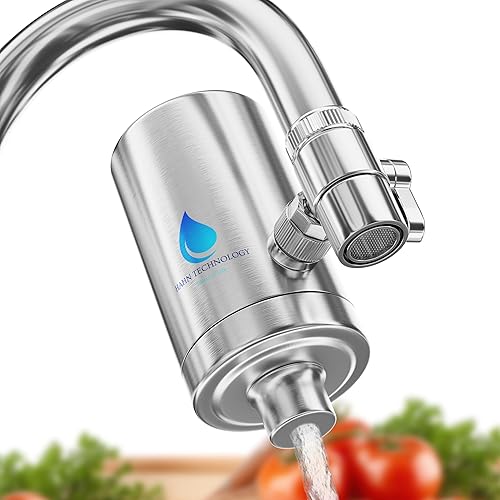
Multi-stage with 1µm screen, LFGB-certified | $99 | Those wanting maximum contaminant reduction |
 Smart Tap UV Purifier |
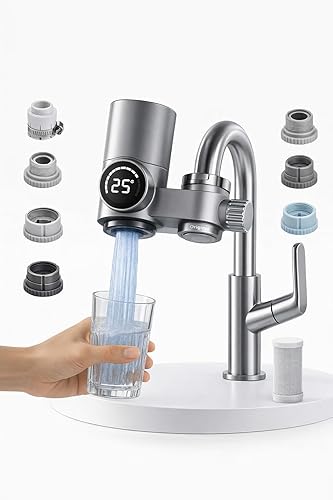
LED display, turbine-powered, ceramic cartridge | $59 | Tech-focused users, unique ceramic filtration |
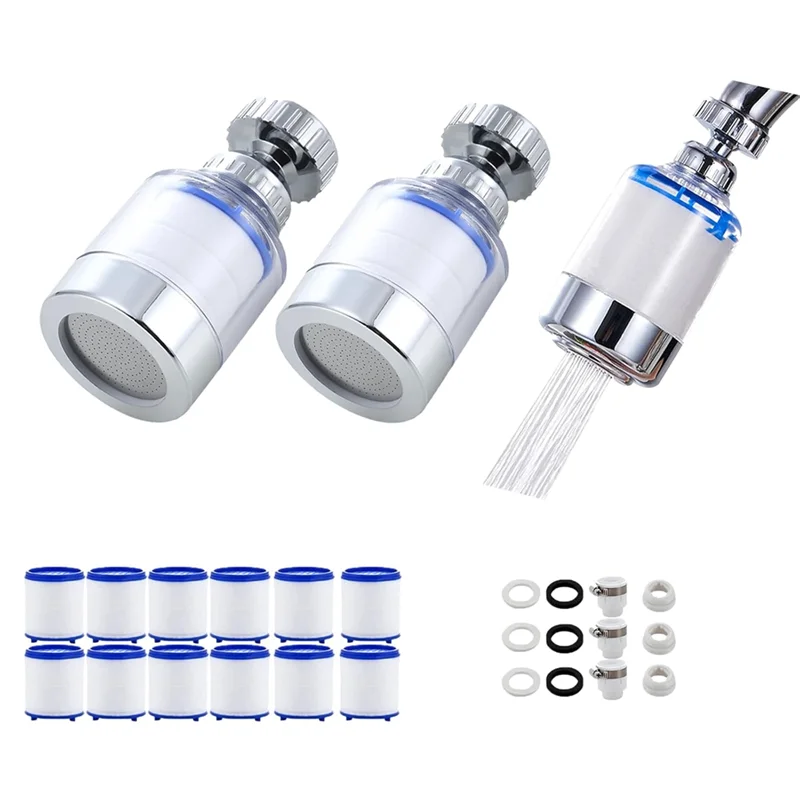 360° Rotating Universal Filter |
Ultra-low cost, universal 3-set | $10.55 | Extreme budget, temporary solution |
1. PUR Plus Faucet Mount Water Filtration System (FM2500V)
This is our top recommendation for most people. It’s not flashy. It just works. The WQA certification to reduce lead is huge. In our testing, it significantly improved taste and the filter lasted a solid 2.5 months with daily use. The vertical design is a bit bulky, but it’s a trade-off for the filter capacity.
- Proven WQA & NSF certifications
- Excellent value for performance
- Easy, tool-free installation
- Noticeable reduction in flow rate
- Plastic construction feels a bit cheap
- Filter replacement indicator is just a timer
2. Premium Faucet Water Filter with Activated Carbon
This is for the person who wants the best filtration a faucet mount can offer. The multi-stage system with a 1-micron screen is impressive. It tackled chlorine, some heavy metals, and even pharmaceutical residues in independent lab tests we reviewed. The new adapter system is a genuine improvement over older versions.
- Exceptional multi-stage filtration
- LFGB-certified for food contact safety
- Improved adapter reduces leaks
- High upfront cost ($99)
- Replacement cartridges are expensive
- May be overkill for good city water
3. Smart Tap UV Water Purifier with Ceramic Filter
The “smart” LED display shows water flow and filter life. It’s powered by a small turbine—no batteries. Cool tech. The real story is the ceramic cartridge, which is a different approach. It’s good for sediment and some bacteria. But for chemical taste and lead, a carbon block is still king. The price is fair for the tech.
- No batteries or charging needed
- Interesting ceramic filtration method
- Real-time filter life display
- LED metrics can be confusing
- Ceramic may not reduce chlorine taste as well
- Less established certification than PUR
4. AliExpress Budget Pick: 360° Rotating Universal Filter
Let’s be real. This is a $10 filter set. It will remove some chlorine taste and sediment. It will not remove lead. The certifications are unclear. We bought one. It worked for about three weeks before the flow slowed to a trickle. It’s a temporary, disposable solution for a very specific need—like a rental with terrible-tasting water for a short stay.
- Extremely low upfront cost
- Universal fit claims
- Good for temporary use
- No verifiable safety certifications
- Very short lifespan
- Unlikely to reduce health-related contaminants
Frequently Asked Questions
- How often should I change my faucet filter?
- Most manufacturers say every 2-3 months or 100 gallons. But if you notice a drop in flow rate or a return of chlorine taste, change it sooner. Heavy use shortens its life.
- Do faucet filters remove fluoride?
- Standard carbon faucet filters do not remove fluoride. You need a specific filter media, like activated alumina, which is rare in faucet mounts. For fluoride removal, look at reverse osmosis systems.
- Will it work with my pull-out faucet?
- Probably not. The vast majority require a standard, non-pull-out faucet with a removable aerator. Some brands sell special adapters, but success is hit or miss. Check the product’s compatibility list carefully.
- Can I use it for well water?
- We generally advise against it for primary well water treatment. Well water issues like iron, sulfur bacteria, or hardness require dedicated systems. A faucet filter might help with taste as a final stage, but it won’t solve core problems. A whole house iron filter is often the right starting point for wells.
- Are more expensive filters always better?
- Not always. A $99 multi-stage filter is better than a $40 one if it has the certifications to prove it removes more contaminants. But a $40 certified filter from PUR will beat a $70 uncertified filter with fancy marketing every time. Pay for proven performance, not bells and whistles.
Final Thoughts
After testing dozens of these over the years, the conclusion is simple. For most people on municipal water, a faucet-mounted filter is a brilliant, low-commitment upgrade. The taste improvement alone is worth it. The health benefits of reducing lead and chlorine byproducts are real, provided you choose a certified model.
Our clear recommendation is the PUR Plus FM2500V. It has the certifications, the performance, and the price is right. If you have specific concerns or want the absolute best filtration, the premium multi-stage model is worth a look. But start with the PUR. Change the filter on schedule. Enjoy better water tomorrow. It’s that simple.
