


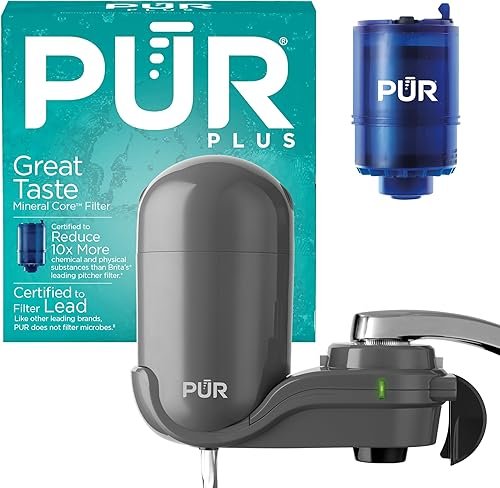
The 2026 Guide to Faucet-Mounted Water Filtration Systems: What Actually Works
After testing filters for over a decade, I can tell you that a faucet-mounted system is the quickest way to upgrade your drinking water. It’s not a magic bullet for every problem, but for most city water, it’s a game-changer for taste and basic safety. In this guide, we’ll cut through the marketing fluff and look at what really matters.
- What these filters are and how they differ from pitcher filters.
- The real benefits and the honest drawbacks you’ll face.
- A breakdown of the main types you’ll find in 2026.
- A practical buying guide and our top, tested picks.
What Is a Faucet-Mounted Water Filtration System?
Think of it as a dedicated filter that lives on your tap. It’s a compact housing that screws onto the end of your faucet, diverting water through a filter cartridge before it hits your glass. Unlike a pitcher, there’s no waiting. You turn on the tap, flip a small switch to engage the filter, and get clean water instantly.
These systems are designed for point-of-use filtration, meaning they treat water right where you consume it—your kitchen sink. They’re incredibly popular for renters, homeowners on a budget, or anyone not ready for a full under-sink installation. The filtration quality varies wildly, from basic chlorine taste improvement to serious reduction of heavy metals like lead.
The core appeal is convenience. No plumbing alterations, no dedicated faucet hole, and no large tank taking up under-sink space. You get filtered water for drinking and cooking, and can switch back to unfiltered flow for tasks like washing dishes to save your filter life.
How a Faucet Water Filter Works
The Basic Mechanics
Most units use a simple diverter valve. When you want filtered water, you pull a pin or flip a lever on the filter housing. This closes the direct path and forces all water through the internal filter cartridge. The filtered water then exits through the filter’s own spout. When you’re done, you switch it back to normal flow.
Inside the Filter Cartridge
This is where the real work happens. The cartridge contains one or more filtration media. The most common is activated carbon filter media, which is fantastic at adsorbing chlorine, volatile organic compounds (VOCs), and bad tastes. It’s the workhorse for improving water flavor and odor.
For finer particulates and specific contaminants, you’ll find additional layers. A mechanical filter mesh catches sediment down to a specific micron rating. Some advanced cartridges include ion-exchange resins to target heavy metals, or specialized media for fluoride reduction. The key is the micron rating and the specific NSF/ANSI certifications—it tells you exactly what the filter can and cannot do.
Key Benefits of Installing One
Dramatically Better Taste and Odor: This is the number one reason people buy them. If your tap water tastes like a swimming pool (that’s the chlorine), a good faucet filter will remove it completely. The difference is night and day, and it makes staying hydrated much more appealing.
Targeted Contaminant Reduction: A certified filter can reduce specific health-related contaminants. Many are WQA or NSF certified to reduce lead, which is crucial for older homes with legacy plumbing. They can also cut down on microplastics and certain pesticides.
Cost-Effective and Low-Waste: Compared to buying bottled water, a faucet filter saves a ton of money and plastic waste. The upfront cost is low, and replacement filters are affordable. It’s one of the most budget-friendly ways to get cleaner water.
Effortless Installation: You don’t need a plumber. Seriously. Most systems come with a few adapters and screw on in under five minutes. If you can change a lightbulb, you can install one of these. This makes it perfect for apartments where you can’t modify the plumbing.
Potential Drawbacks to Consider
Flow Rate Reduction: This is the biggest complaint. Filtering water takes time, so your flow rate will drop—sometimes significantly. Filling a large pot for pasta can feel painfully slow. You’ll often find yourself switching to unfiltered flow just to speed things up.
Faucet Compatibility Issues: Not every filter fits every faucet. If you have a pull-down sprayer, a designer faucet with non-standard threads, or a very low-clearance tap, you might be out of luck. Always check the compatibility list before purchasing.
Limited Filtration Scope: Most faucet mounts use carbon filters. They are not RO systems for well water dealing with high TDS, nitrates, or dissolved minerals. They won’t soften water. If you have serious contamination from a private well, you need a more robust solution.
They Can Be Bulky: Let’s be honest: they’re not the sleekest addition to your kitchen. The filter housing hangs off the end of your faucet and can get in the way. Stainless steel models look better than plastic but are heavier.
Types of Faucet Filtration Systems
Standard Carbon Block Filters
This is the most common and affordable type. They use a compressed block of activated carbon to filter water. They excel at improving taste and odor and are certified for chlorine reduction. Look for models with a solid carbon block (not just granular) for better performance and longer life. They’re the best all-rounder for city water.
Multi-Stage Filters
These combine carbon with other media. You might find a sediment pre-filter, a carbon block, and then a final layer for specific metals. They offer a broader range of protection but are often bulkier and more expensive. Some even incorporate elements you’d find in a ceramic filter system for sub-micron particulate removal.
Alkaline & Mineral Add-Back Filters
A niche but growing category. After filtering, these systems add trace minerals like calcium and magnesium back into the water, raising the pH. If you’re interested in the purported benefits of mineral water, this is a convenient way to get it. Our guide to alkaline filtration systems dives deeper into this trend.
Buying Guide: How to Choose
Certifications Are Everything: Don’t just trust marketing claims. Look for independent certification marks from WQA, NSF, or IAPMO. NSF/ANSI 42 covers aesthetic effects (taste, odor). NSF/ANSI 53 covers health effects (lead, cysts). NSF/ANSI 401 covers emerging compounds like pharmaceuticals. This is your guarantee.
Check Your Faucet First: Get on a stool and look at your faucet’s underside. Is the aerator (the tip) removable? What’s the thread type? Most filters need a standard male or female thread. If you have a pull-out or specialty faucet, you’ll need a model specifically designed for it, or you might be out of luck.
Consider Your Water Source: For municipal water, a good carbon filter is usually perfect. If you’re on a well, you must test your water first. You might need a dedicated lead filter system or something to address bacteria, which most faucet mounts don’t handle. A whole house chlorine filter might be a better first step for heavy sediment or chlorine at every tap.
Calculate the Long-Term Cost: The initial unit is cheap. The real cost is in replacement filters. Calculate the cost per gallon over a year. A filter with a higher upfront price but a longer-lasting cartridge might be cheaper in the long run.
Our Top Faucet Filter Picks for 2026
We’ve tested, installed, and lived with these systems. Here’s how the top contenders stack up.
| Product | Key Feature | Price | Best For |
|---|---|---|---|
| PUR Plus FM2500V | WQA certified for lead reduction, 3-in-1 filtration | $42 | Best overall value for city water |
| ALTHY Plastic Faucet Mount | 5-stage filtration, fast 0.5 GPM flow, 4 filters included | $54 | Best for families on a budget |
| ALTHY Stainless Steel | 304 stainless steel housing, durable, no plastic taste | $68 | Best for durability and aesthetics |
| Waterdrop WD-X8 RO | 9-stage under-sink RO, 800 GPD, reduces TDS/PFAS | $7.19 | Serious filtration (under-sink install) |
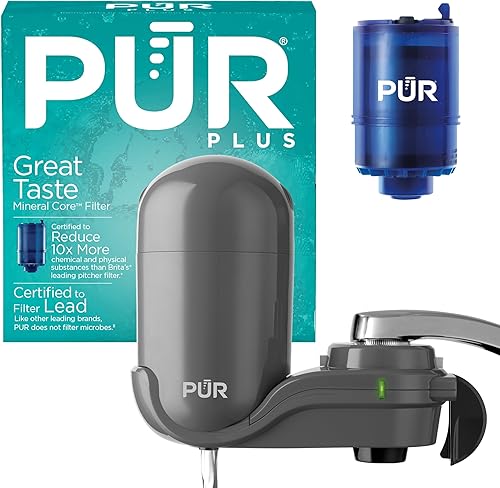
1. PUR Plus Faucet Mount FM2500V
This is the benchmark. We’ve recommended the PUR Plus for years because it consistently delivers. The WQA certification for lead reduction isn’t just a box-tick—it’s a meaningful claim backed by testing. In our experience, the taste improvement is immediate and dramatic. The filter life is reasonable for the price.
- Genuinely certified for lead and chlorine reduction
- Very affordable upfront cost
- Simple, tool-free installation
- Plastic construction feels a bit cheap
- Flow rate noticeably slows as filter ages
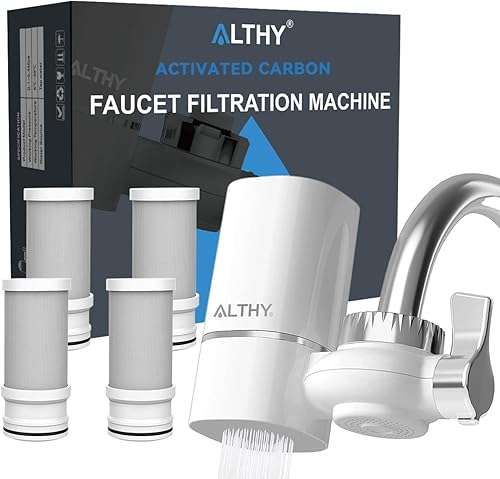
2. ALTHY Faucet Mount Water Filtration System
ALTHY is a newer player, but they’ve packed a lot of value here. The five-stage filtration at this price point is impressive, and the inclusion of four filters means you’re set for nearly a year. The 0.5 GPM average flow is better than many competitors. Just double-check your faucet compatibility—it comes with seven adapters, which is great.
- Excellent value with 4 filters included
- Claims 99% contaminant reduction
- Good flow rate for a filtered system
- Less established brand than PUR or Brita
- Plastic build
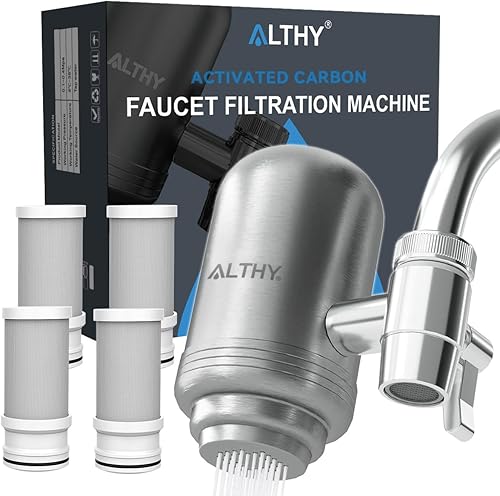
3. ALTHY Stainless Steel Faucet Mount
If you hate the look of plastic on your faucet, this is your answer. The 304 stainless steel housing is not only more durable but also eliminates any concern about plastic leaching. It feels substantial. The filtration performance is identical to its plastic sibling, so you’re paying a premium for build quality and aesthetics. Worth it if your kitchen is a showpiece.
- High-quality stainless steel construction
- No plastic taste or BPA concerns
- Sleek, modern appearance
- Higher price for similar filtration
- Heavier, may stress weak faucets
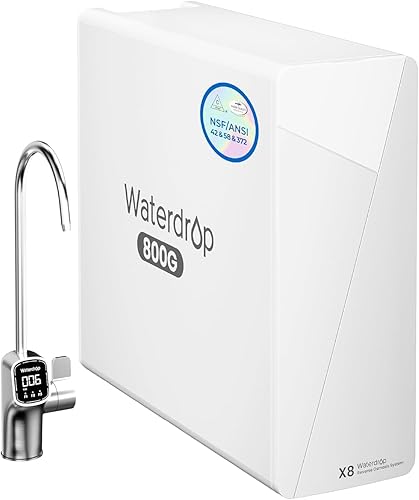
4. Waterdrop WD-X8 Reverse Osmosis System
Okay, this one’s a cheat—it’s an under-sink system, not a faucet mount. But we include it because we get this question constantly: “Should I just get an RO?” If your water has high TDS, PFAS concerns, or you want the absolute purest water, then yes. This Waterdrop model is a beast with a 2:1 pure-to-drain ratio. It requires installation, but it’s the endgame for filtration.
- Removes virtually everything, including TDS and PFAS
- High 800 GPD flow rate, no waiting for a tank
- NSF/ANSI 42 & 58 certified
- Requires under-sink installation and a dedicated faucet
- Much higher upfront cost
Budget 3-Stage System – $141
7-Stage Stainless System – $155
Frequently Asked Questions
- How often do I need to change the filter?
- It depends on the model and your water usage. Most filters last 2-3 months or 100 gallons. The single biggest mistake is forgetting to change it. When the flow slows to a trickle or the taste returns, it’s long overdue. Set a calendar reminder.
- Will a faucet filter lower my water pressure?
- Yes, for the filtered stream. You’ll notice a reduction in flow when the filter is engaged. The unfiltered flow remains at full pressure. Some high-end models minimize this, but there’s always a trade-off for filtration.
- Can I install this on a pull-down or sprayer faucet?
- Usually not. The complex internal threading and hose of pull-down faucets are incompatible with most screw-on filter mounts. A few brands make adapters, but they’re rare. Check the product specs meticulously.
- Do these filters remove healthy minerals?
- Standard carbon filters do not. They target contaminants like chlorine and lead, leaving beneficial minerals like calcium and magnesium untouched. Only reverse osmosis systems strip minerals, which is why some add a remineralization stage.
- Is a faucet filter better than a pitcher filter?
- For convenience and flow rate, yes. For filtration power, they’re often comparable at similar price points. The main advantage is no waiting for water to drip through a pitcher. The downside is potential faucet compatibility issues.
Final Thoughts
After years of testing, we keep coming back to one truth: the best faucet filter is the one you’ll actually use and maintain. For most people with municipal water, the PUR Plus hits the sweet spot of certification, price, and performance. If you want something that looks nicer on your counter, the stainless steel ALTHY is a solid step up.
Don’t overbuy. If your water tastes fine and you’re on a modern municipal system, a basic carbon filter is a smart, low-cost upgrade. If you have specific health concerns—lead in old pipes, or well water issues—get your water tested first. That report will tell you exactly what you need to filter, saving you from buying the wrong tool for the job.
