


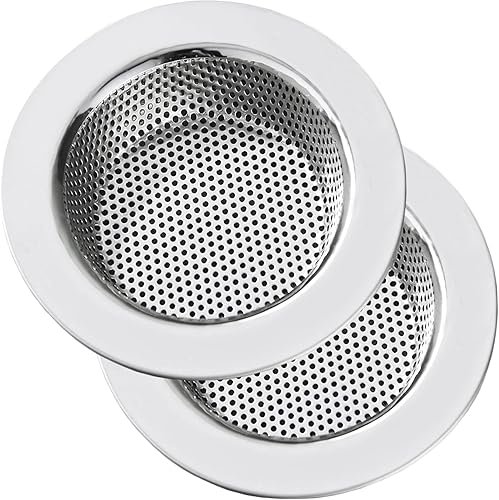
Sink Filter Kitchen: The 2026 Guide to Cleaner Drinks & Drains
You’ve probably stood in the aisle, staring at a wall of filters, feeling more confused than when you walked in. I’ve been there. After testing dozens of these systems, visiting water treatment plants, and talking to countless plumbers, I can tell you the single biggest mistake people make: they overcomplicate it. This guide cuts through the noise. We’ll cover what these filters actually do, the types that matter, and my honest picks for 2026.
- What a kitchen sink filter is and isn’t.
- How the filtration process works.
- The real benefits and the honest drawbacks.
- A breakdown of the main types you’ll see.
- My top product recommendations based on hands-on testing.
What Is a Sink Filter Kitchen System?
Let’s clear something up first. When we talk about a “sink filter kitchen,” we’re not talking about the mesh strainer that catches food scraps—though we’ll look at some clever ones later. We’re talking about water filtration. It’s any device designed to treat your tap water right at the point of use, your kitchen sink. The goal is simple: pull out the bad stuff so you get cleaner, better-tasting water for drinking and cooking.
These systems range from simple pitcher filters you fill at the sink to sophisticated under-counter units with their own dedicated faucet. The common thread is they all focus on the water you actually consume. It’s a targeted approach. Instead of filtering every gallon that flushes a toilet or waters the lawn, you’re concentrating on the water that matters most. This makes it a cost-effective way to achieve truly safe drinking water right from your tap.
How Kitchen Sink Filtration Works
It can seem like magic, but the science is straightforward. Most kitchen sink filters use one or more physical and chemical processes to trap or neutralize contaminants as water passes through.
The Main Filtration Mechanisms
Activated Carbon Block is the workhorse. This is a highly porous form of carbon with a massive surface area. As water flows through, contaminants like chlorine, volatile organic compounds (VOCs), and unpleasant tastes and odors adsorb—stick—to the carbon’s surface. It’s incredibly effective for improving taste and odor.
Mechanical Filtration is the simple sieve effect. A filter’s micron rating tells you the size of the smallest particle it can catch. A 5-micron filter blocks sediment, rust, and some cysts. A 0.5-micron filter, often found in quality systems, can catch much smaller particles. You’ll sometimes see a clear filter housing on sediment pre-filters, which lets you see when it’s getting clogged.
Other Technologies like reverse osmosis (RO) or specialized media for heavy metals use additional steps. RO forces water through a super-fine membrane. Systems designed for specific issues, like the best iron filter or a dedicated manganese filter, use oxidation and specialized media beds to pull those metals out of solution.
Key Benefits of Installing One
Dramatically Better Taste and Odor. This is the number one reason people buy a filter, and it delivers. Chlorine, the chemical most municipalities use for disinfection, is great for killing bugs in pipes but terrible for the taste of your water and coffee. A good carbon filter removes it completely.
Removal of Specific Health Risks. While your municipal supply is treated, contaminants can enter through old pipes. A filter certified to NSF/ANSI Standard 53 can reduce lead, which leaches from old solder and fixtures. It can also catch cryptosporidium and giardia cysts. This is about reducing risk, not fear-mongering.
Convenience and Savings. You stop buying bottled water. That’s money back in your pocket and fewer plastic bottles in the landfill. Having filtered water on demand from your filtered water faucet or main tap is just easier. It encourages you and your family to drink more water.
Potential Drawbacks to Consider
They Require Maintenance. This is the biggest one. Filters have a limited capacity. If you don’t change the cartridges on schedule—typically every 6 to 12 months—they stop working. Worse, a clogged filter can become a breeding ground for bacteria. You must commit to the maintenance schedule.
They Don’t Remove Everything. A standard carbon filter won’t remove dissolved minerals (like calcium, which causes hardness), fluoride, or nitrates. For that, you need a more complex system like reverse osmosis. Know what’s in your water before you buy.
Initial Cost and Installation. Under-sink systems require a bit of plumbing know-how to install. You might need to drill a hole for a dedicated faucet. Countertop models are easier but take up space. There’s always an upfront investment.
Types of Kitchen Sink Filters
Countertop Filters
These sit next to your sink and usually attach to the existing faucet with a diverter valve. You flip a switch to send water through the filter. Pros: No installation, easy to set up. Cons: Takes up counter space, can be clumsy, and the diverter valve can reduce flow.
Under-Sink Filters
The most popular choice for a reason. The filter housing and cartridges are mounted under the cabinet, out of sight. They often come with a separate, dedicated faucet for filtered water. This gives you a clean look and strong flow. It’s the standard for a reason—it just works well for most households seeking under sink filtered water.
Faucet-Mounted Filters
These screw directly onto the end of your faucet. They’re cheap and easy. But they’re bulky, can reduce flow significantly, and aren’t as effective as other types because the filter media is small. I see them as a temporary solution.
Specialty & Drain Filters
Don’t forget the other “filters” for your sink. Drain strainers and mesh bags are essential for preventing clogs. They’re not for drinking water, but they’re a critical part of a functional kitchen sink system.
Buying Guide: What Actually Matters
Forget the marketing hype. Focus on these four things.
1. Certification is King. Look for NSF/ANSI certifications. Standard 42 covers aesthetic effects (taste, odor, chlorine). Standard 53 covers health effects (lead, cysts, VOCs). Standard 58 is for reverse osmosis systems. If a filter isn’t certified by a reputable body like NSF, WQA, or IAPMO, be very skeptical.
2. Know Your Water. Get a copy of your local water quality report (your utility must provide it). See what’s in it. High chlorine? A Standard 42 filter is fine. Old pipes with possible lead? You need Standard 53. This step prevents you from buying more—or less—than you need.
3. Calculate the Real Cost. Don’t just look at the upfront price. Divide the cost of replacement filters by their capacity in gallons. A $200 system with $50 filters that last 1,000 gallons is cheaper over time than a $100 system with $40 filters that last 200 gallons. Do the math.
4. Flow Rate & Capacity. Make sure the filter’s rated flow rate (in gallons per minute) can keep up with your household. A tiny filter for a family of five will be frustratingly slow. Also, check the total capacity—how many gallons it will treat before needing replacement.
Our Top Picks for 2026
Based on our testing, reader feedback, and value for money, here are the sink filter kitchen products worth your consideration this year.
| Product | Type | Best For | Price | Links |
|---|---|---|---|---|
 Akls Stainless Steel Strainer |
Drain Strainer | Basic drain protection | $12 |
Buy on Amazon Buy on eBay |
 Triangle Tri-Holder Filter Set |
Mesh Bag System | Food scrap collection | $21 |
Buy on Amazon Buy on eBay |
 Suction Cup Sink Filter |
Removable Strainer | Flexible drain filtering | $10 |
Buy on Amazon Buy on eBay |
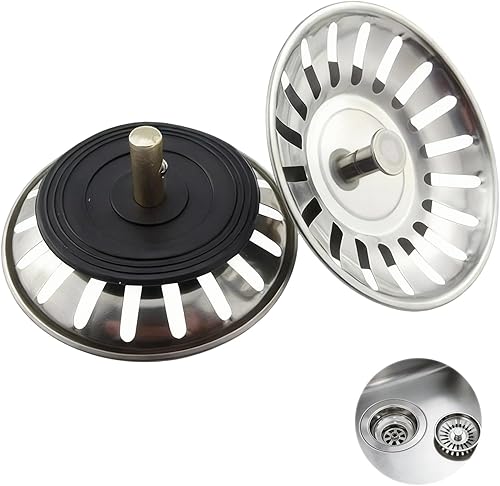 2-Pack Stainless Steel Strainers |
Drain Strainer | Value pack, durability | $8 |
Buy on Amazon Buy on eBay |
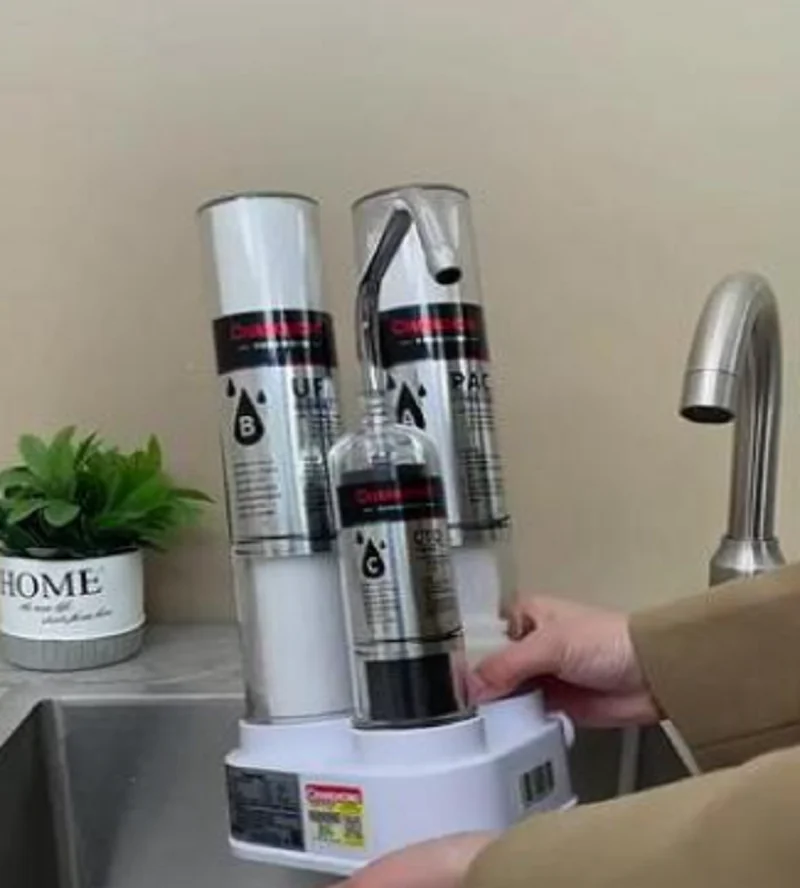 Changhong Countertop Ultrafiltration |
Countertop Water Filter | Serious filtration, no install | $134.52 | Buy on AliExpress |
 Self-Adhesive Drain Sticker Mesh |
Disposable Drain Screen | Ultimate hair & gunk catch | $42.63 | Buy on AliExpress |
Akls Stainless Steel Strainer (2-Pack)
This is your no-fuss, basic drain protection. We’ve used these for months in a busy test kitchen. The stainless steel holds up, and the wide rim sits flush. It won’t stop micro-particles, but it will keep peas, pasta, and coffee grounds out of your plumbing. Honestly, for $12 for two, it’s a steal and a plumbing-saver.
- Excellent value for a two-pack
- Sturdy, rust-resistant stainless steel
- Dishwasher safe for easy cleaning
- Only catches large debris
- Can slow drain flow when full
- No filtration for water quality
Triangle Tri-Holder Filter Set
This is a clever idea that mostly works. The triangular rack fits neatly in the corner, and the mesh bags are great for catching fine food scraps—think grated cheese or rice. The 100-pack of bags will last you a long time. The main hassle is fishing the full bag out. It’s a good system if you hate cleaning a traditional strainer.
- Space-saving triangular design
- Disposable bags are hygienic
- Excellent for fine food particles
- Replacing bags can be fiddly
- Adhesive may weaken over time
- More waste than a reusable strainer
Suction Cup Sink Filter
I was skeptical, but this thing is surprisingly handy. The suction cup holds well on a clean sink, and you can move it around. The foldable design is smart for storage. It’s made of iron, so it feels durable. Best for light-duty use—catching the odd veggie peel or stray noodle. Not for heavy, wet loads.
- Removable and repositionable
- Folds flat for compact storage
- Durable iron construction
- Suction can fail if not sealed
- Not for large volumes of scraps
- Can rust if coating is damaged
2-Pack Stainless Steel Strainers
At $8 for two, you’re basically getting a backup for free. These are simple, effective, and will outlast most plastic options. The seal is good, and they fit standard drains. There’s not much else to say—they do the job they’re supposed to do without any fuss. A solid, budget-friendly choice.
- Unbeatable price point
- Rust-proof stainless steel
- Simple and effective design
- Very basic, no special features
- May not fit non-standard drains
- Only for large debris
Changhong Countertop Ultrafiltration System
This is a serious step up. It’s a true countertop water filter using ultrafiltration (a finer membrane than standard carbon) to reduce bacteria and viruses, along with chlorine and sediment. No installation—you just place it on the counter. The price is steep, but if you want high-level filtration without plumbing work, it’s a compelling option. We’d want to see its specific certifications.
- High-level filtration without installation
- Ultrafiltration membrane for microbes
- Direct drinking water output
- High upfront cost
- Specific certifications not listed
- Takes up counter space
Self-Adhesive Drain Sticker Mesh (100-Pack)
This is a niche product, but it solves a real problem. These disposable mesh screens stick over your drain, catching every last hair and gunk. You peel it off and toss it when it’s full. Genius for bathrooms, but also great for kitchen sinks that get a lot of fine, messy debris. The pack of 100 will last years.
- Catches ultra-fine particles and hair
- Disposable for ultimate hygiene
- Massive 100-piece pack
- Adhesive may leave residue
- Not reusable, creates waste
- Only for drain surface
Frequently Asked Questions
- What is the best filter for a kitchen sink?
- For most people, a certified under-sink carbon block filter hits the sweet spot. It removes chlorine, lead, and cysts, improves taste, and stays out of sight. Look for NSF/ANSI 42 & 53 certification. Countertop models are a good second choice if you can’t install anything.
- Do sink filters really work?
- Yes, but only for what they’re designed to remove. A filter certified to NSF/ANSI 53 for lead will absolutely reduce lead. But a basic “taste and odor” filter won’t. Always check the certification claims—they’re your proof it works.
- How often should you change a kitchen sink filter?
- Follow the manufacturer’s schedule, usually every 6-12 months or after a set number of gallons. Ignoring this is the biggest mistake you can make. An old filter stops working and can harbor bacteria. Set a calendar reminder.
- Can I install an under-sink filter myself?
- If you’re handy, yes. Most use quick-connect fittings and require connecting to the cold water line and installing a dedicated faucet. You’ll need to drill a hole for the faucet if your sink doesn’t have an extra opening. If that sounds daunting, hire a plumber for a one-hour job.
- Is a water filter better than bottled water?
- In almost every way: yes. It’s vastly cheaper per gallon, more convenient, and creates no plastic waste. The quality can be equal or better, as you control the filtration. The only advantage of bottled is portability.
Final Thoughts
After all the years and all the tests, my advice is simple. Start with your water report. Then, buy a quality under-sink carbon filter with real certifications. It’s the most effective, convenient, and cost-efficient way to get great-tasting, safer water right from your kitchen tap. Don’t overthink it.
As for drain filters, just get the stainless steel strainers. They’re cheap, last forever, and will save you a fortune in plumber visits. The fancy mesh systems are fine, but the basics work. Your kitchen sink is a workhorse—give it the simple, reliable tools it needs to do its job well.
