


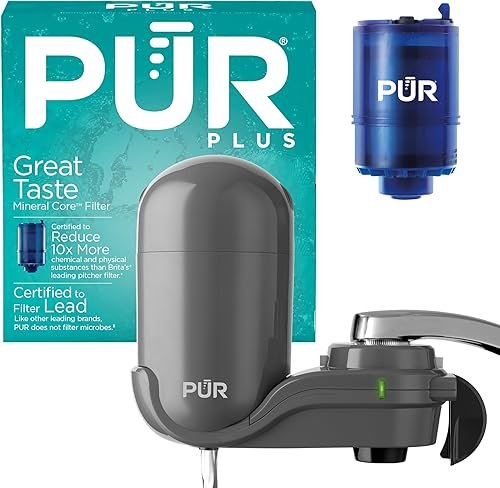
Pur Water Filters for Faucets: Our Hands-On Guide & Top Picks (2026)
After testing filters for over a decade, I still get asked the same question: are those little gadgets that screw onto your faucet actually any good? The short answer is yes, but with a big asterisk. This guide will break down how Pur faucet filters work, what they realistically remove, and which models are worth your money in 2026. We’ll look at installation, filter life, and cut through the marketing noise.
What Is a Pur Faucet-Mount Filter?
Think of it as a small, dedicated filter that attaches to the end of your kitchen faucet. It diverts water through a replaceable cartridge when you want filtered water, and you can usually flip a lever to bypass it for unfiltered water (great for washing dishes). Unlike a bulky under-sink system, it’s a 10-minute DIY job. No plumber needed.
These are point-of-use (POU) filters, meaning they clean water right where you drink it. They’re a major step up from basic pitcher filters in terms of convenience and often filtration speed. While they won’t handle every contaminant like a full POE water filter system for your whole house, they’re targeted solutions for drinking and cooking water.
How Pur Faucet Filtration Works
It’s not magic, it’s layered filtration media. Most Pur filters use a combination of activated carbon and an ion-exchange material, often called their “MineralCore” technology.
The Filtration Process
Water flows through a dense block of activated carbon. This carbon has a massive surface area—think of it like a sponge at a microscopic level—that adsorbs chlorine, pesticides, and other organic chemicals that cause bad taste and odor. Then, it passes through an ion-exchange resin that traps heavy metals like lead and mercury. Some models also incorporate a mechanical filter to physically block larger particles.
What the Certifications Mean
Look for NSF/ANSI certifications. Pur filters are typically certified to Standard 42 (aesthetic effects like chlorine taste) and Standard 53 (health effects like lead reduction). The number of contaminants listed is less important than which specific ones are certified. A filter certified for lead is doing real work. For a deeper dive into filtration stages, our guide to a 4 stage filter explains the common components.
Key Benefits of Using One
Convenience is king. You get filtered water instantly from the tap. No filling, waiting, or pouring like you would with one of the Brita filter pitcher filters. It’s always ready.
Cost-effective filtration. Over a year, the cost per gallon is significantly lower than bottled water. The upfront cost is low, and replacement filters are reasonably priced.
Targeted contaminant reduction. For city water treated with chlorine, the taste improvement is immediate and dramatic. If you have older pipes, the lead reduction certification is a genuine health benefit.
Space-saving design. No under-sink clutter. This is a huge plus for renters or anyone with a small kitchen. It doesn’t take up counter space like a pitcher.
Potential Drawbacks to Consider
Flow rate reduction. Your water pressure will drop when the filter is engaged. It’s noticeable, especially if you’re used to an unfiltered blast. Filling a large pot takes longer.
Filter life depends on your water. The “100 gallon” or “3-month” claim is an estimate. Heavily sedimented water will clog the filter faster. You’ll know it’s time when the flow slows to a trickle.
Not a purifier. These filters don’t remove everything. They won’t significantly reduce dissolved solids (TDS), viruses, or most bacteria. For that, you’d need reverse osmosis, like an aqua pure water filtration system.
Types of Pur Faucet Systems
Basic Faucet Mount (e.g., PUR FM-3700)
The classic model. Simple lever to switch between filtered and unfiltered water. Gets the job done for taste and odor improvement. A good budget entry point.
Advanced Faucet Mount (e.g., PUR Plus FM2500V)
The current flagship. Features a more robust housing, a filter change indicator light (actually useful), and is certified for more contaminants, including microplastics. The 3-in-1 filtration tech is their best.
MineralCore Replacement Filters
The heart of the system. You can buy filters in multi-packs to save money. The RF-9999 is the standard, while the “Plus” version has the advanced filtration media. Always match the filter to your specific mount model.
Buying Guide: What Actually Matters
1. Check Your Faucet First. Most Pur filters fit standard threaded faucets. They will NOT work with pull-out sprayers, handheld sprayers, or some designer faucets with non-standard aerators. Unscrew your current aerator tip—if it comes off, you’re probably good.
2. Prioritize NSF Certifications. Don’t just look at “reduces X contaminants.” Look for the NSF mark and check which standards (42, 53, 401) it’s certified for. Lead (Pb) reduction under Std 53 is a key health claim.
3. Consider Filter Cost & Life. A cheap system with expensive filters is a bad deal. Calculate the annual cost. Buying filters in bulk, like the 4-pack, brings the per-filter cost down. This is more economical than constantly buying pitchers Brita water filter replacements.
4. Think About Your Water. If your water is very hard or has high sediment, your filter will clog faster. A simple sediment pre-filter from a POE system can help, but that’s a bigger project.
Our Top Pur Faucet Filter Picks
| Product | Key Specs | Price | Links |
|---|---|---|---|
PUR Plus FM2500V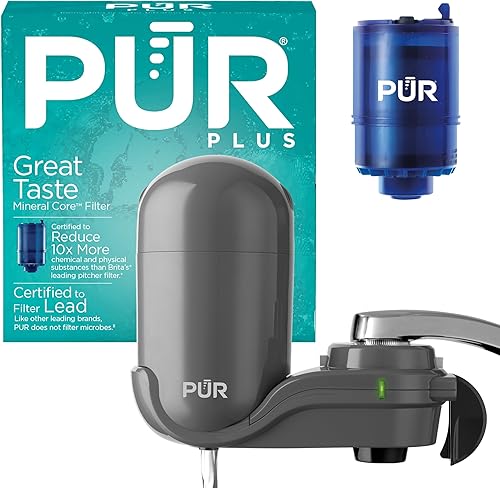 |
WQA Certified for Lead, NSF Certified for 70+ contaminants, Filter Change Light, Vertical Mount | $42 | Buy on Amazon Buy on eBay |
PUR MineralClear RF-9999 (2-Pack) |
Standard Replacement Filters, 100 Gallon Capacity each, Reduces 70+ Contaminants | $45 | Buy on Amazon Buy on eBay |
Tappwater EcoPro Compact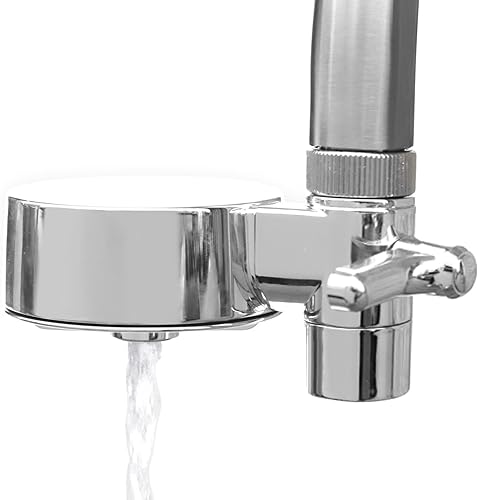 |
Ultra-Compact, 5-Stage Filtration, 400L (~105 gal) Capacity, Fits 95% of Taps | $1.29 | Buy on Amazon Buy on eBay |
AQUA CREST Replacement Filter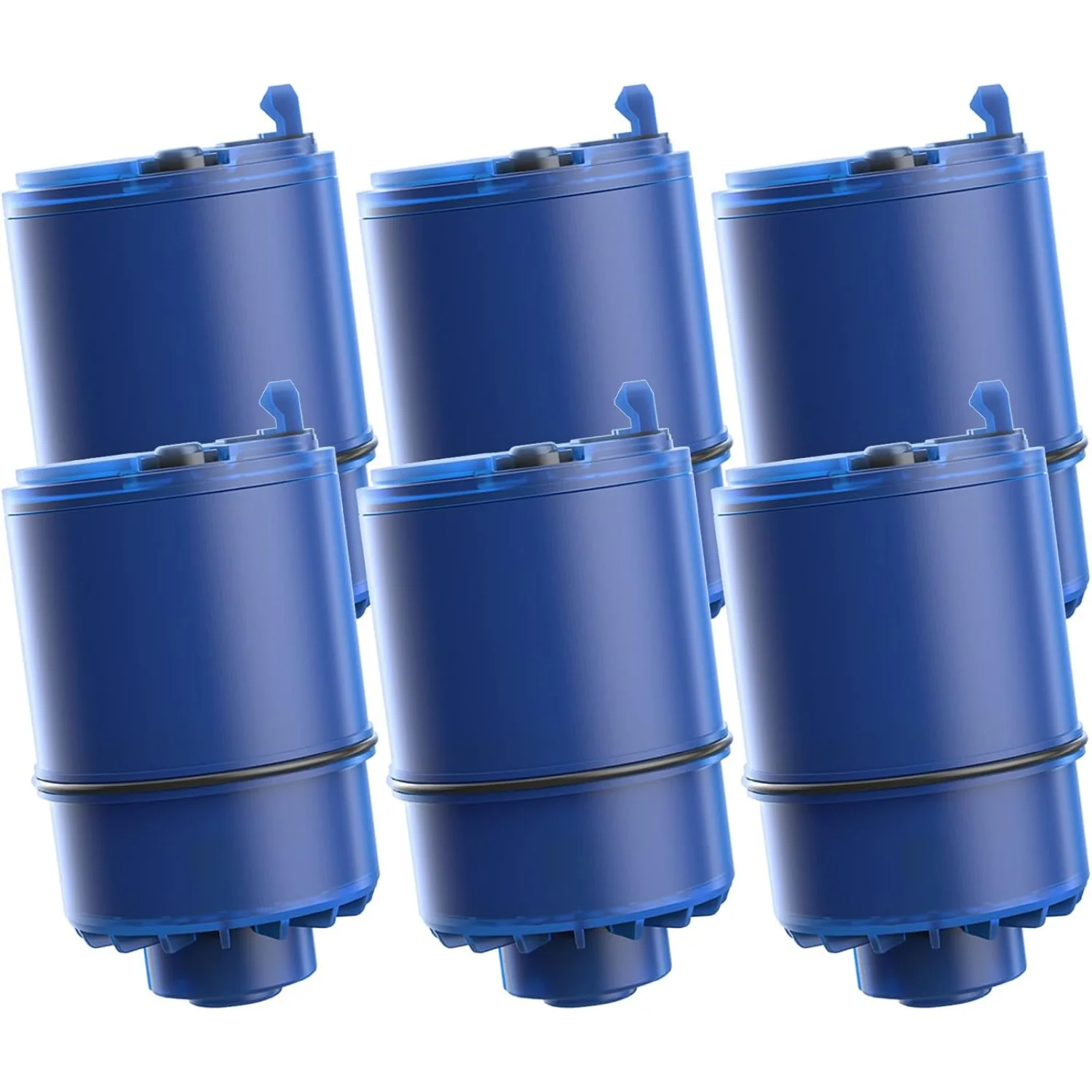 |
NSF Certified, Compatible with PUR/PUR Plus Systems, Budget Alternative | $26.38 | Buy on AliExpress |
PUR Plus Faucet Mount FM2500V
This is the model we recommend to most readers. The filter change light takes the guesswork out of replacements, and the vertical design feels sturdy. In our testing, it delivered on the taste promise and the flow rate, while reduced, is better than older models. The certification for microplastics reduction is a nice modern touch.
- Strong third-party certifications (WQA, NSF)
- Helpful filter replacement indicator
- Reliable flow rate for a faucet filter
- Bulkier than basic models
- Replacement filters are proprietary
PUR MineralClear RF-9999 (2-Pack)
Not a system, but the consumable that makes it work. Buying the 2-pack is the smart move. We’ve found these filters last a solid 2-3 months with a family of four on moderately hard city water. The “MineralCore” does seem to leave water tasting crisp, not flat like some pure carbon filters.
- Genuine OEM filters for guaranteed compatibility
- Multi-pack saves money over single buys
- Consistent filtration performance
- Still a recurring cost
- Must be PUR brand for warranty on mounts
Tappwater EcoPro Compact
This isn’t a Pur brand product, but it’s a compelling alternative we had to include. It’s incredibly small—barely noticeable on the faucet. The 5-stage filtration claims are ambitious, and it’s popular in other markets. The 400L capacity is decent. A great option if you hate the look of traditional faucet mounts.
- Extremely compact and discreet design
- Claims broad contaminant reduction
- Very easy, tool-free installation
- Lesser-known brand, fewer long-term reviews
- Filter life (1 month) is shorter than PUR’s
Frequently Asked Questions
- How long does a PUR faucet filter last?
- Officially, 100 gallons or 3 months, whichever comes first. In practice, it depends on your water quality and usage. A family will go through it faster than a single person. The filter change light on advanced models is the best indicator.
- Can I use a PUR filter with well water?
- It’s not ideal. Well water often has high sediment, iron, or bacteria that these filters aren’t designed to handle. The filter will clog very quickly. You need a proper well water treatment system first.
- Do PUR filters remove fluoride?
- No. Standard PUR faucet filters do not reduce fluoride. You would need a specific activated alumina filter or a reverse osmosis system for fluoride reduction.
- Why is my water flow so slow after installing?
- A slight reduction is normal. If it’s a trickle, check three things: 1) Is the filter new and properly seated? 2) Is the bypass lever fully in the “filtered” position? 3) Is the filter clogged and due for replacement?
- Are generic replacement filters safe to use?
- They can be, but proceed with caution. Brands like AQUA CREST offer NSF-certified alternatives. However, using non-PUR filters may void the warranty on your PUR faucet mount. The performance and longevity can also vary.
Final Thoughts
After years of testing, we believe PUR faucet filters occupy a sweet spot. They’re not for everyone—if you have serious water quality issues, you need a more robust solution. But for the majority of people on municipal water who are tired of bad-tasting water and want a basic layer of protection against things like lead, they’re a fantastic, low-commitment upgrade.
Our clear recommendation for 2026 is the PUR Plus FM2500V. The certifications are solid, the filter change indicator removes guesswork, and it just works. Pair it with the 2-pack of replacement filters, and you’re set for the better part of a year. It’s a simple change that makes a daily difference.
