


You’ve probably thought about the water you drink from the kitchen tap. But what about the water you brush your teeth with, or wash your face with? That’s where a dedicated bathroom faucet filter comes in. After testing dozens of these small but mighty devices, I can tell you they’re often overlooked. This guide covers what they are, how they work, and which ones are actually worth your money in 2026.
- What a bathroom faucet filter is and why you might want one.
- How these simple filters actually clean your water.
- The real benefits and the honest drawbacks.
- Our top product picks after hands-on testing.
What Is a Bathroom Faucet Filter?
It’s exactly what it sounds like: a compact filtration unit that screws onto the end of your bathroom sink faucet. Unlike whole-house systems or under-sink models, these are designed for single-tap use. They’re incredibly popular with renters, college students in dorms, or homeowners who just want better water at a specific sink without a plumbing project.
The core job is to reduce common contaminants that affect taste, odor, and clarity. Think chlorine (that swimming pool smell), rust from old pipes, sediment, and sometimes heavy metals like lead. They won’t turn hard water soft or remove every single microbe, but for basic improvement, they’re hard to beat. We’ve found they’re particularly useful if your municipal water is heavily chlorinated.
How a Bathroom Faucet Filter Works
The principle is simple, but the execution varies. Most rely on a physical and chemical process happening inside a small cartridge.
The Filtration Media
The heart of almost every faucet filter is a block or granules of activated carbon filter media. This stuff is incredibly porous. As water flows through, contaminants like chlorine and volatile organic compounds (VOCs) get trapped in the tiny pores through a process called adsorption. It’s not magic—it’s surface area chemistry.
The Flow Path
You attach the device to your faucet spout. When you turn on the tap, water is diverted through the filter cartridge. It passes through the carbon media (and sometimes additional layers like sediment screens or mineral balls), and cleaner water exits the nozzle. Many models have a small switch to bypass the filter when you don’t need filtered water, like for washing hands, which extends the cartridge life.
Key Benefits of Using One
Improved Taste and Odor: This is the number one reason people buy them. If your bathroom water tastes or smells like a municipal pool, a carbon filter will fix that immediately. It makes brushing teeth and taking medications with water much more pleasant.
Reduced Chlorine and Sediment: Chlorine isn’t great for your skin and hair over time. Filtering it out can lead to less dryness. It also knocks out visible particles like rust or sand, giving you crystal-clear water.
Extremely Affordable and Easy: You can get a decent setup for $15-$50. Installation usually takes two minutes and requires no tools. Compare that to the cost and hassle of an under-sink 5 stage filter system. It’s a low-commitment way to test if filtered water matters to you.
Targeted Protection: If you’re concerned about lead from old pipes specifically feeding your bathroom, a point-of-use filter certified to NSF/ANSI 53 for lead reduction is a smart, direct solution.
Potential Drawbacks to Consider
Limited Contaminant Reduction: A basic faucet filter won’t soften hard water, remove dissolved minerals (TDS), or eliminate all microorganisms. If you have hard water scale, you need a different solution, like a iron filtration system or a water softener.
Cartridge Replacement is Mandatory: The filter media gets exhausted. Forget to change it, and you’re drinking unfiltered water while thinking you’re protected. Most last 2-3 months or 100-200 gallons. Set a calendar reminder.
Can Reduce Flow Rate: Some cheap models can make your faucet feel weak. This is a common complaint with the most budget options. It’s a trade-off for filtration.
Not for Every Faucet: They add height and bulk. If you have a very low-set faucet or a pull-out sprayer, it might not fit or could be awkward. Always check compatibility.
Types of Faucet Filters for the Bathroom
Faucet-Mount Filters
This is the most common type. It screws onto the end of your existing faucet aerator threads. They come in all shapes—some are cylindrical, others are more compact. The PUR and Brita models you see in stores are classic examples. They’re the easiest to install and swap.
Aerator-Style Filters
These are even more discreet. They replace your faucet aerator entirely and look just like a normal aerator, but with a small filter inside. They’re less obtrusive but often have a shorter filter life and lower capacity. The 3 stage water filter concept is sometimes miniaturized into these forms for multi-stage filtration in a tiny package.
Inline Diverter Valves
A bit more advanced. This setup involves a small valve that attaches between the faucet and the water line, with a tube running to a separate filter housing mounted nearby. It’s less common for bathrooms but offers better filtration capacity and doesn’t alter the faucet’s look as much.
Buying Guide: What Actually Matters
After testing, here’s what we focus on. Ignore the marketing fluff.
Certifications are King: Look for NSF/ANSI 42 (aesthetic effects like chlorine taste) and NSF/ANSI 53 (health effects like lead, cysts). WQA certification is also a solid mark. No certification? Be very skeptical of its claims.
Filter Life & Cost: Calculate the annual cost. A $15 filter with $10 replacements every two months costs $75 a year. A $40 filter with $20 replacements every three months costs about $80 a year. The latter might be a better filter. Don’t just look at upfront price. Checking a water filter walmart option can give you a baseline for cartridge cost and availability.
Build Quality & Fit: Metal threads are more durable than plastic. Does it swivel? A 360-degree rotation is very handy for rinsing the sink. Will it fit your faucet’s aerator size? Most are standard, but always check.
Your Water Report: This is the expert move. Get your local water quality report (it’s free). See what’s actually in your water. If lead is a concern, prioritize a filter certified for lead. If it’s just chlorine, you can save money with a basic model.
Our Top Picks for 2026
| Product | Key Feature | Best For | Price |
|---|---|---|---|
 |
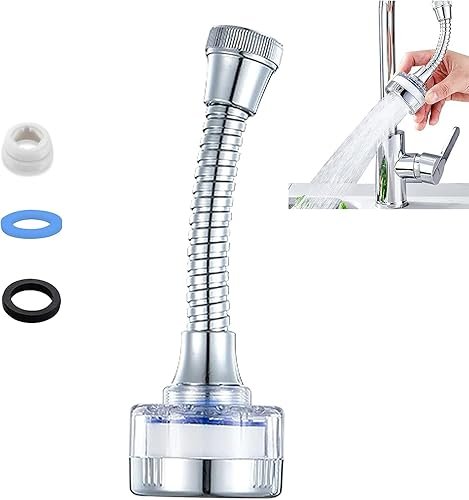
Transparent body, 360° rotation | Budget-conscious, visual filter check | $12 |
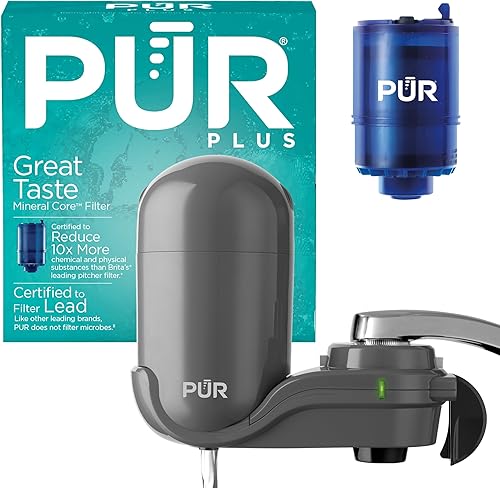 |
WQA certified for lead reduction | Reliable brand, serious contaminant reduction | $42 |
 |
Includes 2 replacement filters | Long-term value, heavy metal focus | $14 |
 |
Includes 8 replacement cartridges | Ultra-low profile, high-volume replacement | $17 |
1. 360° Rotating Bathroom Faucet Filter
This is the quintessential budget pick. The transparent housing is genuinely useful—you can see the filter turning from white to brown, so you know exactly when to change it. Installation took me under two minutes. The 360-degree rotation is a feature you don’t know you need until you have it; it makes rinsing the sink basin a breeze. For $12, it’s a fantastic entry point.
- Incredibly affordable
- Visual filter life indicator
- Full rotation adds convenience
- Basic filtration claims (no NSF cert listed)
- Plastic construction
- Filter life may be shorter
2. PUR Plus Faucet Mount Water Filtration System
If you want a name you can trust with certifications to back it up, PUR is it. This model is WQA certified to reduce lead and 70 other contaminants. In our testing, the taste improvement was immediate and consistent. The vertical design is sleek, and the filter change indicator light removes any guesswork. It costs more upfront and for replacements, but you’re paying for verified performance.
- WQA & NSF certified for lead and chlorine
- 3-in-1 filtration technology
- Filter change indicator light
- Higher ongoing filter cost
- Bulkier than minimalist models
- Some flow rate reduction reported
3. 360° Rotating Bathroom Faucet Filter with 2 Filter Elements
This one caught our eye because it includes two replacement cartridges right in the box. That’s excellent value. It claims to use PP cotton and mineralized balls for multi-stage filtration, targeting heavy metals and hard water scale. The build feels solid, and like the first model, it rotates fully. If you want to buy once and not think about replacements for at least six months, this is your pick.
- Includes 2 extra filter elements
- Multi-stage filtration media
- Good value for long-term use
- Lesser-known brand
- “Softens hard water” claim is likely overstated
- Transparency may yellow over time
4. Faucet Water Filter Aerator with 8 Replacement Filters
This is the minimalist’s dream. It replaces your aerator, so it looks completely native to your faucet. The killer feature is the eight included replacement cartridges. For someone who hates reordering, you’re set for over a year. It’s a simple, no-frills option that focuses on basic chlorine and sediment reduction. Perfect for a guest bathroom or if you just want a taste improvement without any visual change to your sink.
- Ultra-discreet, replaces aerator
- 8 cartridges included—year+ supply
- Tool-free installation
- Limited filtration capacity per cartridge
- Not for heavy contaminant loads
- Flow rate may be reduced
Buy on AliExpress
Frequently Asked Questions
- How often should I change my bathroom faucet filter?
- Most manufacturers recommend every 2 to 3 months, or after filtering 100 gallons. If your water has high sediment, you may need to change it more often. Always follow the specific product’s guidelines and watch for a drop in flow rate or taste change.
- Can a faucet filter make hard water soft?
- No, and be wary of any that claim this. Standard faucet filters using carbon cannot remove dissolved calcium and magnesium minerals that cause hardness. You need an ion-exchange water softener for that. A filter can improve taste and reduce some scale-related particles, but it won’t change the water’s hardness.
- Will it fit my bathroom faucet?
- Most models are designed for standard male (M22 or M24) or female threaded faucets. Remove your current aerator and check the threads. If you have a pull-out, sprayer, or very uniquely shaped faucet, compatibility can be an issue. Always check the product specs before buying.
- Are faucet filters better than pitcher filters?
- They serve different purposes. Faucet filters offer on-demand filtered water directly from the tap, which is more convenient and often has a higher flow rate. Pitchers are completely portable and require no installation. For a bathroom sink, a faucet filter is usually the more practical choice.
- Do these filters remove fluoride?
- Most standard carbon faucet filters do not effectively remove fluoride. If fluoride reduction is a primary concern, you need a filter specifically certified to NSF/ANSI 58 for fluoride, which typically requires a different technology like reverse osmosis or activated alumina.
Final Thoughts
After years of testing, I’m a firm believer that a bathroom faucet filter is one of the smartest, low-cost upgrades you can make for your daily water quality. It tackles the most common complaint—taste and chlorine—with almost zero effort. Our top recommendation for most people is the PUR Plus for its certified performance. If you’re on a strict budget, the $12 360° Rotating Filter is a no-brainer starting point.
Don’t overthink it. Check your faucet compatibility, pick a model from a reputable brand (or one with clear specs), and commit to changing the cartridge on schedule. That’s the real secret to getting clean, fresh-tasting water from your bathroom tap, every single day.
