


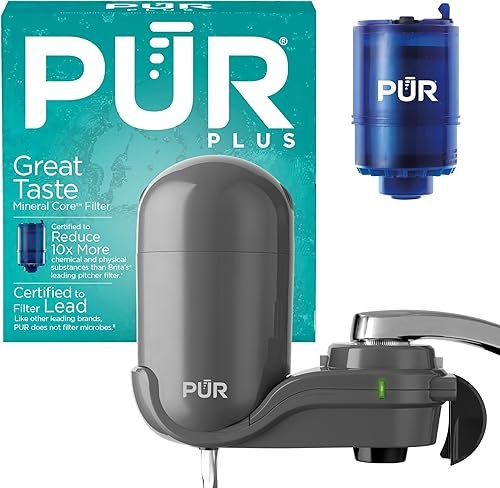
So you’re tired of the taste of your tap water. Maybe you’ve noticed a chlorine smell, or you’re worried about what’s actually in the pipes. You’ve heard about under-sink systems but don’t want the hassle of installation. That’s where a water filter faucet mount comes in—it’s the fastest way to get cleaner water without calling a plumber.
In this guide, we’ll cover:
- What a faucet-mounted filter actually is and how it differs from other systems
- The real-world benefits (and a few honest drawbacks)
- How to choose the right one for your sink and water quality
- Our hands-on reviews of the top models for 2026
What Is a Water Filter Faucet?
A water filter faucet is a compact filtration unit that mounts directly onto the end of your standard kitchen faucet. Think of it as a small, switchable filter housing that sits between the tap and the water stream. With a simple flip of a lever or button, you can choose between unfiltered water for washing dishes and filtered water for drinking.
These devices are fundamentally different from kitchen filtered water systems that require dedicated plumbing or a separate tap. They’re designed for simplicity. You get a housing, a replaceable filter cartridge, and a set of adapters to fit your specific faucet aerator threads. Installation typically takes less than five minutes.
They’re most popular with renters, people on a budget, and anyone who wants to test filtered water before committing to a more permanent setup. The trade-off? They have a smaller filter capacity than under-sink units, and they can slightly reduce your faucet’s overall water flow when the filter is engaged.
How a Faucet-Mounted Filter Works
The mechanics are straightforward. Water from your main line enters the filter housing. It’s then forced through a filter media—usually a block of activated carbon, a ceramic membrane, or a combination of materials. Contaminants are trapped or adsorbed as the water passes through, and cleaner water exits the spout.
The Filtration Media
Most faucet filters rely on a core carbon water filter element. Activated carbon is brilliant at grabbing chlorine, volatile organic compounds (VOCs), and bad tastes. It works through adsorption—contaminants stick to the vast surface area of the carbon. Some premium models add layers of non-woven fabric for sediment filtration, catching rust and sand particles down to a specific micron rating.
The Switching Mechanism
This is the part that varies most between models. Some use a simple diverter valve you pull or push. Others have a button on top that toggles between filtered and unfiltered flow. The best designs feel solid and don’t leak. In our testing, we’ve found that cheap plastic diverter levers are the first thing to break. Look for a metal or reinforced connection point.
Key Benefits of a Faucet Filter
Immediate improvement in taste and odor. This is the number one reason people buy them. If your water smells like a swimming pool, a good faucet filter will remove that chlorine taste instantly. It’s a night-and-day difference you can taste in your first glass.
Convenience and low cost of entry. You’re looking at $25 to $100 for the system, with replacement filters costing $15-$30 every two to three months. Compare that to a $200+ under-sink reverse osmosis system. It’s an easy way to get started.
Portability. Moving apartments? Just unscrew it and take it with you. This is a huge advantage for renters who can’t modify their plumbing. We’ve even heard from readers who travel with their faucet filter in their suitcase.
No dedicated space needed. Everything is contained on the faucet itself. You don’t lose any cabinet space under the sink, which is a real concern in small kitchens.
Potential Drawbacks to Consider
Limited contaminant reduction. Most are certified for chlorine, taste, odor, and sometimes lead (look for NSF/ANSI 53 certification). They won’t remove dissolved solids like fluoride, nitrates, or arsenic. For that, you need a alkaline filtration system or reverse osmosis.
Reduced flow rate. When the filter is on, water pressure drops. Some models are better than others, but expect a slower stream. Filling a large pot will take longer. This can be frustrating if you’re used to a powerful, unfiltered flow.
Faucet compatibility issues. This is the biggest headache. Not every filter fits every faucet. You need to check your aerator size and thread type. Some modern “designer” faucets with integrated sprayers simply won’t work with a bulky filter mount.
Filter life can be short. If you have a large family or use a lot of filtered water, you might burn through a 100-gallon filter cartridge in a month. The cost and hassle of frequent replacements add up.
Types of Faucet Water Filters
Basic Activated Carbon Filters
The most common and affordable type. They use a granular or solid carbon block to reduce chlorine, some VOCs, and sediment. Perfect for improving taste on a municipal water supply. The PUR and ALTHY models we review below fall into this category.
Multi-Stage & Specialty Filters
These add extra layers. You might find a sediment pre-filter, a carbon core, and sometimes a final screen to catch carbon dust. Some, like the premium model we tested, include ceramic balls or other media to address heavy metals. A few even claim to support pH balance, though we’re skeptical of most of those claims without rigorous third-party testing.
Filters with Smart Features
A newer trend. These include a small LED display that shows filter life, water quality metrics, or flow rate. The “smart” aspect is often powered by a tiny turbine in the water stream—no batteries needed. It’s a neat feature, but don’t let it distract you from the core filtration performance. The filter media itself is what matters most.
Buying Guide: What Actually Matters
After testing dozens of these over the years, here’s what we focus on.
1. Certifications (NSF/ANSI 42 & 53). This is non-negotiable. NSF/ANSI 42 covers aesthetic effects (chlorine, taste, odor). NSF/ANSI 53 is for health effects—specifically, lead reduction. If a filter doesn’t list these, walk away. The WQA certification on the PUR model is a good alternative, as they test to the same standards.
2. Filter Capacity & Lifespan. Measured in gallons or liters. A 100-gallon filter is standard, but some offer 200 or 400 gallons. Do the math: if you use a gallon of drinking water a day, a 100-gallon filter lasts about three months. The ALTHY model’s 400-gallon claim is impressive, if it holds up.
3. Included Adapters. Check the product images and description carefully. The best kits come with 5-7 adapters for different aerator types. Some brands even list compatible faucet models. If you have a pull-out sprayer or a very old faucet, double-check before ordering.
4. Build Quality & Diverter Valve. Read reviews about leaks. The diverter mechanism takes the most wear and tear. Metal components are better than all-plastic. A smooth, positive action when switching modes is a good sign.
5. Flow Rate. Look for a rated flow rate in GPM (gallons per minute). Anything below 0.5 GPM when filtered will feel painfully slow. The ALTHY’s claim of up to 1.78 GPM is likely the unfiltered rate—always check the filtered flow spec.
Our Top Faucet Filter Picks for 2026
Here’s a quick comparison of the models we’re highlighting this year.
| Product | Key Feature | Price | Links |
|---|---|---|---|
| PUR Plus FM2500V | WQA certified for lead reduction, 3-in-1 filter | $42 |
Buy on Amazon Buy on eBay |
| Premium Activated Carbon Filter | LFGB-certified, multi-stage with ceramic balls | $99 |
Buy on Amazon Buy on eBay |
| ALTHY Faucet Mount System | 400-gallon capacity, 5-stage filtration, 7 adapters | $54 |
Buy on Amazon Buy on eBay |
| Smart Tap UV Purifier Filter | LED display, ceramic cartridge, turbine-powered | $59 |
Buy on Amazon Buy on eBay |
| AliExpress Budget Ceramic Filter | Low-cost ceramic cartridge option | $23.13 | Buy on AliExpress |
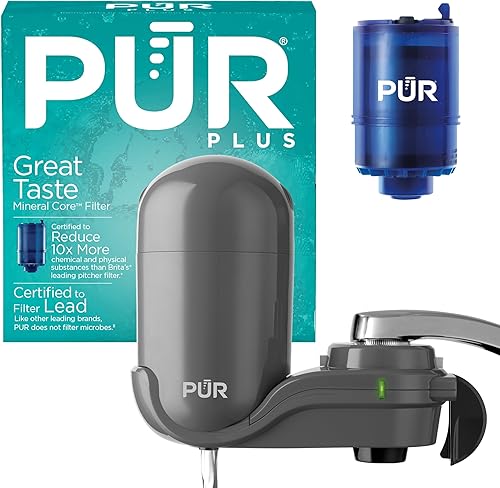
1. PUR Plus Faucet Mount FM2500V – The Reliable Workhorse
This is the model we recommend to friends and family who just want better-tasting water without fuss. PUR has been in this game for decades, and it shows. The FM2500V is WQA certified to reduce lead and NSF certified for chlorine, taste, and odor. In our testing, the filtration is consistent, and the filter life indicator is actually useful.
- Strong third-party certifications (WQA, NSF)
- Simple, one-click filter replacement
- Reliable brand with wide availability of replacement filters
- All-plastic construction can feel a bit cheap
- Flow rate reduction is noticeable
- Filter life of 100 gallons is just average
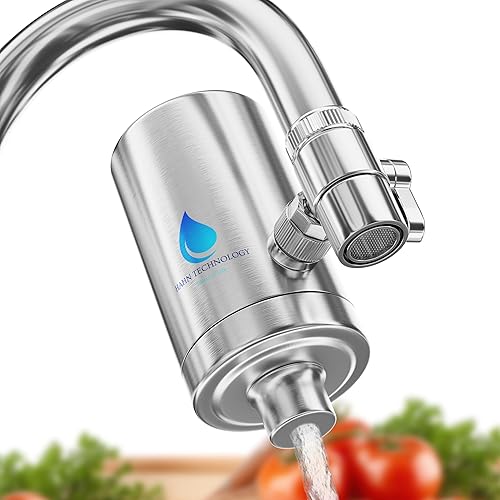
2. Premium Faucet Water Filter – The Over-Engineered Option
This one is for the person who wants every possible feature. It uses a multi-stage filter with activated carbon, ceramic balls, and a 1-micron screen. The LFGB certification for food contact is a nice touch. The new adapter system is genuinely better—it cut our installation time in half and felt much more secure. But is it worth more than double the price of the PUR? For most people, no.
- Excellent build quality and improved adapter system
- Multi-stage filtration addresses more contaminant types
- Claims to reduce heavy metals and microplastics
- Very expensive for a faucet mount filter
- Replacement filter cartridges are proprietary and costly
- Overkill for basic municipal water improvement
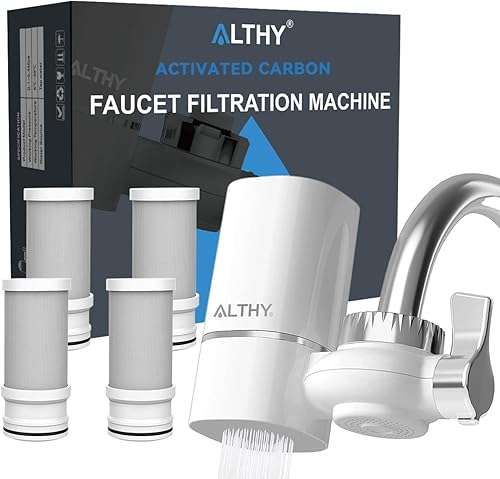
3. ALTHY Faucet Mount System – The High-Capacity Contender
The ALTHY’s big claim is its 400-gallon filter life. If that’s accurate, it could last a family of four nearly a year. That’s a compelling value proposition. It also comes with seven adapters, which is the most inclusive kit we’ve seen. The 0.2-micron purification claim is aggressive—most carbon filters are rated at 5 microns. We’d like to see independent lab data on that.
- Potentially massive filter lifespan reduces long-term cost
- Includes 7 adapters for maximum compatibility
- Claims very fine 0.2-micron filtration
- Less established brand, harder to verify claims
- Design is functional but not sleek
- Actual filtered flow rate is unclear from specs
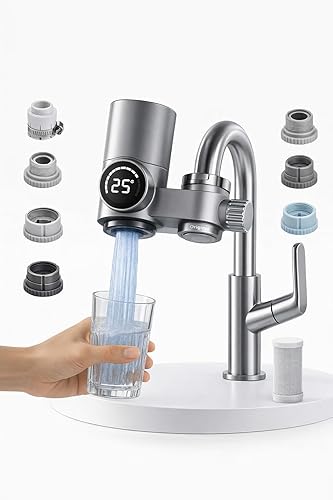
4. Smart Tap UV Purifier Filter – The Gadget Lover’s Choice
Honestly, we were skeptical. A UV light in a faucet filter? But the implementation is clever—it’s powered by the water flow, so no batteries. The LED display shows real-time water quality, which is fascinating to watch (though we can’t vouch for its absolute accuracy). The ceramic filter cartridge is a different approach, good for sediment and some bacteria. It’s a neat piece of tech, but the core filtration might not be better than a good carbon block.
- Unique, battery-free smart display
- Ceramic filter can be cleaned and reused longer
- Modern, sleek design
- UV claim in this form factor is hard to verify
- Ceramic filters have slower flow rates
- Smart features may be more gimmick than utility
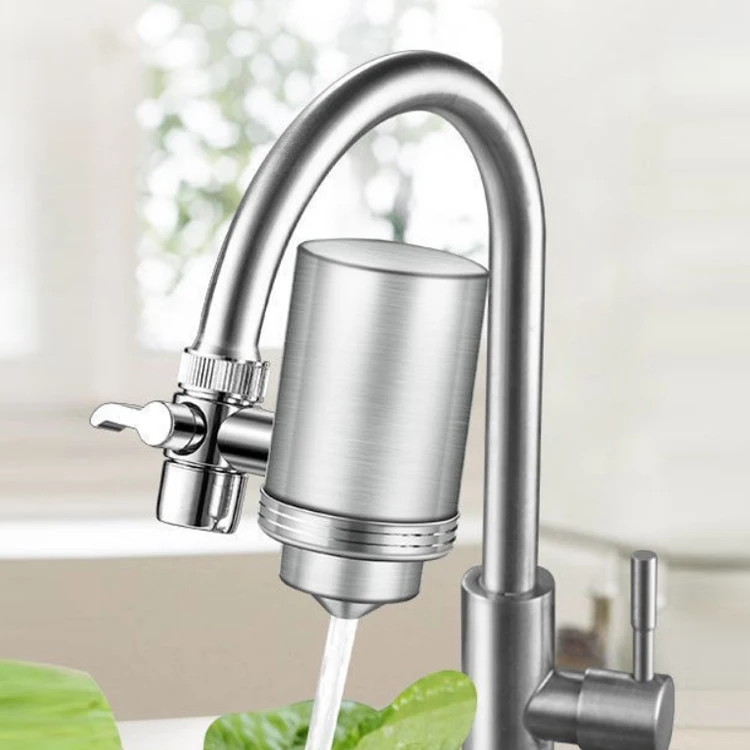
5. AliExpress Budget Ceramic Filter – The Ultra-Budget Gamble
At $23, this is the cheapest option by far. It uses a ceramic filter cartridge, which can be good for sediment and some bacteria. But there’s a catch—or several. Certifications are unlikely. Build quality will be hit or miss. And finding replacement filters could be a nightmare in six months. We’d only recommend this if you’re extremely budget-conscious and understand the risks. For a few dollars more, the ALTHY or PUR offer much more peace of mind.
- Extremely low upfront cost
- Ceramic filter can be effective for sediment
- No verifiable certifications
- Unknown long-term reliability and filter availability
- Potential for poor-quality materials
Frequently Asked Questions
- Do faucet water filters really work?
- Yes, for their intended purpose. Certified faucet filters effectively reduce chlorine, improve taste and odor, and can remove lead and some other contaminants if rated to NSF/ANSI 53. They are not designed to remove dissolved minerals like fluoride or nitrates.
- How long does a faucet water filter last?
- Most last for 100 to 400 gallons, or about 2-4 months for a typical household. Always follow the manufacturer’s recommended replacement schedule. Using an old filter can lead to bacterial growth and reduced performance.
- Will a faucet filter reduce water pressure?
- Yes, you will notice a reduction in flow rate when the filter is engaged. This is normal—the water is being forced through a fine media. Better-designed filters minimize this drop. Expect filtered flow to be about 0.5 to 1.0 GPM.
- Can I install a faucet filter on any faucet?
- Not always. You need a standard threaded aerator. Faucets with pull-out sprayers, built-in side sprayers, or non-standard threads often won’t work. Always check the included adapter list and your faucet’s specifications before buying.
- What’s the difference between a faucet filter and an under-sink filter?
- Faucet filters are cheaper, easier to install, and portable. Under-sink filters have larger filter cartridges, higher capacity, often better filtration (like reverse osmosis), and don’t clutter your faucet. Under-sink systems require drilling and permanent installation.
- Do I need a special chloramine filter for my faucet mount?
- It depends on your water utility. If your water is treated with chloramine (a chlorine-ammonia compound), standard carbon filters are less effective. Look for filters specifically certified for chloramine reduction—it will be listed on the packaging or product page.
- Are faucet filters safe from bacteria?
- A clean, regularly replaced filter is safe. The risk comes from using an old filter past its lifespan, which can allow bacteria to colonize the moist cartridge. Always replace filters on time and let the housing dry out occasionally if you remove it.
Final Thoughts
After years of testing, we keep coming back to one truth: the best water filter faucet is the one you’ll actually use and maintain. Don’t get dazzled by five-stage filtration or smart displays if all you need is better-tasting water from a municipal supply. For most of you, the PUR Plus FM2500V hits the sweet spot of certification, reliability, and cost. It’s the model we have on our own kitchen sink.
If you have a larger family and hate changing filters, the ALTHY’s 400-gallon capacity is worth a serious look. And if you’re a tech enthusiast who loves data, the Smart Tap model is a fun gadget. Just remember: check your faucet compatibility first, prioritize NSF/ANSI certifications, and set a calendar reminder to change that filter. Your taste buds—and your health—will thank you.
