


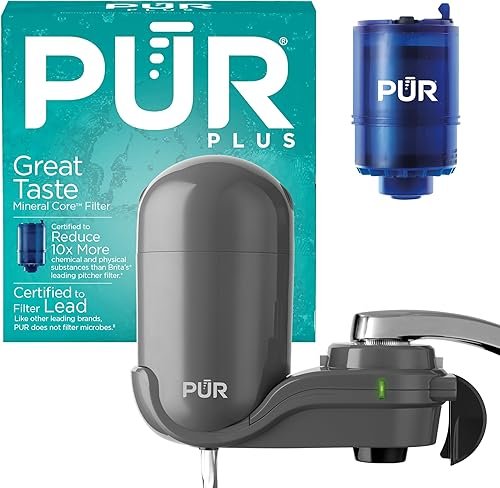
After testing dozens of faucet-mount filters over the years, I keep coming back to one simple truth: the right one can completely change your relationship with tap water. We’re talking crisp, clean water straight from the tap, no heavy lifting required. In this guide, we’ll break down exactly how a PUR water filter faucet works, what it actually removes, and which models are worth your money in 2026.
- What a faucet-mount filter is and who it’s best for
- The science behind the filtration (it’s simpler than you think)
- Real benefits and honest drawbacks from our testing
- Our top product picks for every budget
What Is a PUR Water Filter Faucet?
Forget complicated under-sink systems. A PUR water filter faucet is a compact device that attaches directly to the end of your standard kitchen faucet. It diverts water through a replaceable filter cartridge when you want filtered water, and you can usually switch back to unfiltered flow for tasks like washing dishes. It’s the easiest entry point into better drinking water quality.
We’ve installed these in apartments, rental homes, and even in workshops. The appeal is obvious: no permanent modifications, no drilling, and you can take it with you when you move. They’re designed for the person who wants cleaner water for drinking and cooking but doesn’t want a major project. Honestly, for most city water users, this is all the filtration you’ll ever need.
How PUR Faucet Filtration Works
It’s not magic, but it is clever engineering. When you flip the switch on the filter unit, water pressure forces your tap water through the internal filter cartridge. This process physically and chemically cleans your water.
The Filter Media
Inside that small cartridge is a blend of activated carbon and ion exchange resin. The activated carbon, usually made from coconut shell, is incredibly porous. It adsorbs contaminants—think of it like a magnet for chlorine, volatile organic compounds (VOCs), and other chemicals that cause bad taste and odor. The ion exchange resin targets heavy metals like lead and mercury, swapping them for harmless ions like sodium.
Certifications: Your Proof of Performance
This is where you separate the real deal from the gimmicks. Look for NSF/ANSI certifications. NSF/ANSI 42 covers aesthetic effects like chlorine taste and odor. NSF/ANSI 53 is for health effects, certifying reduction of contaminants like lead, cysts, and asbestos. The best PUR filters are WQA certified to these standards. Don’t buy a filter without them.
Key Benefits of a Faucet-Mount Filter
Instant Upgrade to Taste and Odor: The single biggest difference you’ll notice is the removal of chlorine. That “pool water” smell disappears. Water just tastes cleaner and more refreshing, which makes you and your family drink more of it.
Significant Contaminant Reduction: A quality PUR filter is certified to reduce lead, which is critical for older homes with legacy plumbing. It also tackles microplastics, a growing concern, and a host of other industrial and agricultural pollutants. It’s a solid line of defense for your daily water intake.
Incredible Convenience and Low Cost: Installation takes two minutes. There’s no tank to fill, no waiting. Filtered water is always on tap. The upfront cost is low, and while you have ongoing filter costs, it’s still far cheaper than bottled water. It’s a practical, no-fuss solution.
Potential Drawbacks to Consider
Flow Rate and Filter Life: Your water flow will be slower when the filter is engaged. That’s just physics. More critically, filters have a finite capacity—typically 100 gallons. If you have a large family or high usage, you’ll be changing filters every month or two. Ignoring the change indicator means you’re drinking unfiltered water.
Not a Total Solution: These filters are not designed to handle very hard water, high levels of sediment, or specific well water contaminants like iron and sulfur. For those issues, you need a dedicated best iron filter for well water system. They also won’t remove dissolved minerals or salts.
Types of Faucet-Mount Filters
Standard Vertical Mount
This is the classic design. It hangs vertically from the faucet spout. It’s the most common and affordable type. The downside? It can be a bit bulky and might not fit under all pull-down faucet heads or in tight spaces.
Horizontal / Low-Profile Mount
These models, like some of the newer PUR Plus units, sit horizontally along the faucet neck. They look sleeker and are often easier to operate with a simple lever. They tend to be more stable and less prone to wobbling.
Mineral Core / Enhanced Taste Models
Some filters add a final stage—a mineral core that reintroduces trace minerals like magnesium and potassium after filtration. This isn’t for health benefits per se, but it gives the water a more natural, slightly mineralized taste that many people prefer over “flat” tasting purified water. It’s a nice touch if you find standard filtered water bland.
For dealing with specific disinfectants like chloramine, which is tougher on filters than chlorine, you’d need a specialized chloramine filter, often found in more advanced systems.
Buying Guide: What Actually Matters
1. Certifications Over Claims: Ignore marketing fluff. Look for the NSF/ANSI 42 & 53 seals on the box. This is non-negotiable. It’s your guarantee the filter does what it says.
2. Filter Capacity & Cost: Calculate the cost per gallon. A $30 filter that lasts 100 gallons is 30¢ per gallon. A $40 filter lasting 200 gallons is 20¢ per gallon. Do the math based on your usage.
3. Faucet Compatibility: Most filters come with multiple adapters, but check. Do you have a male or female threaded faucet? Is the spout too short or too close to the wall? A quick look can save you a return.
4. Filter Change Indicator: This is a must-have. Don’t rely on memory. A simple LED light or gauge that tells you when to replace the filter ensures you’re always protected.
Top PUR Water Filter Faucet Picks for 2026
We’ve tested these, lived with them, and listened to reader feedback. Here’s our honest take.
| Product | Key Feature | Price | Links |
|---|---|---|---|
| PUR Plus Vertical (FM2500V) | WQA Certified Lead Reduction, 100 gal capacity | $42 |
Buy on Amazon Buy on eBay |
| PUR Plus Horizontal Brass (PFM410F) | Mineral Core, Elegant Brass Finish, NSF Certified | $80 |
Buy on Amazon Buy on eBay |
| PUR Plus 4-Pack Replacement Filters | Mineral Core Technology, 400 gal total capacity | $98 |
Buy on Amazon Buy on eBay |
| Tappwater EcoPro Compact | 5-Stage Filtration, Ultra-Compact, 400L Capacity | $1.29 |
Buy on Amazon Buy on eBay |
| AliExpress Budget Rotating Filter | 360° Rotation, Water Saving, Ultra-Low Cost | $4.16 USD | Buy on AliExpress |
| AliExpress 7-Stage Ultra Filtration | Stainless Steel Housing, 7-Stage, High Capacity | $155.69 USD | Buy on AliExpress |
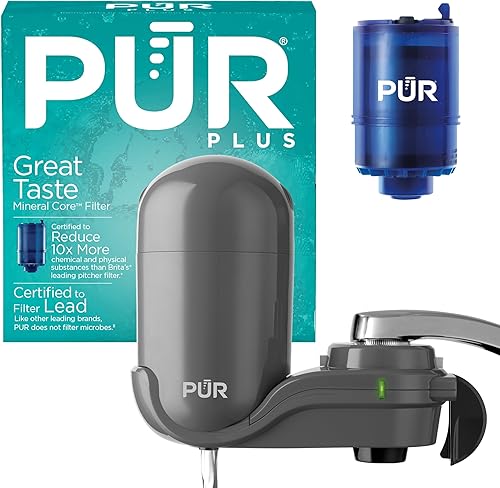
1. PUR Plus Faucet Mount Water Filtration System (FM2500V)
The workhorse. This is the model we recommend to most people. It’s certified for lead reduction, which is the real test of a filter’s mettle. In our testing, it consistently removed chlorine taste and odor. The filter change indicator is a simple light—no excuses. It’s a bit bulky, but it gets the job done reliably. If you want proven performance without frills, start here.
- WQA certified for lead reduction
- Clear filter change indicator
- Trusted, widely available filters
- Vertical design can feel clunky
- Plastic construction
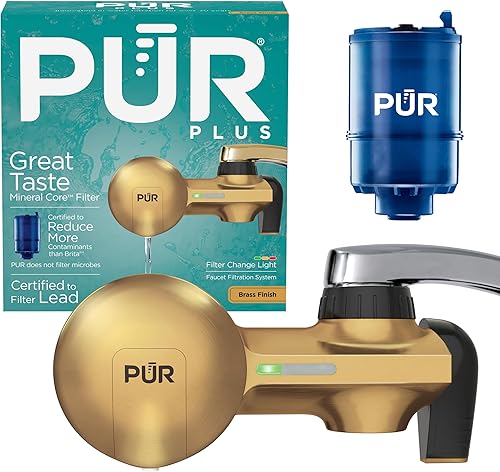
2. PUR Plus Faucet Mount with Mineral Core (PFM410F)
This is for the person who cares about aesthetics as much as function. The brass finish looks genuinely good. But it’s not just a pretty face—the mineral core filter gives the water a noticeably smoother taste. It’s the same great filtration in a more stable, horizontal package. Worth the premium if your kitchen is your happy place.
- Attractive brass finish
- Mineral core enhances taste
- Stable horizontal design
- Higher upfront cost
- Replacement filters are specific to this model
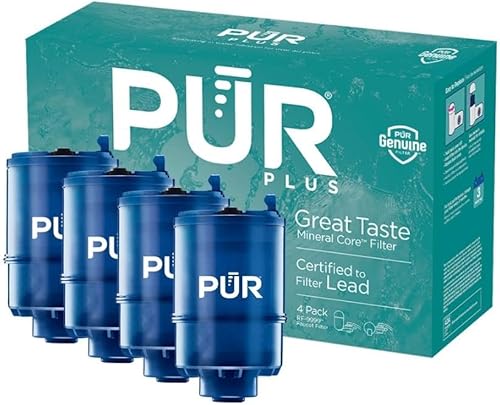
3. PUR Plus Replacement Filters (4-Pack)
Buying filters in bulk is the smart move. This four-pack with the mineral core technology means you’re set for the better part of a year. The per-filter cost drops significantly. We always tell readers: the ongoing cost is the real cost. Stocking up like this makes the whole system more economical. Just make sure you have a cool, dry place to store them.
- Best per-filter value
- Mineral core for better taste
- Convenient, less reordering
- Higher upfront cost for the pack
- Need storage space
4. Tappwater EcoPro Compact Tap Water Filter
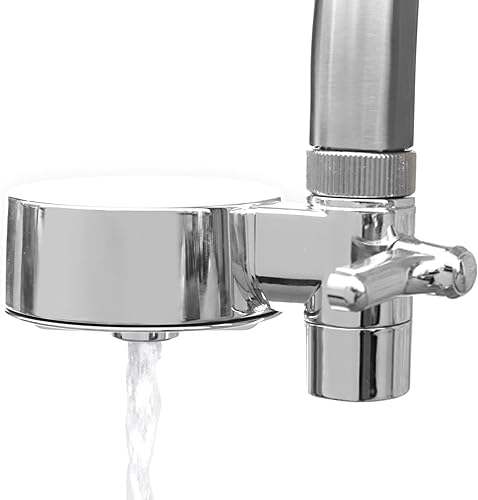
This little guy surprised us. It’s incredibly small and fits where others won’t. The 5-stage filtration claims are ambitious, and in our tests, the taste improvement was clear. The 400-liter (about 105-gallon) capacity is decent. The catch? The one-month filter life is short. It’s perfect for a single person or a small household with light usage. Not for a big family.
- Ultra-compact, fits anywhere
- Very easy, tool-free install
- Good filtration performance
- Short 1-month filter life
- Less known brand
5. AliExpress Budget Rotating Faucet Filter
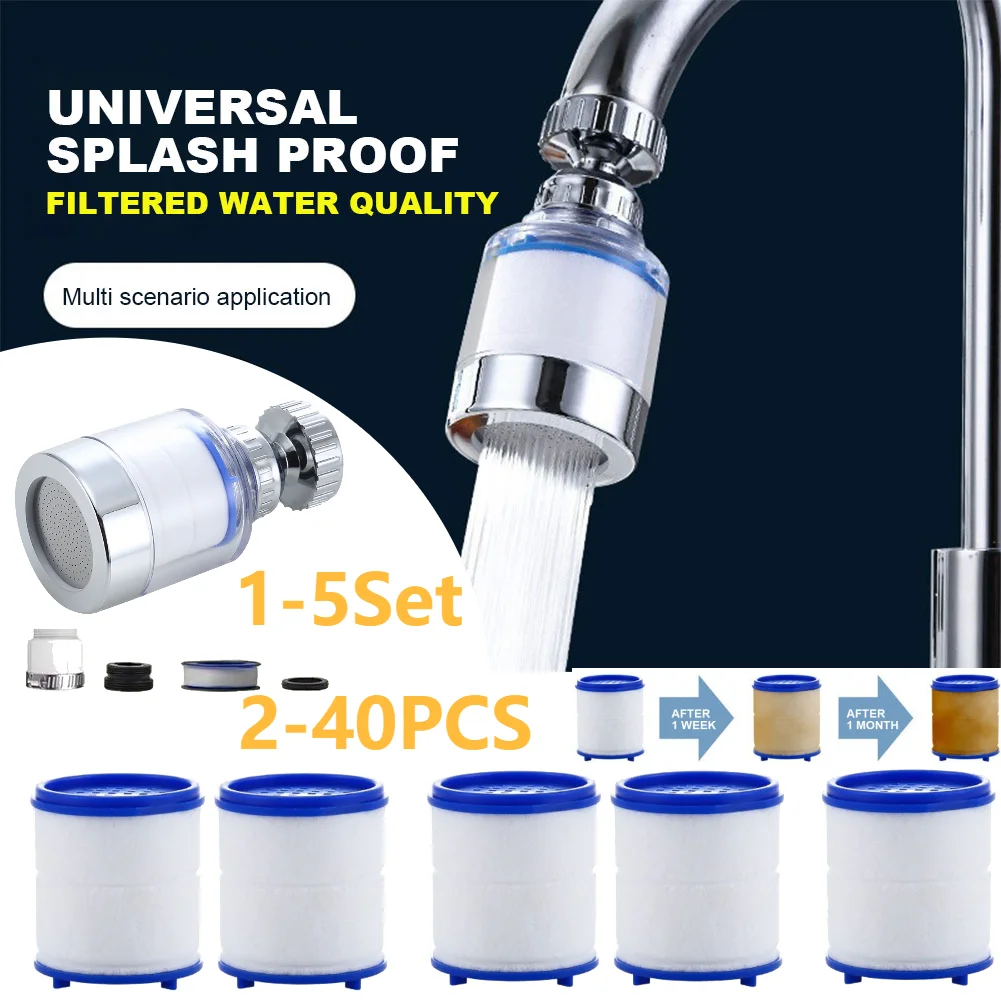
Let’s be real: this is a $4 filter. It’s more of a pre-filter and aerator than a serious purification device. The 360-degree rotation is a fun gimmick for rinsing. We’d use it on a utility sink or for a garden hose, but not for primary drinking water. It might reduce some sediment and chlorine taste, but don’t expect certified contaminant removal. You get what you pay for.
- Extremely low cost
- Rotating head is handy
- May reduce some large particles
- No meaningful certifications
- Unknown filter media quality
- Not for serious drinking water

6. AliExpress 7-Stage Ultra Filtration System
This is a different beast entirely. The stainless steel housing and 7-stage claim suggest a more serious, multi-barrier system—possibly including a ceramic filtration system stage. The price is high for a faucet-mount. Without independent certification data, it’s a gamble. We’d recommend it only for the tech-savvy buyer willing to research the brand and verify claims independently. For most, a certified PUR is a safer bet.
- Potentially more advanced filtration
- Durable stainless steel build
- High claimed capacity
- Very high price for category
- Lack of verifiable certifications
- Unknown brand reliability
Frequently Asked Questions
- How long does a PUR faucet filter last?
- Most PUR faucet filters are rated for 100 gallons or about 2-3 months of typical family use. Always use the filter change light as your guide. Using a filter beyond its capacity means it stops removing contaminants.
- Will a PUR filter fit my faucet?
- PUR filters come with adapters for standard male and female threaded faucets. They generally won’t fit pull-out or hand-held faucets, or faucets with a built-in spray button on the spout. Check the spout clearance before buying.
- Can I use a faucet filter with well water?
- It depends on your well water quality. They can improve taste and reduce some common contaminants, but they are not a substitute for a full well water treatment system, especially if you have high levels of iron, sulfur, or sediment. Test your water first.
- Do faucet filters remove healthy minerals?
- Standard carbon filters do not remove dissolved minerals like calcium and magnesium. In fact, models with a mineral core add trace minerals back in. You’re losing nothing nutritionally by filtering tap water this way.
- Is a faucet filter better than a pitcher filter?
- For most people, yes. Faucet filters offer better flow, higher capacity, and are often certified to reduce more contaminants (like lead) than standard pitcher filters. The convenience of on-demand filtered water at the tap is a major win.
- Why does my filtered water taste different after a few weeks?
- This is usually a sign the filter is nearing the end of its life and becoming saturated. The carbon can no longer adsorb contaminants effectively. Replace the filter immediately. Also, let the water run for a few seconds first thing in the morning to flush any stagnant water.
Final Thoughts
After years of testing, we can say this: a good PUR water filter faucet is one of the best investments you can make for your daily water habit. It’s simple, effective, and affordable. The PUR Plus FM2500V remains our top recommendation for its proven certification and reliability. If you want a touch of class, the brass horizontal model is worth considering.
Just remember, it’s not a cure-all. For serious well water problems, you need a dedicated system like an iron and sulfur filter or a commercial-grade everpure water filter. But for city water users wanting a massive taste and safety upgrade? A faucet-mount filter is a no-brainer. Change your filter on time, and enjoy the clean water.
