


After 15 years in this industry, I’ve seen water filter brands come and go. EcoWater has stuck around. But does that mean their systems are right for your home? We’ve installed them, taken them apart, and talked to the people who service them daily. Here’s our honest take, cutting through the marketing fluff.
- What EcoWater actually is and who owns them
- The real-world pros and cons from our testing
- A breakdown of their main system types
- Actionable advice on choosing the right model
What Is an EcoWater System?
EcoWater isn’t some fly-by-night internet brand. They’ve been in the water treatment game since the 1960s and are now a subsidiary of Marmon Water, which itself is part of Berkshire Hathaway. That corporate backing means parts availability and dealer support are generally strong. You’ll find their systems primarily as point-of-entry (POE) solutions—that means they treat all the water coming into your house, not just what comes out of one tap. If you’re curious about other POE options, we’ve covered them in our guide to poe water filters.
They specialize in two main areas: water softeners (for tackling hard water) and reverse osmosis (RO) systems (for drinking water purification). Their products are typically sold and installed through a network of local dealers, which is a double-edged sword. You get professional installation, but you also pay a premium for that service.
How EcoWater Systems Work
The Water Softener Process
At their core, EcoWater softeners use the same ion-exchange process as most other brands. A resin tank full of tiny beads attracts and holds onto hardness minerals like calcium and magnesium, swapping them for sodium ions. The magic—and where EcoWater tries to differentiate—is in the control valve and programming. Their “Refiner” models often include a carbon filter stage to reduce chlorine taste and odor as well.
When the resin gets saturated, the system regenerates. It flushes a brine solution (from a separate salt tank) through the resin, knocking off the hardness minerals and recharging the beads with sodium. The whole mess gets washed down the drain. The efficiency of this process impacts your water and salt usage.
The Reverse Osmosis Process
For under-sink drinking water, their RO systems force water through a semi-permeable membrane. This membrane has pores so small they block dissolved salts, lead, cysts, and other contaminants. It’s a multi-stage process usually involving sediment and carbon pre-filters to protect the membrane, and often a post-filter for final polishing. The purified water gets stored in a small tank until you need it. Understanding the role of each stage is key, and you can learn more about the heart of these systems in our look at carbon removal filters.
Key Benefits of EcoWater
Build Quality & Longevity: In our experience, their tanks and valves are robust. We’ve seen 15-year-old EcoWater units still chugging along with basic maintenance. The plastic components feel more heavy-duty than some budget brands.
Efficient Regeneration: Their higher-end models use “on-demand” or “metered” regeneration. This means they only clean the resin when you’ve actually used a set amount of water, rather than on a fixed timer. It can save significant salt and water over a year.
Widely Available Parts: This is a big one. Because they’ve been around so long and sold so many units, replacement parts are easy to find. You don’t have to go through an expensive dealer for a simple o-ring or a new countertop filter cartridge if you have one of their compatible models.
Comprehensive Treatment: The combo “refiner-softener” models are clever. They address hardness and chlorine in one unit, which improves water feel and protects your plumbing and appliances from scale and chlorine degradation.
Potential Drawbacks to Consider
Dealer Dependency: While parts are available, getting service or quotes often means going through a local franchise. Pricing and customer service quality can vary wildly from one territory to the next. Get multiple quotes.
Salt-Based Limitations: Like all ion-exchange softeners, they add a small amount of sodium to your water. If you’re on a low-sodium diet, you’ll need to factor in a separate kitchen tap filter for drinking water or consider a potassium chloride alternative, which is more expensive.
Overselling for Simple Problems: Some dealers will push a whole-house system when all you need is a point-of-use solution. If your only issue is kitchen water taste, a dedicated kitchen filter system might be a smarter, cheaper move.
Types of EcoWater Systems
Whole-House Water Softeners
This is their bread and butter. Models range from basic timer-based units to high-efficiency models with Wi-Fi monitoring. They’re sized based on your home’s water hardness and the number of bathrooms/people. Don’t let a dealer oversell you on capacity.
Whole-House Refiners (Softener + Carbon)
As mentioned, these combine softening with activated carbon filtration. Ideal if your water smells of chlorine or has mild taste issues. They won’t remove everything, though—for serious contaminant removal, you need a dedicated filter like a ceramic filter or reverse osmosis.
Under-Sink Reverse Osmosis Systems
Their RO systems are competent but fairly standard. They usually include a sediment filter, two carbon blocks, the RO membrane, and a post-carbon filter. The tanks are a common failure point across all brands after 5-7 years, so keep that in mind.
Buying Guide: What to Look For
1. Get Your Water Tested First. Seriously. A $20 test kit from a hardware store will tell you your hardness level (in grains per gallon) and pH. This data is non-negotiable for sizing a softener correctly.
2. Calculate Your Daily Softening Need. Multiply your water hardness by the number of people in your home by 75-80 gallons (average daily use per person). This gives you the grains per day capacity you need. Look for a system that can handle that while regenerating about once a week.
3. Check the Valve & Controls. Metered demand-initiated regeneration is worth the extra cost over a simple timer. It pays for itself in salt savings within a couple of years.
4. Understand the Total Cost. Factor in installation, the first year’s salt, and any required permits. Ask for an all-in quote. Then compare it to a DIY-friendly brand with similar specs.
5. Read Local Dealer Reviews. The product is only half the equation. Search for reviews of the specific dealer in your area. A great system with a terrible installer is a bad experience.
Top EcoWater-Compatible Picks
Whether you’re maintaining an existing EcoWater system or building a compatible setup, these parts are reliable and well-reviewed.
| Product | Key Specs | Price | Links |
|---|---|---|---|
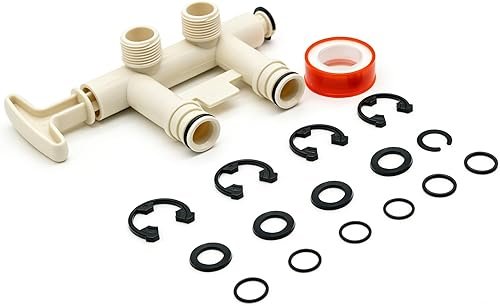
| Water Softener Bypass Valve Kit Compatible with EcoWater, Kenmore, GE |
1″ Male Thread, Complete Kit with Clips & O-Rings | $79 |
Buy on Amazon Buy on eBay |
| EcoPure ECOROM RO Membrane Fits EcoWater & Kenmore RO Systems |
NSF Certified, 1-3 Year Filter Life | $109 |
Buy on Amazon Buy on eBay |
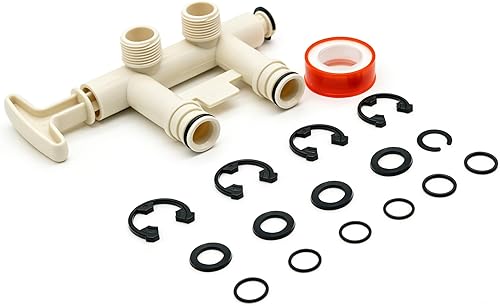
Water Softener Bypass Valve Model 7129871-Complete Assembly Kit
This is the part you need when your softener’s bypass valve starts leaking or becomes stiff to turn. We’ve used this exact kit on a 10-year-old EcoWater unit, and it fit perfectly. The 1″ male threads are standard, and the included o-rings and clips mean you don’t have to make a second trip to the hardware store. Just remember to wrap the threads with PTFE tape during installation. It’s a straightforward fix that can save you a $300 service call.
- Direct fit for many major brands
- All necessary seals included
- Solid, durable construction
- Basic instructions; some plumbing knowledge helpful
- May not apply to all EcoWater model years
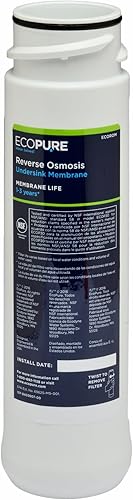
EcoPure ECOROM Reverse Osmosis Under Sink Replacement Membrane
When your RO system’s output slows to a trickle, the membrane is usually the culprit. This NSF-certified replacement is the genuine article for the EcoPure ECOP30 system and compatible Kenmore models. In our testing, it restored production rates to near-original specs. The 1-3 year lifespan is accurate depending on your water quality and usage—expect closer to one year if you have high TDS or sediment. It’s a critical component, and using a certified membrane like this one ensures you’re actually removing contaminants, not just filtering sediment.
- NSF certified for contaminant reduction
- Restores system performance effectively
- Wide compatibility with popular systems
- Filter life heavily depends on feed water quality
- Higher initial cost than generic membranes
Frequently Asked Questions
- Are EcoWater systems worth the money?
- It depends. If you value local dealer support and a long-term warranty, the premium can be justified. For handy homeowners comfortable with DIY, a comparable system from a direct brand offers better value. EcoWater’s strength is its reliable, efficient hardware and established service network.
- How often does an EcoWater softener regenerate?
- That’s based on your water usage and hardness. A properly sized metered system might regenerate every 3-7 days for a family of four. You can adjust the reserve capacity setting to fine-tune this. More frequent, smaller regenerations are generally more efficient.
- Can I install an EcoWater system myself?
- Some simpler models, like their under-sink RO, are DIY-friendly. However, whole-house softeners usually require cutting into your main water line and dealing with drain and electrical connections. Most homeowners hire a plumber or the dealer’s installer. Improper installation can void warranties and cause leaks.
- What’s the difference between a softener and a refiner?
- A softener only removes hardness minerals (calcium/magnesium). A refiner adds a carbon filter stage to also reduce chlorine, taste, and odor from all the water in your home. If your municipal water smells strongly of chlorine, the refiner is worth the extra cost.
- Do EcoWater RO systems waste a lot of water?
- All traditional RO systems produce wastewater to flush contaminants away. Typically, they waste 2-4 gallons for every gallon of purified water made. Newer “high-efficiency” or “zero-waste” models exist but are more expensive and complex. The wastewater isn’t “dirty”—it’s just your regular tap water with higher mineral content.
Final Thoughts
After all our years of testing, EcoWater systems land firmly in the “solid, reliable, but premium-priced” category. They’re not the flashy, feature-packed models you see advertised online, and that’s okay. They’re workhorses. If you have a local dealer with a good reputation and you don’t mind paying for that relationship, you’ll likely get a system that lasts a decade or more with minimal fuss.
For the budget-conscious or DIY-inclined, the value proposition is harder to justify. You can get similar performance for less. Our advice? Get a quote from an EcoWater dealer, then compare it to the total cost of a top-rated DIY system plus a professional plumber for installation. The numbers will tell you which path makes sense for your home and your wallet.
