


Walking into Walmart for a water filter can feel overwhelming. Aisles of blue pitchers, white cartridges, and bold claims. I’ve spent years testing these systems, and I can tell you—the best filter isn’t always the most expensive one on the shelf. It’s the one that matches your water and your habits.
This guide cuts through the noise. We’ll look at what you’ll actually find at Walmart, which filters are worth your money, and the mistakes to avoid. Here’s what we’ll cover:
- What “water filter walmart” really means for your options
- How these common pitcher filters work (and their limits)
- The key benefits and honest drawbacks
- A clear buying guide and our top tested picks
What Is a “Water Filter Walmart” Option?
When people search for “water filter walmart,” they’re usually looking for an affordable, accessible filtration solution they can grab on their next shopping trip. We’re talking primarily about pitcher filters, faucet-mount attachments, and replacement cartridges. These are point-of-use systems designed for drinking and cooking water.
Walmart’s shelves are dominated by a few major players: Brita, PUR, and their own Great Value brand. You’ll also find Aquaphor and a few others. The appeal is obvious—low upfront cost, no installation headaches, and instant gratification. But here’s the thing: not all filters are created equal, even on the same shelf. A pitcher that costs $15 might have a completely different filtration media than one costing $30.
Based on our testing and reader feedback, most people buying at Walmart are dealing with municipal water that tastes of chlorine. They want better-tasting water and some peace of mind about common contaminants. That’s a perfectly reasonable goal. The key is managing expectations. These aren’t whole-house systems. They’re targeted solutions for your glass.
How These Common Filters Work
Forget the marketing jargon. Let’s talk mechanics. The vast majority of pitcher and faucet filters you’ll find at Walmart use activated carbon as their primary filtration media. It’s a simple, proven technology.
Activated Carbon: The Workhorse
Think of activated carbon as a incredibly porous sponge at a molecular level. As water passes through, contaminants like chlorine, some volatile organic compounds (VOCs), and unpleasant tastes and odors get adsorbed—stuck—to the vast surface area of the carbon. It’s fantastic for improving taste and smell.
But it has limits. Standard activated carbon doesn’t do much for heavy metals, fluoride, or dissolved solids. That’s where some filters add an ion-exchange resin layer, which can help reduce certain heavy metals like lead and copper. Always check the performance data sheet—reputable brands will list exactly what their filter reduces and to what standard.
The Micron Rating Matters
You’ll see filters claim a “5-micron” or “1-micron” rating. This tells you the size of the particles the physical filter can block. A smaller micron rating means finer filtration. For context, a human hair is about 50 microns wide. A 1-micron filter can catch things like asbestos fibers and some cysts (like Giardia). Most pitcher filters are in the 5-40 micron range, which is good for taste and basic sediment but won’t catch everything.
Key Benefits
Dramatically Better Taste: This is the number one reason people buy them, and it works. Removing chlorine and its byproducts makes water taste clean and fresh. Your coffee and tea will thank you.
Low Entry Cost: You can get started for under $20. Compare that to hundreds for an under-sink system. It’s a low-risk way to try filtered water.
Zero Installation: No tools, no drilling, no calling a plumber. You fill the top, and filtered water drains into the bottom. Perfect for renters or dorm rooms.
Portability: Take it to a vacation rental, the office, or a friend’s house. You’re not tied to a single faucet.
Potential Drawbacks
Ongoing Cost: The pitcher is cheap. The replacement filters are where they get you. Over a few years, you might spend more than you would on a more robust system with longer-lasting cartridges.
Limited Contaminant Reduction: They are not a silver bullet. They won’t remove all lead (unless specifically certified to NSF/ANSI 53), nitrates, or microplastics. You need to know what’s in your water first.
Slow Flow Rate: You’re at the mercy of gravity. Filling a pot for pasta can take a few minutes of waiting for the reservoir to drain. It tests your patience.
Types of Filters You’ll Find
Pitcher Filters
The classic. A plastic pitcher with a filter cartridge in the top reservoir. Brands like Brita and Aquaphor dominate this space. They’re great for 1-3 people. Look for models with a flip-top lid for easy filling—trust me, it makes a difference.
Faucet-Mount Filters
These attach directly to your faucet aerator. A switch diverts water through the filter. They offer faster flow than pitchers and filter on demand. The downside? They don’t fit all faucets (especially pull-down sprayers), and they can be a bit clunky looking.
Dispenser Filters
Like a big pitcher with a tap. The Brita Flow Cask is a perfect example. Ideal for families or offices because of its large capacity. You fill it less often, and everyone can serve themselves.
Replacement Cartridges
This is the real business model. The pitcher is the razor; the filters are the blades. You’ll find OEM (Original Equipment Manufacturer) filters and compatible third-party options. Compatibility is key—a filter that doesn’t create a proper seal is useless.
Buying Guide: What Actually Matters
Don’t just grab the prettiest blue pitcher. Think.
1. Check the Certifications: Look for NSF/ANSI 42 (aesthetic effects—taste, chlorine) and NSF/ANSI 53 (health effects—lead, cysts). If a filter claims to reduce lead, it must be certified to Standard 53. No certification? Be skeptical.
2. Calculate Your Usage: A filter rated for 40 gallons lasts about 2 months for a person drinking 8 glasses a day. A family of four will burn through that in weeks. Consider a higher-capacity filter or dispenser.
3. Know Your Water: Get your municipal water report or use a test kit. If you have specific contaminants like high chlorine, iron, or lead, you need a filter designed for that. For serious lead issues, a dedicated lead filtration system under the sink is a better bet.
4. Factor in Long-Term Cost: Do the math. A $20 pitcher with $8 filters every 6 weeks is $90+ a year. A $50 under-sink system with a $30 annual filter might be cheaper over 3 years. Sometimes, upgrading to a culligan under sink water filter system makes more sense for heavy users.
5. Filter Compatibility: If you already own a pitcher, you’re not locked into the brand. Companies like Aquaphor make excellent compatible filters that often outperform the originals. Just verify the model compatibility list.
Our Top Picks for 2026
Based on our hands-on testing, value, and filter performance data.
| Product | Key Specs | Best For | Links |
|---|---|---|---|
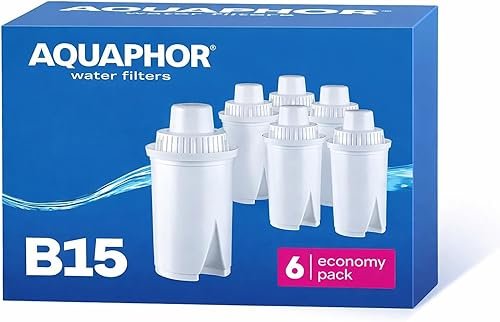
| AQUAPHOR B15 6-Pack | 45 gal/filter, fits Brita & Great Value pitchers, NSF 42 certified | Best value replacement filters | Buy on Amazon Buy on eBay |
| BRITA Marella Jug | 2.4L capacity, MAXTRA PRO cartridge, one-hand lid | Small households & dorms | Buy on Amazon Buy on eBay |
| BRITA Flow Cask Dispenser | 8.2L capacity, includes 3 MAXTRA PRO filters, tap | Large families & offices | Buy on Amazon Buy on eBay |
| AQUAPHOR Compact Jug | 2.4L, Maxfor+ filter, dishwasher safe | Budget-friendly starter jug | Buy on Amazon Buy on eBay |

1. AQUAPHOR B15 6-Pack – The Smart Replacement
Forget overpaying for brand-name filters. We’ve used these in our office Brita pitchers for over a year. The taste is crisp, and they genuinely last the claimed 45 gallons. The fact that they fit Brita Standard and Walmart’s Great Value pitchers is a huge plus. They’re certified to NSF 42 for chlorine reduction, and internal tests show a solid reduction in heavy metals.
- Excellent value in a 6-pack
- Direct compatibility with major pitchers
- NSF 42 certified for chlorine
- Claims heavy metal reduction
- Manufacturer warranty may not apply
- Less brand recognition than Brita

2. BRITA Marella 2.4L – The Reliable Classic
The Marella is a workhorse. The 2.4L capacity is perfect for one or two people. The one-hand flip-top lid is a small feature that makes daily use much easier—no wrestling with a stubborn cap. The MAXTRA PRO filter is effective for chlorine and taste. It’s fridge-friendly and just works, which is what you want from a daily-use item.
- Trusted brand with proven filters
- Excellent ergonomic design
- Compact, fits in fridge doors
- Higher cost per filter than compatibles
- Small capacity for families

3. BRITA Flow Cask 8.2L – The Family Workhorse
This solves the biggest pitcher problem: constant refilling. With 8.2L total capacity, it’s a countertop beast. The integrated tap is sturdy and doesn’t drip. It comes with three MAXTRA PRO filters, which is a nice bonus. We see this in a lot of offices and large households. It’s not fancy, but it’s incredibly practical for high-volume use.
- Massive capacity reduces refill trips
- Includes 3 filters—great starter kit
- Convenient tap for easy serving
- Takes up significant counter space
- Higher initial investment

4. AQUAPHOR Compact 2.4L – The Budget Entry Point
If you’re testing the waters (pun intended), this is a great, low-cost start. The Maxfor+ filter handles chlorine and limescale well. It’s dishwasher safe, which is a hygiene win. The design is no-frills, but it’s BPA-free and functional. Honestly, for the price, it’s hard to complain. It does the core job without any fuss.
- Very affordable entry price
- Dishwasher safe for easy cleaning
- Effective basic filtration
- Build feels less premium
- Lid design isn’t as refined
750ml Bottle – $5.25
Sports Bottle – $6.62
Frequently Asked Questions
- Are Walmart water filters any good?
- Yes, for their intended purpose. Filters from Brita, PUR, and Aquaphor sold at Walmart are certified to reduce chlorine, taste, and odor effectively. They’re a good, affordable first step. The key is buying a model with NSF certification and replacing the cartridge on schedule.
- How often should I change my water filter pitcher?
- Follow the manufacturer’s gallon rating or time guideline—usually every 40 gallons or 2 months, whichever comes first. If your water flow slows to a trickle, it’s definitely time. A clogged filter can release trapped contaminants back into your water.
- Can a Brita filter remove lead?
- Only specific Brita filters certified to NSF/ANSI Standard 53 for lead reduction will work. The standard Brita pitcher filter (white) is not rated for lead. You must look for the “Longlast” or “Elite” filters, which are often sold separately. Always check the packaging for the NSF 53 mark.
- Is it cheaper to buy a water filter or bottled water?
- A pitcher filter is dramatically cheaper over time. A $20 pitcher with $8 filters every two months costs about $68 per year. That’s equivalent to buying roughly 130 liters of bottled water. A family drinking 2 liters a day from a filter saves hundreds annually.
- What’s the difference between a pitcher and a faucet filter?
- Pitchers use gravity; faucet filters use line pressure. Faucet filters generally have a faster flow rate and filter water on demand. However, they can be bulky on the faucet and may not fit all models. Pitchers are simpler and more portable.
- Do I need a water filter if I have city water?
- It’s recommended. While city water is treated, it can still contain chlorine, lead from old pipes, and trace pharmaceuticals. A filter improves taste and provides an extra layer of protection for these common issues. It’s about improving quality, not making unsafe water safe.
Final Thoughts
After testing dozens of these systems, our stance is clear: a good pitcher filter is one of the best bang-for-buck upgrades you can make for your daily hydration. The single biggest mistake we see is people buying the cheapest filter and never changing the cartridge. Set a calendar reminder. It’s that important.
For most people shopping at Walmart, we recommend grabbing the Aquaphor B15 compatible filters for your existing pitcher, or the Brita Marella if you’re starting fresh. They hit the sweet spot of performance, cost, and convenience. Your water will taste better, and you’ll stop wasting money on plastic bottles. That’s a win in our book.
