


Your water cooler looks clean. The water tastes fine. So why bother with maintenance? Because what you can’t see—the biofilm inside the reservoir, the mold in the drip tray—is slowly ruining your water and your machine. After testing dozens of coolers and talking to repair techs, we know the truth: a little upkeep saves you from a lot of headaches (and repair bills).
This guide covers everything you need to know. We’ll walk you through the what, why, and how.
- What proper maintenance actually involves
- The step-by-step cleaning process
- The tools and products that make it easy
- Common mistakes that damage your cooler
What Is Water Cooler Maintenance?
Water cooler maintenance is the regular cleaning and part replacement that keeps your dispenser sanitary and functional. It’s not just about wiping the outside. The real work happens inside—the reservoir, the lines, and the taps where water sits and can grow things.
Think of it like your coffee maker. You’d never go years without descaling it, right? A water cooler holds more water, gets used more often, and has more parts that can get gunky. Maintenance is the routine that stops that gunk from building up. It protects your health and your investment.
At its core, it’s a two-part job: sanitization (killing microbes) and part care (replacing filters, checking seals). Miss one, and the other fails. We’ve seen coolers with brand-new filters still dispensing cloudy water because the tank was never cleaned.
How Water Cooler Maintenance Works
The process is straightforward, but the details matter. Here’s the breakdown of a proper maintenance cycle.
The Sanitization Cycle
This is your deep clean. Unplug the cooler, drain it completely, and remove the bottle or source. You’ll mix a sanitizing solution—usually a diluted bleach or a dedicated cleaner—and fill the reservoir. Let it sit for 10-15 minutes to kill bacteria and biofilm. Then, you flush it thoroughly with clean water, at least three times, until there’s no chemical smell. The drip tray, taps, and exterior get wiped down with the same solution. This should happen every 3 to 6 months.
Filter Replacement
Most coolers with built-in filtration use a carbon water filter to tackle taste and odor. These filters have a finite capacity, typically 1,500 to 3,000 liters. Once saturated, they stop working and can even release trapped contaminants. Replacing them is usually a simple twist-off, twist-on job. The key is doing it on schedule, not when the water starts tasting bad—that’s too late.
Visual Inspection & Part Checks
Every time you change the bottle, give it a quick look. Check the seals and gaskets for cracks. Look at the drip tray—empty and clean it weekly to prevent mold. Listen for unusual pump noises. A small leak from a worn whole house filter cartridge seal can cause big problems if ignored. This constant vigilance is what separates a cooler that lasts a year from one that lasts a decade.
Key Benefits of Regular Maintenance
Health & Safety First. This is the big one. A neglected cooler can harbor E. coli, mold, and algae. Regular sanitization breaks that cycle, giving you water that’s actually safe to drink. It’s non-negotiable, especially in an office setting.
Better Taste & Odor. That plastic or “off” taste? It’s often from a dirty reservoir or an expired filter. Clean systems deliver crisp, clean-tasting water. It makes you drink more water, which is always a win.
Cost Savings Over Time. A $40 cleaning kit twice a year is cheaper than a $200 service call or a $400 replacement cooler. Preventive care stops small issues, like a clogged filter affecting the pump, from becoming catastrophic failures.
Appliance Longevity. Mineral buildup (scale) can coat the cooling element and compressor, making it work harder and die sooner. Descaling as part of maintenance keeps the internals clean and efficient.
Potential Drawbacks & What to Avoid
It’s a Chore. Let’s be honest, it’s another thing to remember. The drawback is the time and consistency it requires. But it’s a 20-minute job every few months. Put it in your calendar.
Risk of Incorrect Reassembly. If you take parts apart for cleaning and don’t put them back correctly, you can cause leaks or blockages. Take a photo before you disassemble anything. And never force a filter into place.
Over-Maintenance. Yes, it’s possible. Changing filters too early wastes money. Sanitizing with chemicals too often can degrade components. Follow the manufacturer’s schedule—it’s there for a reason.
Types of Maintenance Tasks
Weekly Upkeep
This is the easy stuff. Wipe the exterior with a damp cloth. Empty and rinse the drip tray. Check the bottle level and area for spills. It takes two minutes and prevents grime from setting in.
Monthly/Quarterly Sanitization
The full internal clean we detailed above. This is the core of your maintenance plan. For coolers with advanced filtration, like those tackling iron filtration, you might need to clean more often as sediment can build up faster.
Semi-Annual Part Replacement
This is your filter change. Also, inspect the tap mechanisms. If they’re sticking or dripping, a replacement spigot is cheap and easy to install. Don’t forget the carbon removal filter if your system has a dedicated stage for it.
Annual Deep Check
Once a year, pull the cooler away from the wall. Vacuum the condenser coils (usually on the back) to keep the cooling efficient. Check all hoses for brittleness or kinks. This is also a good time to consider if your water source needs better pre-filtration, perhaps a system for lead filtration if you’re on older pipes.
Buying Guide: Maintenance Tools & Parts
You don’t need much. Here’s what actually matters.
Cleaning Kit vs. DIY: A dedicated kit (like our top pick) comes with the right cleaner, brushes, and instructions. It removes the guesswork. DIY with bleach and a bottle brush works fine if you’re careful with ratios.
Filter Compatibility: This is critical. You must match the filter model to your cooler. Check the manual or the old filter’s part number. Universal filters exist but can be hit-or-miss on performance.
Replacement Spigots: Know your cooler’s brand and model. Spigots come in different sizes and mount types (push-button, lever). Taking the old one to the hardware store is the safest bet.
Quality Over Price: A cheap, off-brand filter might not meet NSF/ANSI standards for contaminant reduction. It’s worth paying a little more for a certified filtered water for home peace of mind.
Top Picks for Maintenance Kits & Parts
We’ve used all of these. They’re the ones we keep coming back to.
| Product | Type | Price | Best For | Links |
|---|---|---|---|---|
| Water Cooler Cleaning Kit | Sanitization Kit | $44 | Complete, foolproof cleaning |
Buy on Amazon Buy on eBay |
| Lenoxx 5L Bench Top Cooler | Complete Unit | $95 | A new, reliable cooler with filtration |
Buy on Amazon Buy on eBay |
| jojofuny Push Button Tap | Replacement Part | $12 | Fixing a leaky or stuck spigot |
Buy on Amazon Buy on eBay |

Water Cooler Cleaning Kit
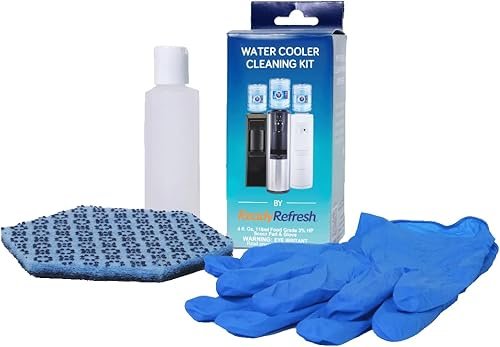
This is the kit we recommend to everyone. It takes all the thinking out of the job. You get a pre-measured sanitizer, a long flexible brush for the reservoir, and a tap brush. We’ve used it on coolers that hadn’t been cleaned in years (yikes), and it brought them back. The instructions are clear. It’s a bit more expensive than DIY bleach, but the convenience and guaranteed results are worth it.
- All-in-one solution
- Effective, safe cleaner
- Includes specialized brushes
- Single-use per purchase
- Can find components cheaper separately

jojofuny Push Button Plastic Water Dispenser Tap
A dripping tap is annoying and wastes water. This $12 replacement is a lifesaver. It’s a generic push-button model that fits many common benchtop coolers. Installation took us about five minutes—just unscrew the old collar and pop this one in. The plastic feels sturdy enough for the price. Is it a premium metal part? No. But it stops the drip and gets your cooler working properly again. A perfect cheap fix.
- Extremely affordable
- Easy DIY installation
- Solves common drip issues
- Plastic construction
- Must verify compatibility first
Water Cooler Maintenance FAQ
- How often should I clean my water cooler?
- Sanitize it every 3 to 6 months. If it’s in a high-traffic office or you notice taste changes, do it quarterly. Wipe spills and clean the drip tray weekly.
- Can I use vinegar to clean my water cooler?
- Yes, white vinegar is a safe, natural alternative. Use a 1:1 vinegar-to-water solution. Let it sit for 15-20 minutes, then flush thoroughly. The smell dissipates after a few rinses.
- Why does my water taste bad even with a new filter?
- The problem is likely inside the cooler, not the filter. A dirty reservoir or old water lines can harbor bacteria and biofilm that create off-flavors. You need to sanitize the entire system.
- What happens if I never change the filter?
- The filter becomes saturated and stops removing contaminants. Worse, it can become a breeding ground for bacteria and may even release trapped particles back into your water, making quality worse than before.
- My cooler is leaking from the bottom. What should I do?
- First, unplug it. Check the drip tray for overflow. Then inspect the bottle connection and seals. If the leak is internal, it could be a cracked reservoir or hose. At that point, call a technician or consider replacement.
- Do I need to clean a bottleless (point-of-use) cooler?
- Absolutely. In fact, they often need more frequent sanitization because they’re connected to a continuous water source. Follow the same process, paying extra attention to the inlet filter and lines.
Final Thoughts
Water cooler maintenance isn’t glamorous. It’s a 20-minute task that’s easy to forget. But after years of seeing the consequences of neglect—moldy tanks, failed compressors, and sick employees—we can’t stress this enough: just do it. Mark your calendar. Buy the kit. The payoff in clean, safe, great-tasting water is huge.
Start with a full sanitization today if you haven’t in the last six months. Then, set a recurring reminder. Your cooler, your wallet, and your health will thank you. It’s the simplest way to guarantee you’re getting the cleanest water possible from your machine.
