


Forget lukewarm water from the tap or lugging bottles from the store. A good water cooler system is a game-changer for your kitchen or office. We’ve tested dozens, from basic dispensers to complex filtration units, and the difference is night and day. This guide covers everything you need to know to pick the right one.
- What a water cooler system actually is and how it works.
- The real benefits and the honest drawbacks nobody mentions.
- A breakdown of the different types you’ll encounter.
- Our hands-on reviews of the top models for 2026.
What Is a Water Cooler System?
At its heart, a water cooler system is an appliance that stores, filters, and dispenses drinking water at your desired temperature. Think beyond the jugs in the office breakroom. Modern units are compact, efficient, and built for home use. They connect to your water line or use a refillable bottle, then cool (or heat) the water internally.
The key differentiator from a simple filter pitcher is the active temperature control and instant access. You get cold water on a hot day or near-boiling water for tea in seconds. The filtration component is what separates a true system from a basic dispenser. It’s designed to improve taste and remove common contaminants right at the point of use.
In our experience, the single biggest upgrade people notice is the consistency. No more waiting for the tap to run cold. No more stale-tasting water from a jug that’s been sitting out. It’s about convenience and quality rolled into one countertop or freestanding appliance.
How a Water Cooler System Works
The process is simpler than you’d think, but the engineering is clever. Let’s look at the main stages.
1. Water Source & Filtration
Water enters the system either from a attached bottle or a direct plumbing connection. It immediately passes through one or more filters. Most use a carbon filter as the primary stage to tackle chlorine, odors, and improve taste. Some advanced models add sediment filters or other media to address specific impurities.
2. Temperature Regulation
Here’s where the magic happens. The filtered water flows into two separate reservoirs. One is connected to a refrigeration unit—basically a tiny, silent compressor—that chills the water to around 5-10°C. The other reservoir has a heating element that brings water to near-boiling, typically 85-95°C. A thermostat maintains these temperatures constantly.
3. Dispensing
When you press a tap or lever, you’re simply opening a valve. Gravity or a small pump directs water from the chosen reservoir—cold, hot, or sometimes room-temperature—through the spout and into your cup. It’s instant. The system then refills and re-regulates the temperature automatically.
Key Benefits of a Water Cooler System
Unmatched Convenience: This is the number one reason people buy them. Instant access to chilled water means you’ll drink more of it. Hot water on demand for coffee, oatmeal, or cooking speeds up your routine. It’s a small luxury that becomes a daily habit.
Improved Taste & Quality: A built-in filter removes the chlorine taste and smell common in municipal water. It can also reduce lead, sediment, and other contaminants depending on the filter specs. This isn’t just about taste; it’s about trust in what you’re drinking. For more targeted contaminant removal, you might explore a dedicated drinking water filter system.
Cost Savings Over Time: The math is simple. A $95 system that lasts three years costs pennies per day compared to buying bottled water. You also eliminate the waste of plastic bottles, which is a win for your wallet and the planet.
Space Efficiency: A benchtop unit consolidates a kettle, a water filter pitcher, and a carafe of refrigerated water into one footprint. It clears up counter space and reduces clutter.
Potential Drawbacks to Consider
Ongoing Filter Costs: You’ll need to replace filters every 6-12 months, depending on usage and water quality. This is an annual expense of $20-$60. It’s crucial maintenance—skip it, and your water quality plummets.
Mineral Buildup: In hard water areas, the heating element can develop scale. This reduces efficiency and can eventually cause damage. Some models have anti-scale coatings, but you may need to descale them periodically with vinegar.
Not a Full Purification System: Most standard coolers use basic carbon filtration. They won’t remove all dissolved solids, heavy metals, or microbes. If you have serious water quality issues, you need a more robust setup, perhaps a ceramic filtration system or reverse osmosis unit.
Types of Water Cooler Systems
Benchtop / Countertop Units
Our favorite for most homes. They sit on your counter, are easy to install (often just plug-in), and have a small footprint. Perfect for kitchens, home offices, or small apartments. Capacity is usually 2-5 liters.
Freestanding Units
The classic office cooler. They stand on the floor and often use large refillable bottles (top-loading) or can connect directly to a water line (point-of-use). Great for high-traffic areas but take up more space.
Point-of-Use (Direct-Connect)
These systems hook directly into your plumbing. You never have to refill a bottle. They offer unlimited filtered water but require installation—sometimes a simple saddle valve, sometimes a professional plumber. This is the most seamless experience.
Hot & Cold vs. Cold & Room Temp
Most units offer two temperatures. Decide if you need the hot water function. It’s fantastic for tea and instant soups, but it adds cost, complexity, and a safety risk if you have young children. Some models offer a third room-temperature tap, which is surprisingly useful.
Buying Guide: What Actually Matters
After testing dozens, here’s what we focus on. Ignore the marketing fluff.
1. Filtration Quality: Look for NSF/ANSI certifications. Standard 42 covers aesthetic effects like chlorine taste. Standard 53 covers health contaminants like lead. Check the filter’s micron rating—smaller is better for particulate removal. A 1-micron carbon block filter is a solid baseline.
2. Cooling Power & Tank Size: Measured in liters per hour (L/h). A good benchtop model should deliver at least 0.5L/h of chilled water. The internal tank size determines how much cold water is ready instantly. A 1L tank is fine for a couple, but a family might want 2L+.
3. Build & Safety: Look for food-grade materials, BPA-free plastics, and stainless steel reservoirs. For hot water models, a child-safety lock on the hot tap is non-negotiable.
4. Ease of Maintenance: Can you change the filter yourself in 60 seconds? Is the drip tray removable and dishwasher-safe? These details matter for long-term happiness. If your water is very hard, you might also consider a pre-filter like a whole house ceramic filter to protect the appliance.
Our Top Picks for 2026
| Product | Key Features | Price | Links |
|---|---|---|---|
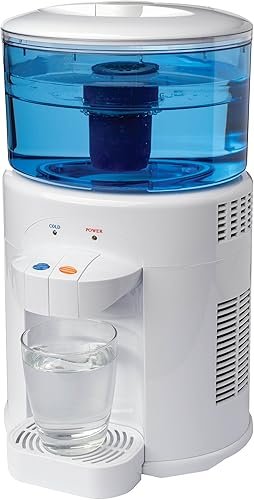
| Lenoxx 5L Bench Top | Dual taps (room/chilled), carbon & resin filter, removable spill-guard tray. | $95 |
Buy on Amazon Buy on eBay |
| Devanti Hot/Cold Top Load | Hot (80-95℃) & cold (10-15℃) taps, electronic refrigeration, safety protections. | $91 |
Buy on Amazon Buy on eBay |
| Devanti 22L 3-Temp Filter | 22L capacity, 7-stage filtration, hot/cold/room temp taps, benchtop design. | $119 |
Buy on Amazon Buy on eBay |
| JUNSPOW 7L Pet Dispenser | Gravity-fed, no electricity, silent, stainless steel, large base for pets. | $59 |
Buy on Amazon Buy on eBay |

Lenoxx 5L Bench Top Water Cooler & Filter
This is our top pick for most people. It’s simple, effective, and does exactly what it promises. The dual taps are straightforward—no confusing buttons. In our testing, the cooling was consistent, getting water down to about 8°C. The filtration is basic but makes a noticeable difference in taste, removing that municipal chlorine tang.
- Excellent value for money
- Very easy to set up and use
- Compact, fits well in most kitchens
- Filter replacement is a breeze
- No hot water function
- Plastic construction feels a bit lightweight
- 5L capacity requires occasional refilling for a large family
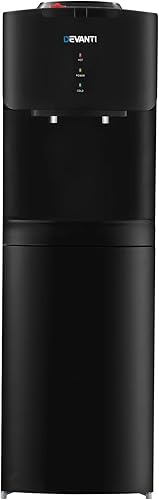
Devanti Hot/Cold Top Loading Cooler
If you need hot water on demand, this Devanti is a solid, budget-friendly choice. The hot water is genuinely hot—perfect for a quick cup of tea. The electronic refrigeration is quieter than older compressor models we’ve heard. Safety features like overheat protection are reassuring, especially in a busy office or a home with kids.
- True hot and cold functionality
- Operates quietly
- Multiple safety certifications
- Classic, stable design
- Top-loading bottles can be heavy to lift
- No built-in filtration (relies on bottled water quality)
- Uses more energy running both heating and cooling
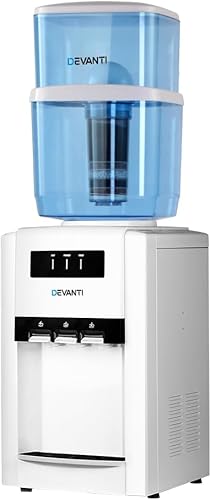
Devanti 22L 3-Temp Filter Dispenser
This is the workhorse. The 22-liter capacity means you’re not refilling it every day. The 7-stage filtration is the most comprehensive in this roundup, tackling sediment, chlorine, and even claiming to balance pH. Having three temperature options—hot, cold, and room—is incredibly versatile. It’s a bit bulkier, but the capacity makes up for it.
- Massive 22L capacity, great for offices or large families
- Advanced 7-stage filtration system
- Three temperature settings cover all needs
- Good build quality for the price
- Takes up significant counter space
- Initial setup of the filtration can be fiddly
- Higher upfront cost than simpler models

JUNSPOW 7L Stainless Steel Pet Water Dispenser
Okay, this one’s for your furry friends. It’s not a powered cooler, but it’s a brilliant gravity-fed system that keeps fresh water available for pets. The stainless steel bowl is hygienic and easy to clean. We like the enlarged, non-slip base—it doesn’t get pushed around by eager drinkers. No electricity means it’s silent and safe.
- Completely silent operation
- Large 7L capacity, great for multi-pet homes
- Stainless steel is durable and hygienic
- No electricity or filters needed
- Does not cool or heat water
- Requires manual cleaning to prevent slime buildup
- Gravity flow can be slow for very large, thirsty dogs
Frequently Asked Questions
- How often should I change the filter in my water cooler system?
- Most manufacturers recommend every 6 months or after filtering 1,500-2,000 liters. If your water has high sediment or you notice a taste change, do it sooner. A clogged filter reduces flow and stops cleaning your water. Mark the date on the filter when you install it.
- Can a water cooler system remove fluoride?
- Standard carbon filters in most coolers do not remove fluoride. You would need a system with activated alumina or reverse osmosis. For whole-house treatment, look into a dedicated whole house fluoride removal system. Point-of-use coolers generally aren’t designed for this.
- Is it cheaper to run a water cooler or buy bottled water?
- A water cooler wins hands down over time. A $100 unit plus $30/year in filters costs about $0.35 per day in the first year. A single 500ml bottle of water costs $1-2. If your household drinks 2 liters daily, you’re saving $2-4 per day. The cooler pays for itself in 2-3 months.
- Do water coolers use a lot of electricity?
- Not really. A modern benchtop cooler uses about 0.5-1 kWh per day—similar to a nightlight. The heating function uses more energy than the cooling. Look for models with energy-saving modes or “sleep” functions to cut usage by up to 50% during idle hours.
- Can I install a direct-connect water cooler myself?
- If you’re handy, yes. Most come with a saddle valve that clamps onto a cold water pipe. It’s a simple drill-and-tap job. However, if you’re not comfortable with plumbing or have old pipes, hire a pro. A bad connection can leak and cause serious damage. For complex setups, a Culligan under sink water filter installed by a professional is a good alternative.
- Why does my water cooler taste funny after changing the filter?
- This is normal for the first few liters. New carbon filters can release fine carbon dust. Run 2-3 gallons of water through the system (discard it) to flush the lines. If the taste persists after flushing, the filter may be defective or incompatible with your model.
Final Thoughts
A water cooler system isn’t just another kitchen gadget. It’s a daily upgrade to your hydration habit. After years of testing, we’re convinced that a reliable benchtop model with solid filtration offers the best bang for your buck for most people. The convenience of instant chilled water is something you quickly can’t live without.
Our top recommendation remains the Lenoxx 5L Bench Top for its simplicity and value. But if you need hot water, the Devanti Hot/Cold is a fantastic budget option. Just remember to factor in filter replacements and clean the unit regularly. Do that, and you’ll have fresh, great-tasting water on tap for years.
