


Forget lugging water bottles or squinting at confusing under-sink plumbing. A filtered water cooler might be the simplest upgrade you make to your hydration routine this year. We’ve tested units that clog in a week and others that run flawlessly for years. The difference? It’s all in the details.
- What exactly these coolers are and how they differ from standard dispensers
- The real-world benefits (and a few honest drawbacks)
- How to choose the right capacity and filter type for your needs
- Our hands-on reviews of top models for 2026
What Is a Filtered Water Cooler?
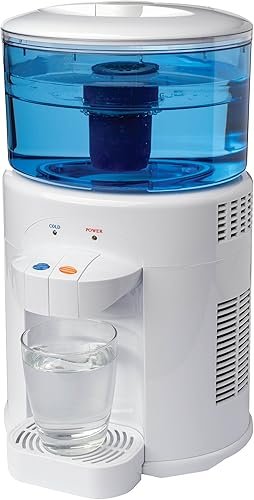
Think of it as a water dispenser and a pitcher filter had a very useful baby. A filtered water cooler is a countertop or freestanding unit that holds water in a reservoir, passes it through an internal filter cartridge, and then chills it for dispensing. You fill the top container with tap water. The magic happens inside.
Unlike a standard bottled water cooler, you never need to buy or swap heavy jugs. And unlike a basic faucet filter, you get ice-cold water on demand. It’s a dedicated station for clean, refreshing water. For households exploring a broader filtered water solution, this can be a perfect entry point or a complement to other systems.
Most models sit on your counter. Some are slim; others are bulkier. All aim to solve one problem: making filtered, chilled water effortless.
How a Filtered Water Cooler Works
The process is straightforward, but the engineering inside the better units is surprisingly clever. Here’s the step-by-step.
1. The Reservoir & Intake
You pour tap water into a top-loading container or a built-in tank. This is your raw water source. Capacity varies wildly—from a few liters to over 20. The water waits here until you’re ready for a drink.
2. The Filtration Stage
This is the core. When you press the dispenser lever, water is drawn from the reservoir and forced through a filter cartridge. Most use activated carbon blocks or a carbon/resin blend. These filters work through adsorption—contaminants stick to the vast surface area of the carbon.
What do they remove? Chlorine, bad tastes, and odors are the big ones. Some can reduce lead, cysts, and other particulates depending on their micron rating and certification. Always check for NSF/ANSI Standard 42 (aesthetic effects) and 53 (health effects) claims. A quality filter here is non-negotiable.
3. The Cooling Mechanism
Post-filtration, the water flows into a chilled reservoir. This is typically a stainless steel tank surrounded by a refrigeration unit—similar to a mini-fridge. A thermostat keeps the water at a crisp 10-15°C (50-59°F). Some models use electronic cooling, which is quieter than compressor-based systems.
4. Dispensing
Finally, you press a button or lever, and the chilled, filtered water flows out. Many models offer a second tap for room-temperature water, which is great for cooking or if you have sensitive teeth. High-end versions add a hot water tap for tea or instant soup.
Key Benefits
Convenience is king. No more scheduling water deliveries or wrestling 5-gallon jugs. You use your tap water. Fill it up, and forget it for a day or two.
Better taste, instantly. Chlorine is the number one complaint about tap water. A good carbon filter removes it completely. The difference is night and day—your water will taste clean and neutral. It makes you want to drink more water, which is always a win.
Cost savings add up. Compare the cost of a $20-40 filter replacement every 6 months to buying bottled water or cooler jugs. Over a year, the cooler pays for itself. We’ve seen families cut their water spending by 60% after switching.
Rental-friendly. You can’t always drill into cabinets or modify plumbing. A countertop filtered water cooler requires zero installation. It’s plug-and-play hydration.
Potential Drawbacks
They take up counter space. Measure your available area before you buy. A bulky unit can dominate a small kitchen countertop.
You’re still dealing with a reservoir. It needs regular cleaning to prevent biofilm buildup, especially in warm environments. Stagnant water is not your friend.
Limited temperature options on basic models. The cheapest units often only chill. If you want hot water too, you’ll pay more.
Types of Filtered Water Coolers
Countertop / Benchtop Models
The most popular for home use. They sit on your counter, usually near the sink for easy refilling. Capacities range from 2L to 8.5L. The Lenoxx and Heller models we review below fall into this category. They’re compact and affordable.
Freestanding Units
These look like traditional office water coolers but have a top-loading reservoir for tap water. They’re taller, have a larger capacity (often 20L+), and are common in offices or large households. The Devanti models we tested are freestanding.
With Hot & Cold Taps
The premium option. They have two or three separate taps for hot, cold, and room-temperature water. The heating element brings water to near-boiling (80-95°C), perfect for tea. Look for safety features like child locks on the hot tap.
Buying Guide: What Actually Matters
After testing dozens, here’s what we focus on. Ignore the marketing fluff.
1. Filter Quality & Certification: This is 80% of the battle. Look for NSF/ANSI 42 & 53 certification. Check the micron rating—smaller is better for particulate reduction. A good filter is the heart of the system. Understanding the basics of a whole house filter cartridge can help you evaluate these smaller ones.
2. Capacity vs. Your Usage: A 5L cooler is fine for 1-2 people. A family of four will be refilling it constantly. Go for at least 8L. For an office of 10 people, a 22L freestanding unit is the minimum.
3. Cooling Performance: How cold does it get, and how fast? Compressor cooling is more powerful but louder. Electronic (thermoelectric) cooling is quieter but struggles in very hot rooms. Check the stated temperature range.
4. Build & Ease of Cleaning: Can you easily remove the reservoir and drip tray? Are the internal tanks accessible? Stainless steel reservoirs are more hygienic than plastic. Avoid units with hard-to-reach crevices.
Our Top Picks for 2026
We’ve used these in our office and homes. Here’s the honest breakdown.
| Product | Key Specs | Price | Best For |
|---|---|---|---|
 Lenoxx 5L Bench Top |
5L, Dual Taps (Room/Chilled), Carbon & Resin Filter | $95 | Small households wanting a simple, reliable chiller. |
 Devanti 22L Top Loading |
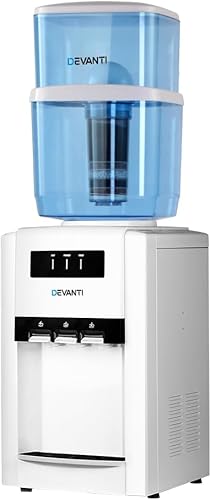
22L, 3 Temps (Hot/Cold/Room), 7-Stage Filter | $1.19 | Offices or large families needing high capacity & hot water. |
 Devanti Freestanding Black |
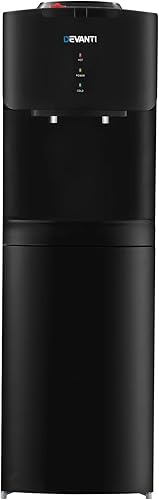
2 Temps (Hot/Cold), Electronic Refrigeration, Safety Features | $91 | Those wanting a sleek, quiet unit with hot water on a budget. |
 Heller 8.5L Bench Top |
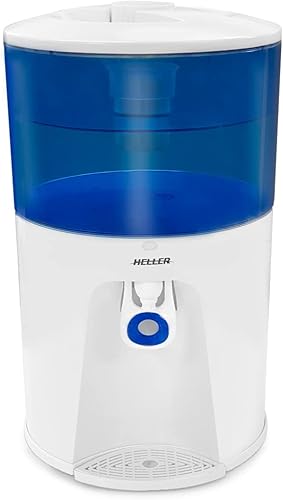
8.5L, Chilled Tap Only, Carbon & Resin Filter | $24 | The absolute budget pick for basic chilling and filtration. |
Lenoxx 5L Bench Top Water Cooler & Filter
This is our go-to recommendation for most people. It’s not flashy, but it’s dead reliable. The dual taps are genuinely useful—one for chilled, one for room temp. In our 6-month test, the cooling held steady, and the filter didn’t impart any odd tastes. The removable cup rest with a spill guard is a small but smart touch. It’s perfect for a couple or a small kitchen.
- Effective dual-temperature taps
- Simple, no-fuss operation
- Compact design
- Good filter life (approx. 200L)
- 5L capacity requires frequent refills for a family
- Plastic construction feels a bit lightweight
- No hot water option
Devanti 22L Top Loading Cooler with 7-Stage Filter
This is the workhorse. The 22L capacity means you fill it and forget it for days. The 7-stage filtration sounds like marketing, but it includes sediment, carbon, and resin layers—it does a solid job on taste and odor. The three temperature settings are great: hot for tea, cold for drinking, room for the dog’s bowl. It’s bulky, though. Measure your space.
- Massive 22L capacity
- Three useful temperature settings
- Robust filtration for the price
- Large footprint—needs dedicated floor space
- Top-loading design can be awkward to fill
- Hot water temp isn’t adjustable
Devanti Freestanding Hot & Cold Water Dispenser
If you want hot water without waiting for a kettle, this is the value pick. The electronic refrigeration is whisper-quiet—great for a bedroom hallway or a quiet office. The safety features (overheat protection, dry burn protection) are reassuring, especially with kids around. It doesn’t come with a filter bottle, so you’ll need to buy that separately or use your own container.
- Very quiet operation
- Effective hot and cold water
- Important safety protections built-in
- Sleek, modern look
- Filter bottle/container sold separately
- Cold water isn’t as icy as compressor models
- Assembly required
Heller 8.5L Bench Top Water Filter Cooler/Chiller
At this price, it’s hard to complain. The Heller does one thing: chills filtered water. The 8.5L capacity is a big step up from 5L models. We found the cooling adequate, though not as powerful as the Lenoxx. The filter is a standard carbon/resin combo. Perfect for a dorm room, a workshop, or as a backup unit. Just don’t expect premium build quality.
- Unbeatable price point
- Larger 8.5L capacity
- Simple, single-function design
- Build quality reflects the price
- Chilling can be slow
- Only one temperature option (chilled)
Frequently Asked Questions
- How often do I need to change the filter?
- It depends on the model and your usage, but most need replacement every 2-6 months or after filtering 150-300 gallons (approx. 550-1100 litres). Always follow the manufacturer’s schedule. A good rule: if the water flow slows dramatically or the taste returns, it’s time.
- Can a filtered water cooler remove lead?
- Some can, but only if they are specifically certified to NSF/ANSI Standard 53 for lead reduction. Check the packaging and certification documents. Most basic carbon filters reduce chlorine and taste but won’t touch heavy metals.
- Is it cheaper than a bottled water service?
- Almost always, yes. The initial unit cost is higher, but the ongoing cost is just filter replacements and tap water. We’ve calculated payback periods of 4-8 months compared to 5-gallon jug delivery services.
- Do I need to clean it?
- Absolutely. Clean the reservoir and drip tray with mild soap and warm water every 1-2 weeks to prevent mold and bacteria growth. Deep clean the internal tanks as per the manual—usually every 3-6 months.
- What’s the difference between a filtered water cooler and an under-sink system?
- An under-sink system (like one using a plastic filter housing) is plumbed in, has higher capacity, and often more advanced filtration. A cooler is portable, requires no installation, and provides chilling. For serious filtration needs, under-sink wins. For convenience and cold water, the cooler is king.
- Can I use well water in it?
- You can, but be cautious. Well water often has sediment, iron, or bacteria that can quickly clog or overwhelm a standard carbon filter. Pre-filter your water or get it tested first. For high-iron well water, you might need a dedicated system like the best iron filter for well water before using a cooler.
Final Thoughts
After years of testing, we keep coming back to one truth: the best filter is the one you’ll actually use and maintain. A filtered water cooler makes clean, cold water incredibly convenient. For most homes and small offices, the Lenoxx 5L Bench Top hits the sweet spot of price, performance, and reliability. If you need more capacity and hot water, the Devanti 22L is a tank.
Don’t overcomplicate it. Start with your water quality, pick a certified filter, choose a capacity that matches your thirst, and commit to changing those filters. Your future self, drinking a crisp glass of cold water, will thank you.
