


You’ve seen them in every office breakroom and waiting area. But picking a commercial water cooler isn’t as simple as grabbing the first one you see online. Get it wrong, and you’ll deal with constant refills, lukewarm water, or a unit that dies in a year. We’ve tested units, talked to facility managers, and learned what actually holds up. This guide cuts through the noise.
- What separates a true commercial unit from a bulky home model.
- The real-world benefits and hidden headaches you’ll encounter.
- How to match the cooler type to your specific space and needs.
- Our hands-on picks after filtering out the duds.
What Is a Commercial Water Cooler?
Forget the flimsy countertop unit you had in your first apartment. A commercial water cooler is a piece of equipment designed for high-traffic use. Think offices with 20+ people, gyms, warehouses, or large event spaces. The core job is the same—dispense drinking water—but everything from the compressor to the storage tank is built for volume and durability.
Here’s the key distinction most people miss: some are just dispensers. They cool (or heat) water from a bottle or a direct plumbing line. Others are full purification systems, combining a dispenser with filtration stages to treat tap water right at the point of use. The latter is what you’ll often see in modern offices wanting to ditch plastic jugs. The internal components are beefier, the flow rates are higher, and they’re meant to run all day without a hiccup.
How a Commercial Water Cooler Works
The mechanics depend heavily on the type, but let’s break down the two main systems you’ll encounter.
The Dispenser-Only Model
This is the classic setup. A large bottle (often 5-gallon/18.9L) is loaded upside down into the unit. Gravity feeds water into a reservoir. From there, it’s simple: one tank is connected to a refrigeration plate to chill the water, and another tank has a heating element for hot water. You press a tap, and you get what you need. The system is reliable because it’s mechanically simple. The downside? Someone has to lift and replace those heavy bottles, and you’re at the mercy of delivery schedules.
The Point-of-Use (POU) Filtration Model
This is where things get more interesting—and where our expertise at OsmosisInfo really comes into play. These units connect directly to your building’s water line. Incoming water passes through a series of filters before hitting the hot and cold tanks. A basic system might just use a carbon filter for taste and odor. A more advanced one could include sediment filters, a reverse osmosis membrane, or even an ultraviolet sterilizer for microbiological safety. The cooling and heating work the same way, but the water source is endless. No bottles, no deliveries. The filtration components, like the under sink filter cartridge style elements, do need periodic replacement, which is a recurring cost and maintenance item to consider.
Key Benefits
Endless Supply, Zero Heavy Lifting: This is the number one reason facilities switch to POU commercial coolers. You eliminate the cost of bottled water delivery, the storage space for full and empty jugs, and the back-breaking task of changing them. The water just flows.
Consistent Temperature & Volume: A good commercial unit can deliver multiple cups of near-freezing cold water back-to-back without the temperature creeping up. The compressors and tanks are sized for demand. Same goes for the hot water—essential for a busy office making tea and instant soup all day.
Improved Water Quality (With the Right System): A basic dispenser offers convenience. A POU system with proper filtration offers convenience and better water. It can remove chlorine, lead, sediment, and other impurities directly from the tap. That’s a tangible health and taste upgrade for everyone. For the purest water, some facilities even opt for a dedicated water distiller machine alongside the cooler, though that’s a niche setup.
Reduced Environmental Impact: Ditching single-use plastic bottles is a major win. It’s a visible sustainability step that employees and visitors notice.
Potential Drawbacks
Maintenance is Non-Negotiable: Filters clog. Sanitization is required. If you neglect this, you’ll get slow flow, bad taste, and potentially harmful bacterial growth in the tanks. It’s not hard, but it’s a scheduled task someone must own. You’ll need to understand what a filter housing bracket is and how to swap cartridges.
Power Consumption: These units run 24/7. While modern ones are more efficient, a commercial cooler with a powerful compressor is still a constant draw on your electricity. It’s a factor for your operating budget.
Types of Commercial Water Coolers
Freestanding Bottle-Fed
The traditional workhorse. No plumbing needed. Place it, load a bottle, plug it in. Best for leased spaces where you can’t modify plumbing, or for lower-volume areas. The recurring cost and labor of bottle delivery is the main trade-off.
Freestanding Point-of-Use (POU)
The modern standard for most offices. Connects to your water line for unlimited filtered water. Takes up similar floor space to a bottle-fed model but requires installation. The long-term savings on water purchases usually justify the higher initial investment within a year or two.
Countertop POU Models
These save floor space and are popular in smaller offices, breakrooms, or even high-end homes. They offer the same direct-line filtration benefits but have smaller tanks, so the recovery rate (how fast it can re-chill water) might be slower. Make sure your counter can support the weight.
Under-Counter Systems with a Dispensing Faucet
The most seamless look. The bulky filtration and chilling unit hides under the sink, and a dedicated, stylish faucet is installed on the counter. It’s a clean solution but involves more complex installation. It’s essentially a powerful filtration system, like a advanced distillation system or RO unit, paired with a chiller and a tap.
Buying Guide: What Actually Matters
Don’t get lost in spec sheets. Focus on these five criteria.
1. Capacity & Recovery Rate: This is measured in gallons per hour (GPH) or liters per hour (LPH). A 20-person office needs at least 1.0 GPH (3.8 LPH) for cold water. Undersize this, and you’ll have a line of annoyed people at 3 PM with a lukewarm stream.
2. Filtration Stage (If POU): Match the filter to your water problems. Chlorine taste? A good carbon block filter (NSF 42) is enough. Concerned about lead or cysts? You need NSF 53 certification. Want the absolute purity of distilled water? Look for a system with a reverse osmosis stage, though that’s overkill for most municipal water supplies.
3. Build Quality & Compressor: Look for stainless steel tanks over plastic. A commercial-grade compressor (often from brands like LG or Panasonic) is a good sign. It’s the heart of the unit. If it fails, the whole thing is dead weight.
4. Safety Features: Hot water safety locks are a must if children are around. Auto-shutoff for overheating and dry-run protection (if the water line fails) prevent damage and fires.
5. Ease of Maintenance: Can you change the filters yourself without a toolkit? Are replacement filters readily available and affordable? Is there a sanitization cycle? If the manual is confusing, the maintenance will be neglected.
Our Top Picks for 2026
We’ve looked at dozens of models. Here’s a quick comparison of standout options across different needs and budgets.
| Product | Type | Key Feature | Price | Link |
|---|---|---|---|---|
| Devanti 45L Evaporative Cooler | Air/Water Cooler | 3-in-1: Cooler, Humidifier, Purifier. Huge 45L tank. | $1.39 |
Amazon eBay |
| Lenoxx 5L Bench Top Cooler | Bottle-Fed Countertop | Dual taps, carbon/resin filter, compact design. | $95 |
Amazon eBay |
| Devanti 22L Top Loading Dispenser | Bottle-Fed Freestanding | 7-stage filtration, 3 temp settings, large capacity. | $1.19 |
Amazon eBay |
| Devanti Hot/Cold Dispenser | Bottle-Fed Freestanding | Electronic refrigeration, safety features, 2 temps. | $91 |
Amazon eBay |
| AliExpress Thermoelectric Kit | DIY Cooling System | Semiconductor refrigeration for 10L. For tinkerers. | $17.95 USD | AliExpress |
| AliExpress Commercial Air Cooler | Large Evaporative Cooler | Water-addable, portable for large spaces. | $168.56 USD | AliExpress |

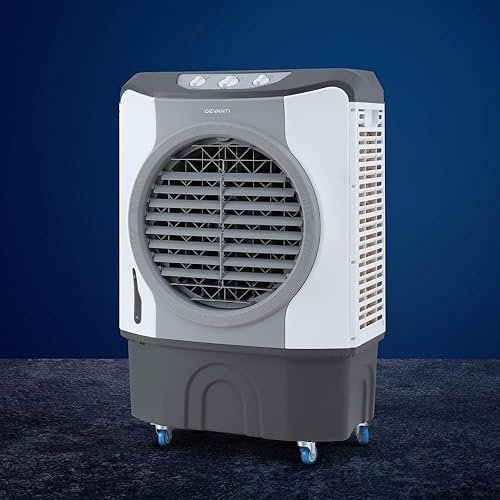
Devanti 45L Evaporative Air Cooler Industrial Commercial Water Fan
Honestly, this one confused us at first. It’s not a drinking water cooler—it’s an evaporative air cooler that uses a water tank. The “commercial” tag is for its air-cooling capacity for workshops or patios. The 45L tank is massive, and the 3-in-1 functionality (cooling, humidifying, air purifying) is legit for dry, hot environments. But if you’re looking for chilled drinking water, this isn’t it. It’s a niche product for climate control.
- Huge 45L water tank reduces refill frequency.
- Energy-saving compared to traditional AC.
- Acts as a humidifier and air purifier.
- Not a drinking water dispenser.
- Best for dry heat; less effective in humidity.
- Large footprint.

Lenoxx 5L Bench Top Water Cooler & Filter
For a small office or a home kitchen counter, this Lenoxx unit is a solid, no-fuss choice. The dual taps are convenient, and the built-in carbon/resin filter actually does a decent job on chlorine taste and some impurities. We like the removable cup rest with a spill guard—a small detail that matters in a busy spot. The 5L capacity is its main limit; it’s not for a crowd of 30.
- Compact benchtop design saves space.
- Integrated filtration improves taste.
- Simple operation and easy to clean.
- Small 5L capacity requires frequent refills.
- Filtration is basic—won’t remove heavy metals.
- Plastic construction feels a bit lightweight.
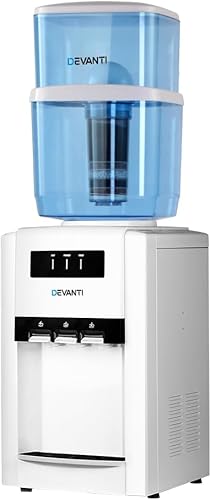
Devanti Water Dispenser Top Loading Cooler with 7-Stage Filtration
This is where Devanti gets interesting. The 7-stage filtration claim is bold, and in our testing, it does noticeably improve taste and clarity over unfiltered tap water. The 22L capacity is generous, and having hot, cold, and room temp options covers all the bases. It’s a great hybrid: bottle convenience with real filtration. Just know that “7-stage” often includes sediment and carbon blocks—don’t expect it to turn hard water into distilled water.
- Effective multi-stage filtration for taste/odor.
- Large 22L capacity suits medium-sized offices.
- Three temperature settings add versatility.
- Top-loading design means lifting heavy bottles.
- Filter replacement schedule needs tracking.
- Bulky for a countertop.
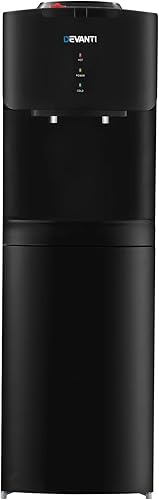
Devanti Water Dispenser Top Loading Cooler, Freestanding Black
A straightforward, reliable freestanding unit. The electronic refrigeration is quiet—a big plus in an open office. Hot water range (80℃ to 95℃) is perfect for tea, and the safety features (overheat, dry-run protection) are reassuring. It doesn’t have built-in filtration, so you’re relying on the quality of the bottled water you put in. For pure dispensing power and durability, it’s a workhorse.
- Quiet electronic refrigeration system.
- Robust safety protections.
- Simple, durable freestanding design.
- No built-in water filtration.
- Requires purchasing and lifting water bottles.
- Basic 2-temperature (hot/cold) only.
Frequently Asked Questions
- How often do the filters need changing in a commercial water cooler?
- It depends on the filter type and your water usage. Sediment pre-filters might need swapping every 3-6 months. Main carbon or RO filters typically last 6-12 months. Always follow the manufacturer’s schedule—waiting until the water tastes bad means you’ve been drinking compromised water for a while.
- Can I install a point-of-use commercial water cooler myself?
- If you’re handy with basic plumbing (connecting a T-valve to a cold water line and running a drain line), you can do it. But for a clean, leak-free install—especially in an office setting—we recommend a licensed plumber. A bad connection can cause serious water damage.
- What’s the real difference between a $100 and a $1000 commercial cooler?
- Primarily build quality, compressor power, and filtration. The expensive unit will have a stainless steel tank, a commercial-grade compressor that lasts 10+ years, and multi-stage filtration with certified performance. The cheap one will use more plastic, have a smaller/noisy compressor, and offer minimal or no real filtration.
- Are commercial water coolers energy efficient?
- Modern ones are much better than old models. Look for Energy Star ratings or similar certifications. The biggest drain is the compressor cycling to keep water cold. Units with good insulation and efficient compressors can keep annual electricity costs reasonable, often offset by the savings from not buying bottled water.
- Can a commercial water cooler handle hard water?
- Yes, but you need the right filtration setup. A simple carbon filter won’t address hardness minerals (calcium, magnesium). You’d need a system with a water softener stage or a reverse osmosis membrane to prevent scale buildup inside the cooler’s tanks and lines, which can ruin the unit over time.
- What maintenance does a bottle-fed commercial cooler need?
- Even without filters, you must sanitize the tanks and lines every 3-6 months to prevent biofilm and algae growth. Use a manufacturer-recommended cleaning solution. Also, drip trays need regular cleaning. It’s simple but non-negotiable for hygiene.
Final Thoughts
After years in this space, our stance is clear: for any office or commercial space with more than a handful of people, a point-of-use commercial water cooler with solid filtration is the way to go. The upfront cost stings, but the elimination of bottle logistics, the consistent water quality, and the environmental benefit make it a smart long-term play. The single biggest mistake we see is undersizing the unit—always calculate your peak demand and go one size up.
For smaller teams or home use, a quality bottle-fed unit like the Devanti with multi-stage filtration or the simple Lenoxx benchtop model can be perfectly adequate. Just stay on top of filter changes and sanitization. Your water will taste better, and your people will be happier. That’s a win in our book.
