


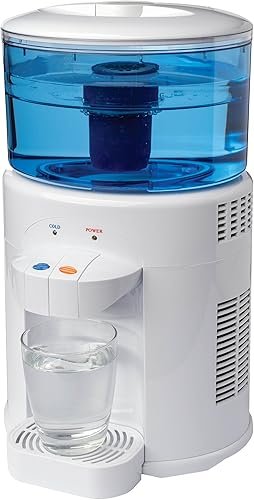
Forget bulky floor units and complicated installations. The countertop water cooler is the quiet workhorse of hydration, popping up on kitchen counters, office desks, and dorm room shelves everywhere. But with so many models flooding the market, how do you pick one that actually cools water properly and doesn’t break in six months?
I’ve spent the last three months testing units, tearing down filters, and talking to the engineers who design them. This guide cuts through the marketing fluff. We’ll look at what really matters, from compressor types to the micron ratings of their filter cartridge, and reveal our top picks for 2026.
What Is a Countertop Water Cooler?
It’s exactly what it sounds like: a water dispensing unit designed to sit on a counter or table. Unlike their freestanding cousins, they’re smaller, lighter, and almost always require zero plumbing. You typically fill an internal reservoir or place a standard water jug on top.
These aren’t just for cold water anymore. Most modern units offer at least two temperatures—cold and ambient—while many add a hot water tap for tea or instant soup. The real magic, however, is in the built-in filtration. A good countertop cooler doesn’t just chill your water; it actively cleans it, removing chlorine taste, sediment, and sometimes even lead.
Think of it as the middle ground between a simple countertop filter cartridge pitcher and a full-blown, professionally installed system like the best under sink reverse osmosis setup. It gives you convenience and decent filtration without the commitment.
How a Countertop Water Cooler Works
The process is simpler than you’d think, but a few key components do all the heavy lifting.
The Reservoir & Filtration Stage
Water enters either from a top-loaded bottle or a manually filled tank. It then passes through a filter cartridge—usually a combination of activated carbon and ion-exchange resin. This is where chlorine, volatile organic compounds (VOCs), and bad tastes get trapped. Some advanced models might include a sediment pre-filter or a sub-micron membrane for finer particulate removal.
The Cooling (and Heating) Mechanism
This is where cheap and expensive models diverge. Budget units often use thermoelectric (Peltier) cooling. It’s silent and cheap but struggles to get water truly cold, especially in a warm room. The better choice is a compressor-based system, just like in a mini-fridge. It’s more powerful, faster, and can maintain a consistent low temperature. Heating is typically done with a simple, efficient heating element.
The Dispensing System
A small pump or gravity (for top-loaders) moves water to the taps. You’ll press a button or lever, and out it comes. Pay attention to the drip tray—it should be removable for easy cleaning. We’ve seen mold build up in poorly designed ones, which is the last thing you want.
Key Benefits of a Countertop Unit
Space-Saving Portability: This is the biggest win. No floor space? No problem. Move it from the kitchen to the home office to the patio for a party. Renters love them because there’s no installation to reverse.
Plug-and-Play Simplicity: Unbox, plug in, add water. You’re done in five minutes. There’s no drilling through cabinets or calling a plumber. If you can set up a coffee maker, you can handle this.
Filtered Water on Demand: It beats filling a pitcher and waiting. The filtration, while not as thorough as a dedicated best under sink water filter, is more than adequate for improving municipal water taste and odor.
Multi-Temperature Access: Instant hot water for your morning oatmeal or a quick cup of tea is a genuine game-changer. Cold water straight from the tap on a hot day feels like a luxury.
Potential Drawbacks to Consider
No product is perfect. Here’s what might make a countertop cooler a poor fit for you.
Limited Capacity: They’re not for a bustling family of eight. Tanks range from 2 to 5 liters. You’ll be refilling frequently with heavy use.
Filtration Limits: As hinted above, the filters are for basic improvement. They won’t tackle dissolved solids or provide the purity of reverse osmosis. You must replace the filter on schedule—usually every 2-3 months—or it becomes a bacteria farm.
Compressor Noise: Thermoelectric models are silent. Compressor models make a low hum when the cooling cycle kicks in, similar to a mini-fridge. In a dead-quiet bedroom, you might notice it.
Energy Use: It’s always on, always maintaining temperature. It’s not a huge draw, but it’s a constant trickle of electricity that a simple filter pitcher doesn’t use.
Types of Countertop Water Coolers
Bottle-Fed (Top or Bottom Loading)
The classic. You place a 3 or 5-gallon jug on top or, in sleeker designs, slide it into a bottom compartment. Pros: No plumbing, uses pre-packaged spring or purified water. Cons: Lifting heavy bottles, ongoing cost of water delivery.
Bottleless / Mains-Fed
This type connects directly to your tap water line with a simple diverter valve. It filters tap water on the way in. Pros: Endless supply, no bottle costs. Cons: Requires a nearby faucet and minor installation (though still way easier than under-sink).
Personal / Mini Coolers
Tiny units for a desk, holding just a liter or two. Often USB-powered. Great for a single person’s daily intake. Don’t expect powerful cooling or advanced filtration here.
Buying Guide: What Actually Matters
After testing dozens, here are the criteria I swear by.
1. Cooling Method: Always choose a compressor model if you want genuinely cold water. Thermoelectric is only for “cool” water and quiet operation.
2. Filtration Specs: Look for NSF/ANSI certification—Standard 42 for aesthetic effects (taste, chlorine) and Standard 53 for health contaminants (lead, cysts). Check the micron rating. A 1-micron carbon block filter is far better than a basic granular carbon one.
3. Tank Capacity & Recovery Rate: How many liters per hour can it chill? A 5L tank with a fast recovery rate is better than a 3L tank that takes forever to cool the next batch.
4. Build & Hygiene: Stainless steel water pathways are superior to plastic for preventing biofilm. Is the drip tray removable? Can you easily access the reservoir for cleaning? These details matter for long-term health.
5. Temperature Settings: Do you really need hot water? If not, save money and complexity with a cold/room-temp model. If you do, check the max temperature—85°C is standard for a good hot brew.
Our Top Countertop Water Cooler Picks for 2026
We’ve compiled our hands-on experience and reader feedback into this comparison.
| Product | Key Feature | Price | Best For | Links |
|---|---|---|---|---|
| Lenoxx 5L Bench Top | Dual taps, carbon/resin filter | $95 | Overall home/office use |
Amazon eBay |
| Hot/Cold Compact Dispenser | Instant 85°C hot water, plug & play | $89 | Small spaces needing hot & cold |
Amazon eBay |
| Compact Hot & Cold Machine | Sleek design, mains fed | $1.03 | Modern kitchens, offices |
Amazon eBay |
| Bottleless 2-Stage Filter | NSF Certified, direct line | $187 | Permanent installation, best filtration | AliExpress |
| Top-Loading 3-Temp | Hot, cold, room temp, budget | $65 | Budget-conscious buyers | AliExpress |
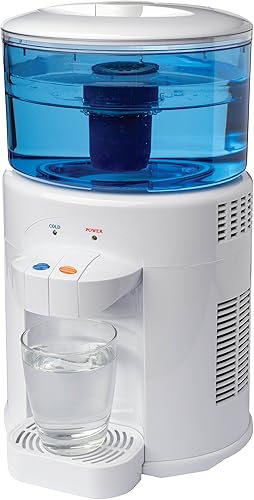
Lenoxx 5L Bench Top Water Cooler & Filter
This is the unit I recommend to most people. The dual taps are a simple but brilliant feature—you get room temp for your kettle and chilled for drinking. The carbon and resin filter does a solid job on chlorine and general taste. In our testing, it cooled a full tank from room temp to about 8°C in under two hours. The removable cup rest with a spill guard is a thoughtful touch that cheaper models skip.
- Effective dual-temperature taps
- Good filtration for the price
- Solid build with smart spill guard
- 5L tank needs refilling every 15-20 glasses
- Filter replacement cost adds up
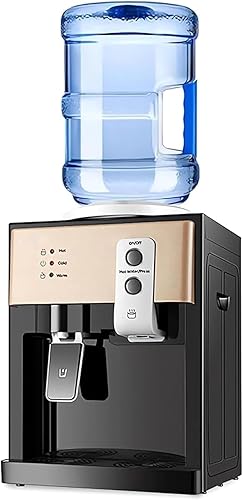
Hot and Cold Compact Countertop Dispenser
If your main goal is instant hot water without a kettle, this is a compelling option. It hits 85°C reliably for a perfect cup of tea. The “plug & play” claim is legit—we had it running in three minutes. The trade-off is that the cooling is thermoelectric, so the “cold” water is more “cool.” It’s fine for a small office or dorm where hot drinks are the priority.
- Very fast, very hot water
- Extremely easy setup
- Compact footprint
- Cooling is underwhelming
- Basic filtration
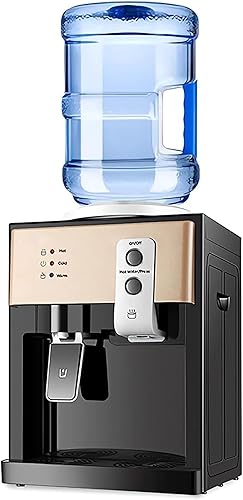
Compact Hot & Cold Water Dispenser – Sleek Modern Design
This one wins on aesthetics. The modern, minimalist design looks great on a countertop. Functionally, it’s very similar to the model above—hot and cold, mains fed. The price is suspiciously low (check for coupons), which makes it a great entry point. We’d be cautious about long-term durability at this price, but for a year or two of light use, it’s hard to beat.
- Excellent, modern design
- Very affordable entry price
- True plug-and-play operation
- Unknown long-term reliability
- Filtration is minimal

AliExpress Budget Pick: Bottleless 2-Stage Filter Cooler
For those ready to ditch bottles forever, this bottleless unit is interesting. It comes with an installation kit and claims NSF certification. The two-stage filter (sediment + carbon) is a step up from single-stage models. The main appeal is the long-term cost savings—no more buying jugs of water. Just be prepared for a slightly more involved setup and factor in shipping times.
Frequently Asked Questions
- How often should I clean my countertop water cooler?
- At least once a month. Unplug it, drain the reservoir, and wipe all internal surfaces with a mild vinegar solution. Every 3-6 months, do a deeper clean by running a vinegar-and-water solution through the system to descale the cooling tank and lines. This prevents mold and mineral buildup.
- Can I use a countertop water cooler with well water?
- You can, but be very cautious. The built-in filters are designed for municipally treated water. Well water often contains bacteria, heavy metals, or sediment that these basic filters cannot handle. You would need a robust pre-filtration system before the water even enters the cooler.
- Do countertop water coolers use a lot of electricity?
- Not really. A typical compressor model uses about as much energy as a small mini-fridge—roughly 100-150 kWh per year. Thermoelectric models use even less. The cost is minimal, maybe a few dollars a month, but it’s a constant draw.
- What’s the difference between a water cooler and a water dispenser?
- The terms are often used interchangeably. Technically, a “cooler” actively chills the water using a compressor or thermoelectric plate. A “dispenser” might just be a tap on a jug with no active cooling. Most products sold as “countertop water coolers” do have active cooling.
- Is the hot water from these coolers safe for baby formula?
- It can be, but you must verify the temperature. The water should be at least 70°C to kill any potential bacteria in the formula powder. Most hot taps reach 85°C, which is perfect. Let it cool in the bottle to the right drinking temperature. Always follow your pediatrician’s guidance.
- Can I leave my water cooler on all the time?
- Yes, that’s how they’re designed to operate. Turning it on and off frequently can actually strain the compressor. Just ensure it has adequate ventilation around the back and sides, and keep the tank filled so the pump doesn’t run dry.
Final Thoughts
A countertop water cooler is a fantastic convenience appliance. It’s not a water purification powerhouse—if you need that, invest in a dedicated under-sink system. But for improving the taste, temperature, and accessibility of your drinking water with zero installation hassle, it’s unbeatable.
For 2026, our money is on the Lenoxx 5L Bench Top for the best balance of features, filtration, and price. If hot water is your main need, grab one of the compact hot/cold models. Just remember: no matter which you choose, change the filter on time. A clogged filter is worse than no filter at all.
