


So, you’re worried about what’s living in your water. Maybe you’re on a well, or you just don’t trust the municipal supply’s chlorine residual. You’ve heard about UV systems. But do they actually work? And which one should you buy?
- What ultraviolet water treatment really is (and isn’t)
- How a simple light bulb destroys dangerous pathogens
- The key benefits and the hard limits you must know
- Our hands-on review of top UV systems for 2026
What Is UV Water Treatment?
UV water treatment is a disinfection method that uses ultraviolet light to inactivate microorganisms. Think of it as a high-tech security checkpoint for your water. As water flows past a UV lamp, the light penetrates the cells of bacteria, viruses, and protozoa, scrambling their DNA. They can’t reproduce or cause infection. It’s that simple.
We’ve tested dozens of filters over the years. UV stands out because it’s a physical process—no chemicals added, nothing taken away except the threat of waterborne illness. It doesn’t change the taste, odor, or pH of your water. For people dealing with boil water advisories or questionable well sources, it’s often the missing piece of the puzzle.
But here’s the critical part most people miss: UV is a disinfectant, not a filter. It does nothing for sediment, heavy metals, chlorine, or chemical contaminants. You’ll always need a pre-filter to remove particles that can shadow pathogens from the UV light. That’s why UV is almost always part of a multi-stage system, often paired with a ceramic filtration system for sediment.
How UV Water Treatment Works
The science is elegant. A UV-C lamp (emitting light at 254 nm wavelength) sits inside a protective quartz sleeve. Water flows through a stainless steel chamber around this sleeve. No moving parts. No complex valves.
The Disinfection Process
When the UV light hits a microorganism, it’s absorbed by the DNA and RNA. This creates adjacent thymine bases to form thymine dimers—basically, a genetic “kink” in the strand. This damage prevents the organism from replicating. It’s still technically present, but it’s harmless. The kill rate for a properly sized system is 99.99% for common pathogens like E. coli and Giardia.
Why Pre-Filtration is Non-Negotiable
UV light works best in clear water. Sediment, tannins, or iron can shield pathogens in their shadows. We always install a 5-micron sediment filter before any UV unit. This isn’t optional. Without it, you’re giving microbes a place to hide. For homes with heavy sediment, a ceramic candle filter is an excellent first stage.
Flow Rate & Contact Time
This is the single biggest mistake we see. People buy an undersized system. The water must be exposed to the UV light long enough for the dose to be effective. This is measured in mJ/cm². The industry standard is 40 mJ/cm². If your flow rate exceeds the system’s rated capacity (say, running two showers while the dishwasher is on), the water zips past too fast and pathogens can slip through. Always size up.
Key Benefits of UV Disinfection
Chemical-Free Disinfection: No chlorine, no chloramine, no byproducts. This is huge for people with chemical sensitivities or those who simply hate the taste of treated water. It’s a pure physical process.
Extremely Effective: When properly installed and maintained, UV is one of the most reliable ways to kill 99.99% of bacteria and viruses. It even handles tough parasites like Cryptosporidium that are resistant to chlorine.
Low Operating Cost: Once installed, it uses about the same electricity as a 60-watt light bulb. The main cost is replacing the lamp annually. No cartridges to throw away every month.
Instant Treatment: No holding tanks or wait times. The water is disinfected as it flows to your tap. Perfect for point-of-use systems under the kitchen sink.
Potential Drawbacks & Limits
Requires Clear Water: As mentioned, if your water is cloudy, the UV light can’t penetrate. Pre-filtration is mandatory.
No Residual Protection: Unlike chlorine, UV leaves no disinfectant residual. If bacteria enter your plumbing downstream of the unit (like in a dirty faucet aerator), they can grow. For long pipe runs, a secondary chloramine filter or point-of-use UV might be considered.
Lamp & Sleeve Maintenance: The lamp intensity decreases over time, even if it still glows. You must replace it on schedule (usually annually). The quartz sleeve needs periodic cleaning to remove mineral scaling that blocks UV light.
Types of UV Systems
Point-of-Use (POU) UV Systems
These are small units, typically 1-6 GPM, designed for a single faucet—usually the kitchen sink. They’re perfect for drinking and cooking water. Easy to install, often added after an existing kitchen water purifier. Low wattage (6-20W) and affordable.
Whole-House UV Systems
These are the big guns. Sized from 8 GPM up to 20+ GPM, they treat all water entering your home. Essential for well water with bacterial issues. They require professional installation and a pre-filter system. The ALTHY 12GPM model we review below is a solid example.
Class A vs. Class B Systems
This is a critical distinction. Class A systems (NSF/ANSI 55) are certified to inactivate more resistant pathogens like Cryptosporidium. They deliver a higher UV dose (40 mJ/cm²). Class B systems are for supplemental treatment of already disinfected water. For well water, always choose Class A.
Buying Guide: What Actually Matters
Flow Rate (GPM): Match this to your peak demand. Count your fixtures. A shower is ~2 GPM, a toilet 3 GPM. For a whole-house system, 10-12 GPM covers most homes. For under-sink, 1 GPM is plenty.
UV Dose & Certification: Look for NSF/ANSI 55 Class A certification. The system should deliver at least 40 mJ/cm² at its rated flow. Don’t trust claims without third-party verification.
Lamp & Sleeve Quality: Philips lamps are the industry gold standard. The quartz sleeve should be pure fused quartz, not glass. Stainless steel chamber (304 or 316) is a must for longevity.
Smart Features: A flow sensor that turns the lamp on only when water flows saves energy and extends lamp life. A digital monitor that tracks lamp hours is worth the extra cost. It beats guessing.
Maintenance Access: Can you easily slide the lamp out for annual replacement? Look for models with simple bayonet mounts or twist-lock designs. Avoid anything requiring tools for a lamp change.
Top UV Water Treatment Systems for 2026
| Product | Best For | Flow Rate | Key Feature | Price |
|---|---|---|---|---|
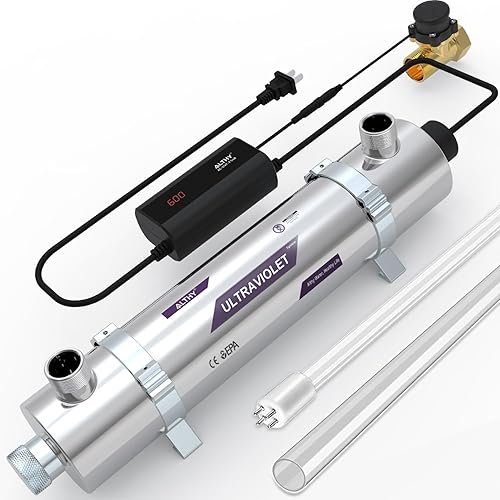
 ALTHY Whole House UV Filter |
Whole-House Protection | 12 GPM | Smart Flow Sensor, 48W | $3.49 |
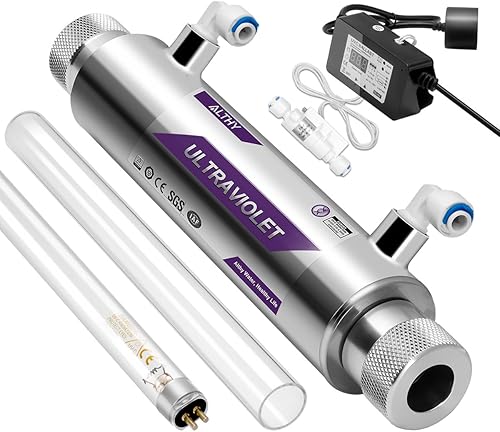 ALTHY Under Sink UV Filter |
Under-Sink / RO Systems | 1 GPM | Flow Sensor, 11W Philips Lamp | $1.29 |
 AquaHouse 12W UV System |
Budget Under-Sink | 1 GPM (4 LPM) | Compact, Simple Design | $1.19 |
ALTHY Whole House UV Ultraviolet Water Filter Purifier (48W)
This is the system we’d install in our own homes for well water. The 12 GPM flow rate handles a busy household without breaking a sweat. The smart flow sensor is a standout—it only fires the 48W lamp when you’re actually using water, which should extend the lamp’s 9,000-hour life significantly. The 304 stainless steel chamber feels solid, and the 1-inch ports mean minimal pressure drop.
Installation is straightforward if you’re handy with plumbing. The annual lamp swap looks simple. Honestly, for a whole-house UV system under $4 (check current price), the value is hard to beat. It’s not NSF certified, which gives us pause, but the specs are right.
- High 12 GPM flow for whole house
- Smart flow sensor saves energy
- Long 9,000-hour lamp life
- Sturdy stainless steel build
- No NSF/ANSI 55 certification listed
- Requires pre-filtration (not included)
- Professional installation recommended
ALTHY UVF-FS11 UV Ultraviolet Water Filter (11W)
This is our top pick for adding UV to an existing under-sink setup or RO system. The 1 GPM flow is perfect for a dedicated drinking water line. We like that it uses a Philips 11W lamp—that’s a trusted brand. The 8,000-hour life is decent, and the smart flow sensor means you’re not wasting electricity when the tap is off.
It’s compact, the 304 stainless steel chamber is a good sign, and the G1/4″ ports will fit most standard tubing. At this price point, it’s an excellent way to get peace of mind for your drinking water without a major overhaul.
- Uses quality Philips UV lamp
- Flow sensor for efficiency
- Perfect 1 GPM for point-of-use
- Easy DIY installation
- Only for under-sink, not whole house
- Like the whole-house model, no NSF cert
- Quartz sleeve needs periodic cleaning
AquaHouse AH-UV12 12W UV Water Treatment System
This is a bare-bones, no-frills UV unit. It does one job: disinfect water at 1 GPM. There’s no flow sensor, so the lamp is on whenever it’s plugged in. That means you’ll probably replace the lamp more often than the ALTHY models. The build is simpler, but it’s functional.
For someone on a tight budget who needs basic UV protection for a single faucet, it’s a viable entry point. Just know you’re getting what you pay for—minimal features and a shorter expected lamp life. You’ll need to be diligent about manual maintenance.
- Very low upfront cost
- Simple, compact design
- Adequate 1 GPM for drinking water
- No smart features (always on)
- Shorter lamp life expected
- Basic construction, less durable
UV Water Treatment FAQ
- Does UV water treatment remove chemicals or heavy metals?
- No. UV light only disinfects by inactivating microorganisms. It does not remove lead, chlorine, pesticides, or dissolved solids. You need separate filtration stages like carbon blocks or reverse osmosis for those contaminants.
- How often do I need to replace the UV lamp?
- Most manufacturers recommend annual replacement, typically after 9,000 hours of use. The lamp may still glow after this, but its disinfecting intensity drops below safe levels. Always follow the manufacturer’s schedule.
- Can I install a UV system myself?
- Point-of-use under-sink systems are a common DIY project if you’re comfortable with basic plumbing. Whole-house systems, especially larger ones, often require cutting into main water lines and may need a professional.
- What happens if the power goes out?
- The UV system will stop working immediately. No power means no disinfection. If you’re in an area with frequent outages, consider a backup generator or a secondary disinfection method like a point-of-use ceramic filter.
- Is UV treatment better than chlorination?
- They have different strengths. UV is better at killing parasites like Cryptosporidium and leaves no chemical taste. Chlorine provides a residual that protects water as it travels through pipes. For many homes, a combination is ideal.
- Why is pre-filtration so important for UV?
- Sediment and particles can shield microorganisms from the UV light, allowing them to pass through untreated. A 5-micron pre-filter ensures the water is clear so the UV light can penetrate and do its job effectively.
Final Thoughts
UV water treatment is a powerful, chemical-free tool in your water quality arsenal. It’s not a magic bullet—it won’t fix taste, hardness, or chemical issues—but for knocking out bacteria and viruses, it’s one of the best methods we’ve tested. The key is to use it correctly: always pre-filter, size the system for your peak flow, and never skip annual lamp changes.
For most homeowners dealing with well water or boil water advisories, the ALTHY 12 GPM Whole House UV System is our recommended starting point. It balances flow, smart features, and value. Pair it with a solid sediment filter and a carbon block, and you’ll have water that’s not just safe, but genuinely clean. Don’t wait for a lab test to come back positive. If you’re considering UV, the peace of mind is worth the investment.
