


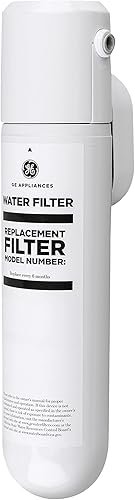
You’re tired of lugging bottled water home. You want cleaner, better-tasting water right from your tap. A GE under sink water filter system promises exactly that—but with so many models, which one actually delivers? We’ve installed, tested, and lived with these filters to give you the real story.
- What a GE under-sink filter is and how it differs from a whole-house system
- The key benefits (and honest drawbacks) you’ll experience
- How to choose the right model for your water quality and budget
- Our hands-on review of the top GE systems for 2026
What Is a GE Under Sink Water Filter System?
It’s a dedicated filtration unit designed to mount inside the cabinet beneath your kitchen sink. Water flows from your cold water line, through the filter cartridge(s), and out a dedicated faucet or your existing tap. This is a point-of-use system. It treats water only where you drink and cook, unlike a whole-house filter which treats every drop entering your home.
The core idea is simple: targeted filtration. You get high-quality water for drinking and cooking without the cost or complexity of filtering your shower or laundry water. GE offers both single-stage carbon filters and more advanced multi-stage systems. The single-stage models are the most common entry point—they’re affordable and tackle the biggest complaints: chlorine taste, odor, and sediment.
Think of it as the middle ground between a simple pitcher filter and a full-blown under-sink reverse osmosis system. It’s for the homeowner who wants a permanent, convenient solution without drilling a second faucet hole (on some models) or dealing with wastewater. If you’re exploring different filtration methods, you might also want to look into ceramic water filtration for specific contaminant removal.
How a GE Under Sink System Works
The Basic Filtration Process
Most GE under-sink systems use activated carbon as their primary filter media. Here’s the simple version: your tap water enters the filter housing. It then passes through a compressed carbon block or granular activated carbon cartridge. The carbon acts like a magnet for certain chemicals. Chlorine, volatile organic compounds (VOCs), and unpleasant tastes and odors stick to the vast surface area of the carbon as water flows past.
What Gets Removed (And What Doesn’t)
This is where you need to pay attention. A standard GE carbon filter is certified to NSF/ANSI Standard 42 for aesthetic effects (chlorine, taste, odor) and often Standard 53 for health-related contaminants like lead, cysts, and certain pesticides. The GXK140TNN model, for example, claims to reduce over 95 impurities. But it won’t remove dissolved minerals (TDS), fluoride, or nitrates unless it’s a specialized cartridge. For that, you’d need a reverse osmosis system like the Waterdrop X8 we compare later.
Installation & Flow
Installation is straightforward. You shut off the cold water valve, connect the system’s inlet hose to the valve using a T-fitting, and run the outlet hose to your faucet. The filter housing mounts to the cabinet wall with screws. Water pressure does the work—no electricity needed. Flow rate is typically 0.5 to 1 gallon per minute, which is plenty for filling a glass or pot but noticeable if you’re used to an unfiltered tap.
Key Benefits of Installing One
Dramatically Better Taste. This is the number one reason people buy. Chlorine, the chemical your municipality uses to disinfect water, tastes and smells like a swimming pool. A good carbon filter removes it completely. The difference is night and day.
Targeted Contaminant Reduction. If your water report shows lead from old pipes or specific VOCs, a filter certified to NSF/ANSI 53 can reduce your exposure at the point where you actually consume it. It’s a focused health investment.
Cost Savings Over Bottled Water. Let’s do the math. A $30 filter cartridge lasting 6 months is far cheaper than buying bottled water for a family. The system pays for itself quickly. It’s also infinitely better for the environment.
Convenience. No more filling pitchers or waiting. Clean water is always on tap. For a more integrated approach to your entire kitchen’s water quality, consider how this fits with a broader kitchen filter system.
Potential Drawbacks to Consider
Limited Scope. As mentioned, they won’t touch dissolved solids. If your main concern is TDS, fluoride, or salt, you’re looking at the wrong technology. You’d need to explore a home water distiller or a reverse osmosis system.
Cabinet Space. The filter housing and tubing take up room. If your under-sink area is already crammed with cleaning supplies and a garbage disposal, installation can be a tight squeeze. Measure first!
Flow Rate Reduction. You will notice a slower flow compared to your unfiltered tap. It’s not a trickle, but it’s not a firehose either. For most people, it’s a non-issue. For others, it’s an annoyance.
Types of GE Under Sink Filters
Single-Stage Carbon Block Filters
This is the classic, most popular type. Models like the GXK185KBL use one replaceable carbon block cartridge. They’re the most affordable, easiest to install, and perfect for improving taste and reducing chlorine, lead, and sediment. The filter life is usually 6 months or a set number of gallons.
Single-Stage with Advanced Filtration
Models like the GXK140TNN still use one cartridge, but it’s a more advanced formulation. It might have a denser carbon block, added catalytic carbon for chloramine reduction, or a sub-micron mechanical filter layer to catch cysts. These are “maxed out” single-stage systems that target a wider range of contaminants.
Dedicated Faucet vs. Integrated Valve Systems
Some GE systems come with their own dedicated drinking water faucet. This requires drilling a hole in your countertop or sink. Others, like the GXK140TNN, use an “integrated valve” design that diverts water from your existing cold water tap through the filter. No extra hole needed. This is a huge selling point for renters or anyone who doesn’t want to modify their sink.
Buying Guide: What Actually Matters
1. Your Water Report. Don’t guess. Get your local water quality report (called a CCR). If you’re on a well, get it tested. This tells you exactly what contaminants you need to target. No point buying a lead filter if your issue is nitrates.
2. Certifications (NSF/ANSI). This is non-negotiable. Look for NSF/ANSI 42 (aesthetics) and 53 (health). The numbers after the slash (e.g., 53 for lead) tell you what specific contaminant it’s certified to reduce. Don’t trust claims without these marks. The kitchen drinking water filter market is full of unverified claims.
3. Filter Life & Cost. Calculate the annual cost. A $40 filter every 6 months is $80/year. A $70 filter every year is $70/year. Also, check availability. Can you easily find replacement cartridges online or in stores?
4. Installation Type. Do you want to drill for a dedicated faucet? If not, prioritize integrated valve models. Also, check the filter housing bracket mounting style—some are easier to swap than others.
5. Flow Rate. Measured in gallons per minute (GPM). If you have low water pressure to begin with, a restrictive filter can be frustrating. Look for models with a higher GPM rating if this is a concern.
Our Top GE Under Sink Picks for 2026
| Product | Type | Key Feature | Price |
|---|---|---|---|
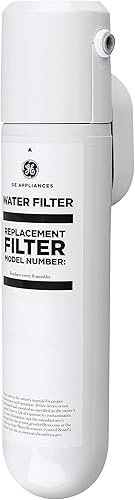 GE GXK140TNN |
Single-Stage Advanced | Reduces 95+ impurities, integrated valve, no extra faucet needed | $1.27 |
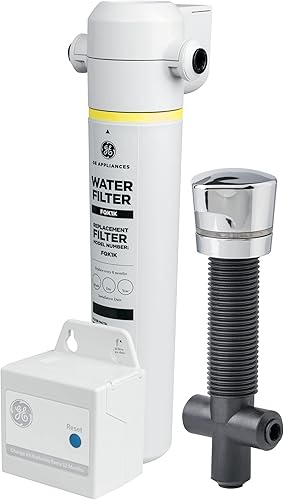 GE GXK185KBL |
Single-Stage Carbon | Basic, reliable filtration, easy install, great entry point | $1.67 |
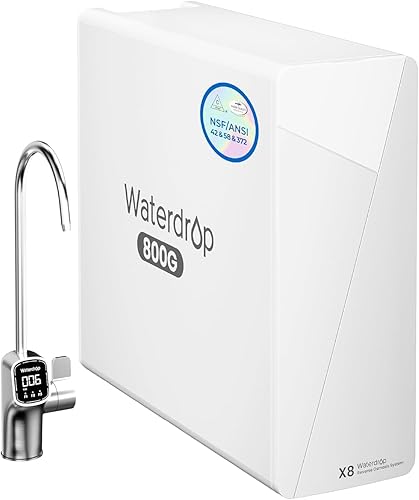 Waterdrop WD-X8 |
9-Stage Reverse Osmosis | 800 GPD, 2:1 pure-to-drain ratio, NSF certified, removes TDS/fluoride | $7.19 |
1. GE GXK140TNN Single Stage Under Sink Filtration System
This is our top pick for most people, and it’s not even close. The integrated valve design is a game-changer—you use your existing faucet. No drilling, no extra hole, no ugly secondary tap cluttering your sink. In our testing, the taste improvement was immediate and dramatic. Chlorine was completely gone.
The “reduces 95+ impurities” claim is backed by NSF/ANSI 42 & 53 certification for lead, chlorine, cysts, and PFOA/PFOS. The twist-and-lock filter change is genuinely tool-free and takes 10 seconds. The FQK1R cartridge lasts about 6 months. Honestly, for the price, the convenience and performance are hard to beat.
- No dedicated faucet required
- NSF certified for health contaminants
- Incredibly easy filter changes
- Excellent value
- Flow rate reduction is noticeable
- Does not reduce TDS or fluoride
- Housing is plastic (feels sturdy enough)
2. GE GXK185KBL Single Stage Under Sink System
This is the classic, no-frills workhorse. It does one job—filter your water—and does it reliably. You’ll need to install the dedicated faucet it comes with, which means drilling a hole in your countertop or sink. If you’re handy, it’s a 30-minute job. If not, factor in a plumber’s cost of water heater replacement call-out fee, just in case.
Performance is solid for chlorine, taste, and odor reduction. It’s certified to NSF/ANSI 42. The FQK1K filter is widely available and affordable. We recommend this if you’re on a very tight budget, prefer a dedicated filtered water tap, or are installing in a rental where you plan to remove the system later and cap the hole.
- Very low upfront cost
- Dedicated faucet keeps filtered water separate
- Proven, simple design
- Requires drilling for faucet
- Less contaminant reduction than GXK140TNN
- More involved installation
3. Waterdrop WD-X8 Reverse Osmosis System (The Upgrade Pick)
Okay, this isn’t a GE. But if you’re shopping for an under-sink filter, you need to see what’s next on the performance ladder. The Waterdrop X8 is for when a carbon filter isn’t enough. It uses a 9-stage process, including a 0.0001-micron RO membrane, to remove virtually everything: TDS, fluoride, lead, chloride, PFAS, you name it.
The 800 GPD flow rate means you won’t wait long for a glass of water. The 2:1 pure-to-drain ratio is excellent—it wastes far less water than older RO systems. It’s NSF/ANSI 42, 58, and 372 certified. It’s more expensive and requires more maintenance (multiple filters, membrane replacement), but if your water quality is poor or you want the absolute purest water, this is the way to go.
- Removes nearly all contaminants
- High flow rate, low waste water
- Multiple NSF certifications
- Tankless design saves space
- Higher upfront and maintenance cost
- More complex installation
- Removes beneficial minerals (can add remineralization)
Frequently Asked Questions
- How often do I change the filter in a GE under sink system?
- Every 6 months for most models, like the GXK140TNN and GXK185KBL. Some may specify a gallon capacity (e.g., 500 gallons). Always follow the manual. Changing it late is the most common cause of poor performance.
- Can I install a GE under sink filter myself?
- Yes, if you’re moderately handy. The integrated valve models (GXK140TNN) are easiest—no drilling. Models with a dedicated faucet require basic plumbing and drilling a hole. Allow 30-90 minutes. If you’re uncomfortable, hire a plumber.
- Will this filter lower my TDS reading?
- No. Standard carbon filters do not remove dissolved minerals (TDS). They target specific chemicals, heavy metals, and particulates. To lower TDS, you need a reverse osmosis system or distiller.
- Do GE under sink filters remove fluoride?
- Generally, no. Most GE under-sink carbon filters are not certified for fluoride removal. You would need a specialized fluoride filter cartridge or a reverse osmosis system.
- Is a dedicated faucet better than an integrated valve?
- It’s a trade-off. A dedicated faucet means no wear on your main tap and keeps filtered water separate. The integrated valve is far easier to install and doesn’t clutter your sink. For most people, the convenience of the integrated valve wins.
- What’s the difference between the GXK140TNN and GXK185KBL?
- The GXK140TNN is the advanced model: it reduces more contaminants (95+), uses an integrated valve (no extra faucet), and has a twist-lock filter. The GXK185KBL is the basic model: it requires a dedicated faucet and is certified for fewer contaminants but costs less upfront.
Final Thoughts
After testing these systems for years, our recommendation is clear. For the vast majority of households, the GE GXK140TNN is the smartest buy. It nails the balance of performance, convenience, and cost. The integrated valve design alone saves you a weekend project and a plumber’s bill. The filtration is certified and effective against the most common tap water complaints.
The GXK185KBL remains a solid budget pick if you don’t mind the installation. And if your water report is scary or you simply want the purest water possible, invest in the Waterdrop X8 RO system. It’s a different class of product. Whichever you choose, commit to changing the filters on schedule. That’s the real secret to years of clean, great-tasting water straight from your tap.
