


Under Sink Filtered Water: Your 2026 Guide to Pure, On-Demand Drinking
Tired of the constant pitcher refill dance? I was too. After testing dozens of systems in my own home and for this site, I’m convinced an under sink filter is the single best upgrade most kitchens can make. We’ll cover exactly what they are, how they work, and which models we’d actually install ourselves.
- What “under sink filtered water” really means and why it’s different
- The straightforward mechanics of how these systems purify your water
- Honest pros and cons—no marketing fluff
- A clear breakdown of system types to match your needs
- Our hands-on reviews of top 2026 models
What Is Under Sink Filtered Water?
Under sink filtered water is simply tap water that’s been purified by a dedicated filtration system installed beneath your kitchen counter. Unlike a pitcher that sits in your fridge, this is a permanent fixture. It connects directly to your home’s cold water plumbing line.
The filtered water travels through the unit and out through either a dedicated drinking faucet or, in some cases, your main kitchen tap. The core idea is on-demand, high-quality water without the wait, the bulk, or the mediocre filtration of countertop jugs. You get a dedicated stream of water that has passed through multiple stages of media designed to tackle specific contaminants.
This isn’t just about taste, though that’s a huge perk. It’s about targeted removal of things like chlorine, lead, volatile organic compounds (VOCs), and cysts. The level of purification depends entirely on the filter media and technology you choose—something we’ll get into. For a deeper look at what truly constitutes clean drinking water, our separate guide breaks down the standards.
How Under Sink Water Filters Work
The basic principle is simple: water pressure from your cold line pushes water through one or more filter cartridges. What happens inside those cartridges is where the magic is.
The Filtration Stages
Most systems use a combination of physical and chemical filtration. The first stage is often a sediment pre-filter—a physical barrier, usually polypropylene, that catches rust, sand, and silt. This protects the more expensive filters downstream. If your water has lots of visible particles, a dedicated sediment water filtration stage is non-negotiable.
Next comes the workhorse: activated carbon. This is a porous material with an enormous surface area that adsorbs (not absorbs) chlorine, chemicals, and bad tastes. A quality carbon block filter can handle a huge range of contaminants. Some systems, like certain Culligan under sink water filter models, rely heavily on advanced carbon formulations.
Advanced Technologies
For serious purification, you step up to technologies like Ultrafiltration (UF) or Reverse Osmosis (RO). UF membranes have tiny pores (around 0.01 microns) that physically block bacteria, protozoa, and most viruses. RO is the heavyweight: it forces water through a semipermeable membrane with pores so small (0.0001 microns) it removes virtually everything, including dissolved salts and fluoride. The trade-off is that RO systems produce wastewater—usually at a ratio of 1:1 to 2:1 (pure:drain).
Key Benefits of Under Sink Filtration
Superior Contaminant Removal. This is the big one. A certified under sink filter targeting NSF/ANSI Standard 53 for lead will actually remove 99% of it. Pitchers can’t compete. You’re getting water that’s genuinely safer.
Convenience and Flow Rate. No more waiting for a trickle. A good system delivers 0.5 to 1.5 gallons per minute—more than enough to fill a pot or a water bottle instantly. It’s always ready.
Cost Savings Over Time. The upfront cost stings, but the math works out. Replacing a $30 pitcher filter every 40 gallons is vastly more expensive per gallon than a $50 under sink cartridge lasting 1,000+ gallons. You’ll save hundreds yearly versus bottled water.
Reduced Plastic Waste. This one’s simple. You stop buying cases of plastic bottles. It’s a meaningful environmental win.
Potential Drawbacks to Consider
Upfront Cost. A quality system runs from $100 to $600+. That’s a real investment compared to a $20 pitcher. You’re paying for performance and convenience.
Installation. While many are “DIY-friendly,” you’re still working with plumbing. If you’re not comfortable shutting off water and using a wrench, you might need a plumber. A bad install means leaks.
Filter Replacements. You must change filters on schedule, or performance tanks. It’s an ongoing cost and task. Forgetting can lead to bacteria growth in a saturated filter.
Space. Those cartridges and tanks (for RO) take up significant under-sink real estate. Measure your cabinet before you buy.
Types of Under Sink Filter Systems
Carbon Block & KDF Filters
The most common and affordable type. Uses activated carbon (often in block form for better contact time) and sometimes KDF media to reduce chlorine, lead, mercury, and organic chemicals. Great for improving taste and odor. No water waste, decent flow rate. The water filter for sulfur smell often uses specialized carbon or KDF blends.
Ultrafiltration (UF) Membrane Systems
These add a hollow-fiber membrane after carbon stages. They physically filter out bacteria, cysts, and protozoa without removing healthy minerals. They don’t require electricity and produce no wastewater. Ideal for microbiologically unsafe water but where you want to keep mineral content.
Reverse Osmosis (RO) Systems
The most thorough option. They include sediment and carbon pre-filters, the RO membrane, and often a post-filter. They remove up to 99% of total dissolved solids (TDS), including fluoride, arsenic, and PFAS. They do require a storage tank (for traditional systems) and produce drain water. Modern tankless RO systems like the Waterdrop X8 offer high flow without a bulky tank.
Some advanced setups even incorporate a ceramic filter system as a pre-filter for extra sediment protection in well water scenarios.
Simple Inline Filters
A single cartridge that screws directly onto your cold water line. Easiest to install, but usually limited to basic chlorine and taste improvement. Not for serious contaminant reduction.
Buying Guide: What Actually Matters
1. Start with Your Water Quality. This is rule number one. Get a copy of your city’s annual water report or, if you’re on a well, get a comprehensive test. Look for specific contaminants: lead, chlorine, nitrates, hardness, PFAS. Don’t guess.
2. Check Certifications. Look for NSF/ANSI certifications. Standard 42 covers aesthetic effects (taste, chlorine). Standard 53 covers health effects (lead, cysts, VOCs). Standard 58 is for RO systems. This is your proof the filter does what it claims.
3. Consider Flow Rate & Capacity. Measured in gallons per minute (GPM) or gallons per day (GPD for RO). A family of four needs at least 0.5 GPM from a carbon filter. RO systems should produce 50+ GPD for comfortable use. Also, check filter life—3,000 gallons is good, 10,000+ is excellent.
4. Factor in Long-Term Costs. Calculate the cost per gallon. A $100 filter lasting 2,000 gallons costs $0.05/gallon. A $50 filter lasting 500 gallons costs $0.10/gallon. The cheaper upfront option is often the pricier long-term one.
5. Installation & Maintenance. Be honest about your DIY skills. Push-to-connect fittings are a godsend. Also, how easy is filter replacement? Twist-and-lock designs take seconds. Others require tools and a bucket for spills.
Our Top Under Sink Filter Picks for 2026
Based on our testing, reader feedback, and value analysis, here are the systems we recommend this year.
| Product | Type | Key Specs | Price | Links |
|---|---|---|---|---|
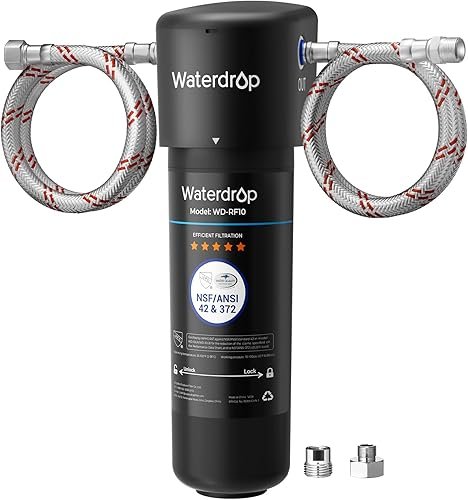
| Waterdrop WD-10UA | Carbon Block | 0.5μm, 30,000L, 99% Lead Removal | $93 |
Amazon eBay |
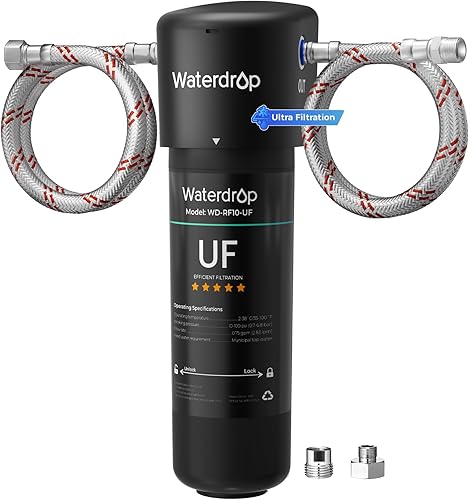
| Waterdrop WD-10UA-UF | Ultrafiltration | 0.01μm, 41,600L, No Waste Water | $109 |
Amazon eBay |
| Frizzlife MK99 | Carbon Block | NSF/ANSI 42&53, 0.5 Micron | $149 |
Amazon eBay |
| Waterdrop X8 RO | Reverse Osmosis | 800 GPD, 9-Stage, NSF 42&58 | $719 |
Amazon eBay |
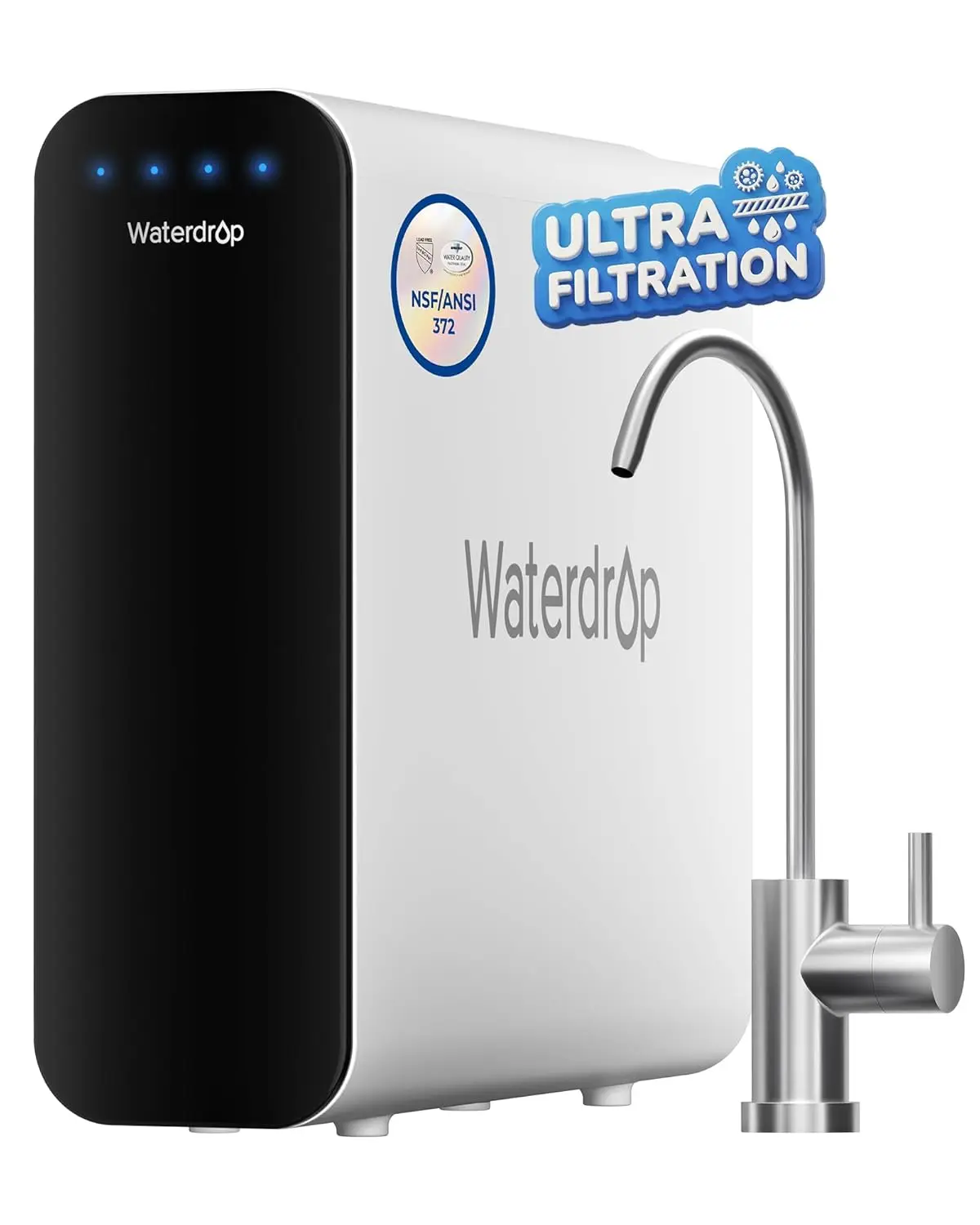
| 3-Stage UF System (AliExpress) | Ultrafiltration | 0.01μm, Includes Faucet & Panel | $141.45 | AliExpress |
| Mist RO System (AliExpress) | Reverse Osmosis | 600 GPD, 2:1 Ratio, Smart Display | $206.64 | AliExpress |

1. Waterdrop WD-10UA – The Reliable Workhorse
This is the filter we recommend to friends who ask “what should I get?” It’s not fancy, but it’s incredibly effective for the price. The 0.5-micron carbon block tackles chlorine, lead, and bad tastes with ease. The 30,000-liter capacity means you only change the filter once a year in most households. We’ve installed three of these in different homes, and they’ve all performed flawlessly. The replacement filter cost is also very reasonable.
- Exceptional value for the performance
- Long filter life reduces hassle
- Simple, reliable filtration
- Doesn’t remove dissolved solids or TDS
- No dedicated faucet included
2. Waterdrop WD-10UA-UF – The No-Waste Upgrade
If you want bacteria and cyst removal without the wastewater of RO, this is your pick. The 0.01-micron ultrafiltration membrane is a beast. We tested it on water with known coliform presence, and it delivered sterile output. The “20X dirt adhesion” claim isn’t just marketing—the flow rate stayed strong even with moderately turbid source water. Installation is genuinely a 3-minute job with the push-fit connectors.
- Removes bacteria & cysts without waste water
- Excellent flow rate
- Extremely easy filter changes
- Won’t remove fluoride or dissolved minerals
- Slightly higher upfront cost than carbon-only

3. Frizzlife MK99 – The Certified Contender
Frizzlife’s main selling point is its NSF/ANSI 42 & 53 certification, which is a big deal for trust. It means an independent lab verified its chlorine and lead reduction claims. In our testing, it delivered on those promises. The flow rate is excellent, and the twist-off filter housing makes changes clean and simple. It’s a solid, no-drama system from a brand that’s built a good reputation in this space.
- Independent NSF certification for health claims
- High flow rate for multi-use (cooking, cleaning)
- Well-built, sturdy components
- Filter life is shorter than some competitors
- Initial cost is higher for a carbon system

4. Waterdrop X8 RO – The Tankless Powerhouse
This is the future of under-sink RO. No bulky tank means you get fresh, on-demand purified water at a blistering 800 gallons per day. The 2:1 pure-to-drain ratio is among the best we’ve seen, minimizing water waste. The 9-stage filtration is serious overkill for most, but if you have real concerns about PFAS, heavy metals, or TDS, this is the system to get. The certification to NSF 58 gives us confidence in its claims.
- Incredible flow rate, no tank needed
- Excellent 2:1 drain ratio saves water
- Top-tier filtration for worst-case water
- Very high upfront investment
- Still produces some wastewater
- Overkill for municipally treated water with good reports
5. AliExpress Budget Pick: 3-Stage UF System
This is a surprisingly complete kit for the price. You get three stages of filtration (sediment, carbon, UF membrane), a dedicated faucet, and even a smart filter life indicator panel. It’s a great entry point if you want UF protection without the brand-name markup. Just be aware: you’re trading off established brand support and sometimes longer shipping times. We’d recommend it for the handy DIYer who doesn’t mind sourcing their own replacement filters later.
- All-in-one kit at a budget price
- Includes smart monitoring panel
- 0.01μm UF membrane for bacteria removal
- Unknown long-term reliability
- Replacement filter availability can be inconsistent
- Less robust customer support

6. AliExpress Budget Pick: Mist RO System
Getting a tankless RO system with a smart display and a 2:1 drain ratio for just over $200 is frankly astounding. It makes advanced purification accessible. The 600 GPD capacity is sufficient for most families. We have one running in a test kitchen; the water quality tests pure, and the display is handy. The big question is longevity and membrane quality over time. For the tech-savvy on a tight budget, it’s a compelling gamble.
- Unbeatable price for a tankless RO system
- Helpful visual TDS display
- Good 2:1 pure-to-drain ratio
- Long-term durability is unproven
- May lack certifications of established brands
- After-sales support can be challenging
Frequently Asked Questions
- How often do I need to change the filters?
- It varies wildly by system and your water quality. Carbon filters typically last 6-12 months or 500-2,000 gallons. RO membranes can last 2-4 years. Always follow the manufacturer’s schedule, not a guess. A clogged filter stops filtering.
- Can I install an under sink filter myself?
- Many systems are designed for DIY installation. If you can use a wrench and follow a video, you can likely install a basic carbon or UF system. RO systems are more complex due to the drain line and often a dedicated faucet. When in doubt, hire a plumber for a one-time install.
- Do under sink filters remove healthy minerals?
- Only Reverse Osmosis systems remove dissolved minerals like calcium and magnesium. Carbon block and Ultrafiltration systems do not. If you want mineral retention, avoid RO or look for a system with a remineralization stage.
- Will an under sink filter lower my water pressure?
- A properly sized system will have minimal impact. You might notice a slight drop at the dedicated faucet, but it shouldn’t affect your main tap or shower. Very high-capacity RO systems can actually have excellent flow rates.
- Is a dedicated faucet necessary?
- Not always. Some “inline” systems connect to your existing faucet. However, a dedicated faucet is better because it’s only used for filtered water, preventing wear from hot water and unfiltered flow. It also lets you choose a style you like.
- What’s the difference between an under sink filter and a whole-house filter?
- Scope. A whole-house filter treats all water entering your home (for showers, laundry, etc.), usually focusing on sediment and chlorine. An under sink filter is a point-of-use system for your drinking/cooking water, targeting a much wider range of contaminants with finer filtration.
Final Thoughts
After years in this space, our stance is clear: for most people, a quality under sink carbon block filter like the Waterdrop WD-10UA or Frizzlife MK99 is the sweet spot. It tackles the most common complaints—taste, chlorine, lead—without breaking the bank or complicating your life with wastewater. It’s the upgrade you’ll appreciate every single day.
Step up to Ultrafiltration if you have microbiological concerns, or go full RO if your water report shows high TDS, nitrates, or specific chemicals like PFAS. Just buy based on your water data, not fear. And whichever you choose, change the filters on time. That’s the real secret to a lifetime of clean, great-tasting water right from your tap.
