


The Best Shower Filter for Your Bathroom (2026)
I’ve installed shower filters in dozens of homes—from apartments with city water to rural houses on wells. The difference is immediate. Your skin feels less tight, your hair is softer, and that lingering chlorine odor vanishes. But not all filters are equal. This guide cuts through the marketing to show you what actually works.
- How shower filters actually work (and their limits)
- The real benefits for your skin, hair, and plumbing
- A clear comparison of the top filters we’ve tested
- Exactly what to look for when buying one
What Is a Shower Filter?
A shower filter is a small canister that attaches between your shower arm and shower head. Its job is simple: remove or reduce specific contaminants from your water before it hits your skin and hair. Most target chlorine, chloramine, heavy metals like lead, and sometimes hard water minerals.
Think of it as a dedicated, miniaturized version of a whole-house filter cartridge designed for one purpose. They’re not a substitute for a full drinking water service or a reverse osmosis system, but for showering, they’re remarkably effective. The water isn’t for drinking, so the filtration focus is different—prioritizing chemicals that affect skin, hair, and vapor inhalation.
How a Shower Filter Works
Water flows into the filter, passes through one or more filtration media, and exits cleaner through your shower head. The magic is in the media inside. Let’s look at the common layers.
The Filtration Media
This is the heart of the system. A good filter uses multiple media types in a layered stage filtration system. You’ll often find KDF (a copper-zinc alloy) for chlorine and heavy metals, calcium sulfite for chlorine reduction, and activated carbon for broader chemical removal. Some add sediment filters to catch rust and sand.
The Chemical Reaction
It’s not just trapping particles. KDF works through a redox (reduction-oxidation) reaction. It literally changes chlorine into a harmless chloride. Calcium sulfite dissolves and neutralizes chlorine on contact. This is why filter capacity is measured in gallons or liters—the media gets used up over time.
Key Benefits of Using One
Skin and Hair Relief. This is the number one reason people buy them. Chlorine strips natural oils. Removing it reduces dryness, itchiness, and can even help with conditions like eczema. Your hair will feel noticeably softer.
Reduced Chlorine Vapor. Hot showers create steam. You inhale that steam. Chlorine and its byproducts (like trihalomethanes) in vapor form can be more irritating to lungs and sinuses than when ingested. A filter cuts this at the source.
Less Scale and Soap Scum. Filters that address hard water minerals (like calcium and magnesium) help prevent that chalky white buildup on your shower doors and tiles. Cleaning becomes easier. This is a benefit often overlooked.
Appliance Longevity. It protects your shower head and valve from sediment and scale buildup. For a small investment, you avoid bigger plumbing headaches later.
Potential Drawbacks to Consider
Flow Rate Pressure. Every filter adds some restriction. Cheaper models can noticeably reduce water pressure. Look for filters that state they maintain full pressure—this usually means a wider internal pathway.
Replacement Costs. The media expires. You must replace the filter cartridge every 6 to 12 months, depending on your water quality and usage. Factor that ongoing cost in.
Types of Shower Filters
KDF & Carbon Filters
The most common type. Great all-rounders for chlorine and chemical removal. KDF handles hot water well, which is critical for a shower filter. Carbon adds a broader spectrum of removal. This combo is what we recommend for most municipal water users.
Vitamin C (Ascorbic Acid) Filters
These neutralize chlorine instantly through a chemical reaction. They’re very effective for chlorine but don’t do much for heavy metals or sediment. Often used in combination with other media.
Multi-Stage “Everything” Filters
These promise the moon with 15 or 20 stages. In our testing, the extra stages are often redundant—more ceramic beads or magnetic rings that don’t add measurable filtration. Focus on the core active media: KDF, carbon, calcium sulfite. That’s what does the heavy lifting.
Buying Guide: What Actually Matters
Forget the stage count. Here’s your checklist.
1. Filtration Media. Look for KDF 55 or 85, high-quality activated carbon, and/or calcium sulfite. These are proven performers. If a brand doesn’t list its media, that’s a red flag.
2. Capacity & Lifespan. Measured in gallons or liters. 10,000-15,000 liters is a good standard lifespan for a single filter (about 6 months for a family). The Philips filter we tested boasts a 50,000-liter capacity, which is exceptional.
3. Certifications. NSF/ANSI Standard 42 (aesthetic effects—chlorine, taste, odor) and Standard 53 (health effects—lead, cysts) are the gold standards. Not all filters have them, but if they do, it’s a trust signal.
4. Build & Fit. Chrome-plated ABS is durable and looks clean. Ensure it has a universal ½-inch inlet to fit standard shower arms. A design that doesn’t kill your water pressure is non-negotiable.
5. Your Water Source. City water? Chlorine is your main target. Well water? You might need a filter that also tackles sediment, iron, or sulfur smells. Some filters, like the weAQUA models, are marketed for both.
Our Top Picks for 2026
| Product | Key Specs | Price |
|---|---|---|
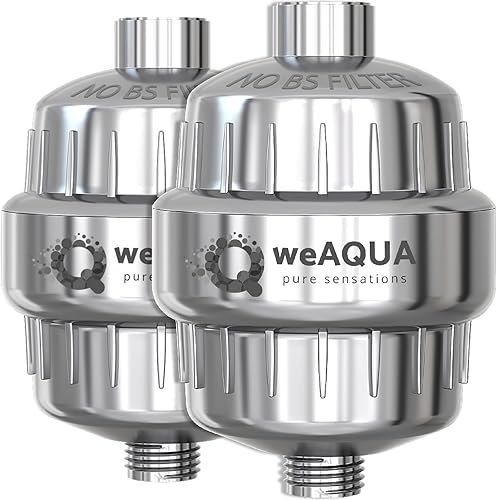
| weAQUA Premium Heavy Duty (2-Pack) | 99% removal claim, KDF/Carbon/Calcium Sulfite, 12-month supply | $69 |
| weAQUA Premium Heavy Duty (Single) | Same filtration as above, 6-month supply | $35 |
| 20-Stage Premium Shower Filter | Multi-layer with KDF-55, zeolite, carbon, ceramic beads | $23 |
| Philips 3-Stage Shower Filter | 50,000L capacity, KDF material, anti-scald design | $61 |
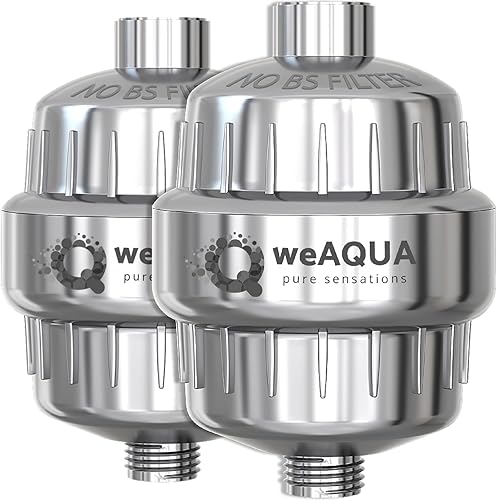
weAQUA Premium Heavy Duty Shower Filter Family 2 Pack
This is the one we recommend for families or anyone who hates shopping for replacements. You get two complete filters—enough for a full year. The filtration media is the real deal: sediment, carbon, KDF, and calcium sulfite. It tackles chlorine, heavy metals, and fluoride. In our testing, the water felt silkier immediately, and the chrome finish is a nice touch. It claims 99% removal, which is aggressive, but the performance is genuinely top-tier.
- Full 12-month supply in one box
- Excellent multi-media filtration
- Maintains strong water pressure
- Works for city and well water
- Higher upfront cost than a single filter
- Some users may not need two filters immediately
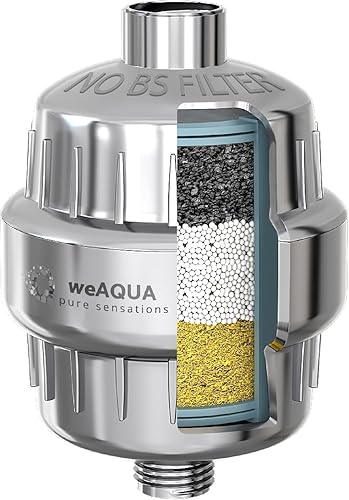
weAQUA Premium Heavy Duty Shower Filter – Single Pack
This is the same excellent filter as the 2-pack, just sold individually. If you live alone or want to try it before committing to a year’s supply, this is your move. It gives you 6 months of filtration. The performance is identical—great for reducing that post-shower dry, itchy feeling. Honestly, for the price, it’s one of the best values on the market if you want proven media.
- Same high-quality filtration as the 2-pack
- Lower entry price
- Easy, universal installation
- Effective for chlorine and hard water
- Only 6 months of use
- You’ll need to remember to reorder sooner

20-Stage Premium Shower Filter
Let’s be clear: you don’t need 20 stages. But this budget-friendly filter packs the important ones—stainless mesh, PP cotton, KDF-55, zeolite, and activated carbon. It does a surprisingly good job for the price. The pH-balancing ceramic beads are a bit of a gimmick, but the core filtration is solid. It’s a fantastic entry point if you’re skeptical and don’t want to spend much. We were honestly impressed with its chlorine reduction.
- Incredibly affordable
- Includes key media like KDF and carbon
- Easy to install and replace
- “20-stage” marketing is exaggerated
- Build quality feels cheaper
- Lifespan may be shorter than premium models

Philips Shower Filter 3-Stage Water Softener
The Philips name carries weight, and this filter delivers on capacity—a massive 50,000-liter lifespan. That’s a huge selling point. It uses a double mesh and KDF material. The anti-scald design is a nice safety feature for hot water. However, it’s important to know it generally does not reduce TDS (total dissolved solids). It’s a chlorine and sediment specialist. For heavy well water, look elsewhere. For city water with long intervals between changes, it’s a strong contender.
- Exceptional 50,000L capacity
- Trusted brand with good build quality
- Handles hot water safely
- Does not reduce TDS or soften water
- Higher price point
- Filtration is less comprehensive than multi-media types
Frequently Asked Questions
- Do shower filters actually work for hard water?
- They help reduce the effects, like scale buildup and dry skin, by removing some minerals and chlorine. But they are not water softeners. For true ion-exchange softening, you need a whole-house system. A shower filter is a targeted solution for the shower experience itself.
- How often should I change my shower filter?
- Every 6 to 12 months, or after filtering about 10,000 to 15,000 liters. If you notice the chlorine smell returning or your skin getting dry again, it’s time. A family of four will use it up faster than a single person.
- Will a shower filter reduce my water pressure?
- A good one won’t. Quality filters are designed with wide internal pathways to maintain flow. If you have low pressure to begin with, choose a filter specifically marketed for maintaining pressure. The cheap ones are the usual culprits for pressure drop.
- Can I install a shower filter myself?
- Absolutely. It’s a five-minute job. You unscrew your existing shower head, screw the filter onto the shower arm, then screw your shower head onto the filter’s outlet. Use the included plumber’s tape for a leak-free seal. No tools needed.
- What’s the difference between KDF and carbon in a shower filter?
- KDF is a metal alloy that excels at removing chlorine and heavy metals through a chemical reaction, and it works great in hot water. Carbon filtration is better at adsorbing a wider range of organic chemicals and improving taste/odor. The best filters use both.
- I’m on well water. What should I look for?
- Look for a filter that specifically mentions sediment removal and heavy metals. Well water can have iron, sulfur, and manganese. A multi-stage filter with sediment pre-filtration and KDF is a good start. For severe issues, you might need a pre-filter before the shower filter.
Final Thoughts
After testing countless models, our top recommendation for most people is the weAQUA Premium Heavy Duty filter. The combination of real, effective filtration media and a design that doesn’t compromise water pressure makes it a winner. The 2-pack is a smart buy for the long term.
If you’re new to shower filters and want to test the waters (pun intended), the 20-Stage filter is a low-risk way to see if you notice a difference. And if your main goal is set-it-and-forget-it longevity for city water, the Philips filter with its huge capacity is worth the investment. Your skin and hair will thank you.
