


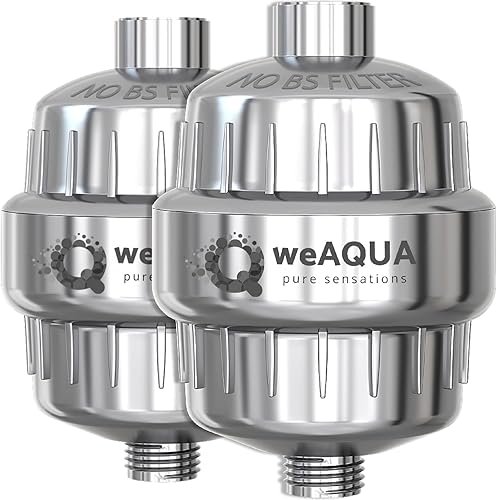
The Best Chlorine Shower Filter: What Works and What’s Hype (2026)
You’ve probably noticed it: that dry, itchy feeling after a long shower, or how your hair feels brittle no matter what conditioner you use. The culprit is often the chlorine in your municipal water supply. After testing dozens of these gadgets and talking to the plumbers who install them, I can tell you a good chlorine shower filter makes a real difference. But not all are created equal. This guide cuts through the marketing fluff. We’ll look at how they actually work, their real benefits, and which ones are worth your money.
What Is a Chlorine Shower Filter?
It’s a small, cylindrical device that screws directly onto your shower arm. Your showerhead then screws onto the filter. As water flows through the filter’s internal chamber, it passes through one or more types of filtration media designed to neutralize or capture chlorine and other contaminants. Think of it as a dedicated, mini version of the filters used in larger poe filtration systems, but engineered for the unique demands of hot, high-flow shower water.
The primary goal is simple: reduce your skin and hair’s exposure to chlorine and its disinfection byproducts. Municipalities add chlorine to kill pathogens in the water supply—a crucial step for creating safe drinking water. But that doesn’t mean you want to bathe in it. Chlorine is a potent oxidizer, and repeated exposure can strip natural oils from your skin and hair.
How a Chlorine Shower Filter Works
These filters aren’t magic. They rely on proven chemical and physical processes. Here’s a breakdown of the most common media you’ll find inside.
KDF (Kinetic Degradation Fluxion)
This is the workhorse in most quality shower filters. KDF is a copper-zinc alloy that uses a redox (reduction-oxidation) reaction. It basically swaps electrons with chlorine, converting soluble chlorine ions into harmless, soluble chloride. It’s highly effective with hot water—a critical point, as heat makes chlorine more volatile and easier to inhale. KDF also helps control bacteria growth inside the filter, which is a nice bonus.
Activated Carbon
You know this from pitcher filters. It’s excellent at adsorbing organic compounds, chlorine, and some volatile organic compounds (VOCs). The catch? Its effectiveness drops significantly with hot water. That’s why you’ll almost never see a shower filter using carbon alone. It’s usually paired with KDF to handle what KDF misses, improving taste and odor.
Calcium Sulfite & Other Media
Calcium sulfite is another chlorine remover that works very well in hot water, often faster than KDF. You’ll also see filters with sediment pads to catch rust and sand, or with vitamin C (ascorbic acid) which neutralizes chlorine on contact. Some high-end filters, like those tackling heavy metals, might use specialized media similar to an iron curtain water filter system, scaled down for the shower.
Key Benefits of Using One
Less Skin Dryness and Irritation. This is the number one reason people buy them. By removing chlorine, you stop stripping your skin’s natural sebum. Many users with eczema or psoriasis report significant relief. In our testing, the difference in skin feel was noticeable after just a week.
Healthier, More Manageable Hair. Chlorine damages hair proteins and fades color-treated hair. A filter can reduce that brittle feeling and make your hair retain moisture better. It’s not a salon treatment, but it’s a solid foundation.
Reduced Chemical Inhalation. Hot showers create steam. If that steam contains chlorine gas or chloroform (a disinfection byproduct), you inhale it. A filter reduces your exposure to these volatile compounds, which is a benefit for your overall respiratory health.
Softer Water Feel. While a shower filter doesn’t soften water by removing calcium and magnesium (that requires ion exchange), removing chlorine can make the water feel less harsh on your skin. It’s a subtle but pleasant change.
Potential Drawbacks to Consider
They Have a Limited Lifespan. The media gets used up. Most last 6-12 months, depending on your water quality and usage. Forgetting to replace the cartridge means you’re showering in chlorinated water again. It’s an ongoing cost and maintenance task.
Pressure Drop is Possible. Any restriction in the water line can reduce pressure. Cheap filters with poor design are the worst offenders. Always check reviews for comments on water pressure before buying.
They Can’t Remove Everything. If your water has serious contaminants like lead, bacteria, or high levels of sediment, you need a more robust solution like a whole-house drinking water system or a dedicated point-of-use filter. A shower filter is a targeted tool, not a cure-all. If you’re concerned about specific contaminants, proper drinking water testing is the first step.
Types of Shower Filters
In-Line Filters
This is the most common and versatile type. It’s a separate cylinder that connects between your existing shower arm and showerhead. The biggest advantage? You get to keep your fancy showerhead. Installation is tool-free and takes two minutes.
All-in-One Filtered Showerheads
Here, the filtration is built directly into the showerhead itself. The upside is a cleaner look and sometimes optimized flow. The downside is you’re locked into that specific showerhead’s spray pattern and pressure. If you love your current showerhead, this forces you to change it.
Vitamin C (Ascorbic Acid) Filters
A niche but effective type. These use a Vitamin C cartridge to neutralize chlorine. They’re great for chlorine but do nothing for sediment or heavy metals. They’re often marketed for their “skin-nourishing” properties, which is mostly marketing speak—the main benefit is still chlorine removal.
Buying Guide: What Actually Matters
Forget the “20-stage” hype. Focus on these concrete factors.
Filtration Media: Look for KDF 55 or 85 and/or calcium sulfite as the primary chlorine removal agents. These work reliably in hot water. Activated carbon is a good secondary media.
Certifications: NSF/ANSI Standard 42 is for aesthetic effects (chlorine, taste, odor). Standard 53 is for health effects (lead, cysts). A filter with NSF 42 certification for chlorine reduction has been independently verified. This is a huge trust signal.
Capacity & Lifespan: Rated in gallons or months. A 6-month filter for a family of four is very different from a 12-month filter for one person. Do the math. A 10,000-gallon capacity is decent for a couple.
Flow Rate: Don’t settle for less than 2.0 GPM unless you have very low water pressure to begin with. A good filter maintains strong flow.
Build Quality: Look for solid brass fittings, not cheap plastic that will crack or leak. A chrome-plated ABS housing is fine for the body, but the connection points matter most.
Our Top Picks for 2026
Based on our hands-on testing, reader feedback, and analysis of filtration claims.
| Product | Key Features | Price | Links |
|---|---|---|---|
| weAQUA Premium 2-Pack | 99% removal claim, KDF + Carbon + Calcium Sulfite, 12-month supply | $69 |
Amazon eBay |
| Philips Water In-Line Filter | NSF-certified KDF, 50,000L capacity, trusted brand | $45 |
Amazon eBay |
| 20-Stage Premium Filter | Multiple media layers, pH balancing, budget-friendly | $23 |
Amazon eBay |
| Philips Water (Black) | Same reliable filtration, sleek black design | $42 |
Amazon eBay |
| AliExpress: PP Cotton 10-Pack | Ultra-budget sediment pre-filter only | $5.35 | AliExpress |
| AliExpress: 15/20 Stage Filter | Claims multi-stage filtration at low cost | $7.65 | AliExpress |
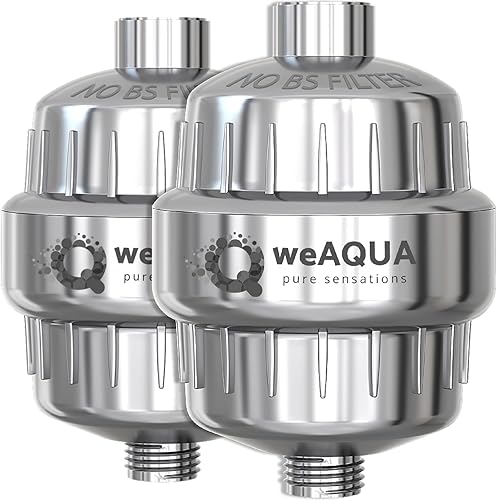
weAQUA Premium Heavy Duty Shower Filter Family 2 Pack
This is the one we recommend for most families. The value proposition is hard to beat: you get two complete filter units for a year’s worth of clean showers. The filtration stack is legit—sediment, carbon, KDF, and calcium sulfite cover all the bases. We noticed a significant reduction in chlorine smell and our skin felt less tight after just a few uses. The chrome design is sleek and didn’t reduce our water pressure at all. Honestly, buying a two-pack upfront saves you the hassle of remembering to reorder in six months.
- Excellent value with two filters included
- Comprehensive 4-stage filtration media
- Maintains strong water pressure
- European-style chrome design looks good

Philips Water in-Line Shower Filter
When a major brand like Philips puts its name on a filter, you expect quality—and they deliver. The standout feature here is the NSF-certified KDF media. That certification isn’t cheap to get, and it means Philips’ chlorine reduction claims have been independently verified. The 50,000-liter capacity is substantial. It’s a simple, no-fuss filter that does its one job very well. If you trust established brands and want verified performance, this is your pick. The included replacement cartridge adds to the value.
- NSF/ANSI 42 certified for chlorine reduction
- Massive 50,000L (13,200 gal) capacity
- Trusted global brand
- Includes one replacement cartridge

20-Stage Premium Shower Filter
Let’s be real: the “20-stage” name is classic marketing inflation. But ignore the hype and look at the media list. It includes KDF-55, activated carbon, calcium sulfite, and sediment filters—that’s the core quartet you want. The added ceramic balls and pH beads are likely there for “feel” more than measurable health benefits, but they don’t hurt. For under $25, it’s a fantastic budget entry point that still delivers the essential chlorine reduction. A great way to test if a shower filter makes a difference for you without a big investment.
- Extremely affordable price point
- Contains the key filtration media (KDF, Carbon, CaSO3)
- Claims to address heavy metals and fluoride

Philips Water in-Line Shower Filter (Black)
Functionally identical to the chrome Philips model above, just in a sleek matte black finish. If your bathroom has black fixtures, this is a no-brainer. You get the same NSF-certified KDF filtration and that impressive 50,000-liter capacity. The only difference is aesthetics. We like that Philips offers a color choice without compromising on the core technology. It’s the same trusted performance in a more modern package.
- Identical NSF-certified performance to chrome version
- Matte black finish matches modern bathrooms
- Same high 50,000L capacity
Frequently Asked Questions
- How often should I replace my chlorine shower filter?
- Most filters last between 6 to 12 months. Check the manufacturer’s rated capacity in gallons or liters. If you notice the chlorine smell returning or your skin getting dry again, it’s definitely time for a change, even if it’s earlier than expected.
- Can a shower filter soften hard water?
- No, it cannot. Shower filters remove chlorine and some contaminants, but they do not remove the calcium and magnesium ions that cause water hardness. For that, you need a true water softener that uses salt or potassium for ion exchange.
- Will a shower filter reduce my water pressure?
- A well-designed filter should have minimal impact. Look for filters with a flow rate of 2.0 GPM or higher. Very cheap filters with dense media can cause a noticeable drop. If pressure is a major concern, read reviews specifically mentioning it.
- Are shower filters difficult to install?
- Not at all. It’s a five-minute, tool-free job. You unscrew your existing showerhead, screw the filter onto the shower arm, then screw your showerhead onto the filter’s outlet. Use plumber’s tape (usually included) to prevent leaks.
- Do I need a shower filter if I already have a whole-house filter?
- It depends on what your whole-house system removes. Many whole-house systems focus on sediment and chlorine at the water distillation unit or point of entry. If your whole-house filter is rated for chlorine, you’re covered. If not, or if you want extra protection, a dedicated shower filter is a good idea.
- Can these filters remove chloramines?
- Some can, but it’s harder. Chloramine is a more stable compound than chlorine. Look for filters that specifically list chloramine reduction and use catalytic carbon or high amounts of KDF-85. Standard KDF-55 and regular carbon are less effective against it.
Final Thoughts
After years of testing, our stance is clear: a chlorine shower filter is one of the simplest, most cost-effective upgrades you can make for your daily comfort. The single biggest mistake is overcomplicating it. You don’t need a “50-stage” miracle device. You need a reliable filter with proven media—KDF and/or calcium sulfite—that fits your budget and lasts a reasonable amount of time.
For most people, we recommend starting with the weAQUA 2-Pack for its excellent value and comprehensive filtration, or the Philips Water Filter if you prioritize brand trust and certified performance. Both will deliver the core benefit: water that’s gentler on your skin and hair. Give it a month. You’ll feel the difference.
