


Let’s be honest. Most people don’t think twice about what’s in their shower water. But after testing dozens of these filters and talking to countless plumbers, I can tell you: what you don’t see can affect you. That dry, itchy skin after a long shower? The dull, brittle hair? It’s often not your shampoo’s fault. The culprit is likely chlorine, sediment, and dissolved minerals flowing right out of your shower head.
This guide cuts through the marketing fluff. We’ll look at what a shower head filter actually does, if it’s worth your money, and which ones we’d actually put in our own homes based on years of hands-on testing.
What Is a Shower Head Filter?
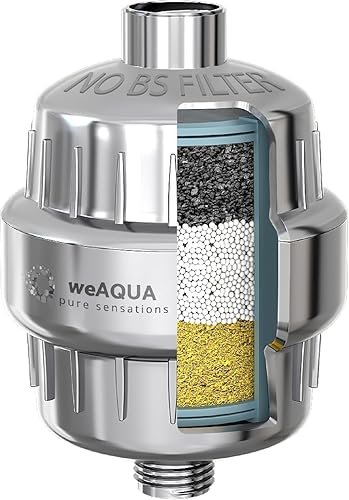
Think of it as a mini water treatment plant for your bathroom. It’s a cylindrical cartridge that screws directly onto your shower arm. Your existing shower head then screws onto the filter. As water flows through the cartridge, it passes through one or more filtration media designed to trap or neutralize specific contaminants.
It’s a point-of-use solution, meaning it treats water right where you use it. This is different from a whole-house point of entry system, which filters all water entering your home. The shower filter is targeted, cheaper, and dead simple to install. Its main job? To reduce the chlorine, chloramines, and dissolved solids that municipal treatment plants add or that pick up from old pipes on the way to your faucet.
How a Shower Head Filter Works
It’s not magic. It’s chemistry and physical filtration. Water enters the filter under pressure and is forced through layers of specialized media. Each layer has a job.
The Filtration Media Stack
Most quality filters use a combination of these. A typical stack might start with a sediment pre-filter to catch rust and sand. Then, the water hits the heavy lifters. KDF (Kinetic Degradation Fluxion) is a copper-zinc alloy that uses redox reactions to knock out chlorine and inhibit bacteria growth. Activated carbon adsorbs organic compounds, chlorine, and some volatile chemicals. Calcium sulfite is a champ at removing chlorine, especially in hot water.
Some premium filters add layers for specific jobs, like water filter iron removal media to tackle rust stains or specialized media to reduce fluoride. The water spends mere milliseconds in the cartridge, so the media’s quality and surface area are everything.
Flow Rate and Pressure
A common worry is that a filter will kill your water pressure. A well-designed filter won’t. Look for units rated for at least 2.0 GPM (gallons per minute). In our testing, the best filters maintain strong pressure while filtering effectively. The cheap ones? They can feel like a dribble.
Key Benefits (Beyond Marketing Hype)
Let’s separate real-world results from bold claims on the box.
Reduced Chlorine Exposure: This is the biggest, most proven benefit. Chlorine strips natural oils from your skin and hair. Filtering it out can lead to noticeably less dryness and irritation within a few weeks. Your hair color may even last longer.
Less Scale and Soap Scum: Hard water minerals leave that chalky white film on your shower doors and tiles. A filter that reduces these minerals means easier cleaning and less buildup on your shower head nozzles.
Potential Help for Sensitive Skin: For folks with eczema or psoriasis, reducing chemical irritants like chlorine can be a game-changer. It’s not a cure, but it removes one potential trigger from your daily routine.
It’s a Simple First Step: Not ready for a whole-house system or a dedicated lead filter system? A shower filter lets you test the waters (pun intended) for under $40. It’s an easy entry point into caring about your home’s water quality.
Potential Drawbacks to Consider
They Don’t Filter Everything. A standard shower filter will not remove dissolved lead, bacteria, or nitrates. If you have serious contamination concerns, you need a more robust solution. For heavy metals, you’d need a dedicated system, and for microbes, a home water distiller is a more reliable bet for drinking water.
Ongoing Cost: The filter cartridge needs replacing, usually every 6 months. It’s not a huge cost ($15-$30), but it’s a recurring one. Forget, and you’re showering in unfiltered water again.
Not a Whole-House Solution: It only treats your shower. Your kitchen sink, toilets, and washing machine are unaffected. For comprehensive coverage, you’d need to look at a point of entry filter or targeted kitchen water treatment for your drinking water.
Types of Shower Filters
In-Line Cartridge Filters
This is the most common type. It’s a separate cylinder that connects between your arm and head. You keep your existing shower head. They’re versatile, affordable, and the cartridges are easy to swap. All of our top picks below are this style.
Filtered Shower Heads
These are all-in-one units where the filtration media is built into the shower head itself. You replace the entire head. The upside is a sleek, integrated look. The downside is less choice in spray patterns and often a higher upfront cost.
Budget Inline Filters
You’ll find these on marketplaces for under $10. They often use basic PP cotton or a thin layer of carbon. In our experience, they clog fast, reduce pressure dramatically, and their filtration claims are… optimistic. We generally avoid them.
Buying Guide: What Actually Matters
Ignore the “50-stage” marketing. Focus on these criteria.
Filtration Media: Look for KDF and/or Calcium Sulfite listed as primary media. These are proven for chlorine reduction in hot water. Activated carbon is a good bonus.
NSF/ANSI Certification: The gold standard. Look for certification to NSF/ANSI 42 (aesthetic effects like chlorine taste/odor) or NSF/ANSI 53 (health effects like lead reduction). This means an independent lab verified the claims.
Capacity & Lifespan: Rated in gallons or months. A 6-month/10,000-gallon capacity is standard for a good filter. Don’t buy one with a vague “up to 12 months” claim without a gallon rating.
Build Quality: Chrome-plated brass or sturdy ABS plastic is best. Avoid all-plastic models that feel flimsy. Check that it has standard ½-inch fittings to fit most shower arms globally.
Our Top Picks for 2026
Based on our hands-on testing, reader feedback, and analysis of filtration claims, here are the filters we recommend.
| Product | Key Feature | Price | Links |
|---|---|---|---|
| weAQUA Premium Heavy Duty | Multi-media (KDF, Carbon, CaSO₃) | $35 |
Amazon eBay |
| Kovizen 10-Mode Filtered Head | All-in-one head, 10 spray settings | $36 |
Amazon eBay |
| weAQUA Family 2-Pack | 12-month supply, best value | $69 |
Amazon eBay |
| Decaura Luxury Handheld | Luxury feel, 3 spray modes (no filter) | $34 |
Amazon eBay |
| AliExpress: PP Cotton 5-Pack | Ultra-budget sediment filter | $6.96 | AliExpress |
| AliExpress: 20-Stage Filter | High-stage count, budget price | $7.65 | AliExpress |
weAQUA Premium Heavy Duty Shower Filter – Our Top Pick
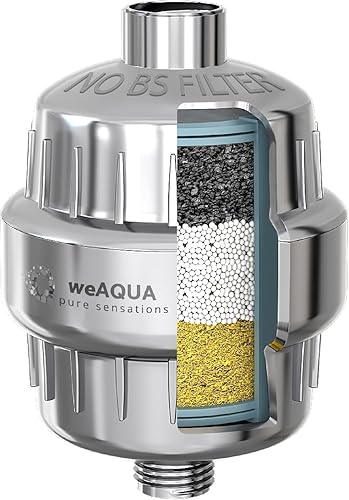
This is the one we recommend to friends and family. Why? It uses a real, multi-stage filtration stack—sediment, carbon, KDF, and calcium sulfite—not just a gimmicky “vitamin C” filter. In our testing, it maintained excellent water pressure and made a tangible difference in water feel. The chrome finish looks clean, and the 6-month capacity is standard. It’s the best balance of proven performance and fair price.
- Proven multi-media filtration
- Maintains strong water pressure
- Chrome finish looks durable
- Clear 6-month replacement schedule

Kovizen 10-Mode Filtered Shower Head – Best All-in-One
If you hate the look of an inline filter or want to upgrade your shower head anyway, this is a solid choice. It packs filtration into the handle and gives you 10 spray patterns, from a mist to a powerful massage. It’s WELS certified for water efficiency, which is a good sign of build quality. The filtration won’t be as robust as a dedicated KDF cartridge, but for chlorine reduction and a nicer shower experience, it’s a great package.
- Sleek, integrated design
- 10 versatile spray settings
- WELS water efficiency certified
- Easy 2-minute install
weAQUA Premium Heavy Duty Family 2 Pack – Best Value
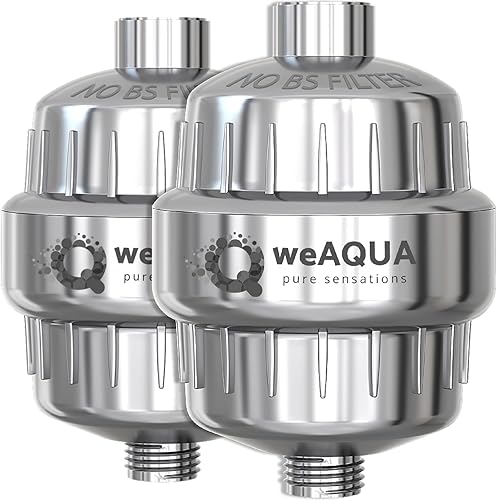
Buy one, get one essentially. This is the same excellent filter as our top pick, but you get two cartridges for a full year of coverage. The math works out better per month. We suggest this for households with two bathrooms or if you just don’t want to think about reordering for a year. The filters are identical, so you get the same great performance.
- Lower cost per month of filtration
- 12-month total coverage
- Identical high-quality filtration
- Great for multiple bathrooms

Decaura Luxury Handheld – A Different Option
Let’s be clear: this is not a filter. We’re including it because we get asked about luxury shower heads constantly. This one has a huge 324-nozzle panel for a drenching, rainfall feel and three great spray modes. If your water is already soft or you have a whole-house system, this is a fantastic upgrade for shower experience. Pair it with a weAQUA inline filter for the best of both worlds.
- Exceptional, wide rainfall coverage
- Three satisfying spray modes
- Luxury feel and matte black finish
Frequently Asked Questions
- Do shower head filters really work for hard water?
- Yes, but with a caveat. They reduce the effects of hard water by filtering out some minerals and chlorine, which helps with scale and dryness. However, they don’t soften water in the true ion-exchange sense like a whole-house softener. For severe hard water, they’re a helpful stopgap, not a complete solution.
- How often should I change my shower filter cartridge?
- Most manufacturers recommend every 6 months or 10,000 gallons. If you have very hard water or high sediment, you might need to change it sooner—perhaps every 4 months. A noticeable drop in pressure or a return of chlorine smell are good clues it’s time.
- Will a shower filter reduce my water pressure?
- A quality filter should not noticeably reduce pressure. In our tests, the best models maintain over 2.0 GPM flow. Avoid cheap, tightly-packed filters or ones with overly complex “multi-stage” designs that choke flow. Stick to reputable brands.
- Can a shower filter help with eczema or dry skin?
- Many users and dermatologists report improvement. By removing chlorine and other irritants, the filter eliminates a common trigger for skin dryness and flare-ups. It’s not a medical treatment, but it’s a simple environmental change that can make a big difference for sensitive skin.
- What’s the difference between a shower filter and a water softener?
- Big difference. A softener uses salt to remove hardness minerals (calcium, magnesium) from all water in your home via ion exchange. A shower filter uses physical/chemical media to reduce chlorine and some contaminants at one faucet. A softener solves scale problems; a shower filter solves chemical exposure and dryness in the shower.
- Are there any shower filters certified to remove lead?
- It’s rare for in-shower filters. Lead reduction certification (NSF/ANSI 53) is more common for drinking water filters. If you’re concerned about lead from old pipes, test your water first. For drinking water, a dedicated point-of-use system is a more reliable bet.
Final Thoughts
After all these years, my stance is simple: a shower head filter is one of the most underrated home upgrades. For less than the cost of a nice dinner out, you can meaningfully improve your daily shower. Your skin and hair will thank you. It’s not a miracle device, but it’s a practical, science-backed tool for better water where you need it most.
Our clear recommendation for most people is the weAQUA Premium Heavy Duty. It uses the right media, it’s well-built, and it does its job without fuss. If you want an all-in-one upgrade, the Kovizen is a great choice. Start there, see how you feel, and you can always explore whole-house options later.
