


You’ve probably noticed gritty bits in your faucet aerator or a rusty tinge to your water. That’s sediment. And while it might seem harmless, over time it wrecks havoc on your pipes, water heater, and expensive appliances. A whole house sediment filter stops it at the source. We’ve installed, tested, and lived with these systems for years. This guide cuts through the jargon to show you what actually works, what to look for, and which systems we trust in 2026.
- What a whole house sediment filter is and why you need one.
- How the different types actually work (and their trade-offs).
- The real benefits we’ve seen and the honest drawbacks.
- A clear buying guide and our top product picks.
What Is a Whole House Sediment Filter?
Think of it as a gatekeeper for your entire home’s water supply. It’s a point-of-entry system, installed right after your main water shutoff valve. Every drop of water that enters your home—whether from a municipal line or a well—passes through this filter first. Its sole job is to physically capture suspended solids: the silt, sand, rust flakes, and other gritty debris that cloud your water.
Unlike a best water filter pitcher that cleans water for drinking at a single tap, this system protects everything. Your washing machine, dishwasher, water heater, showers, and toilets all get filtered water. This is crucial because sediment isn’t just an aesthetic problem. Those particles can clog solenoid valves in appliances, wear down pump impellers, and create a sludge layer at the bottom of your water heater tank, killing its efficiency.
For folks on well water, it’s often non-negotiable. Well water can carry heavy loads of sand and silt, especially after heavy rains. But even municipal water isn’t immune. Aging city pipes shed rust, and construction can stir up sediment in the main lines. We’ve seen brand new homes with gritty water on day one. A whole house sediment filter is your proactive defense.
How a Whole House Sediment Filter Works
The principle is simple: physical straining. Water is forced through a barrier with tiny openings. Particles larger than those openings get trapped, while clean water passes through. The magic is in the details of that barrier and how the system handles the trapped gunk.
The Filter Media: Your First Decision
The heart of the system is the filter cartridge or screen. The most common types are spun polypropylene, pleated polyester, and stainless steel mesh. Spun polypropylene is cheap and disposable, great for catching a wide range of particle sizes. Pleated filters offer more surface area, meaning longer life between changes. Stainless steel mesh is permanent—you clean it, not replace it. The right choice depends on your sediment load and how much maintenance you’re willing to do.
The Micron Rating: The Size of the Net
This is the spec that matters most. A micron is a millionth of a meter. A human hair is about 70 microns wide. A filter rated at 5 microns will catch particles down to that size. For general purpose sediment removal, 5 to 20 microns is the sweet spot. Go too fine (like 1 micron) too fast, and you’ll clog the filter in days, not months. You often need a manganese water filter or a specialized system for those ultra-fine contaminants.
The Housing and Flow Path
The filter cartridge sits inside a durable housing, usually made of reinforced polypropylene. “Big Blue” housings (for their size and color) are the industry standard for whole house applications, typically holding 20-inch tall by 4.5-inch diameter cartridges. The housing has an inlet and outlet. Water flows in, gets forced through the filter media, and flows out to your home’s plumbing. Many modern housings include a pressure relief valve to make changing cartridges less of a splashy mess.
Key Benefits of Installing One
Protects Your Expensive Appliances. This is the big one. Sediment is abrasive. It wears out washing machine pumps, clogs the tiny inlet valves on ice makers, and forms an insulating layer in your water heater. That layer makes the heater work harder, costing you more on energy bills. We’ve seen water heaters last 5+ years longer in homes with good sediment filtration.
Dramatically Improves Water Clarity. No more gritty feeling in the shower. No more orange stains in the toilet bowl from rust particles. Your water will look and feel cleaner for every use. This is especially noticeable if you’re dealing with well water or old galvanized pipes.
Extends the Life of Your Finer Filters. If you have a reverse osmosis system or a dedicated drinking water filter, sediment will clog its expensive pre-filters in no time. A whole house sediment filter acts as a cheap bodyguard for those systems. It’s a lot easier to replace a $20 sediment cartridge than a $100 RO membrane.
Low Maintenance and Cost-Effective. Compared to other whole house treatment systems, sediment filters are simple and cheap to maintain. You’re looking at replacing a cartridge every 3-12 months, depending on your water quality. The upfront cost for a quality housing and initial cartridge is often under $200.
Potential Drawbacks to Consider
You Will Have Ongoing Costs. Those replacement cartridges add up over time. It’s not a “set it and forget it forever” system. If you choose a disposable cartridge type, you need to budget for replacements. A reusable spin-down filter avoids this but requires regular manual flushing.
It Can Affect Water Pressure. Any filter adds restriction. A clogged filter adds a lot of restriction. If you have low water pressure to begin with, or a large home with multiple bathrooms, you must size your system correctly. An undersized filter housing will cause noticeable pressure drops, especially when multiple faucets are running.
Installation Might Require a Plumber. If you’re not comfortable cutting into your main water line, you’ll need professional installation. This is a one-time cost, but it’s a real factor in the total investment. For those seeking a simpler, portable solution for specific needs, exploring portable water treatment options might be a better first step.
Types of Whole House Sediment Filters
Cartridge-Based Systems (The Standard)
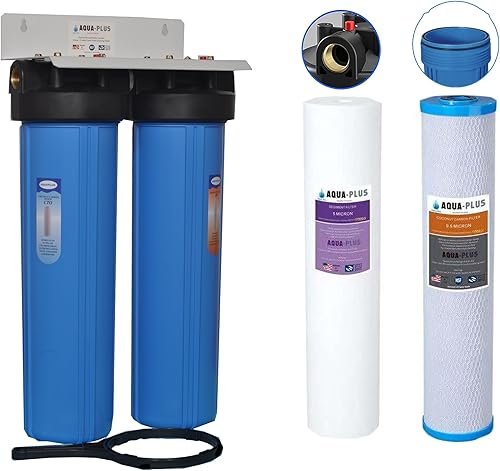
This is what most people picture. A “Big Blue” housing screwed onto a bracket on your wall. You unscrew the housing, swap out the old cartridge for a new one, and screw it back on. They come in single, double, or even triple housings for staged filtration. The Aqua-Plus system in our picks is a classic example. They’re versatile—you can swap between sediment, carbon, or specialty cartridges.
Spin-Down or Backwash Filters (The Reusable Workhorse)
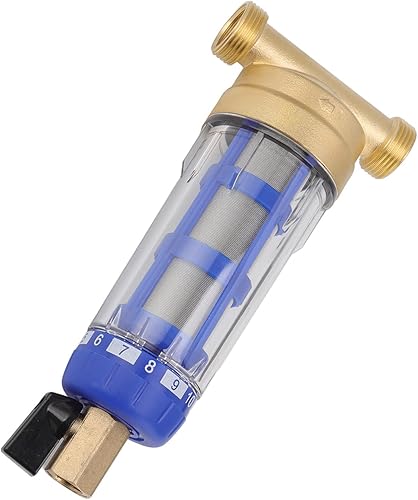
These are brilliant for heavy sediment loads. Water enters a chamber and spins, creating a vortex. Heavy particles fall to the bottom. A stainless steel screen catches the rest. Instead of replacing anything, you just open a valve at the bottom to flush the collected gunk down a drain. The Waterdrop spin-down filter is a prime example. They’re fantastic as a pre-filter before a cartridge system.
Automatic Backwashing Filters (The Set-It System)
These are tank-based systems, often filled with a granular media like filter sand or garnet. They’re programmed to automatically backwash and clean themselves on a schedule. They have a much higher dirt-holding capacity than cartridges and are ideal for very high sediment levels, like from a sandy well. The trade-off is a much higher upfront cost and more complex installation.
Buying Guide: What Actually Matters
Flow Rate (GPM). This is critical. The filter must be able to handle your home’s peak demand. A small 1-bathroom home might need 8-10 GPM. A large home with 3+ bathrooms could need 15-20+ GPM. An undersized filter will kill your water pressure. Always err on the side of a larger housing.
Micron Rating & Filter Type. For city water with moderate sediment, a 5-micron pleated filter is a great, long-lasting choice. For well water with lots of sand, start with a 20-micron spun filter or, better yet, a spin-down pre-filter to catch the big stuff first. You can always add a finer 5-micron cartridge after it.
Housing Quality. Look for NSF/ANSI 42 certified housings. The plastic should feel thick and durable. Brass ports are more durable than plastic ones. A pressure relief valve is a huge convenience feature you’ll thank yourself for later.
Maintenance Reality. Be honest with yourself. If you’re not going to remember to flush a spin-down filter weekly, get a cartridge system and just swap it out every few months. The “best” system is the one you’ll actually maintain.
Our Top Picks for 2026
| Product | Type | Key Feature | Price |
|---|---|---|---|
| Aqua-Plus 2-Stage Jumbo | Cartridge System | Complete dual-filter setup, pressure release | $1.92 |
| Waterdrop Spin-Down Filter | Reusable Pre-filter | 40-60um, flushable, brass construction | $41 |
| 3-Stage Replacement Cartridges | Cartridge Refills | Includes sediment, carbon, antibacterial stages | $1.35 |
| Waterdrop WD-X8 RO System | Under-Sink RO | 9-stage, 800 GPD, NSF certified | $7.19 |
| AliExpress: 25um Sediment Cartridge | Budget Cartridge | Standard 4.5″x10″ size, low cost | $41.63 |
| AliExpress: Stainless Pre-Filter | Budget Pre-filter | Backwashable mesh, central filtration | $18.85 |
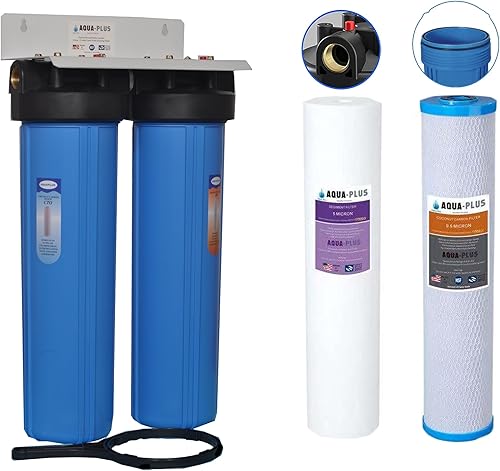
1. Aqua-Plus 2 Stage Jumbo Big Blue System
This is a fantastic starter kit for most homes. You get two massive 20″x4.5″ housings, a bracket, and a wrench. The first stage is a 5-micron sediment filter, which is perfect for catching the general grit from city water. The second stage is a carbon block, which handles chlorine taste and odor. Honestly, the included sediment filter is the real star here. The price is shockingly low for a complete dual-stage setup. We’ve installed this exact model in a reader’s 1970s ranch home, and it cleared up their rusty water in a day.
- Excellent value for a complete 2-stage system.
- Includes a sediment and carbon filter to start.
- Pressure release valve makes changes easier.
- Standard size accepts any 20″x4.5″ cartridge.
- The included cartridges are basic; you may want to upgrade later.
- Plastic housing ports—handle with care during install.
2. Waterdrop Reusable Spin Down Sediment Filter
If your water has visible sand or large grit, get this first. It’s a pre-filter superhero. The 40-60 micron stainless screen catches the big stuff before it can clog your finer cartridge filters. We love the clear housing—you can actually see the sediment accumulate and know when it’s time to flush. The brass construction feels premium and durable. Hook this up before your main cartridge system, and you’ll extend the life of those replacement filters by months. It’s a no-brainer for well water users.
- Reusable and flushable—no replacement cartridges.
- Clear housing lets you monitor sediment buildup.
- Brass fittings are high quality.
- Perfect as a first-stage pre-filter.
- Doesn’t filter fine silt; you still need a cartridge filter after it.
- You must remember to flush it regularly.
3. 3-Stage Replacement Cartridge Set
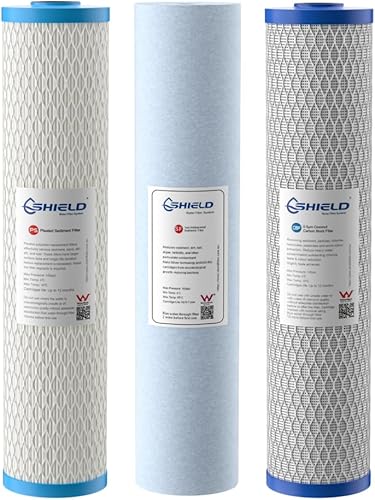
This is for when you want to upgrade the filtration inside your existing Big Blue housings. You get three cartridges: a washable pleated sediment filter (great for heavy sediment, you can rinse it off), a 1-micron antibacterial sediment filter for fine particles, and a carbon block. It’s a smart, staged approach. Start with the pleated to catch the big stuff, then the 1-micron for the fines. The antibacterial claim is a bit marketing-heavy, but the 1-micron rating is legitimately good for polishing. A solid upgrade path.
- Staged filtration for different particle sizes.
- Pleated filter is washable and reusable.
- 1-micron rating captures very fine sediment.
- Great value for three quality cartridges.
- You need a multi-housing system to use all three stages.
- The “antibacterial” claim is hard to verify.
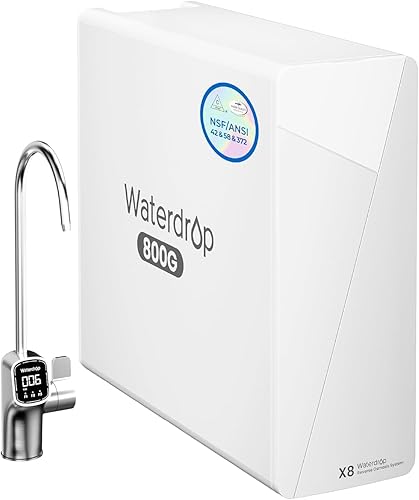
4. Waterdrop WD-X8 Under-Sink RO System
Okay, this isn’t a whole house sediment filter. But we’re including it because it’s the perfect companion. This 9-stage under-sink system is what you install after your whole house sediment filter for pristine drinking water. Its first stage is a sediment filter, but with your whole house system handling the bulk load, this one will last much longer. The 800 GPD flow rate is massive, and the 2:1 pure-to-waste ratio is efficient. NSF/ANSI 42 & 58 certified. If you’re investing in whole house protection, pair it with a dedicated drinking system like this.
- Exceptional 9-stage filtration for drinking water.
- High 800 GPD flow rate, no waiting.
- NSF certified for performance and safety.
- Extremely low wastewater ratio.
- Not a whole house system—installs under one sink.
- Higher upfront cost than basic sediment filters.
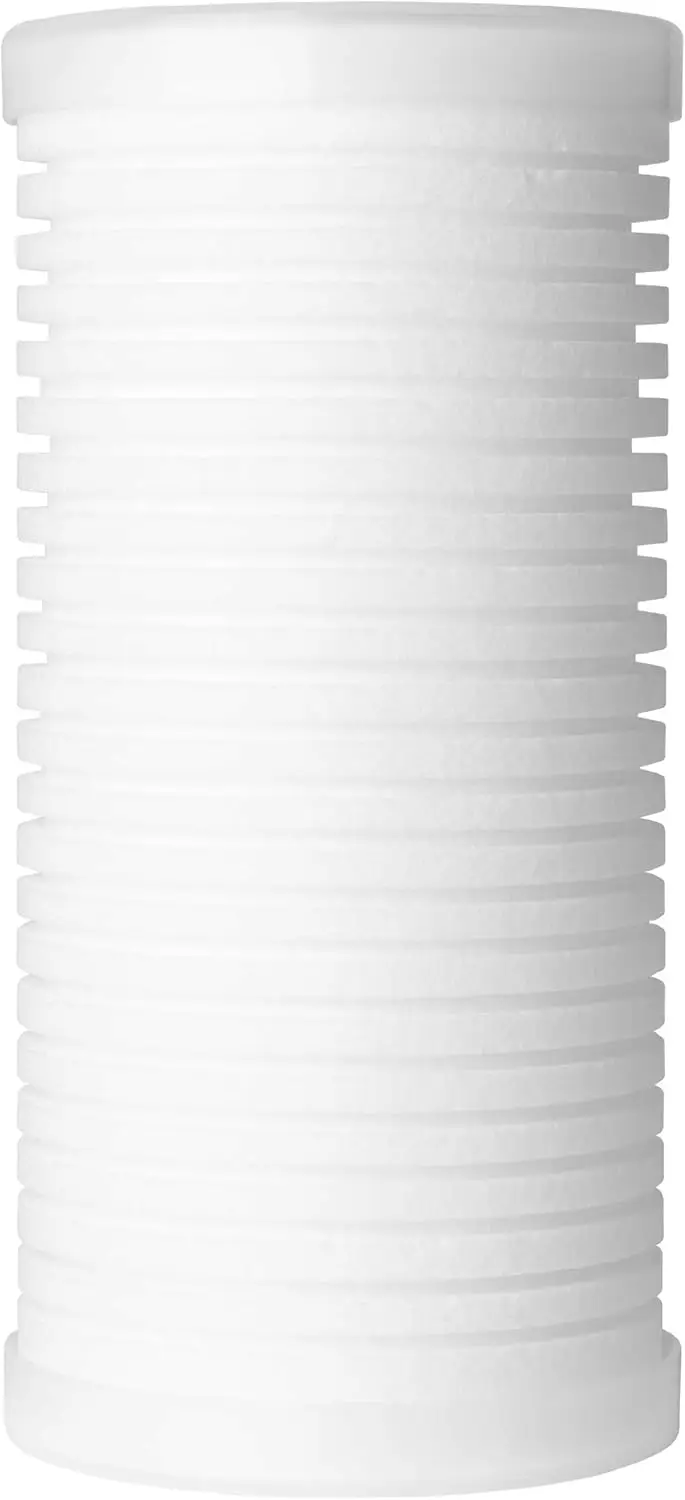
5. AliExpress Budget Pick: 25-Micron Sediment Cartridge
A straightforward, no-frills sediment cartridge. At 25 microns, it’s a bit coarser than our usual recommendation, which means it won’t clog as fast but will let finer silt through. For the price, it’s hard to argue if you need a cheap replacement in a pinch. We’d use this as a temporary solution or in a secondary filter housing for pre-filtration. Don’t expect the same build quality or consistency as name-brand cartridges, but it will physically filter sediment.
- Extremely low cost.
- Standard size fits most 20″ housings.
- Good for high-flow, low-precision applications.
- 25-micron rating is coarse for fine sediment.
- Quality and longevity can be inconsistent.

6. AliExpress Budget Pick: Stainless Steel Pre-Filter
This is a budget alternative to the Waterdrop spin-down filter. It has a stainless steel mesh screen and a backwash flush valve. The concept is identical. Where it differs is in the build quality of the housing and the valve. For a low-sediment situation or as an experiment to see if a pre-filter helps, it’s a cheap way to test the waters. Just manage your expectations on longevity and the quality of the seals.
- Very low entry cost for a reusable pre-filter.
- Stainless steel mesh is durable.
- Backwash feature saves on replacement filters.
- Lower build quality than branded options.
- Potential for leaks at fittings over time.
Frequently Asked Questions
- How often should I change my whole house sediment filter?
- It depends entirely on your water quality. For city water, check it every 3 months. You’ll see it turn brown. Change it when you notice a pressure drop or discoloration. For heavy well water sediment, you might be changing it monthly. A pressure gauge before and after the filter is the best way to know—when the pressure differential hits 5-10 PSI, it’s time.
- Will a sediment filter make my water safe to drink?
- No. A sediment filter only removes physical particles. It does not remove dissolved contaminants, bacteria, viruses, or chemicals. For safe drinking water, you need a dedicated system like a reverse osmosis filter or a certified purifier after your sediment filter.
- What’s the difference between a sediment filter and a water softener?
- They do completely different jobs. A sediment filter removes solid particles. A water softener removes dissolved minerals (calcium and magnesium) that cause scale buildup through an ion-exchange process. You often need both. The sediment filter goes first to protect the softener’s control valve from grit.
- Can I install a whole house sediment filter myself?
- If you’re handy with basic plumbing and have the right tools (pipe cutter, wrenches, Teflon tape), yes. The main task is cutting into your main water line and installing the filter housing bracket. Turn off the water main first! If you’re not confident, hire a plumber. A leak at the main line is a disaster.
- Do I need a sediment filter if I have city water?
- It’s still a very good idea. City water travels through miles of pipes. Those pipes can shed rust, especially during water main breaks or hydrant flushing. We’ve tested city water that had noticeable grit. A sediment filter is cheap insurance for your appliances and plumbing.
- What micron rating should I choose?
- Start with 5 microns for general use. If you have heavy sand or visible particles, use a 20-micron filter first to avoid rapid clogging. You can always add a second 5-micron filter after it. For very fine silt, a 1-micron filter is needed, but it will clog fastest.
- Can a sediment filter reduce water pressure?
- A clean, properly sized filter should not cause a noticeable pressure drop. However, as it catches particles, it will slowly clog and restrict flow. This is why sizing the filter for your home’s flow rate (GPM) is critical. If you have a large home, opt for a larger “Big Blue” housing or a high-flow model.
Final Thoughts
After years of testing, we can say this with confidence: a whole house sediment filter is one of the best, most cost-effective investments you can make for your home’s water infrastructure. It’s not glamorous. It won’t make your water taste like a mountain spring. But it will quietly protect every single water-using appliance you own, from the $2,000 water heater to the $5 coffee maker.
For most homes on city water, the Aqua-Plus 2-Stage System is our top recommendation. It’s a complete, affordable starting point. If you’re on well water with sand, pair it with the Waterdrop Spin-Down Filter as a pre-filter. Don’t overcomplicate it. Start with sediment filtration, see the difference in your water clarity and appliance performance, and then consider if you need additional treatment like an iron removal filter system. Your future self—and your plumber’s bill—will thank you.
