


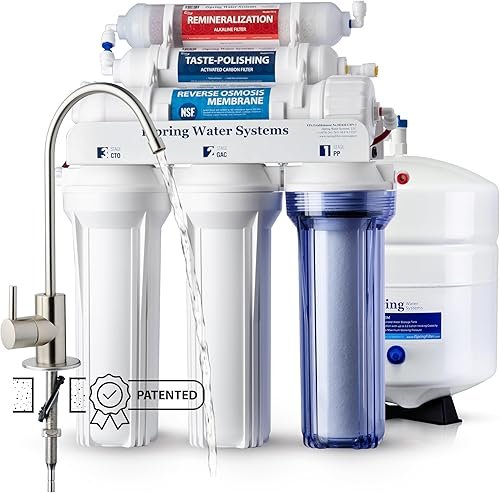
You’ve tasted the difference. Maybe it was at a friend’s house, or from one of those fancy fridge filters. That crisp, clean, almost sweet taste of water that’s been properly purified. You want that, every day, right from your tap. And you’ve heard reverse osmosis is the gold standard. But the market is a jungle.
After testing systems for over a decade, I can tell you the single biggest mistake is buying based on price or stage count alone. The real differences are in the membrane quality, the waste ratio, and the certifications. This guide cuts through the noise. We’ll cover what actually matters, break down the top systems, and help you find the perfect fit for your sink.
What Is an Under-Sink Reverse Osmosis System?
An under-sink reverse osmosis system is a multi-stage water filtration unit installed directly beneath your kitchen counter. It connects to your cold water line and sends purified water to a dedicated faucet. The core of the system is a semipermeable membrane with microscopic pores—about 0.0001 microns.
That’s incredibly small. For context, a human hair is roughly 50 microns wide. This membrane blocks the vast majority of dissolved contaminants that simpler filters miss. We’re talking heavy metals like lead, salts, fluoride, and even some pesticides. The result is water that’s not just filtered, but fundamentally purified.
Unlike pitcher filters or faucet-mounted units, these systems tackle a much broader spectrum of pollutants. They’re a permanent solution for households concerned about specific contaminants in their local water supply. If you’ve ever considered a dedicated fluoride filter system, a quality RO unit handles that and a whole lot more.
How Reverse Osmosis Works Under Your Sink
The process seems complex, but the principle is straightforward: pressure forces water through a super-fine filter. Let’s break down the typical flow.
The Pre-Filtration Stages
Water first hits a sediment filter—usually a 5-micron polypropylene cartridge. This catches dirt, rust, and sand. Next comes one or two carbon blocks. These are crucial. They adsorb chlorine, which would otherwise destroy the delicate RO membrane. They also tackle volatile organic compounds and bad tastes. Think of these stages as the bodyguards for the main event.
The RO Membrane
Here’s where the magic happens. Household water pressure (or a booster pump in some models) pushes water through the tightly wound semipermeable membrane. Pure H2O molecules slip through. Dissolved solids—salts, metals, fluoride—are rejected and flushed away as “waste” water. This waste line typically connects to your drain pipe.
Post-Filtration & Storage
After the membrane, water usually passes through a final carbon “polishing” filter to remove any remaining tastes or odors. It then enters a small storage tank—typically 2-4 gallons—because the purification process is slow. When you open the faucet, water flows from this tank. Some newer, tankless models use powerful pumps to produce water on demand.
Key Benefits of a Dedicated RO System
Seriously Clean Water: This is the headline. A certified RO system reduces up to 99% of total dissolved solids (TDS). If your water report shows high TDS, lead, or nitrate levels, this is your most effective home solution. The difference in taste and safety is not subtle.
Cost Savings Over Bottled Water: The math is simple. A family spending $20 a week on bottled water will spend over $1,000 a year. A good RO system costs between $150-$400 upfront, with annual filter changes around $50-$80. It pays for itself quickly.
Environmental Win: You eliminate the need for plastic bottles. No more hauling cases from the store, no more empties cluttering the recycling bin. It’s a permanent, under-sink solution.
Better Tasting Coffee and Cooking: Purified water makes a noticeable difference. Your morning coffee will taste cleaner because you’ve removed the chlorine and minerals that can cause bitterness. Soups and pasta benefit too.
Potential Drawbacks to Consider
Water Waste: Traditional RO systems create a reject stream. While modern systems are much more efficient, you will still send some water down the drain. If you’re on a metered supply or live in a drought-prone area, the pure-to-drain ratio is a critical spec.
Removes Beneficial Minerals: The membrane doesn’t discriminate. It removes harmful contaminants but also strips out naturally occurring minerals like calcium and magnesium. This is why many systems, like our top pick, include a final alkaline filtration system stage to add these back.
Requires Installation: You need to drill a hole for the dedicated faucet and connect to your plumbing. It’s a moderate DIY project, but if you’re not comfortable, factor in the cost of a plumber.
Slow Flow Rate: The purification process is slow. That’s why tanks exist. If you drain the tank making a big pot of pasta, you’ll wait for it to refill. Tankless models solve this but cost more.
Types of Under-Sink RO Systems
Traditional Tank-Based Systems
The most common and affordable type. They use a pre-pressurized bladder tank to store purified water. You get instant access to water until the tank is depleted. Sizes vary, but a 3.2-gallon tank (holding about 2 gallons of water) is standard. Reliable and time-tested.
Tankless RO Systems
The newer breed. They use a high-output membrane and a powerful pump to produce water on demand, eliminating the storage tank. This saves a ton of under-sink space and guarantees fresh water. The flow rate is often higher, but they require an electrical outlet and are typically more expensive.
High-Efficiency & Zero-Waste Models
These focus on minimizing waste. Some use a permeate pump to improve efficiency. Others recirculate the reject water. Be cautious with “zero-waste” claims—sometimes the waste water is directed to your hot water line, which isn’t ideal. Always check the certified pure-to-drain ratio.
Buying Guide: What Actually Matters
Forget the marketing hype about “12-stage filtration.” Here’s what we look at when testing systems.
Certifications are Non-Negotiable: Look for NSF/ANSI Standard 58 for RO performance. Standard 42 is for aesthetic effects (taste, odor), and 53 is for health contaminants (lead, cysts). A system certified to 58 has been independently verified to reduce specific contaminants. This is your primary trust signal.
Membrane Quality & GPD Rating: Gallons Per Day (GPD) indicates production speed. 75 GPD is fine for most families. 400-800 GPD is for tankless, high-demand units. The membrane brand matters—Filmtec and CSM are reputable.
Waste Ratio: As mentioned, this affects your water bill. A 2:1 pure-to-drain ratio is now a good standard. Avoid systems with ratios higher than 3:1 unless you have a specific need.
Filter Availability & Cost: Check the price and availability of replacement filters before you buy. A cheap system with proprietary, expensive filters is a trap. Standard-sized filters are best. You’ll need to swap the under sink filter cartridge sets annually.
Your Water Quality: Start with a drinking water testing kit or your local water report. If you have high sediment, you might need extra pre-filtration. If your water has high levels of iron or manganese, you may need a dedicated iron and manganese filter before the RO system to protect the membrane.
Our Top Picks for 2026
| System | Best For | Key Spec | Price |
|---|---|---|---|
| iSpring RCC7AK | Overall Value & Taste | 75 GPD, 6-Stage w/ Alkaline | $5.03 |
| Geekpure 6-Stage UV | Well Water / Microbiological Concerns | 75 GPD, 6-Stage w/ UV | $2.45 |
| ROWF-05 Tankless | Space Saving & Efficiency | 450 GPD, 2:1 Ratio, Tankless | $2.99 |
| Waterdrop X8 | High Flow & Heavy Use | 800 GPD, 9-Stage, 2:1 Ratio | $7.19 |
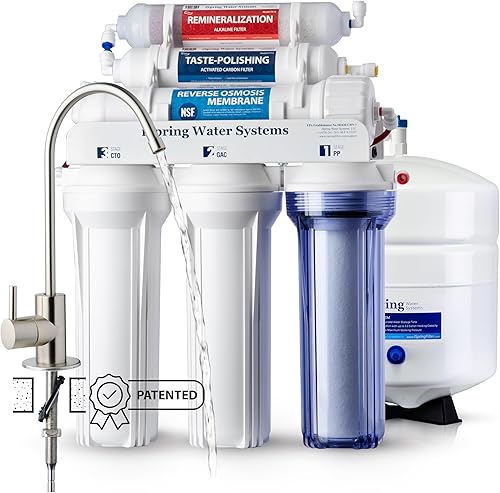
1. iSpring RCC7AK – The Reliable Workhorse
This is the system I recommend to friends and family more than any other. Why? It just works. The 6-stage filtration is thoughtfully designed, and the final alkaline remineralization filter is a game-changer for taste. It adds back a small amount of calcium and magnesium, giving the water a more natural, mineral flavor that plain RO lacks. In our testing, it consistently reduced TDS by over 90%.
The build quality is solid, with NSF-certified components. Installation is straightforward for a handy homeowner. The 75 GPD membrane is plenty for a household of four. Honestly, most people don’t need more capacity than this. It’s the perfect balance of performance, quality, and price.
- Excellent value for a full 6-stage system
- Alkaline filter greatly improves taste
- Proven reliability and easy filter changes
- Strong NSF/ANSI 58 certification
- Traditional tank takes up under-sink space
- Standard 3:1 waste ratio (not the most efficient)
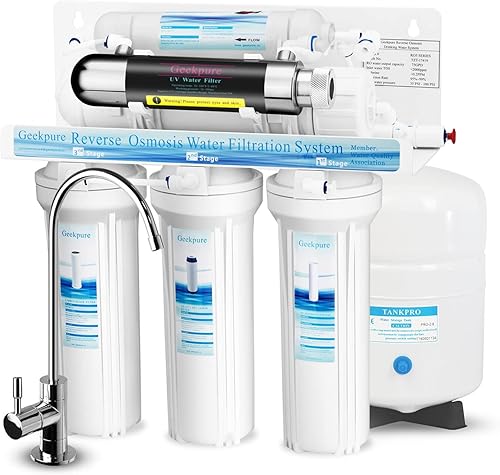
2. Geekpure 6-Stage with UV – The Well Water Specialist
If your water comes from a private well, you’re dealing with a different set of challenges—potential bacteria, viruses, and parasites. The Geekpure adds a critical 6th stage: an ultraviolet light sterilizer. The UV chamber sits after the RO membrane, zipping any microorganisms that might have slipped through. It’s an extra layer of security that municipal water users might not need.
The core RO performance is solid, with an NSF-certified membrane. The included faucet is lead-free, which is a must. We like that the manufacturer is ISO9001:2015 certified—it shows a commitment to quality control. Just remember, the UV bulb needs replacing about once a year, which adds a small ongoing cost.
- UV sterilization is crucial for untreated well water
- Good overall filtration performance
- ISO-certified manufacturer
- UV bulb adds to annual maintenance cost
- Overkill if you’re on treated city water
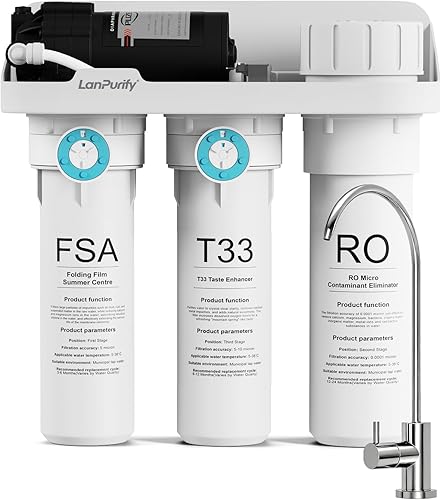
3. ROWF-05 Tankless RO – The Space Saver
Short on under-sink space? This tankless model is your answer. It’s remarkably compact, freeing up room for cleaning supplies or a trash bin. The 450 GPD flow rate means you won’t run out of water mid-task. The 2:1 pure-to-drain ratio is a big step up in efficiency from traditional tanks.
We appreciate the simple date-logging dial on each filter—a low-tech, foolproof way to track replacements. It’s NSF/ANSI 58 certified for the core membrane. The main caveat? It requires a power outlet under your sink. If you don’t have one, installation gets more complicated. But for modern kitchens, this is a sleek, efficient choice.
- Tankless design saves massive space
- Excellent 2:1 waste ratio
- High 450 GPD flow rate
- Simple, manual filter life tracking
- Requires an electrical outlet
- Higher upfront cost than tank systems
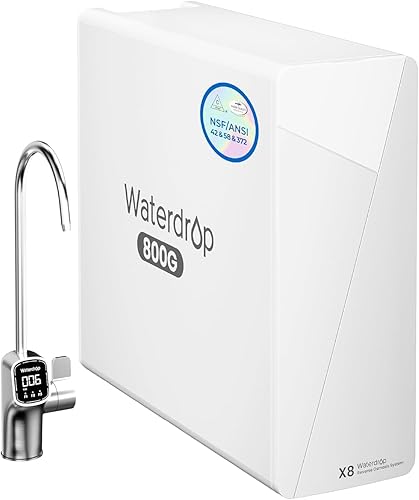
4. Waterdrop X8 – The High-Flow Powerhouse
Big family? Cook a lot? The Waterdrop X8 is a beast. 800 GPD is an enormous output—your glass fills almost as fast as from a standard tap. The 9-stage filtration is comprehensive, and it’s certified to NSF/ANSI 42, 58, and 372 (for lead-free materials). They specifically highlight PFAS reduction, which is a growing concern.
The 2:1 ratio is efficient, and the system is tankless. The design is clean and modern. But is the extra cost worth it? For most households, no. This is for those who truly need high volume and instant flow. If you’re constantly waiting for a tank to refill, this solves that problem completely.
- Extremely high 800 GPD flow rate
- Excellent 2:1 pure-to-drain ratio
- Comprehensive certifications (42, 58, 372)
- Tankless, space-saving design
- Premium price point
- Overkill for average households
Frequently Asked Questions
- How often do I need to change the filters?
- Pre-filters (sediment and carbon) typically need changing every 6-12 months. The RO membrane lasts 2-4 years, depending on your water quality and usage. The post-carbon filter usually gets changed annually. Always follow the manufacturer’s specific schedule.
- Does reverse osmosis waste a lot of water?
- Older systems did. Modern systems are much better. A system with a 2:1 pure-to-drain ratio produces two cups of pure water for every one cup sent to drain. This wastewater is used for cleaning the membrane and isn’t truly “wasted”—it’s part of the process.
- Can I install an under-sink RO system myself?
- Yes, if you’re moderately handy. You’ll need to drill a hole in your sink or countertop for the dedicated faucet and connect the system to your cold water line and drain. Most kits come with detailed instructions and all necessary parts. Budget 1-3 hours for a first-time install.
- Will an RO system make my water acidic?
- Pure RO water has a neutral pH, but it can absorb CO2 from the air, forming carbonic acid and lowering the pH slightly. This is why systems with a final alkaline or remineralization stage are popular—they add minerals back, raising the pH and improving taste.
- Is reverse osmosis water safe for babies and formula?
- Yes, it’s considered very safe. In fact, many pediatricians recommend using purified water for mixing infant formula to ensure it’s free from contaminants like lead, nitrates, and bacteria. The mineral content in formula is sufficient, so the lack of minerals in RO water is not a concern.
- What’s the difference between a 4-stage and 6-stage system?
- The core stages are always sediment filter, carbon filter(s), RO membrane, and post-carbon filter. A “6-stage” system often adds an extra carbon filter or, more valuably, a remineralization or alkaline filter as the final stage. More stages isn’t always better—quality matters more than quantity.
Final Thoughts
Choosing the best reverse osmosis system under sink comes down to your priorities. For the vast majority of households, the iSpring RCC7AK hits the sweet spot. It’s certified, effective, and the alkaline filter makes the water taste fantastic. It’s the system we have installed in our own test kitchen.
If you have specific needs—like well water requiring UV treatment, extreme space constraints, or a huge family that demands high flow—the other picks have you covered. Start by understanding your water, look for that NSF/ANSI 58 certification, and don’t overpay for features you won’t use. Here’s to cleaner, better-tasting water straight from your tap.
