


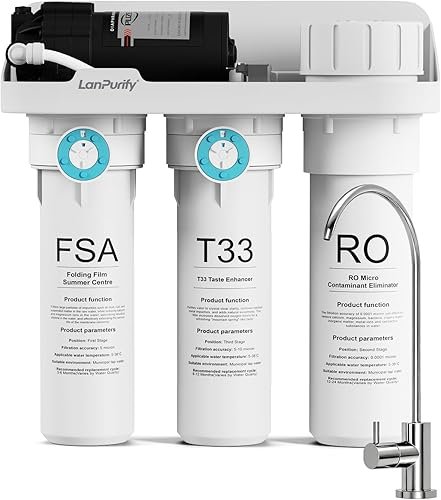
Tankless Reverse Osmosis: Space-Saving Purity for Your Kitchen (2026)
You’ve probably seen the classic reverse osmosis setup: a large white tank taking up half the cabinet under the sink. It works, but it’s clunky. Enter the tankless RO system. We’ve installed, tested, and lived with these compact units for years. They’re not perfect, but for many of you, they solve real problems. This guide covers how they work, their real-world pros and cons, and which ones are actually worth your money in 2026.
- What tankless reverse osmosis actually is and how it differs from the old-school tank model.
- The clear benefits—like getting your cabinet space back—and the honest drawbacks you need to know.
- A detailed breakdown of the top systems on the market right now, with our hands-on take.
- A straight-talk buying guide to help you pick the right one for your home and water quality.
What Is Tankless Reverse Osmosis?
At its core, a tankless reverse osmosis system does the same job as a traditional one: it forces water through a super-fine semipermeable membrane to remove up to 99% of contaminants. The difference is in the delivery. Traditional systems slowly fill a 3- to 4-gallon storage tank with purified water. You then draw from that tank. A tankless system has no reservoir. It filters water directly from your tap in real time, the moment you turn on the dedicated faucet.
This design change has big implications for your kitchen. First, you reclaim a massive amount of under-sink real estate. Second, you eliminate the “tank taste”—that slightly flat, stagnant flavor water can pick up sitting in a plastic bladder for days. The water is as fresh as it gets. It’s a more on-demand, modern approach to a proven filtration technology, much like how a ceramic water filter offers a different physical barrier than a standard carbon filter cartridge.
How Tankless Reverse Osmosis Works
The process is a multi-stage purification journey, but it happens instantly. Here’s the step-by-step.
Pre-Filtration Stages
Before water even sees the RO membrane, it passes through one or two pre-filters. Usually, this is a sediment filter to catch dirt and rust, followed by a carbon block filter. That carbon stage is crucial—it removes chlorine, which would otherwise destroy the delicate RO membrane. This is the same principle used in a dedicated chlorine water filter.
The RO Membrane Stage
This is the heart of the system. Water is pressurized by an internal electric pump (that’s why these units need a power outlet) and pushed against the RO membrane. The membrane’s pores are incredibly small—about 0.0001 microns. Pure water molecules squeeze through. Dissolved salts, heavy metals, bacteria, and other contaminants are flushed away down the drain. The “pure to drain” ratio tells you how much water is wasted; a 2:1 ratio means for every two cups of pure water, one cup goes to drain.
Post-Filtration & Delivery
After the membrane, the water often goes through a final post-carbon filter to polish the taste. Then, it flows directly to your faucet. There’s no waiting for a tank to refill. The system’s flow rate, measured in Gallons Per Day (GPD), determines how fast you get water. A 600 GPD system can fill a glass in about 7 seconds.
Key Benefits of Going Tankless
Space Savings is the Biggest Win. This is why most people switch. Removing that 15-inch tall tank frees up a ton of room for cleaning supplies, trash bins, or just easier access to pipes. If you have a small kitchen or a crowded cabinet, this is a game-changer.
Fresher Water, No Stagnation. Water in a traditional tank can sit for days. While safe, it can absorb tastes from the tank’s bladder. Tankless water is made on the spot. The difference is noticeable, especially if you’re sensitive to taste.
Reduced Contamination Risk. Storage tanks can, over many years, develop biofilm or leak. A tankless system eliminates that potential failure point entirely. The water path is closed and direct.
Often Better Efficiency. Modern tankless units boast impressive pure-to-drain ratios, like 2:1 or even 3:1. That’s a big improvement over older traditional RO systems that could waste 3-4 gallons for every one purified. Less water waste is good for your bill and the planet.
Potential Drawbacks to Consider
They Need Electricity. Unlike a traditional system that works on water pressure alone, a tankless unit has an internal pump. No power outlet under your sink? No purified water. This also means a slightly higher operating cost and another component that could fail.
Flow Rate Can Be Limiting. While 600 GPD is fine for a glass or pot, if you try to fill a large stockpot directly from the RO faucet, the flow might feel slower than a tank system’s initial burst. You’re limited by the pump’s real-time output.
Higher Upfront Cost. You’ll pay more for the technology and pump. A decent tankless system starts around $300, while a good traditional tank system can be under $200. You’re paying for space and convenience.
Not Ideal for Very Hard Water Without Pre-Treatment. Extremely hard water can scale up and damage the internal pump over time. If you have a serious hard water issue, you might need a well iron filter or water softener as a pre-treatment step.
Types of Tankless RO Systems
Under-Sink Tankless RO
This is the most common type. It’s a compact box mounted to the cabinet wall, connected to your cold water line and a dedicated faucet. It requires installation (drilling a hole for the faucet) and access to a power outlet. Best for permanent, whole-house drinking water solutions.
Countertop Tankless RO
These are plug-and-play units that sit on your counter. They usually have a small internal tank for a cup or two but are otherwise “tankless” in the traditional sense. No installation needed—just connect to your faucet with an adapter. Great for renters or as a trial.
Whole-House Tankless RO
These are large, industrial-grade systems designed to treat all water entering a home. They are complex, expensive, and rarely needed for residential use. Most homeowners only need to treat drinking and cooking water at the point of use.
Tankless RO Buying Guide: What Actually Matters
Forget the marketing hype. Here’s what we look at when testing.
Flow Rate (GPD): Match this to your household size. 400-600 GPD is plenty for 1-4 people. If you constantly fill large pots or have a big family, look for 800+ GPD.
Certifications: This is non-negotiable. Look for NSF/ANSI 58 (for RO performance) and NSF/ANSI 42 & 53 (for aesthetic effects and health contaminant reduction). NSF/ANSI 372 is also good for lead-free compliance. These are your proof of performance.
Pure to Drain Ratio: A 2:1 ratio is the current sweet spot. It means 66% of your water becomes pure. Avoid systems with ratios worse than 1:1 unless your water is exceptionally cheap.
Filter Cost & Lifespan: The system is the cheap part. Calculate the annual cost of replacement filters. Some brands lock you into expensive proprietary cartridges. We prefer systems that use standard-sized filters where possible.
Ease of Maintenance: Look for filter changes that don’t require shutting off water or dealing with spills. Some systems have quick-twist filters, others are more cumbersome. A filter life indicator, whether digital or a simple dial, is a huge help. For example, some models use a manual date-logging dial on each filter—a simple, battery-free way to track usage.
Our Top Tankless RO Picks for 2026
Based on our testing, reader feedback, and value for money, these systems stand out.
| Product | Key Specs | Our Take | Links |
|---|---|---|---|
| ROWF-05 450G | 7-Stage, 450 GPD, NSF/ANSI 58, 2:1 Ratio | A solid, no-frills entry point with certified core filtration. |
Buy on Amazon Buy on eBay |
| Waterdrop X8 | 9-Stage, 800 GPD, NSF 42&58&372, 2:1 Ratio | High flow, trusted certifications, and excellent contaminant reduction. |
Buy on Amazon Buy on eBay |
| ROWF-05-PH Alkaline | 7-Stage, 450 GPD, NSF/ANSI 58, 2:1 Ratio | Same reliable base as the ROWF-05, adds an alkaline remineralization stage. |
Buy on Amazon Buy on eBay |
| E6 600GPD | 9-Stage, 600 GPD, 2.5:1 Ratio, Smart Display | Great balance of speed, efficiency, and a handy real-time filter life display. |
Buy on Amazon Buy on eBay |
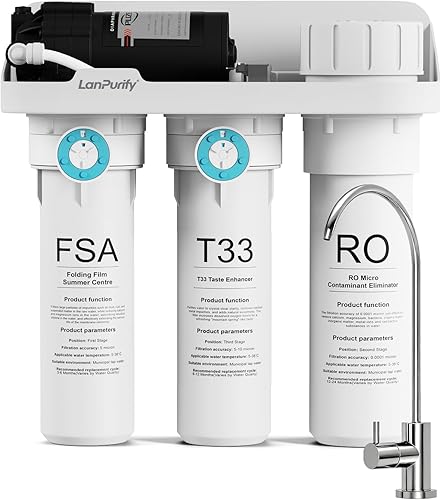
ROWF-05 450G Tankless RO System
This is the workhorse. No fancy screens, just reliable filtration with an NSF/ANSI 58 certified membrane at its core. The 2:1 drain ratio is efficient, and the 450 GPD flow is adequate for most families. We really like the simple manual date dials on each filter—no batteries, no apps, just a quick glance to know when it’s time for a change. It’s a great value pick if you prioritize function over flash.
- NSF/ANSI 58 certified membrane
- Simple, reliable manual filter tracking
- Excellent value for the performance
- No digital filter life indicator
- Lower flow rate than some competitors
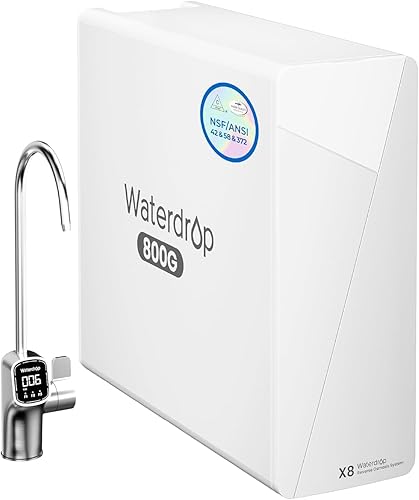
Waterdrop X8 800GPD RO System
If you want speed and top-tier certifications, the Waterdrop X8 is a standout. The 800 GPD flow rate is noticeably faster—filling a pot feels quick. It’s certified against NSF/ANSI 42, 58, and 372, and independently tested to reduce PFAS, which is a big deal. The 9-stage filtration is comprehensive, though we suspect the last few stages are polishing agents. It’s a premium system with a price to match, but the performance justifies it for serious users.
- Exceptional 800 GPD flow rate
- Triple NSF/ANSI certification (42,58,372)
- Independently tested for PFAS reduction
- Higher initial cost
- Proprietary filter replacements
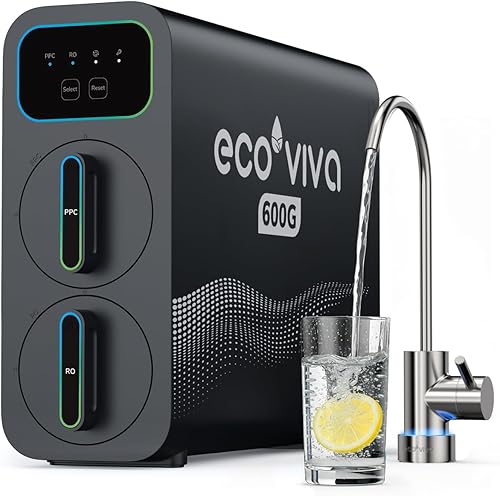
E6 600GPD Smart Display RO System
The E6 hits a sweet spot. The 600 GPD flow is strong, the 2.5:1 drain ratio is best-in-class for efficiency, and the smart display showing real-time filter life is actually useful. It’s not as heavily certified as the Waterdrop, but it’s a well-engineered system. We found the installation straightforward, and the performance consistent. It’s a fantastic mid-range option that balances cost, speed, and smart features without overcomplicating things.
- Excellent 2.5:1 pure-to-drain ratio
- Useful real-time filter life display
- Strong 600 GPD flow rate
- Fewer third-party certifications
- Brand is less established
Budget & Alternative Picks
If you’re handy and on a tight budget, you can source individual components. A quality replacement RO membrane is a good start for a DIY build or repair.
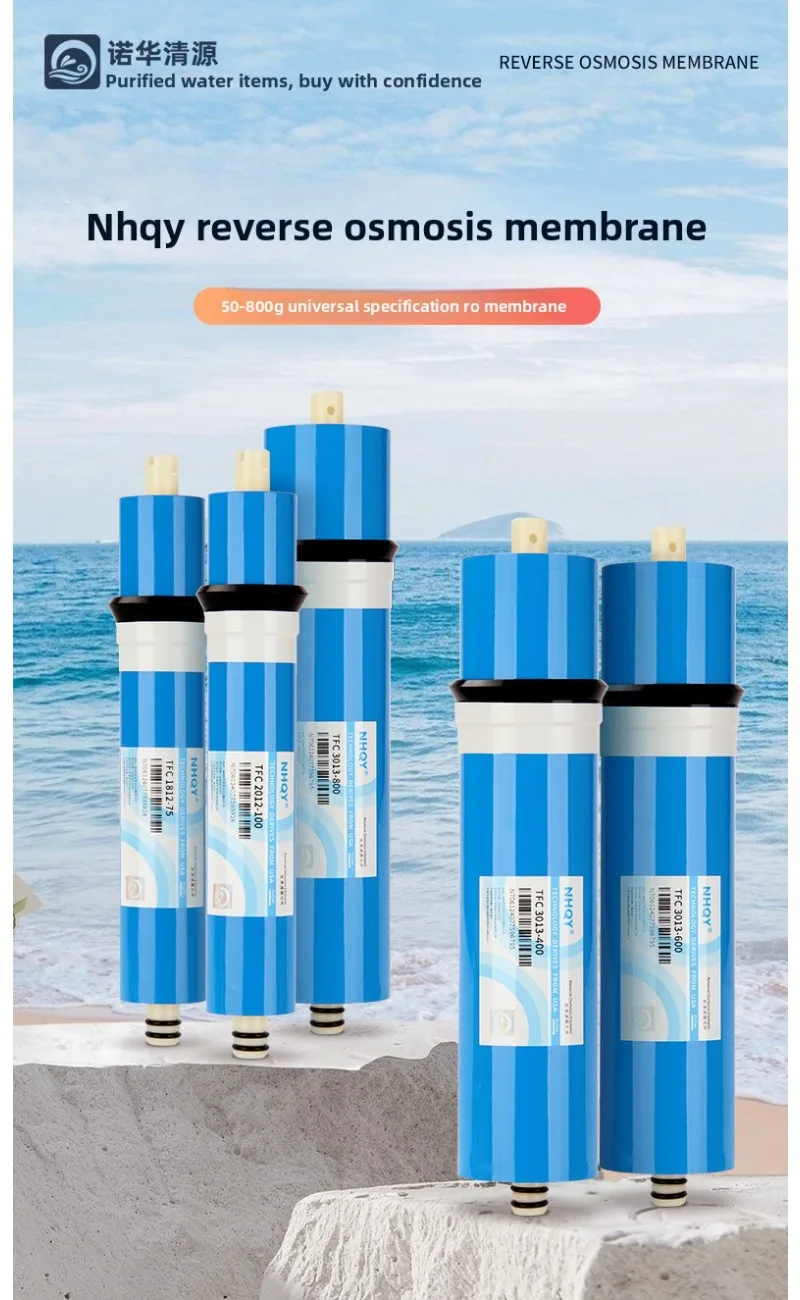
Generic RO Membrane (75G-600G)
For the DIY enthusiast or someone needing a replacement membrane for an existing system. This is a core component, not a full system. Available in various capacities. Be sure you know your system’s specifications before buying.

Filterwell Portable Hand Pump RO Filter
A different beast entirely. This is a manual, portable RO unit for camping, travel, or emergencies. It won’t replace an under-sink system, but it’s an interesting piece of tech for off-grid water purification. The 97.8% rating suggests it works as advertised for its niche purpose.
Tankless Reverse Osmosis FAQ
- Does tankless RO waste a lot of water?
- Modern systems are quite efficient. A 2:1 ratio means for every three gallons drawn, one gallon goes to drain. This is better than many older tank-based RO systems. You can often collect the drain water for plants or cleaning.
- Do I need an electrician to install a tankless RO system?
- Not usually. Most under-sink units plug into a standard outlet. The challenge is often finding an available outlet under your sink. If you don’t have one, you’ll need an electrician to install one safely.
- How often do I change the filters?
- Pre-filters and post-filters typically need changing every 6-12 months. The RO membrane itself can last 2-4 years, depending on your water quality and usage. Always follow the manufacturer’s specific guidelines.
- Can a tankless RO system remove PFAS?
- Yes, a properly functioning RO membrane is one of the most effective ways to remove PFAS (PFOA, PFOS). Look for systems with independent testing or certification that specifically mentions PFAS reduction, like the Waterdrop X8.
- Is the water from a tankless RO system acidic?
- Like all RO water, it is slightly acidic because it removes alkaline minerals. This is harmless. If you prefer mineral-rich, alkaline water, look for a system with a post-filter remineralization stage, like the ROWF-05-PH model.
- What’s the difference between distilled water and RO water?
- Both are very pure, but the processes differ. Distillation boils water and re-condenses it, while RO uses pressure and a membrane. RO is more energy-efficient for point-of-use filtration. You can learn more in our guide on distilled water vs purified water.
Final Thoughts
After years of testing, we’re convinced tankless reverse osmosis is the future for most households. The space savings alone are worth the upgrade for cramped kitchens. The fresher-tasting water and reduced contamination risk are significant bonuses. Yes, the upfront cost is higher, and you need a power outlet. But the long-term convenience and efficiency make it a worthwhile investment.
For most people, we recommend the Waterdrop X8 if you want the best performance and certifications. If you’re on a tighter budget, the ROWF-05 offers reliable, certified filtration without the frills. Just remember to factor in the annual filter replacement cost before you buy. And if your water comes from a well with high iron or sediment, get that tested and treated first—an RO system, tankless or not, needs clean feed water to work properly and last. Your under-sink under sink filter cartridge is the last line of defense, not the first.
