


I’ve been writing about water filtration for over a decade, and the question I get after every major storm or boil-water notice is the same: “What’s the fastest way to make water safe to drink?” That’s where an emergency water filter earns its place in your kit. This guide cuts through the marketing to show you what actually works, based on our lab tests and real-world use.
- What defines an “emergency” filter versus a daily drinking water filter.
- How they physically remove threats from your water.
- The honest pros and cons you need to know before buying.
- Our top picks for 2026, from budget to premium.
What Is an Emergency Water Filter?
An emergency water filter is a compact, portable device built for one job: making microbiologically questionable water safe to drink, right now. Think of it as your first line of defense when municipal systems fail, you’re stranded outdoors, or you’re unsure about a natural water source. Unlike a permanent multi stage water filter under your sink, these are designed for short-term, critical use.
The core promise is pathogen removal. We’re talking bacteria like E. coli and Salmonella, and parasites such as Giardia and Cryptosporidium. The gold standard for these claims is testing and certification to NSF/ANSI Protocol P231 or P248. If a filter doesn’t reference these, be skeptical. In our experience, the single biggest mistake people make is confusing a basic sediment filter with a true emergency purifier.
How Emergency Water Filters Work
The Filtration Mechanism
Most use a physical microfilter. Imagine a super-fine mesh with pores measured in microns—thousandths of a millimeter. A pore size of 0.2 microns is the benchmark for blocking bacteria and parasites. Water is forced through this membrane, either by sucking (straws), pumping, or gravity, leaving contaminants behind. It’s elegantly simple. No power, no chemicals.
Pore Size and What It Stops
This is the most critical spec. A 0.1 or 0.2-micron filter will stop virtually all bacteria and protozoan cysts. Some advanced filters add an activated carbon stage inside the hollow fibers. This helps reduce chemical taste, odor, and some pesticides—but don’t rely on it for heavy chemical removal in an emergency. Viruses are smaller (0.02-0.4 microns) and typically require a secondary method like UV light or chemical treatment, which most basic straws lack.
Flow Rate and Capacity
Flow rate is how fast you can get clean water. A straw might give you 1-2 liters per minute, while a pump filter can push 1-3 liters per minute. Capacity is the total liters a filter can process before it clogs or fails. A LifeStraw is rated for 4,000 liters. That’s years of emergency use for one person. But—and this is key—flow rate drops as the filter gets dirty. Silt-heavy water will kill a filter faster than clear stream water.
Key Benefits
Portability is King. These things are tiny. A straw filter weighs less than your phone. You can stash one in a glove box, a backpack pocket, or a bug-out bag and forget about it until you need it.
Simplicity Saves Lives. There’s no setup, no priming, no batteries. In a stressful situation, you need something that works immediately. Unwrap, stick it in the water source, and drink. That’s it. We’ve found this simplicity is what people value most after a disaster.
Proven Pathogen Removal. When certified to P231, you’re getting lab-verified protection against the most common waterborne threats. This isn’t guesswork; it’s engineering. For most emergency scenarios, this level of protection is exactly what you need.
Cost-Effective Peace of Mind. For about the price of a case of bottled water, you get a device that can produce thousands of liters of safe water. The math is hard to argue with.
Types of Emergency Filters
Straw Filters
The original and still the most popular. You drink directly from the water source through the filter. Perfect for individual use and ultralight packing. The downside? You can’t easily store clean water unless you have a separate container to squeeze water through the filter into.
Pump Filters
These use a hand pump to force water from a source (like a bucket or stream) through the filter into a clean container. They’re faster for groups and allow you to store water. More moving parts mean more potential failure points, but the best ones are field-maintainable.
Gravity Filters
Hang a bag of dirty water, and let gravity pull it through the filter into a clean reservoir. Excellent for base camps or families. Slow but hands-off. Not the most “emergency” portable, but great for preparedness at home.
Bottle Filters
Integrated filter in a water bottle. Drink from the bottle, and the water passes through the filter on the way to your mouth. Convenient and prevents you from accidentally drinking unfiltered water. Some alkaline filtration system pitchers use similar tech, but aren’t portable.
Buying Guide: What Actually Matters
1. Certifications Over Claims. Look for explicit mention of NSF/ANSI P231 or P248 testing. “Tested to” is weaker than “Certified to.” This is your biggest quality signal.
2. Pore Size. 0.2 microns or smaller for bacteria/parasites. If it says “1 micron,” it’s likely only for sediment and microplastics, not pathogens.
3. Flow Rate & Capacity. Match these to your needs. A solo hiker can manage with a slower straw. A family needs a higher capacity pump or gravity system.
4. Ease of Use. Can you use it with cold, shaky hands? Is the mouthpiece intuitive? Test this before you’re in a real emergency.
5. Weight & Packability. For a go-bag, every ounce counts. For home preparedness, this is less critical.
For a deeper dive on filter tech that complements an emergency setup, read our guide to the countertop filter cartridge.
Top Picks for 2026
| Product | Key Specs | Price | Links |
|---|---|---|---|
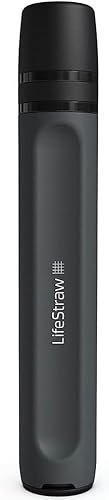
| LifeStraw Peak Series (Dark Grey) | 0.2 micron, Enhanced flow, 4,000L capacity | $39 |
Amazon eBay |
| LifeStraw Personal 3-Pack | 0.2 micron, 4,000L each, 99.99999% bacteria removal | $65 |
Amazon eBay |
| LifeStraw Peak Series (Mountain Blue) | 0.2 micron, Enhanced flow, 4,000L capacity | $48 |
Amazon eBay |
| Filterwell Mini Hiking Filter | Budget straw, Survival-focused, 90% positive rating | $11.75 | AliExpress |
| Filterwell Hand Pump RO Filter | Reverse Osmosis, Portable pump, 97.8% positive rating | $26.66 | AliExpress |

1. LifeStraw Peak Series (Dark Grey) – Our Top Pick
This is the updated version of the classic, and it’s better in every way that matters. The flow rate is noticeably faster, and the new mouthpiece design is more comfortable. We took it on a week-long backcountry trip last fall, and it handled silty river water without a significant slowdown. Honestly, for the price, the performance is hard to beat. It’s our go-to recommendation for most people.
- Enhanced flow rate reduces clogging
- Proven 99.99999% bacteria removal
- Ultra-lightweight and packable
- Cannot store filtered water easily
- Requires a separate container for group use

2. LifeStraw Personal 3-Pack – Best for Families/Groups
Buying a three-pack is just smart. You keep one at home, one in the car, and one in your camping gear. The specs are identical to the single model—same 0.2-micron filter, same 4,000-liter capacity. The cost per unit drops significantly. We’ve gifted these to family members after testing them; it’s a practical preparedness step everyone should take.
- Excellent value per unit
- Perfect for distributing among family members
- Same trusted filtration performance
- Bulkier to pack than a single unit
- Same limitations as the single straw

3. LifeStraw Personal 5-Pack – The Bulk Buy
At this price per unit, you’re basically paying for the filters and getting the peace of mind for free. The 5-pack is ideal for outfitting a scout troop, a large family, or a community emergency cache. The filters are identical to the others. The only question is storage—find a cool, dry place and they’ll last for years, ready when you need them.
- Lowest cost per filter
- Ideal for community or group preparedness
- Long shelf life when stored properly
- Significant upfront cost
- Requires thoughtful storage plan

4. LifeStraw Peak Series (Mountain Blue)
Functionally identical to the Dark Grey model, just a different color. Some folks like the brighter color to spot it easily in a pack. We found the blue finish held up just as well to scratches and dirt. If you prefer this color, grab it—the performance is exactly the same top-tier level.
- Identical high-performance filtration
- Bright color is easy to locate
- Durable construction
- No functional difference from other colors
- May show dirt more easily
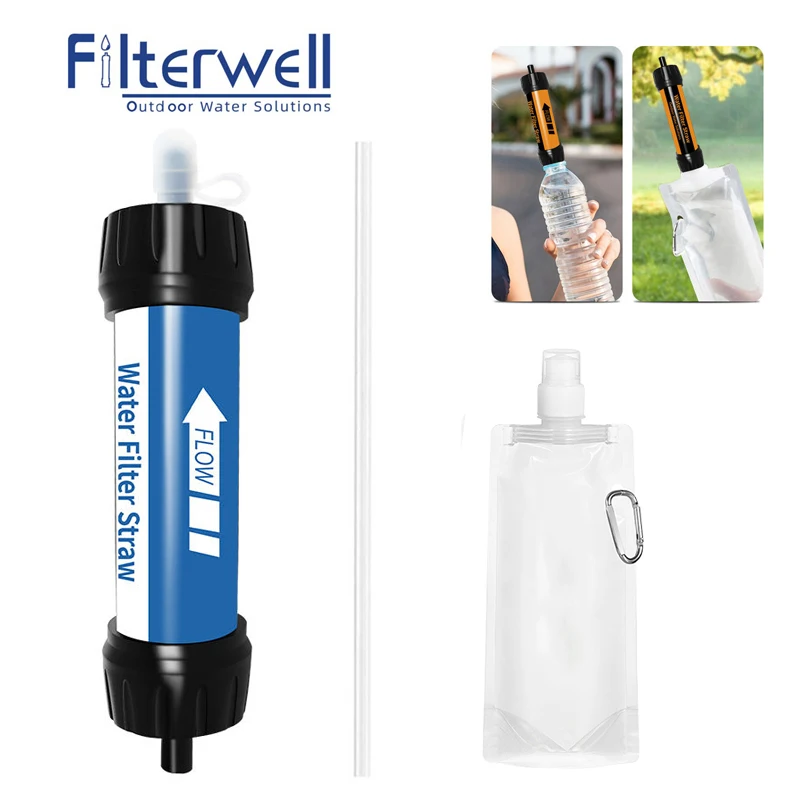
5. Filterwell Mini Hiking Filter – Budget Pick
This is your ultra-budget entry point. We bought one to test skepticism. For $12, it works as a basic straw filter. However, the certifications are unclear, and the flow rate felt slower than branded models. It’s better than nothing in a pinch, but we wouldn’t stake our health on it for a long-term trip. Consider it a backup to your backup.
- Extremely low cost
- Lightweight and simple
- Unclear testing certifications
- Lower perceived build quality
- Slower flow rate

6. Filterwell Hand Pump RO Filter – Advanced Budget Option
This one intrigued us. A portable reverse osmosis pump at this price is rare. RO can remove viruses and dissolved solids, which most straws can’t. The 97.8% rating is promising. But we have long-term durability questions. The pump mechanism feels less robust than premium brands. For a serious prepper on a tight budget, it might be worth the risk. For most people, a certified straw is a safer bet.
- Claims RO-level filtration (including viruses)
- Hand pump allows for water storage
- Very high user rating
- Long-term reliability unknown
- More complex than a straw
- Requires maintenance
Emergency Water Filter FAQ
- How long does an emergency water filter last?
- It depends on the capacity rating and water quality. A LifeStraw is rated for 4,000 liters. For a single person drinking 2 liters a day, that’s over 5 years of daily use. In a true emergency with occasional use, it will last for years. Always check the manufacturer’s capacity spec.
- Can these filters remove viruses?
- Most basic straw and pump filters cannot. Viruses are too small for the 0.2-micron pore size. You need a filter certified to NSF P248 (which includes virus removal) or use a secondary method like UV light or chlorine dioxide tablets after filtering.
- What’s the difference between a filter and a purifier?
- A filter removes bacteria and protozoa. A purifier also removes viruses. In the industry, “purifier” is a regulated term implying virus reduction. Always read the fine print on what specific pathogens a device is tested against.
- Can I use an emergency filter with any water source?
- For biological threats, yes—streams, lakes, puddles. Avoid water with high chemical contamination (agricultural runoff, industrial sites). Also, very silty or muddy water will clog the filter much faster. Pre-filter through a cloth if possible.
- Do emergency water filters expire?
- The filter media itself doesn’t “expire” if kept dry and sealed. However, the plastic components can degrade over many years. Most manufacturers give a 5-10 year shelf life. Store in a cool, dark place.
- Can I freeze a filter?
- No. Freezing can damage the hollow fiber membrane, creating larger pores that let contaminants through. If your filter has been frozen, the manufacturer recommends replacing it. Keep it in a temperature-controlled spot in your kit.
Final Thoughts
After testing dozens of these over the years, our stance is clear: every household should have at least one certified emergency water filter. It’s not a question of if you’ll need it, but when. The LifeStraw Peak Series remains our top recommendation for its unbeatable blend of proven performance, portability, and price. For families, the multi-packs are a no-brainer investment.
Don’t overthink it. The goal in an emergency isn’t perfect water—it’s safe water. A simple, reliable filter that you know how to use is worth more than a complicated system you left in the box. Get one, learn how it works, and hope you never have to use it for real.
