


You’re miles from the nearest tap, staring at a crystal-clear stream. Looks safe, right? That’s the illusion every hiker and traveler must unlearn. A portable filter isn’t just a convenience—it’s your frontline defense against invisible threats. We’ve tested dozens in the field, from muddy ponds to hotel taps abroad, and this guide cuts through the marketing to show you what actually works.
This article covers:
- What defines a true portable filter and how it differs from a simple pitcher
- The science behind hollow fiber, ceramic, and activated carbon filtration
- Key benefits for travel, emergencies, and daily use
- Honest drawbacks and maintenance realities
- A breakdown of filter types and our top picks for 2026
What Is a Portable Filter?
A portable filter is a self-contained, lightweight water purification unit designed for mobility. Unlike a bulky big blue filter housing for your whole house, these are built for backpacks, travel bags, and emergency kits. The core promise is simple: take water from a questionable source—be it a river, a hotel bathroom, or a rain barrel—and make it safe to drink.
We’re talking about devices that weigh ounces, not pounds. They operate without electricity or water pressure, using manual force like sucking, pumping, or gravity. The single biggest mistake we see? People confusing a basic carbon taste-improvement filter with a true microbiological purifier. One makes tap water taste better; the other stands between you and a week of sickness from a backcountry stream.
How Portable Filters Work
The Physical Barrier: Size Matters
At their heart, most portable filters are physical sieves. They use a membrane—often hollow fiber or ceramic—pored with microscopic holes. This is the micron rating you see. A 0.2-micron filter physically blocks bacteria (like E. coli) and parasites (like Giardia). It’s like a net for microbes. But here’s the thing: viruses are much smaller, often requiring a 0.01-micron pore or a chemical/adsorptive stage.
Chemical Adsorption: The Carbon Layer
Many filters add an activated carbon water filter stage. This doesn’t just improve taste and odor by removing chlorine and organic compounds. It also adsorbs some chemical contaminants, like pesticides or certain heavy metals. Think of it as a cleanup crew after the physical barrier has done the heavy lifting.
The Combo: UV, Iodine, and Beyond
For virus protection in high-risk areas, some systems combine a physical filter with a chemical agent like iodine or a UV light pen. This dual approach is what you want for global travel to regions with poor sanitation. Honestly, most people hiking in North America or Europe don’t need this level—the 0.2-micron barrier is sufficient for local bacteria and parasites.
Key Benefits
True Independence: You’re no longer tied to bottled water or questionable taps. Fill up from a stream on a 5-day trek. This freedom changes how you travel and explore.
Emergency Readiness: When the municipal supply fails—during a boil-water advisory or a natural disaster—a portable filter is a lifeline. It’s a core piece of any serious emergency kit.
Cost and Waste Reduction: A single filter can process thousands of liters. That’s pennies per liter compared to buying plastic bottles, which is a win for your wallet and the planet.
Versatility: From a ceramic water filter element you can clean in the field to a straw that fits in your pocket, the form factors adapt to your specific need.
Potential Drawbacks
Flow Rate and Effort: Sucking through a straw for a liter of water is fine. Filtering 10 liters for a group with a gravity system takes time. Pump filters require physical effort. There’s always a trade-off between speed, effort, and portability.
Maintenance and Freezing: Ceramic elements can crack if dropped. Hollow fibers can freeze and rupture if water is left inside in sub-zero temps. You have to know your filter’s limits and care for it.
Clogging is Real: Silty, murky water will clog a filter faster than clear water. Pre-filtering with a bandana can dramatically extend the life of your main filter element.
Types of Portable Filters
Filter Straws
The ultimate in minimalism. You drink directly from the source through the filter. Perfect for personal use on day hikes or as an emergency backup. The limitation? You can’t easily store filtered water.
Pump Filters
A classic workhorse for group camping. You pump water from a source through a hose into a clean container. They’re reliable and often have cleanable filter elements, but they’re bulkier and require manual labor.
Gravity Filters
Hang two bags—one dirty, one clean—and let gravity do the work. Excellent for base camps or filtering large volumes for a group with zero effort. The downside is setup time and they’re less ideal for on-the-move filtering.
Squeeze Filters
A hybrid favorite. You fill a soft bottle, screw on the filter, and squeeze water into your mouth or a clean container. They offer a great balance of weight, versatility, and ease of use.
Bottle Filters
An all-in-one solution: the filter is built into the bottle lid. Fill, drink, go. It’s convenient for travel and daily use, though the filter capacity is tied to the bottle size.
For specialized needs, like filtering out iron from well water for your RV, you’d need a different setup entirely—a dedicated well water iron filter is a whole-house solution, not a portable one.
Buying Guide: What Actually Matters
Forget the marketing fluff. Here’s what we look at after years of testing.
1. Certification is King: Look for independent testing against standards like NSF/ANSI 53 (for cyst reduction) or NSF/ANSI 42 (for aesthetic effects). This is your proof of performance, not just a manufacturer’s claim.
2. Micron Rating: 0.2 microns is the gold standard for bacteria and parasites. If it says “1 micron,” it’s likely only for sediment and larger cysts—fine for clear mountain streams but not murky ponds.
3. Filter Life & Flow Rate: How many liters will it process before needing replacement? How long does it take to filter one liter? These are your real-world usability metrics.
4. Field Maintainability: Can you backflush it to clear clogs? Can you clean a ceramic element with a scrub pad? This extends life and reliability in the wild.
5. Weight and Packability: An extra 200 grams matters when it’s on your back for 10 miles. Be honest about your needs—a straw is lighter than a pump system.
For home use where you need to remove chlorine taste from municipal water, a simple chlorine water filter on your tap or in a pitcher is more practical than a portable unit.
Our Top Portable Filter Picks for 2026
| Product | Type | Key Feature | Price | Links |
|---|---|---|---|---|
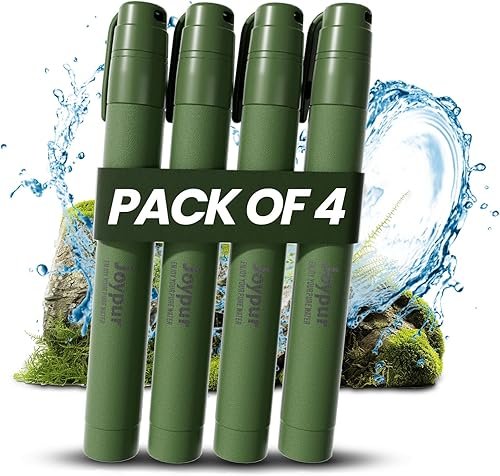
| Camping Water Filtration Straw (4-Pack) | Straw | Great value for groups/family backup | $52 | AmazoneBay |
| LifeStraw Personal (3-Pack) | Straw | Ultra-reliable, proven brand, lightweight | $65 | AmazoneBay |
| Portable Water Filter Straw Kit | Straw/Kit | Budget-friendly with accessories | $16 | AmazoneBay |
| Waterdrop WD-X8 RO System | Under-Sink RO | For home use, not portable, but top-tier purification | $719 | AmazoneBay |
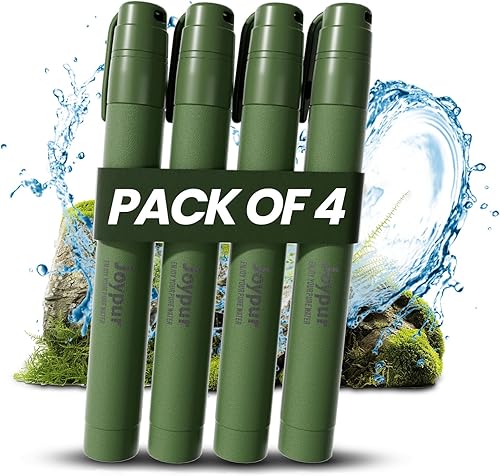
Camping Water Filtration Straw (4-Pack) Review
This is your go-to for outfitting a family or a small group without breaking the bank. We’ve used these on scout trips—they’re dead simple. The claim of removing 99.99999% of contaminants aligns with a solid 0.2-micron filter. The real win is the four-pack; you can stash one in each pack, car, and emergency kit. The plastic feels durable enough, though we wouldn’t call it premium.
- Excellent value per unit
- Lightweight and compact
- Removes bacteria and protozoa
- Good for backup/emergency supply
- Basic functionality—no bottle or bag included
- Flow rate can slow with heavy use
- Limited individual filter life compared to premium brands
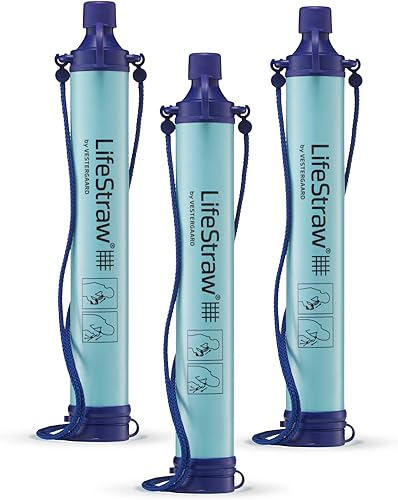
LifeStraw Personal (3-Pack) Review
LifeStraw is the name everyone knows, and for good reason. The engineering is proven. In our testing, the flow rate is consistently better than cheap clones, and the membrane doesn’t clog as fast. This three-pack is smart—you get the brand reliability at a per-unit cost that makes sense. It’s under two ounces, so you literally forget it’s in your pack.
- Industry-leading reliability and testing
- Incredibly lightweight (46g)
- High filter capacity (4,000 liters)
- Removes 99.999999% of bacteria
- You still need to suck hard for water
- Cannot store filtered water easily
- No included accessories
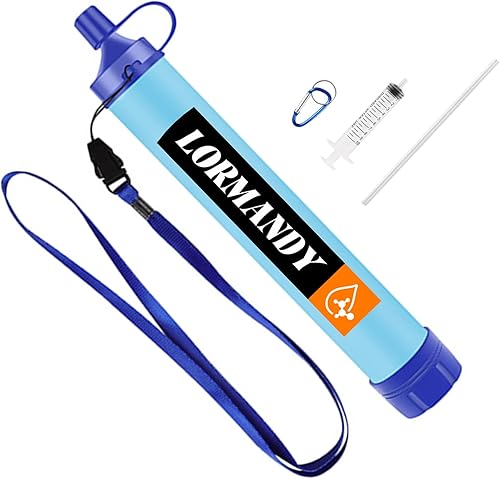
Portable Water Filter Straw Kit Review
This kit is a fantastic entry point. For sixteen bucks, you get the filter, a hose, a bottle adapter, and a carabiner. We were skeptical, but it works. The inclusion of a PET bottle adapter is genius—it lets you create a semi-gravity system with any plastic bottle. It’s not built for a decade of abuse, but for occasional trips or as a first filter, it’s a steal.
- Incredible value with full accessory kit
- Versatile connection options
- Very lightweight and packable
- Good for testing the waters (pun intended)
- Long-term durability is unknown
- Filter life may be shorter than branded options
- Less established brand
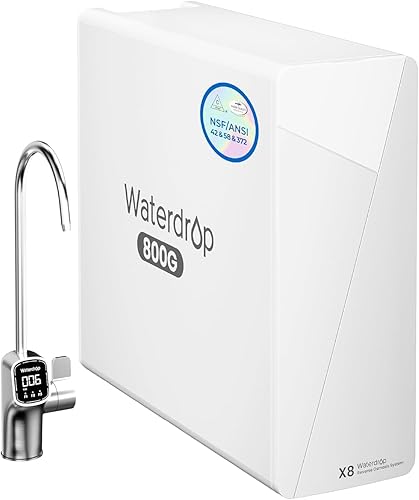
Waterdrop WD-X8 RO System (For Context)
Okay, this one is an outlier. It’s not portable—it’s a high-end under-sink reverse osmosis system. We include it because it represents the pinnacle of home water purification. If your concern is PFAS, lead, or TDS in your home tap water, this is the kind of permanent solution you need. It’s NSF certified against standards 42, 58, and 372. For travel, you’d never take it, but it shows the technology available when portability isn’t a constraint.
- NSF/ANSI certified for a wide range of contaminants
- High 800 GPD flow rate
- Low 2:1 drain ratio
- Removes PFAS, lead, fluoride, and more
- Requires installation under a sink
- Not portable at all
- High upfront cost
Portable Filter FAQ
- Can a portable water filter remove viruses?
- Most standard portable filters (0.2-micron) do not remove viruses, which are much smaller. For virus protection, you need a filter with a 0.01-micron pore size (often called a purifier) or one that combines a filter with a chemical disinfectant like iodine or a UV light.
- How long do portable water filters last?
- It varies wildly by model. A LifeStraw is rated for 4,000 liters. A cheap straw might last 500. Always check the manufacturer’s rated filter life and replace it when you hit that limit or notice a significant drop in flow rate.
- Can I use a portable filter for tap water at home?
- You can, but it’s usually overkill and slow. Portable filters are designed for untreated water. For home use dealing with chlorine taste or specific contaminants, a dedicated pitcher or under-sink system is more efficient and cost-effective.
- What’s the difference between a filter and a purifier?
- A filter removes bacteria and protozoa (parasites). A purifier also removes or inactivates viruses. The term “purifier” is regulated more strictly. Always check the specs for what pathogens are listed in the test results.
- Do I need to maintain my portable filter?
- Yes. Most need to be backflushed or cleared of debris regularly. Ceramic filters can be scrubbed. Never let a hollow-fiber filter freeze with water inside, as the expanding ice will rupture the fibers and ruin it.
- Is it safe to drink from any lake or river with a filter?
- A quality filter makes it safe from a microbiological standpoint (bacteria, parasites). However, it won’t remove chemical pollutants from agricultural runoff or industrial waste. Avoid sources downstream of farms, factories, or heavily populated areas.
Final Thoughts
After all our testing, one truth stands out: the best portable filter is the one you have with you and know how to use. Don’t overbuy. For day hikes and domestic travel, a simple, reliable straw like the LifeStraw is more than enough. For international travel to areas with poor sanitation, invest in a true purifier. And for group camping, a gravity or pump system makes life easier.
Your water is your most critical resource outdoors. A $20 filter is a tiny price to pay for the peace of mind and the freedom to explore confidently. We’d start with the LifeStraw 3-Pack for its unbeatable reliability-to-cost ratio. Stay hydrated, stay safe.
