


You’ve heard the term thrown around, but what exactly is a point of use filter? Is it just a fancy pitcher, or something more? After testing dozens of these systems and crawling under more sinks than I can count, I can tell you it’s one of the smartest investments for targeted water quality. This guide cuts through the hype. We’ll cover what they are, how they work, the real pros and cons, and how to pick one that won’t leave you regretting your purchase.
What Is a Point of Use Filter?
Forget the jargon. A point of use (POU) filter is simply a water filter installed right where you drink, cook, or bathe. It treats water at the final destination—the “point” where you “use” it. This is the opposite of a whole-house or point of entry (POE) system, which filters all water entering your home.
Think of it like this: a whole-house system is a security checkpoint at your city limits. A point of use filter is the personal bodyguard at your front door. It’s dedicated to one outlet. Most commonly, that’s the kitchen sink. But it could be a dedicated filtered water tap, your refrigerator’s ice maker line, or even the showerhead in your bathroom.
The core idea is efficiency. Why spend a fortune filtering every gallon for toilets and laundry when you only need pristine water for drinking and cooking? A POU system targets your budget and your filtration where it counts. For a deeper dive into the broader system concept, check out our guide on what a POE system is and how the two compare.
How a Point of Use Filter Works
The mechanics vary by type, but the principle is consistent: water from your cold (or sometimes hot) supply line is diverted through a filter cartridge before reaching the faucet.
The Basic Flow Path
It starts with a saddle valve or a dedicated supply line adapter that taps into your existing plumbing. Water flows into the filter housing, passes through the filter media—be it activated carbon, a ceramic shell, or a reverse osmosis membrane—and exits through a dedicated faucet or the original tap. Simple.
The Real Work: Filtration Media
This is where the magic happens. Different media tackle different problems. Activated carbon is a champ at grabbing chlorine, volatile organic compounds (VOCs), and bad tastes. A sediment filter cartridge with a 5-micron rating will catch rust and sand. For serious purification, a reverse osmosis (RO) system uses a semi-permeable membrane to strip out dissolved solids, lead, arsenic, and even salts. The key is matching the media to your contaminants.
Key Benefits
Targeted Contaminant Removal. This is the biggest win. If your water report shows high lead levels but is otherwise fine, you can install a POU system certified specifically for lead reduction (NSF/ANSI 53) at your kitchen tap. You’re not paying to filter problems you don’t have.
Lower Cost, Both Upfront and Long-Term. A quality under-sink POU system costs a fraction of a whole-house installation. Replacement filters are also cheaper because they’re smaller and you’re changing fewer of them. For most homeowners, this is the most economical path to great-tasting, safe water.
Easier Installation and Maintenance. Many under-sink systems are true DIY projects. You’re not cutting into main water lines. Filter changes are usually a simple twist-off, twist-on procedure you can do in five minutes. No plumber required.
Preserves Beneficial Minerals (in some systems). Unlike distillation or some RO systems, carbon-based POU filters can leave in healthy minerals like calcium and magnesium while removing the bad stuff. Your water stays healthy and doesn’t taste flat.
Potential Drawbacks
It Only Protects One Outlet. Your shower, bathroom tap, and washing machine will still receive unfiltered water. If you have hard water causing scale everywhere, or chlorine irritating your skin in the shower, a POU system at the kitchen sink won’t help. You’d need to look at a whole-house solution or multiple POU units.
Flow Rate Can Suffer. Especially with dense carbon blocks or RO membranes, you might notice a slower stream from your dedicated faucet. It’s the trade-off for thorough filtration. In our testing, most quality systems maintain a usable flow, but cheap ones can trickle.
They Have a Capacity Limit. Every filter cartridge has a lifespan, measured in gallons or months. Let it go too long, and it stops working—or worse, becomes a breeding ground for bacteria. You must stick to the replacement schedule.
Types of Point of Use Systems
Under-Sink Carbon Filters
The most popular type. A compact housing under your sink holds one or more carbon filter cartridges. They’re fantastic for improving taste and odor, and removing chlorine, sediment, and many organic chemicals. Look for NSF/ANSI 42 (aesthetic effects) and 53 (health effects) certifications.
Reverse Osmosis (RO) Systems
The heavy artillery. An RO system forces water through a super-fine membrane, removing up to 99% of dissolved contaminants. It’s the go-to for lead, arsenic, nitrates, and fluoride. The downside? They produce wastewater (the “reject” stream) and remove beneficial minerals. They also require a storage tank and more space under the sink.
Countertop Filters
A great non-permanent option. These sit on your counter and usually connect to your faucet with a diverter valve. No drilling, no permanent changes—perfect for renters. Performance can be surprisingly good, though they’re often less robust than under-sink models.
Specialty Filters
This is where you get specific. If your well water has that metallic taste and orange stains, you might need a dedicated iron filter as your POU solution. These use specialized media like manganese greensand or birm to oxidize and filter out iron and manganese. They’re a targeted fix for a specific, annoying problem.
Buying Guide: What Actually Matters
1. Start With a Water Test. I can’t stress this enough. Don’t guess. A basic test will tell you your pH, hardness, and levels of common contaminants like chlorine, lead, and nitrates. This is your roadmap.
2. Match the Certification to Your Contaminants. Look for NSF/ANSI standards on the box. Standard 42 covers aesthetic issues like chlorine taste. Standard 53 covers health concerns like lead and cysts. Standard 58 is for reverse osmosis systems. If a filter claims to remove lead but isn’t certified to Standard 53, walk away.
3. Consider Your Space and Skill. Under-sink systems need room. Measure your cabinet. If you’re not comfortable drilling a hole for a dedicated faucet, a countertop model or a system that uses a faucet adapter is your friend. If you’re dealing with severe iron contamination from a well, researching an iron filter for well water is a critical step before choosing a generic POU unit.
4. Calculate the Real Cost. The upfront price is just the start. Divide the cost of replacement filters by their lifespan in gallons to get your cost per gallon. A cheap system with expensive, short-lived filters is a bad deal.
Our Top Picks for 2026
We’ve filtered through the noise. Here are systems that have performed well in our testing and earned positive feedback from readers and plumbers we trust.
| Product | Type | Key Feature | Price | Links |
|---|---|---|---|---|
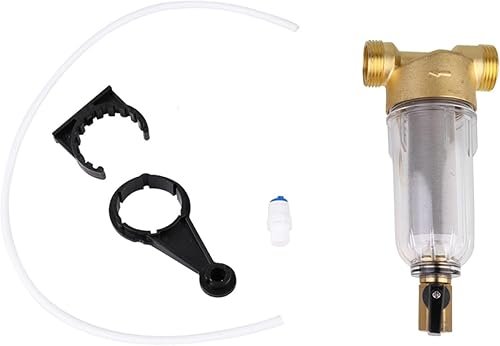
Backwash Sediment Filter |
Point of Use Sediment | Self-cleaning stainless steel screen, great for garden taps or pre-filtration | $35 | Buy on AmazonBuy on eBay |
Self-Cleaning Bottleless Water Cooler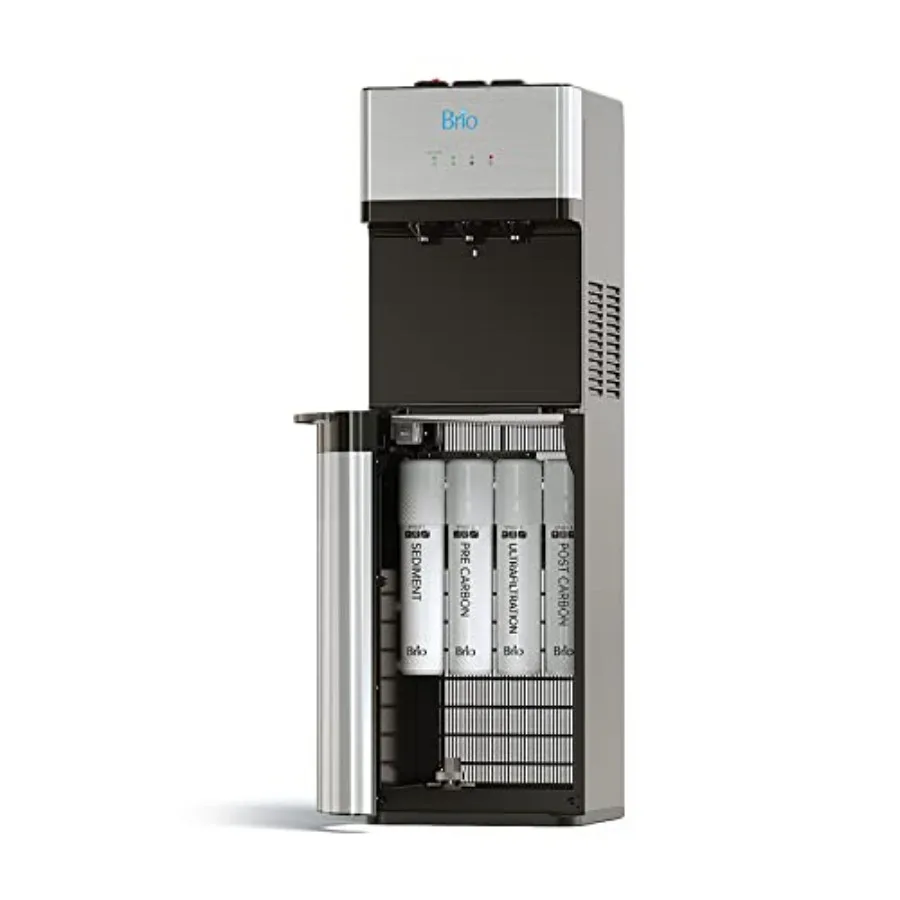 |
Countertop POU Dispenser | UL approved, hot/cold/room temp, built-in filtration | $357.75 | Buy on AliExpress |
Backwash Water Sediment Filter
This isn’t your typical under-sink cartridge. It’s a point of use sediment warrior, perfect for a garden hose tap or as a pre-filter for a more delicate system. The stainless steel screen is durable, and the backwash feature means you can clean it without replacing a cartridge. We found it incredibly effective at catching sand and rust particles that would otherwise clog aerators and appliances. A solid, no-nonsense choice for specific sediment issues.
- Self-cleaning design saves money on replacements
- Durable stainless steel construction
- Transparent housing lets you see when it needs cleaning
- Only filters sediment, not chemicals or dissolved contaminants
- Requires manual backwashing
- Not a standalone drinking water solution
Self-Cleaning Bottleless Water Cooler Dispenser
For offices or homes wanting a dedicated, filtered hot and cold water station, this is an interesting all-in-one POU unit. It hooks directly to your water line, eliminating bottle waste and delivery hassles. The built-in filtration tackles basic taste and odor issues. In our view, it’s a convenience play. The filtration won’t match a dedicated under-sink RO system, but for pure, temperature-controlled drinking water on demand, it’s a compelling package. Just know you’re paying for the dispenser hardware as much as the filter.
- Provides instant hot, cold, and room-temperature water
- Eliminates the cost and waste of plastic bottles
- UL approved for safety
- High upfront cost
- Filtration capability is likely basic carbon—check specs
- Large countertop footprint
Point of Use Filter FAQ
- What’s the difference between a point of use filter and a whole house filter?
- A whole house (point of entry) filter treats all water entering your home, protecting pipes and appliances. A point of use filter treats water at a single outlet, like the kitchen sink, for drinking and cooking. POU is for targeted quality; POE is for whole-home protection.
- Can a point of use filter remove lead?
- Yes, but you must choose one specifically certified to NSF/ANSI Standard 53 for lead reduction. Look for this certification on the packaging. Carbon block filters and reverse osmosis systems are the most common types that effectively remove lead.
- Do I need a plumber to install an under-sink point of use filter?
- Not usually. Most modern under-sink systems are designed for DIY installation with basic tools. They typically connect to your cold water line with an adapter and include a dedicated faucet. If you’re not comfortable, a plumber can do it in under an hour.
- How often do I need to change the filter?
- It depends entirely on the filter type and your water quality. A carbon filter might last 6 months or 500 gallons. An RO membrane could last 2 years. Always follow the manufacturer’s schedule. Ignoring it can lead to poor performance and bacterial growth.
- Will a point of use filter lower my water pressure?
- There can be a slight drop, especially with dense filters or RO systems. Quality systems are designed to minimize this. If you notice a significant pressure drop, it usually means the filter is clogged and needs replacement.
- Are countertop filters as good as under-sink filters?
- They can be very effective for taste, odor, and common contaminants. The main trade-offs are convenience (they take counter space and use a diverter valve) and sometimes capacity. Under-sink systems are more powerful and out-of-the-way, but require installation.
- What if my water has iron or manganese?
- Standard carbon filters won’t remove iron. You’ll need a specialized iron removal water filter that uses oxidation and filtration media like birm or KDF. These are often used as a iron filter for well water at the point of entry, but smaller POU versions exist for single taps.
Final Thoughts
After years in this field, I keep coming back to one truth: the best point of use filter is the one that solves your specific water problem. Don’t overbuy. If your city water tastes like a swimming pool, a simple, certified carbon block under your sink will change your life for under $100. If you’re on a well with iron stains, you need to target that issue head-on with the right media.
Start with a test, match the certification to the contaminant, and buy from a reputable brand that clearly states its performance data. A good POU system is a set-it-and-forget-it upgrade that pays for itself in better coffee, safer drinking water, and peace of mind. For most people, it’s the single most effective step you can take for your water quality.
