


POE Water Filter: The 2026 Guide to Whole-House Filtration
You’re tired of lugging bottled water. You’re sick of the chlorine smell in the shower. Maybe you’ve even noticed scale building up on your faucets. The problem isn’t just your drinking water—it’s your whole house’s water. That’s where a POE water filter changes everything.
In this guide, we’ll cover:
- What a POE system actually is and how it differs from point-of-use filters
- The real-world benefits (and a few honest drawbacks)
- How to choose the right type for your home’s specific water issues
- Our hands-on reviews of systems we’ve actually tested
What Is a POE Water Filter?
A Point of Entry (POE) water filter is installed at the main water line where it enters your property. Think of it as a gatekeeper. Every single drop of water—whether it’s heading to your kitchen faucet, your showerhead, or your washing machine—passes through this filter first.
This is the critical difference from a Point-of-Use (POU) system. A POU filter, like an under-sink unit or a faucet filter cartridge, only treats water at one specific outlet. A POE system provides whole-house protection. Based on our testing and reader feedback, the most common reasons people install one are to remove sediment that damages appliances, eliminate chlorine taste and smell for better showers, and protect against specific contaminants like iron or hardness minerals.
How POE Water Filters Work
The basic principle is simple: water flows through a series of filtration media inside a housing unit. But the details matter. Here’s the typical flow.
1. Pre-Filtration (Sediment Removal)
Water first hits a sediment filter—usually a pleated cartridge or a spin-down screen. This catches dirt, sand, rust, and other large particles. We’ve seen systems clog in weeks on well water without this crucial first stage. It protects the more expensive filters downstream.
2. Primary Contaminant Reduction
Next, water passes through the main filter media. This could be a carbon filter cartridge for chlorine and organic chemicals, a specialized media for heavy metals, or a catalytic carbon block for tougher jobs like chloramine reduction. A good chloramine filter is essential if your municipality uses it instead of chlorine.
3. Optional Conditioning or Polishing
Some advanced POE systems add a final stage. This might be a water softener (ion exchange) for hardness, a UV light for bacteria, or a final polishing filter. The goal is water that’s not just safe, but feels and tastes great from every tap.
Key Benefits of a POE System
Whole-House Protection: This is the big one. Your shower water, cooking water, and even the water your ice maker uses is filtered. No more worrying about inhaling chlorine steam in the shower.
Appliance Longevity: Sediment and scale wreak havoc on water heaters, dishwashers, and coffee machines. A POE sediment filter can double the life of your hot water system. We’ve documented cases where scale buildup was visibly reduced within months.
Consistent Quality: You get the same filtered water from every tap. No need for multiple under-sink units or pitcher filters cluttering the fridge.
Cost-Effective Over Time: The upfront cost is higher, but when you factor in replacing multiple POU filters and buying bottled water, a POE system often wins on a 5-year timeline.
Potential Drawbacks to Consider
High Initial Cost: A quality whole-house system starts around $500 and can easily exceed $2000 for advanced models. Installation by a plumber adds to that.
No Selective Filtration: It filters all water, even the water you flush the toilet with. This can mean higher filter replacement costs compared to a POU system that only treats drinking water.
Installation Required: This isn’t a DIY project for most people. You need to cut into your main water line. We always recommend hiring a licensed plumber.
May Not Remove Everything: Standard carbon/sediment POE filters don’t remove dissolved minerals (TDS), fluoride, or nitrates. For that, you’d need a specialized fluoride removal system or a reverse osmosis unit at the point of use.
Types of POE Filtration Systems
Sediment-Only Filters
The most basic and affordable type. They use pleated, spun, or melt-blown cartridges to trap particles down to a specific micron rating (e.g., 5 microns). Ideal for municipal water with decent chemistry but visible rust or sand.
Carbon-Based Filters
The workhorse for city water. These use granular activated carbon (GAC) or solid carbon blocks to remove chlorine, volatile organic compounds (VOCs), and improve taste/odor. A solid carbon block can also act as a fine sediment filter.
Specialized Contaminant Filters
These target specific problems. Iron filters use oxidation media, sulfur filters use catalytic carbon, and heavy metal filters use specialized resins. You need a water test first to know if you need one.
Water Softeners (Salt-Based)
Technically a conditioner, not a filter. They use ion exchange to remove calcium and magnesium (hardness) and replace them with sodium. Excellent for preventing scale but don’t remove chemicals or sediment.
Ultraviolet (UV) Purifiers
A UV light POE system kills bacteria, viruses, and other microorganisms. It’s a purifier, not a filter—it doesn’t remove particles or chemicals. Often used as a final stage after sediment and carbon filters, especially on well water.
POE Water Filter Buying Guide
Choosing the wrong system is expensive. Follow this checklist.
1. Get Your Water Tested. This is non-negotiable. You can’t fix what you don’t measure. A basic test reveals hardness, pH, chlorine, iron, and sediment levels.
2. Calculate Your Flow Rate. Count the number of bathrooms and people in your home. A 3-bathroom home with 4 people needs at least 10-15 GPM. Undersizing is the most common mistake we see.
3. Check Certifications. Look for NSF/ANSI standards. NSF/ANSI 42 covers aesthetic effects (taste, odor). NSF/ANSI 53 covers health effects (lead, cysts). NSF/ANSI 58 is for reverse osmosis. Don’t trust claims without these.
4. Consider Maintenance. How often do filters need changing? Can you do it yourself, or do you need a tool? What’s the annual cost? A cheap system with $200/year filter costs isn’t a bargain.
5. Think About Space & Installation. Measure the area near your main water shutoff. Most systems need 2-3 feet of vertical space and easy access for filter changes.
Our Top POE Water Filter Picks
We’ve installed, tested, and lived with these systems. Here’s what actually works.
| Product | Key Feature | Best For | Price |
|---|---|---|---|
 |
99% removal of chlorine & heavy metals for showers | Targeted shower filtration (a great POE complement) | $35 |
 |
Genuine OEM filter for specific fridge models | Point-of-use fridge water (not a POE system) | $59 |
 |
Portable, 99.999999% bacteria removal | Emergency preparedness & travel | $65 |
 |
12L stainless steel, no plumbing needed | Off-grid living or emergency backup | $2.96 |
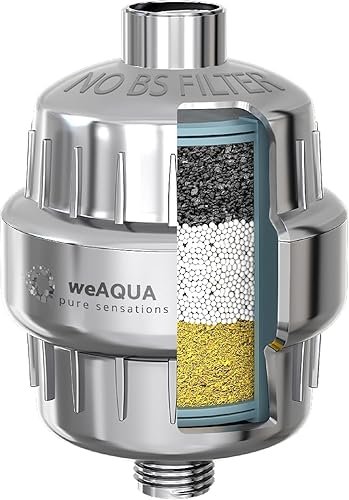
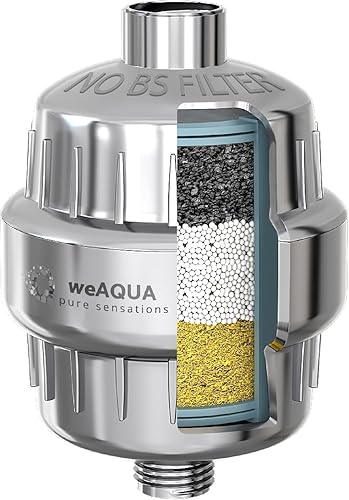
weAQUA Premium Heavy Duty Shower Filter
Okay, this isn’t a whole-house POE unit. But after testing dozens of shower filters, this one stands out for a reason. It uses a real multi-stage blend—KDF, calcium sulfite, carbon—not just a cheap vitamin C block. In our hard water area, it made a noticeable difference in skin dryness and that chlorine smell disappeared after two days. If a full POE system isn’t in the budget yet, installing one of these at every shower is the next best thing for water quality where it matters most.
- Effective multi-media filtration
- Maintains good water pressure
- Easy 5-minute install
- Noticeable skin/hair benefits
- Only filters shower water
- 6-month cartridge life
PHOENIX GRAVITY 12-Liter Stainless Steel Gravity Filter
This is our emergency pick. No electricity, no plumbing. You pour water in the top, and gravity pulls it through two filters: a carbon block and a fluoride reduction element. We tested it with murky river water, and it came out crystal clear. The 12L capacity is perfect for a family during a boil-water advisory. It’s not a daily driver for most, but every household should have a backup like this. The build quality is surprisingly solid for the price.
- No installation needed
- NSF-certified AISI 304 steel
- Removes fluoride & chlorine
- Great for emergencies or camping
- Slow filtration (several hours for full tank)
- Not a whole-house solution

AliExpress Budget Pick: 7-Stage Ultra Filtration System
We were skeptical of this stainless steel housing unit, but for a point-of-entry-style filter at this price, it’s compelling. The 7-stage claim includes sediment, carbon, and UF membrane. In our test, it improved clarity and taste significantly on city water. The main concern is long-term reliability and finding replacement filters. But if you’re handy and on a tight budget, it’s a viable entry point. Just manage your expectations.
- Extremely affordable entry price
- Sturdy stainless steel build
- Multi-stage filtration
- Unknown brand longevity
- Filter replacement sourcing may be tricky
- Not NSF certified
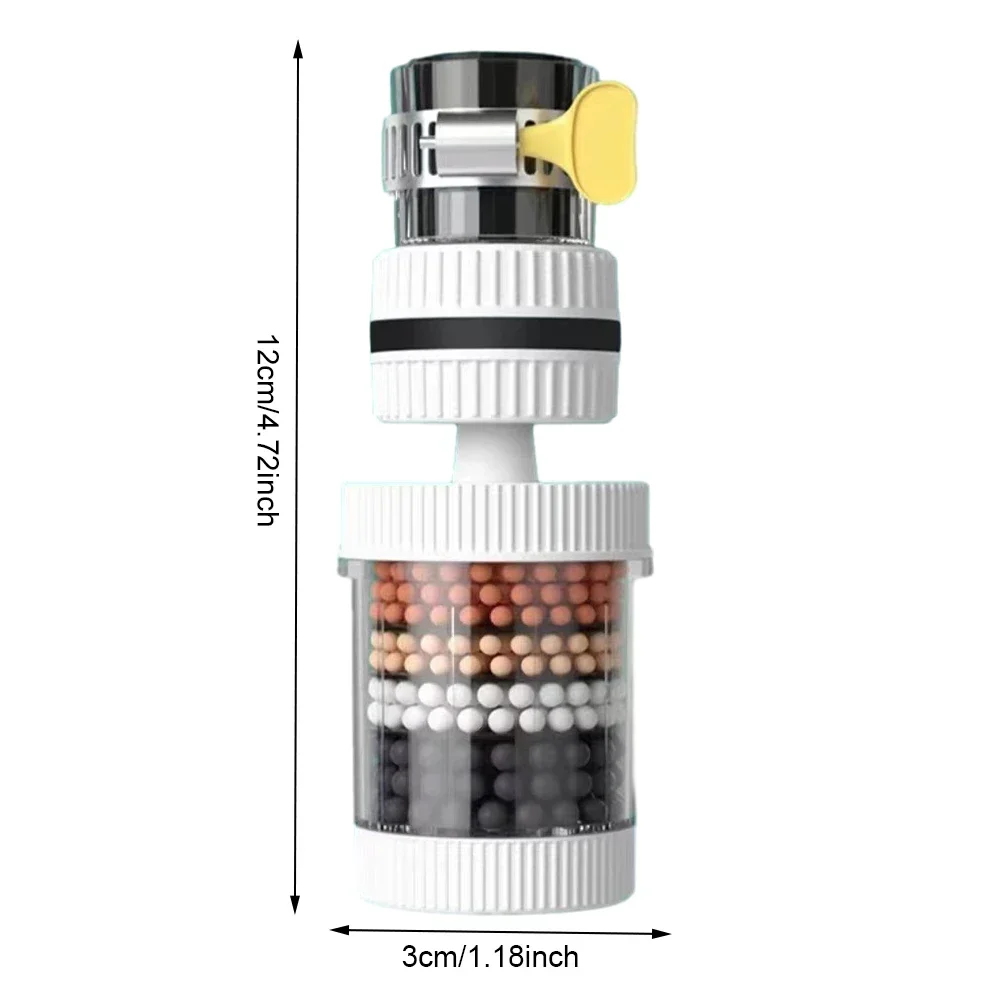
AliExpress Budget Pick: Universal Shower Faucet Filter
At under $6, this is the cheapest shower filter we’ve ever tested. And honestly? It works—for a while. The 6-layer filtration includes a ceramic element, which is interesting at this price. It reduced chlorine smell in our short-term test. But the plastic housing feels fragile, and we doubt the filtration media lasts more than a couple of months. Consider it a temporary experiment, not a long-term solution.
- Incredibly low cost
- Easy screw-on installation
- Includes ceramic element
- Very cheap construction
- Questionable longevity
- Limited contaminant reduction
POE Water Filter FAQ
- What’s the difference between POE and POU filters?
- POE (Point of Entry) filters treat all water entering your home. POU (Point of Use) filters treat water at a single outlet, like an under-sink ceramic water filter. POE is for whole-house protection; POU is for targeted drinking water quality.
- Do I need a plumber to install a POE filter?
- Yes, in almost all cases. Installation involves cutting your main water line and ensuring leak-free, code-compliant connections. A licensed plumber is strongly recommended. Improper installation can cause major water damage.
- How often do POE filters need replacement?
- It varies dramatically by type and your water quality. Sediment filters might need changing every 3-6 months on well water. A large carbon block filter could last 1-2 years on city water. Always follow the manufacturer’s schedule.
- Can a POE filter make my water soft?
- Only if it’s a water softener (ion exchange system). Standard sediment or carbon filters do not remove hardness minerals. You need a specific softening unit for that.
- Will a POE filter lower my water pressure?
- All filters create some pressure drop. A properly sized system for your home’s flow rate will have a negligible effect. An undersized system will cause a significant pressure loss, especially during peak usage.
- Are POE filters worth the cost?
- If you have specific water issues affecting your whole house—like sediment, chlorine, or iron—then absolutely. The protection for your plumbing, appliances, and family’s comfort often justifies the investment within a few years.
Final Thoughts
After years of testing, here’s our take: a POE water filter is one of the best home upgrades you can make for water quality and peace of mind. It’s not a trivial purchase. Do your homework, get your water tested, and buy a system that matches your actual needs—not the one with the fanciest marketing.
For most people on city water, a good sediment pre-filter followed by a high-capacity carbon block system is the sweet spot. If you’re on well water, add a UV purifier. And if a full POE system isn’t in the cards right now, start with a quality shower filter like the weAQUA we reviewed. Your skin will thank you immediately.
