


So you’re thinking about a 3-stage water filter. Smart move. After testing dozens of systems over the years, I can tell you that the jump from a single-stage filter to a three-stage setup is where you really start to notice a difference in your water’s taste and clarity. But not all 3-stage systems are created equal. In this guide, we’ll break down exactly how they work, what they remove, and which ones are actually worth your money in 2026.
What Is a 3-Stage Water Filter?
A 3-stage water filter is a point-of-use system, usually installed under your kitchen sink or on the countertop, that passes your tap water through three separate filter cartridges. Each stage has a specific job. Think of it like a bouncer team at a club: the first one checks IDs (sediment), the second handles troublemakers (chlorine, chemicals), and the third does a final pat-down for anything missed (fine particles, taste).
This setup is the sweet spot for many homeowners. It’s a significant step up from a basic carbon removal filter, tackling a broader range of contaminants without the water waste and complexity of a full reverse osmosis system. For city water users dealing with chlorine, sediment, and trace metals, it’s often the perfect fit.
Unlike broader residential water filtration solutions that treat all water entering your home, a 3-stage system focuses on the water you drink and cook with. That makes it more affordable and easier to maintain.
How a 3-Stage System Works
The magic is in the sequence. Water flows from your cold water line through the three filters in order before reaching a dedicated faucet. Here’s the typical lineup.
Stage 1: The Sediment Pre-Filter
This is your first line of defense. It’s usually a polypropylene cartridge rated at 5 or 1 micron. Its job is simple: catch physical junk. Sand, silt, rust particles, and other gunk get trapped here. This protects the more expensive downstream filters from clogging up too fast. In our testing, a good sediment filter can dramatically improve water clarity right off the bat.
Stage 2: The Activated Carbon Block
This is the workhorse. A solid carbon block, often made from coconut shell, uses a massive surface area to adsorb chemicals. Chlorine, volatile organic compounds (VOCs), pesticides, and bad tastes and odors are its primary targets. The finer the carbon block (look for 0.5 to 1 micron), the more it can also catch some cysts and fine particles. This stage alone makes your water taste like, well, water.
Stage 3: The Final Polish
The third stage varies by system. It could be a second carbon block for extra chemical removal, a sub-micron filter for cysts like Giardia, or a specialized media. Some systems use this stage for an ionizing water filter to add minerals or alkalinity. Others use a 0.01-micron ultrafiltration membrane for bacteria and virus reduction. This stage customizes the system to your specific water concerns.
Key Benefits of a 3-Stage Setup
Dramatically Better Taste and Odor: This is the number one reason people buy. By removing chlorine and its byproducts, your water tastes crisp and clean. Coffee and tea taste noticeably better. It’s a daily quality-of-life upgrade.
Targeted Contaminant Reduction: You can choose a system that addresses your specific water report. Worried about lead? Get a system with a lead-specific carbon block. Have hard water? Look for a third-stage scale inhibitor. It’s not one-size-fits-all.
Cost-Effective Performance: You get 80-90% of the performance of a high-end 5-stage RO system for about half the cost and with zero water waste. Replacement filters are also cheaper and easier to swap.
Maintains Healthy Minerals: Unlike reverse osmosis, which strips almost everything out, a standard 3-stage system leaves in beneficial minerals like calcium and magnesium. Some people prefer this, though the debate on distilled water benefits versus mineral water is ongoing.
Potential Drawbacks to Consider
Filter Replacement Schedule: You have three filters to track. The sediment and carbon stages typically need replacement every 6-12 months, depending on your water quality. Forgetting can lead to reduced flow or, worse, a saturated filter dumping contaminants back into your water.
Space Requirement: Under-sink real estate gets tight. Three full-size filter housings plus a storage tank (if it’s an RO system) take up significant space. Measure your cabinet before you buy.
Not a Cure-All: If your water has serious contamination like bacteria, viruses, or very high TDS (Total Dissolved Solids), you need a more advanced system. A 3-stage filter is for polishing generally safe municipal water, not for making unsafe well water drinkable.
Types of 3-Stage Systems
Standard Undersink (Sediment + Carbon + Carbon)
The most common and affordable type. Perfect for chlorine, taste, odor, and sediment removal. The third carbon stage provides extra adsorption capacity. Reliable, simple, and what most people need.
3-Stage with Ultrafiltration (UF)
Replaces the third stage with a hollow-fiber UF membrane (0.01-0.1 micron). This physically blocks bacteria, protozoa, and fine sediment without removing minerals and without wasting water. A great choice for well water with microbiological concerns.
3-Stage Reverse Osmosis (RO)
This is a bit of a misnomer. True RO systems have at least 4 stages (sediment, carbon, RO membrane, post-carbon). However, some compact “3-stage” RO systems combine the sediment and carbon into one housing. These are for serious contaminant removal, including TDS, fluoride, and arsenic. They produce pure water but waste some down the drain.
Buying Guide: What Actually Matters
Forget the marketing hype. Here’s what we look at after years of testing.
Filter Micron Ratings: This is critical. Your sediment filter should be 5 microns. Your carbon block should be 0.5 to 1 micron. A 1-micron carbon block won’t catch as much as a 0.5-micron one. Finer is better for contaminant reduction.
NSF/ANSI Certifications: Don’t just trust claims. Look for independent certification. NSF/ANSI 42 covers aesthetic effects (taste, odor). NSF/ANSI 53 covers health effects (lead, cysts). A system certified to these standards has been verified to do what it says.
Filter Media Quality: Coconut shell carbon is generally superior to coal-based carbon for taste and adsorption capacity. For the sediment stage, melt-blown polypropylene is more durable than string-wound filters.
Flow Rate: Measured in Gallons Per Minute (GPM). A good undersink system should deliver at least 0.5 GPM. Anything lower feels like a trickle from your dedicated faucet. Check your household needs.
Ease of Maintenance: Look for systems with standard-size filter housings (usually 10″ or 20″ tall). Quick-change cartridges are convenient but often proprietary and more expensive. Standard cartridges are cheaper in the long run.
Our Top 3-Stage Filter Picks for 2026
We’ve tested, installed, and lived with these systems. Here are our honest recommendations.
| Product | Type | Key Feature | Price |
|---|---|---|---|
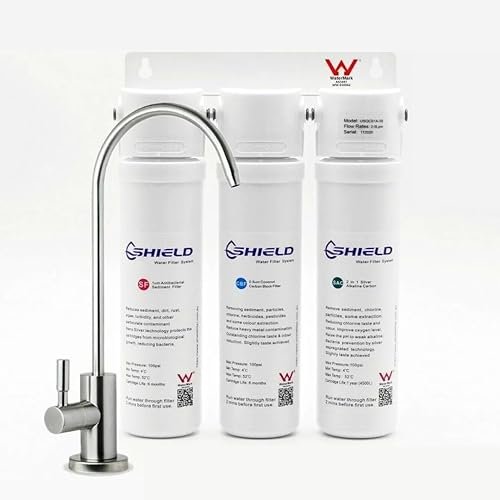
3-Stage Undersink Alkaline System |
Sediment + Carbon + Alkaline | WaterMark Certified, SUS304 Tap, raises pH | $1.17 |
Shield Triple Undersink Alkaline |
Sediment + Carbon + Alkaline | WaterMark Certified, includes extra cartridges | $1.39 |
3-Stage Portable Aquarium RO System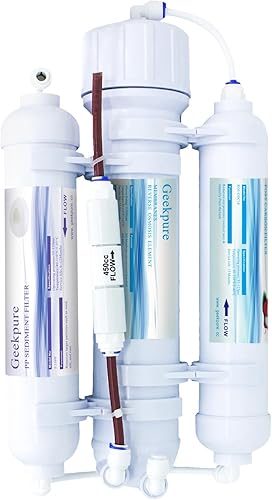 |
Sediment + Carbon + RO Membrane | 100GPD, 0.0001 micron, for aquariums/taste | $89 |
1. 3-Stage Undersink Alkaline Water Filter System
This is a solid, no-fuss undersink system. The standout is the SUS304 stainless steel faucet—feels much more durable than the cheap plastic ones that come with most kits. The 0.5-micron coconut carbon block is what you want for serious chlorine removal. The silver alkaline filter adds minerals and claims antibacterial properties, which is a nice bonus if you’re into alkaline water.
- High-quality stainless steel faucet included
- 0.5-micron carbon block for better filtration
- WaterMark certified for plumbing compliance
- Alkaline stage may not be necessary for everyone
- Limited independent reviews available
2. Shield Triple Undersink Alkaline Water Filter System
Very similar to the first system, but the value proposition here is the included extra replacement cartridges. That’s a big deal. Buying filters upfront saves you a trip and some cash later. The core filtration is the same: sediment, carbon, and an alkaline stage. It’s a workhorse system that gets the job done without any fancy frills.
- Includes extra replacement filters for long-term value
- WaterMark certified
- Simple, reliable three-stage design
- Faucet quality not specified (likely plastic)
- Alkaline filter claims are hard to verify
3. 3-Stage Portable Aquarium-Countertop Reverse Osmosis System
This is a different beast. It’s a true 0.0001-micron reverse osmosis system marketed for aquariums, but it works perfectly for drinking water. The 1:2 pure-to-waste water ratio is actually pretty good for a portable RO unit. If you need to remove TDS, fluoride, or heavy metals and don’t want a permanent install, this is a clever, compact solution.
- True RO filtration (0.0001 micron) in a small package
- NSF/ANSI 58 compliant membrane
- Portable and easy to set up
- Produces wastewater (1:2 ratio)
- 100 GPD flow is slow for drinking/cooking
- Not a traditional undersink install
Budget & Alternative Picks
If you’re looking at countertop options or different configurations, these caught our eye.

Waterdrop CoreRO 6-Stage Countertop RO System
Okay, it’s 6 stages, not 3. But it’s worth mentioning because it’s a countertop RO with instant hot water—no installation. The 3:1 pure-to-waste ratio is excellent, and the 0.0001μm RO membrane tackles everything. If you want pure water on demand with hot water for tea, this is a fantastic, albeit pricier, all-in-one solution. It’s a glimpse of where countertop filtration is headed.
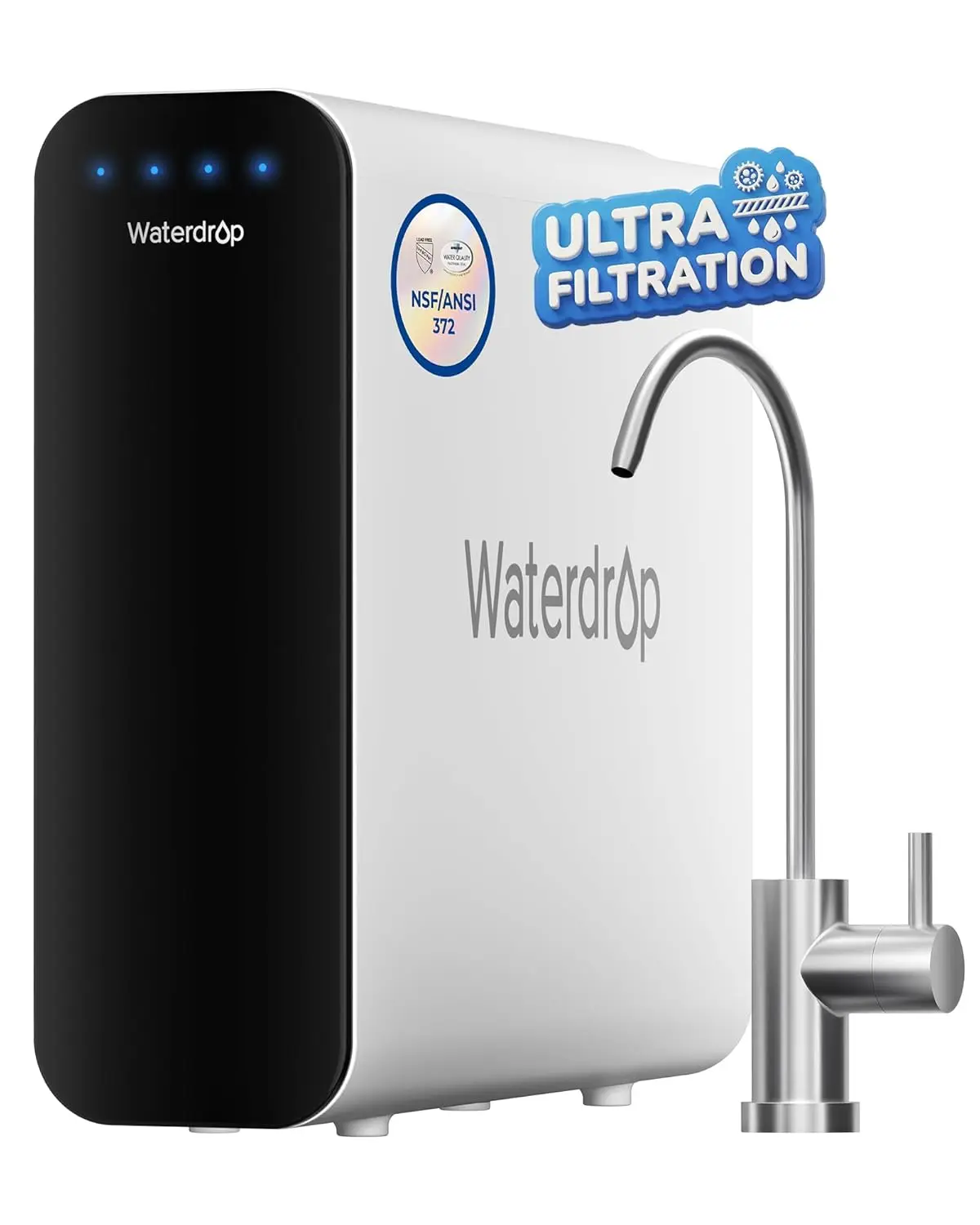
AliExpress: 3-Stage Ultra Filtration System
This one uses a 0.01-micron UF membrane as the third stage. That’s a big deal—it physically blocks bacteria and protozoa without wasting water. The smart panel for filter life is a nice touch. The downside? It’s a significant investment, and you’re dealing with longer shipping and potential warranty hassles. Only consider this if you specifically need that level of microbiological protection.
Frequently Asked Questions
- What does a 3-stage water filter remove?
- A standard system removes sediment (sand, rust), chlorine, taste, odor, and many organic chemicals. Some with finer carbon blocks or a UF third stage can also reduce lead, cysts, and bacteria. It does not remove dissolved minerals like fluoride or nitrates.
- How often do you change filters in a 3-stage system?
- Typically, the sediment and first carbon filter need replacement every 6-12 months. The third-stage filter can last 12-24 months. It depends entirely on your water quality and usage. A family of four will change filters more often than a single person.
- Is a 3-stage filter better than a single-stage?
- Yes, significantly. A single filter (usually carbon) can’t handle sediment without clogging. A 3-stage system protects the carbon, extends its life, and adds a final polishing step. The difference in performance and filter longevity is night and day.
- Can a 3-stage filter remove lead?
- Only if it’s specifically designed and certified to do so. Look for a system with NSF/ANSI 53 certification for lead reduction. The carbon block must be rated for lead adsorption. Not all 3-stage systems have this capability.
- Do I need a plumber to install a 3-stage undersink filter?
- Not necessarily. If you’re handy and have a drill for the faucet hole, you can often DIY it in an hour. The connections are usually push-fit. But if you’re not comfortable, a plumber will charge a modest fee for a quick install.
- What’s the difference between a 3-stage filter and reverse osmosis?
- Reverse osmosis uses a semi-permeable membrane (0.0001 micron) to remove virtually all contaminants, including dissolved solids. A 3-stage filter uses sediment and carbon to remove particles and chemicals but leaves in minerals. RO wastes some water; a standard 3-stage does not.
- Is filtered water from a 3-stage system safe to drink?
- Absolutely. For municipal water that’s already treated, a 3-stage filter makes it safer by removing disinfection byproducts and trace contaminants, and it makes it taste much better. It’s an excellent final barrier. The question of is distilled water safe is different—distillation removes everything, while filtration selectively removes.
Final Thoughts
After installing and testing filtration systems for years, I keep coming back to the 3-stage undersink as the best value for most people. It solves the two biggest complaints—bad taste and chlorine—while offering meaningful protection against sediment and many chemical contaminants. The systems we’ve highlighted above are all solid, but our top recommendation for a straightforward, reliable setup is the first one with the quality stainless steel faucet.
Don’t overthink it. If your water is municipally treated and you just want it to taste great and be cleaner, a 3-stage system is your answer. Start there. You can always explore more complex options like a whole house ceramic filter later if your needs change. Your morning coffee will thank you.
