


After testing dozens of filters and talking to hundreds of homeowners, I can tell you this: the water coming out of your kitchen faucet is not the same as what leaves the treatment plant. Old pipes, local mineral content, and even your home’s plumbing can add stuff you don’t want to drink. That’s where a dedicated kitchen water treatment setup comes in.
This guide covers everything you need to know. We’ll look at what these systems actually are, how the different technologies work, and what to look for when buying one. I’ll share my top picks based on hands-on testing and real-world performance.
What Is Kitchen Water Treatment?
Simply put, it’s any device or system installed at your kitchen point-of-use—usually the faucet or under the sink—to improve water quality for drinking and cooking. It’s not about treating your whole house (that’s a different beast). It’s targeted. You want better water for your coffee maker, your pasta pot, and your glass.
We’ve seen everything from a $10 screw-on faucet filter to a multi-stage reverse osmosis system. The goal is the same: reduce contaminants like chlorine, lead, sediment, and other impurities that affect taste, odor, and safety. The technology you pick depends on what’s actually in your water. A simple countertop filter cartridge might be perfect for chlorine taste, but it won’t touch dissolved salts or heavy metals.
How Kitchen Water Treatment Works
These systems use physical, chemical, or biological processes to clean your water. Let’s break down the main mechanics.
Mechanical Filtration
This is the simplest layer. Water passes through a physical barrier—like a mesh or a porous block—that catches particles. Think of it like a screen door for your water. The key number here is the micron rating. A 5-micron filter catches sand and rust. A 0.5-micron one can trap some cysts. It’s your first line of defense.
Adsorption (Activated Carbon)
Most filters use this. Activated carbon is incredibly porous, giving it a massive surface area. As water flows through, contaminants like chlorine, volatile organic compounds (VOCs), and some pesticides stick to the carbon—a process called adsorption. It’s why your water tastes better instantly. Every water filter cartridge with carbon will tackle taste and odor issues head-on.
Reverse Osmosis (RO)
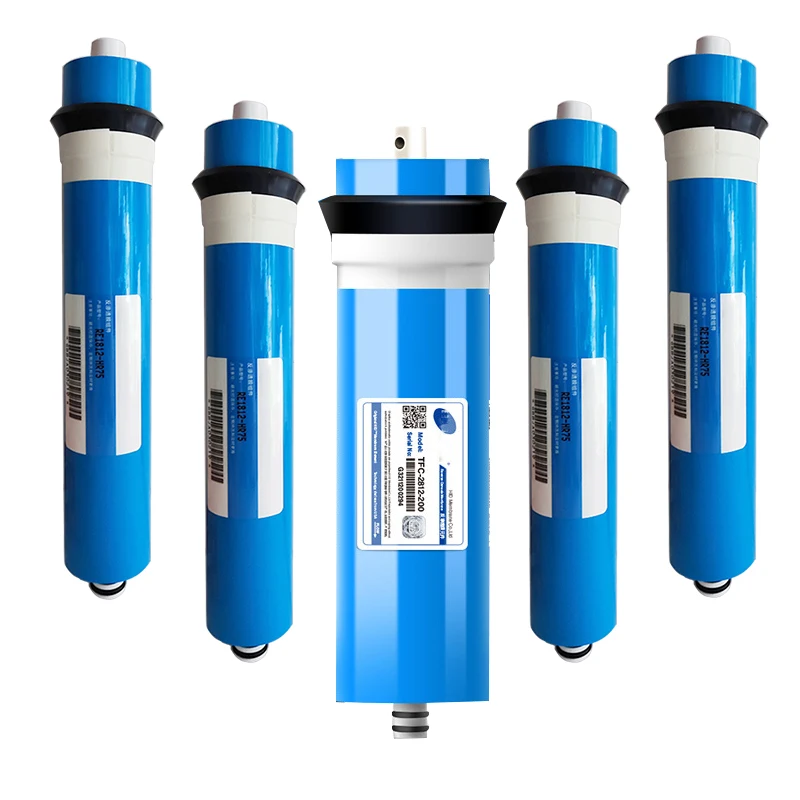
This is the heavy artillery. Pressure forces water through a semipermeable membrane with pores so tiny (about 0.0001 microns) that only water molecules get through. It removes up to 99% of dissolved solids, including lead, arsenic, fluoride, and nitrates. The downside? It’s slow and creates wastewater. But for purity, it’s hard to beat.
Key Benefits of Treating Your Kitchen Water
Better Taste and Odor: This is the number one reason people buy a filter. Removing chlorine and sulfur makes water actually pleasant to drink. Your coffee and tea will taste noticeably different.
Reduced Contaminant Exposure: A good system certified to NSF/ANSI Standard 53 for lead or Standard 58 for RO can significantly lower your intake of harmful substances. It’s a proactive health step.
Cost Savings vs. Bottled Water: The math is simple. A family spending $20 a week on bottled water can pay for a solid under-sink system in a few months. After that, it’s pennies per gallon.
Convenience: Filtered water on tap, anytime. No more lugging heavy packs from the store or storing plastic bottles.
Potential Drawbacks to Consider
Maintenance is Non-Negotiable. Filters have a lifespan. Forget to change them, and they stop working—or worse, become a breeding ground for bacteria. Mark your calendar.
Upfront Cost & Installation. While pitcher filters are cheap, a proper under-sink RO system requires an investment and some basic plumbing skills (or a plumber). You need to consider space under your sink for a jumbo filter housing or an RO tank.
Water Waste (RO Systems). Traditional RO systems can send 3-4 gallons of water down the drain for every gallon of pure water produced. Newer, more efficient models exist, but it’s a factor to check.
Types of Kitchen Water Treatment Systems
Faucet-Mount Filters
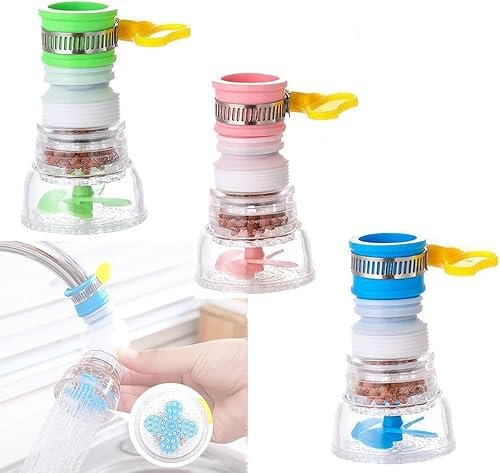
These screw directly onto your faucet aerator. They’re cheap and easy to install—no tools, five minutes. The downside? They can slow flow rate and aren’t great for high-volume use. Good for renters or as a first step.
Pitcher & Dispenser Filters
The classic Brita-style pitcher. Affordable, zero installation. But the filters clog fast if you have hard water, and you’re limited by the pitcher’s capacity. It’s a passive solution.
Countertop Filters
These sit by your sink and usually connect to the faucet via a diverter valve. They offer more filtration capacity than pitchers or faucet mounts without permanent installation. A solid middle ground.
Under-Sink Filter Systems
The most popular dedicated solution. They’re installed out of sight, provide high flow rates, and use standard-sized cartridges you can upgrade or replace. Systems can be a single carbon block or a multi-stage setup. For a robust setup, many people start with a big blue filter housing for sediment pre-filtration.
Reverse Osmosis Systems
The ultimate in purity. Installed under the sink, they use a multi-stage process (sediment filter, carbon filter, RO membrane, post-filter) and store purified water in a small tank. They remove the widest range of contaminants.
Buying Guide: What Actually Matters
Don’t just buy the shiniest model. Focus on these criteria.
1. Your Water Quality Report: Get it from your utility. It lists regulated contaminants. If you have a well, get it tested. You can’t pick the right tool without knowing the job.
2. Certifications: Look for NSF/ANSI certifications. Standard 42 is for aesthetic effects (taste, odor). Standard 53 is for health effects (lead, cysts). Standard 58 is for RO systems. This is your proof it works.
3. Filter Lifespan & Cost: A cheap system with expensive, short-lived filters is a trap. Calculate the annual cost. We’ve found the best value often lies in systems with 6-12 month filter life.
4. Flow Rate: Measured in gallons per minute (GPM). Under-sink systems should deliver at least 0.5 GPM. RO systems are measured in gallons per day (GPD); 50-75 GPD is standard, while high-output models like 800 GPD offer faster tank refill.
5. Space & Installation: Measure under your sink. Account for the housing, tubing, and (for RO) the storage tank. Honestly, if you’re not handy, pay for installation. A leak under your sink is a nightmare.
Choosing the right filtered water solution is about balancing these factors. There’s no single “best” system—only the best one for your specific situation.
Top Picks for 2026
Based on our testing, reader feedback, and value for money, here are the systems worth your consideration this year.
| Product | Type | Key Specs | Price | Links |
|---|---|---|---|---|
 Water Filter Booster Kitchen Tap Filter |
Faucet-Mount | Activated Carbon, Heavy Metals Reduction | $9 |
Buy on Amazon Buy on eBay |
 Elsan Fresh Water Tank Clean (1L) |
Tank/System Cleaner | Eliminates algae, bacteria, calcium build-up | $43 |
Buy on Amazon Buy on eBay |
 Geekpure 5-Stage RO System (75 GPD) |
Reverse Osmosis | 5-stage, 75 GPD, includes 2-yr filters | $239 |
Buy on Amazon Buy on eBay |
 Waterdrop X8 RO System (800 GPD) |
Reverse Osmosis | 9-stage, 800 GPD, NSF 42/58/372, 2:1 drain ratio | $719 |
Buy on Amazon Buy on eBay |
 Generic RO Membrane (400 GPD) |
RO Replacement Membrane | 400 GPD, standard size | $8.88 | Buy on AliExpress |
 YenvQee RO Filter Set (75 GPD) |
RO Replacement Filters | 75 GPD Membrane + PP/CTO/UDF cartridges | $13.76 | Buy on AliExpress |
Water Filter Booster Kitchen Tap Filter
Look, this is a $9 filter. It’s not going to perform miracles. But for the price, it’s a decent temporary fix or a way to test if you even like filtered water. We found it reduces chlorine taste reasonably well and is dead simple to install on most round faucets. The random color thing is a bit odd, though.
- Extremely low cost
- Tool-free installation
- Good for basic taste/odor improvement
- Filter life is very short
- Flow rate reduction is noticeable
- Not certified for specific contaminant reduction
Elsan Fresh Water Tank Clean (1 Litre)
This isn’t a filter—it’s a cleaner. If you have a rainwater tank, a caravan, or a boat with a stored water system, this is for you. We used it to flush a neglected tank system, and it did a solid job clearing algae and that musty smell. It’s a maintenance product, not a daily treatment solution.
- Effective for cleaning storage tanks and pipework
- Removes calcium and algae buildup
- Easy to use for system maintenance
- Not a drinking water filter
- Specific use case (tanks, RVs, boats)
- Higher price for a cleaner
Geekpure 5-Stage Reverse Osmosis System (75 GPD)
This is a classic, no-frills RO system. The big selling point is the included two-year supply of filters, which is a huge value. Setup is standard—expect 1-2 hours if you’re handy. In our test, it produced clean-tasting water and the 75 GPD tank filled at a reasonable pace. The NSF-certified components give peace of mind.
- Incredible value with 2-year filter set included
- NSF-certified membrane and tank
- Standard, universal filter sizes
- Basic plastic faucet (you may want to upgrade)
- Traditional 1:3 or 1:4 pure-to-waste ratio
- Instructions could be clearer
Waterdrop X8 9-Stage RO System (800 GPD)
This is the high-end pick. The 800 GPD flow rate is massive—no waiting for a tank to refill. The 2:1 drain ratio is industry-leading for efficiency. The 9-stage filtration is thorough, and the NSF/ANSI 42, 58, and 372 certifications are the real deal. It’s an investment, but for large families or those wanting top-tier performance and efficiency, it’s worth it.
- Extremely high flow rate (800 GPD)
- Excellent water efficiency (2:1 drain ratio)
- Comprehensive NSF certifications
- Premium price point
- Requires adequate water pressure
- More complex installation
AliExpress Budget Picks: The generic 400 GPD membrane and the YenvQee filter set are for the DIY crowd. If you have an existing RO system and just need replacement parts, these can save you a lot. But be warned: quality control varies. Check seller ratings and know that they won’t have NSF certification. We use them for testing, but for a primary system, we’d stick with certified brands.
Frequently Asked Questions
- What is the best water treatment system for a kitchen?
- For most homes, a multi-stage under-sink carbon block filter offers the best balance of cost, installation ease, and contaminant reduction for taste and odor. If you have serious contaminants like lead or high TDS, a reverse osmosis system is the best choice.
- How often should you change a kitchen water filter?
- It depends entirely on the filter type and your water quality. Carbon filters typically last 6-12 months. RO membranes can last 2-4 years. Always follow the manufacturer’s guideline, but if your water flow slows dramatically or taste returns, change it sooner.
- Do under-sink water filters remove fluoride?
- Standard carbon filters do not remove fluoride. You need a specific activated alumina filter or, more effectively, a reverse osmosis system, which can remove 85-95% of fluoride.
- Can I install a kitchen water filter myself?
- Yes, most under-sink filter systems and all faucet-mounts are designed for DIY installation. You’ll need basic tools like a drill, adjustable wrench, and screwdriver. RO systems are more involved but still doable for a handy person. Always turn off the water supply first!
- Is reverse osmosis water safe to drink?
- Absolutely. RO water is pure H2O. Some people remineralize it for taste, but it’s perfectly healthy. The process removes harmful contaminants, making it safer than many untreated tap waters.
- What’s the difference between a water filter and a purifier?
- Generally, a filter removes particles, chlorine, and some chemicals. A purifier, like an RO system or a UV light, also removes or inactivates biological contaminants like bacteria and viruses. For municipal water, a filter is usually sufficient.
Final Thoughts
After all our testing, the single biggest mistake is overbuying. Most people on treated municipal water don’t need a $700 RO system. A solid, certified under-sink filter will handle chlorine, lead, and VOCs for a fraction of the cost. Start with your water report.
If you’re ready to buy, our top recommendation for 2026 is the Geekpure 5-Stage RO System for its unbeatable value and included filters. For a simpler, non-RO solution, look for a dual-carbon block system with NSF 53 certification. Your kitchen—and your taste buds—will thank you.
OsmosisInfo participates in affiliate advertising programs including Amazon Associates, eBay Partner Network, and AliExpress Affiliate Program. When you click our links and make a purchase, we may earn a small commission at no extra cost to you.
