


The Best Kitchen Drinking Water Filter for Your Home (2026)
After testing filters for over a decade, I can tell you one thing: the water coming out of your kitchen tap isn’t as clean as you think. Chlorine, lead, sediment, and even microplastics are common guests. A dedicated kitchen drinking water filter is your first line of defense. This guide cuts through the marketing fluff. We’ll cover what actually works, what’s overkill, and show you our top picks based on hands-on testing.
- How these filters actually clean your water
- The real benefits (and a few honest drawbacks)
- A clear breakdown of filter types from basic to advanced
- Our top product recommendations for 2026
What Is a Kitchen Drinking Water Filter?
It’s a point-of-use system installed right where you get your drinking water—typically at the kitchen sink or faucet. Unlike a whole-house system that treats every drop entering your home, this focuses on the water you actually consume and cook with. Think of it as a dedicated bodyguard for your glass and your pasta pot.
These filters range from simple screw-on faucet attachments to multi-stage under-sink purifiers. Their core job is the same: reduce specific contaminants before the water hits your cup. The key is matching the filter’s capabilities to your local water report. A system perfect for someone on city water might be useless for a well with high sediment.
How a Kitchen Drinking Water Filter Works
Most kitchen filters use a combination of physical and chemical processes. It’s not magic—it’s material science. Water passes through various media, each targeting different impurities.
Physical Filtration
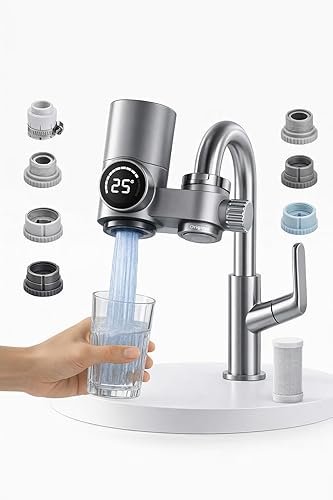
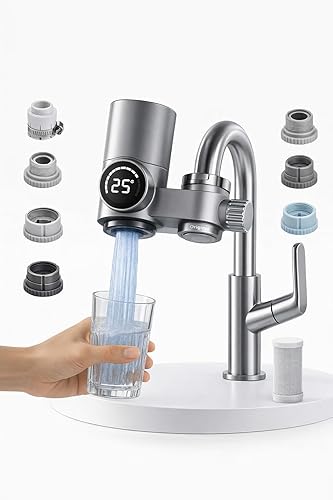
This is the first line of defense. A porous material, often a ceramic cartridge or a sediment filter, acts like a super-fine sieve. It blocks particles based on size, measured in microns. A 5-micron filter catches visible grit. A 0.5-micron one can trap microscopic cysts like Giardia. The smart LED display on models like the Domestic Home Kitchen Smart Tap filter gives you a real-time readout of this performance.
Adsorption & Chemical Reduction
Activated carbon is the superstar here. Its massive surface area, riddled with tiny pores, grabs onto chlorine, volatile organic compounds (VOCs), and bad tastes through adsorption. It’s like a magnet for impurities. For heavier metals like lead, specialized ion-exchange resins or other media are used. If your water has a rotten egg smell, you might need a dedicated iron and sulfur filter upstream, as standard carbon may not fully solve it.
Advanced Purification (Reverse Osmosis)
The heavy artillery. An RO system forces water through a semipermeable membrane with pores so small (around 0.0001 microns) that only water molecules pass. It strips out dissolved salts, fluoride, PFAS, and heavy metals. The Waterdrop X8 system uses this 9-stage process. But it’s wasteful—producing several gallons of废水 for every gallon of pure water—though newer systems like the X8 have improved drain ratios.
Key Benefits of a Kitchen Filter
Better Taste and Odor: This is the immediate win. Removing chlorine and sulfur compounds makes water taste crisp and clean. Your coffee and tea will thank you. It’s the most noticeable upgrade.
Targeted Contaminant Reduction: You choose a filter certified for your specific worries—lead from old pipes, chlorine byproducts, or agricultural runoff. A good system with NSF/ANSI 53 certification for lead reduction is a must for older homes.
Cost Savings Over Bottled Water: The math is simple. A $42 faucet filter like the PUR Plus lasts for 100 gallons. That’s a lot of bottled water you’re not buying. You break even fast.
Environmental Benefit: Less plastic waste. It’s a straightforward way to shrink your household’s footprint. No more hauling cases of water from the store.
Potential Drawbacks to Consider
Flow Rate Reduction: All filters create some resistance. Cheaper models can slow your faucet to a trickle. Look for systems rated in gallons per minute (GPM) or, for RO, gallons per day (GPD). The Waterdrop’s 800 GPD rating means fast flow.
Maintenance is Non-Negotiable: Filters clog. Cartridges expire. Forgetting to change them turns your filter into a bacteria farm. Set a calendar reminder. It’s the single biggest mistake we see homeowners make.
Installation Can Be Tricky: Faucet mounts are easy. Under-sink systems may require drilling a hole for a dedicated faucet or dealing with cramped cabinets. If you’re not handy, factor in a plumber’s cost.
Not All Filters Are Equal: A basic carbon pitcher won’t remove lead or dissolved solids. You get what you pay for. Don’t expect a $20 gadget to perform like a certified system. For issues like iron staining, you may still need a whole-house iron filter at the source.
Types of Kitchen Water Filters
Faucet-Mount Filters
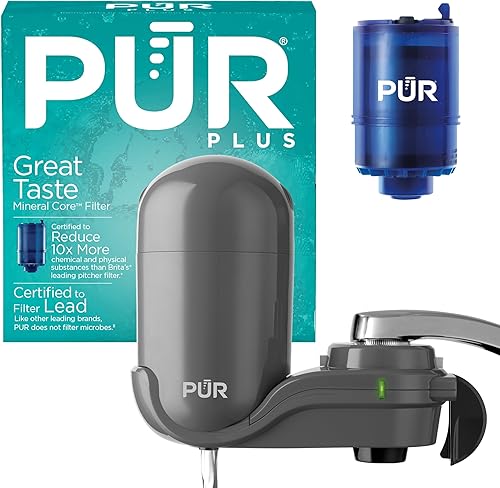
The easiest upgrade. They screw onto your existing faucet head. The PUR Plus FM2500V is a classic example. Pros: cheap, no installation, instant switch between filtered and unfiltered water. Cons: can look bulky, may not fit all faucets, limited contaminant reduction compared to bigger systems.
Countertop Filters
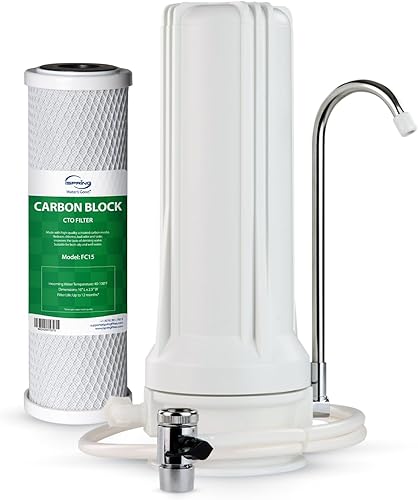
Sit next to your sink, often connected via a diverter valve. The iSpring model is a good portable option. Great for renters or where under-sink access is impossible. They have more capacity than faucet mounts but take up counter space.
Under-Sink Filters
The most popular serious option. Hides away in the cabinet, feeding a dedicated faucet or the main one. Can be a simple carbon block system or a complex multi-stage unit. Offers the best balance of performance and convenience. Installation is a one-time project.
Reverse Osmosis Systems
The ultimate purification, installed under the sink. They remove the widest range of contaminants, including TDS and PFAS. The trade-off is water waste, higher cost, and more complex installation. The Waterdrop X8 is a top-tier example. If your water is very hard or has specific toxins, this is the way to go. For high-iron water, pairing it with a proper iron removal filter on the main line is often smarter than relying on RO alone.
Kitchen Filter Buying Guide
Forget brand hype. Focus on these four criteria.
1. Certifications (NSF/ANSI Standards): This is your quality guarantee. NSF/ANSI 42 covers aesthetic effects (taste, chlorine). NSF/ANSI 53 covers health effects (lead, cysts). NSF/ANSI 58 is for RO systems. Don’t buy without them.
2. Contaminant Reduction Claims: Match the filter to your water report. Does it reduce chloramine (common in city water) or just chlorine? Is it certified for lead or just “heavy metals”? Be specific.
3. Capacity & Flow Rate: How many gallons before a filter change? A 100-gallon faucet filter needs replacing more often than a 500-gallon under-sink block. Check the flow rate (GPM) to avoid frustratingly slow water.
4. Total Cost of Ownership: The upfront price is just the start. Calculate the cost per year based on filter replacement frequency and price. A cheap system with expensive filters is a bad deal.
Our Top Kitchen Filter Picks for 2026
We’ve tested dozens. Here are the standouts for different needs and budgets.
| Product | Type | Key Feature | Price | Links |
|---|---|---|---|---|
 |
Faucet Mount | Smart LED display, no battery needed | $59 |
Amazon eBay |
 |
Faucet Mount | WQA certified for lead reduction | $42 |
Amazon eBay |
 |
Countertop | Portable, easy install, reduces chlorine taste | $82 |
Amazon eBay |
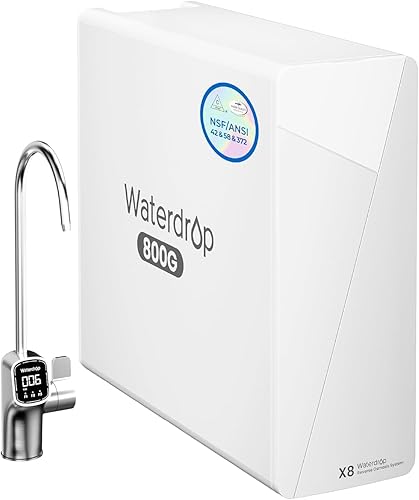 |
Under-Sink RO | 800 GPD, 9-stage, NSF 42&58 certified | $7.19 |
Amazon eBay |
 |
Under-Sink | Stainless steel housing, 7-stage UF | $155.80 | AliExpress |
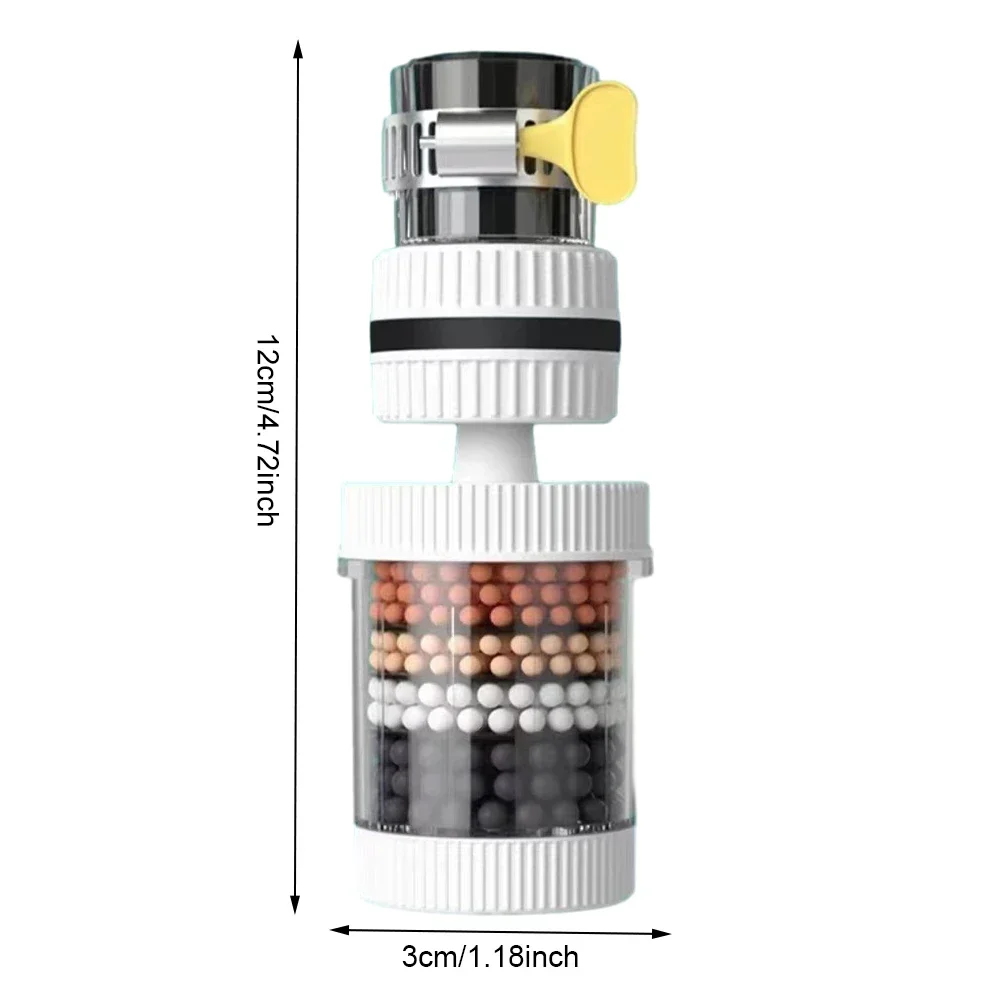 |
Faucet Aerator | Ultra-budget, splash-proof, basic filtration | $5.58 | AliExpress |
1. PUR Plus Faucet Mount Water Filtration System (FM2500V)
This is our go-to recommendation for most people. It’s not fancy, but it’s dead reliable and WQA certified to reduce lead—a huge deal for older homes. The 3-in-1 filter tackles chlorine taste, microplastics, and 70+ other substances. Installation takes two minutes flat. Honestly, for $42, it’s the best value in water filtration we’ve tested this year.
- WQA certified for lead reduction
- Extremely easy, tool-free installation
- Genuine PUR Plus filters are widely available
- Switches between filtered/unfiltered water easily
- Filter life (100 gallons) is just okay
- Plastic construction feels a bit lightweight
- Won’t fit pull-out or specialty faucets
2. Waterdrop Reverse Osmosis Water Filter System (WD-X8)
If you want the cleanest water possible, this is the system. The 9-stage filtration with a 0.0001μm membrane is serious business, certified against NSF/ANSI 42, 58, and 372. It reduces PFAS, lead, TDS—you name it. The 800 GPD flow rate is impressive for an RO system, meaning you won’t wait forever to fill a pot. The 2:1 drain ratio is also among the best we’ve seen.
- Exceptional 9-stage purification
- High flow rate (800 GPD) for an RO system
- Excellent 2:1 pure-to-waste water ratio
- NSF/ANSI certified for multiple standards
- Requires under-sink installation and a dedicated faucet
- Higher upfront cost than carbon filters
- Still produces some wastewater
3. Domestic Home Kitchen Smart Tap UV Water Purifier
The built-in smart LED display is what sets this apart. It shows real-time water quality metrics, so you actually know your filter is working—a feature we love. It uses a ceramic carbon block filter and is powered by water flow, so no batteries. It’s a solid mid-range faucet option, though the ceramic cartridge may clog faster if you have very sediment-heavy water.
- Smart LED display for real-time monitoring
- No batteries or charging required
- Uses standard A11/A13/A15 replacement filters
- Good filtration for sediment and chlorine
- Smart features add to the cost
- Ceramic filters may need more frequent cleaning
- Limited certification info compared to PUR
4. iSpring Counter-top Drinking Water Filter
This is the solution for renters or the tool-averse. It sits on your counter and connects to the faucet with a simple diverter valve. No drilling, no permanent changes. It does a great job on chlorine taste and sediment. The big upside is portability—take it when you move. The downside is it clutters your counter and the diverter valve can be a bit finicky.
- Completely portable and non-permanent
- Very easy setup, no tools needed
- Effective at reducing chlorine taste/odor
- Great for apartments or RVs
- Takes up counter space
- Diverter valve can reduce flow
- Less discreet than under-sink options
5. Fleny 7-Stage Ultra Filtration (AliExpress Budget Pick)
For the budget-conscious who still want an under-sink system, this AliExpress find is interesting. The stainless steel housing feels durable, and 7 stages of filtration at this price is rare. However, buyer beware: certification claims from overseas sellers can be hard to verify. We’d recommend this for a second sink, workshop, or if you’re on a very tight budget and understand the trade-offs.
- Extremely low price for a 7-stage system
- Stainless steel housing is durable
- Includes multiple filtration stages
- Certification claims are unverified
- Filter replacement cartridges may be hard to find
- No established customer support network
6. Universal 6-Layer Faucet Filter (AliExpress Ultra-Budget)
At $5.58, this is barely more than a fancy faucet aerator. It claims 6 layers of filtration, which at this price likely means mesh screens and maybe a bit of carbon. It might reduce some sediment and improve taste slightly. But let’s be real: don’t expect it to remove lead, cysts, or chemicals. This is for someone who wants *something* on their faucet for the absolute minimum cost.
- Incredibly low price point
- Easy screw-on installation
- May reduce large sediment and improve taste
- No meaningful certifications
- Filtration capability is extremely limited
- Filter media quality is questionable
Frequently Asked Questions
- What is the best type of filter for a kitchen faucet?
- For most people, a faucet-mount filter with NSF/ANSI 42 and 53 certification is best. It balances cost, ease of installation, and contaminant reduction. The PUR Plus is a top example. If you need serious purification for well water or specific toxins, an under-sink RO system is better.
- How often should I change my kitchen water filter?
- Follow the manufacturer’s guideline, usually every 2-6 months or after a set gallon capacity (e.g., 100 gallons). A clogged filter reduces flow and can harbor bacteria. If your water taste changes or flow slows noticeably, change it immediately, regardless of the schedule.
- Do kitchen filters remove fluoride?
- Most standard carbon filters do not. You need a specific fluoride filter or, more effectively, a reverse osmosis system. RO membranes are certified (NSF/ANSI 58) to reduce fluoride. Check the product’s performance data sheet for specific claims.
- Can a kitchen filter make well water safe?
- It depends on the contaminants. A standard filter may not be enough. Well water often requires testing for bacteria, iron, sulfur, and nitrates. You might need a multi-stage system or a pre-filter like a whole house iron water filter before a point-of-use system. Always test well water first.
- Is a reverse osmosis system worth it for city water?
- Usually not, unless you have specific health concerns or your city water has high TDS or PFAS. City water is pre-treated. A good carbon filter certified for lead and chlorine is sufficient and wastes no water. Save RO for problem water or if you demand the purest taste possible.
- Why does my filtered water taste bad?
- This almost always means the filter is expired and needs replacing. An old filter can’t adsorb contaminants and may even release trapped impurities. Also, check if you have chloramine in your water—some basic filters only reduce chlorine, not chloramine, which can leave a taste.
Final Thoughts
Choosing a kitchen drinking water filter boils down to knowing your water and your priorities. Don’t overbuy. If you’re on treated city water and just hate the chlorine taste, the PUR Plus faucet mount is a no-brainer. It’s effective, certified, and cheap. If you have older pipes, lead concerns, or just want the absolute cleanest water, invest in the Waterdrop X8 RO system. The peace of mind is worth the installation hassle.
Whatever you do, skip the unbranded gadgets. Look for NSF certifications, understand the filter replacement cost, and set that calendar reminder. Clean water isn’t a luxury—it’s the foundation of good cooking and good health. Start with the right filter for your tap, and you’ll taste the difference in your first glass.
