


After testing filters for over a decade, I can tell you this: the water coming out of your kitchen tap isn’t as clean as you think. A dedicated kitchen water purifier isn’t a luxury; it’s a practical upgrade for better-tasting, safer water. This guide cuts through the marketing fluff. We’ll look at how these systems work, the real benefits, and which ones are actually worth your money in 2026.
- What a kitchen purifier is and why you might need one
- The science behind filtration, explained simply
- Honest pros, cons, and our top product picks
- A step-by-step buying guide to avoid common mistakes
What Is a Kitchen Water Purifier?
A kitchen water purifier is a point-of-use treatment device designed specifically for your sink. Unlike whole-house systems that treat water for showers and laundry, these focus on the water you drink and cook with. They connect directly to your cold water line, usually under the sink or right at the faucet aerator.
The goal is simple: reduce specific contaminants that affect taste, odor, and safety. Municipal water is treated, but it can still pick up lead from old pipes or contain chlorine byproducts. If you have well water, you might be dealing with sediment or iron bacteria. A good purifier targets these issues right at the point of consumption.
Think of it as the last, most critical line of defense. It’s not about replacing your city’s treatment plant. It’s about polishing that water to a higher standard for your family’s daily use.
How Kitchen Water Purifiers Work
Most systems use a combination of physical and chemical filtration. It’s not one magic layer, but several stages working together. Here’s the basic rundown.
Physical Filtration: The First Barrier
This is the sediment trap. Water passes through a porous material—often a pleated filter or a ceramic shell—that physically blocks particles like sand, rust, and silt. The effectiveness is measured in microns. A 5-micron filter catches visible grit. A 0.5-micron filter, common in quality ceramic filtration systems, can trap microscopic cysts like giardia.
Adsorption: The Chemical Sponge
This is where activated carbon shines. It’s incredibly porous, giving it a massive surface area. As water flows through, contaminants like chlorine, volatile organic compounds (VOCs), and some pesticides stick to the carbon in a process called adsorption. A solid carbon block filter is particularly effective here, offering better contact time than granular carbon.
Advanced Filtration: Going the Extra Mile
For tougher jobs, systems add more stages. Reverse osmosis (RO) uses a semipermeable membrane to reject dissolved solids like lead, fluoride, and salts. Ultraviolet (UV) light sterilizes bacteria and viruses. Some specialized filters are even designed to tackle specific issues, such as an iron bacteria filter for well water problems.
Key Benefits of Installing One
Better Taste and Odor. This is the immediate win. Removing chlorine and its byproducts makes water taste crisp and clean. Coffee and tea taste noticeably better. It’s a simple upgrade you’ll appreciate every single day.
Targeted Contaminant Reduction. You can choose a filter certified for what’s in your water. Worried about lead from old pipes? Get a system NSF/ANSI 53 certified for lead reduction. Concerned about chlorine and taste? NSF/ANSI 42 has you covered.
Cost Savings Over Bottled Water. The math is clear. A family spending $20 a week on bottled water spends over $1,000 a year. A quality $150 under-sink system pays for itself in months. It’s also a massive reduction in plastic waste.
Convenience for Cooking. Filling pots, rinsing vegetables, and making soups with purified water is a game-changer. You stop second-guessing the water quality in your food. It simplifies your kitchen routine.
Potential Drawbacks to Consider
Maintenance is Non-Negotiable. Filters have a rated capacity, usually in gallons or months. A clogged filter slows flow to a trickle and stops removing contaminants. Set a calendar reminder. It’s the single most important thing you can do.
Initial Cost and Installation. While faucet mounts are cheap and easy, robust under-sink systems require a bit more investment and sometimes drilling for a dedicated faucet. If you’re not handy, you might need a plumber. Factor that into your budget.
Possible Flow Rate Reduction. Some systems, especially reverse osmosis, can slow down your water flow. You’re waiting for a glass to fill. High-quality systems mitigate this, but it’s a trade-off for ultra-pure water.
Types of Kitchen Water Purifiers
Faucet-Mount Filters
These attach right to your faucet spout. They’re affordable, easy to install (no tools usually), and perfect for renters. The downside? They can be bulky, and filtration is often basic—good for chlorine and taste, but not for heavy metals.
Under-Sink Carbon Filters
Installed under the counter with a dedicated faucet. They use one or more carbon blocks for serious filtration without wasting water. This is the sweet spot for most homeowners—great performance, hidden installation, and reasonable cost.
Under-Sink Reverse Osmosis (RO) Systems
The heavy artillery. RO forces water through a 0.0001-micron membrane, removing up to 99% of contaminants, including dissolved solids. They produce a small stream of wastewater but deliver exceptional purity. Ideal for areas with poor water quality or high TDS.
Countertop Units
These sit beside your sink and often connect via a diverter valve. No permanent installation. They range from simple pitchers to complex multi-stage units. Good for very limited under-sink space, but they take up counter real estate.
Buying Guide: What Actually Matters
1. Start With a Water Test. This is step one. You can’t fix what you don’t know is broken. Get a basic test from a lab or use a home kit for initial clues. It tells you exactly what you need to filter.
2. Match the Certifications. Look for NSF/ANSI standards on the box. NSF/ANSI 42 covers aesthetic effects (taste, odor). NSF/ANSI 53 covers health effects (lead, cysts). NSF/ANSI 58 is for reverse osmosis systems. Don’t trust vague claims like “removes 99% of contaminants” without the certification to back it up.
3. Calculate Your Usage. Look at the filter’s rated capacity in gallons. Divide that by your daily usage (a person uses about 1-2 gallons for drinking/cooking). That gives you the replacement frequency. A 500-gallon filter might last a family of four about 3-4 months.
4. Consider Long-Term Costs. The upfront price is just the start. What do replacement filters cost? How often do they need changing? A cheap system with expensive filters is no bargain. Do the 3-year math.
5. Check Your Faucet Compatibility. For faucet mounts, ensure it fits your faucet type (pull-down, standard, etc.). For under-sink systems, make sure you have space and can drill a hole for a dedicated faucet if needed.
Our Top Picks for 2026
We’ve tested dozens of systems, talked to plumbers, and analyzed years of reader feedback. Here’s our honest take on the best options right now.
| Product | Type | Key Feature | Price | Link |
|---|---|---|---|---|
 |
Faucet Mount | LED TDS Display, Ceramic Filter | $59 |
Amazon eBay |
 |
Faucet Mount | WQA Certified for Lead, 3-in-1 Filter | $42 |
Amazon eBay |
 |
Faucet Mount | 304 Stainless Steel, Fast Flow (0.5 GPM) | $68 |
Amazon eBay |
 |
Under-Sink RO | 800 GPD, 9-Stage, NSF/ANSI 42&58 | $7.19 |
Amazon eBay |
1. Smart Tap UV Ceramic Filter – Best Gadget
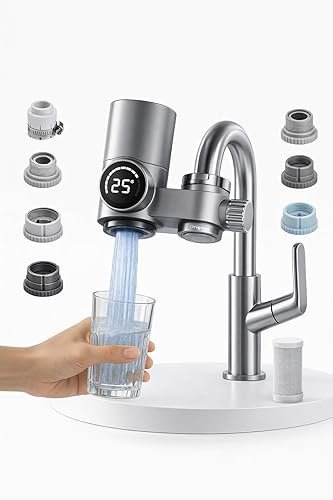
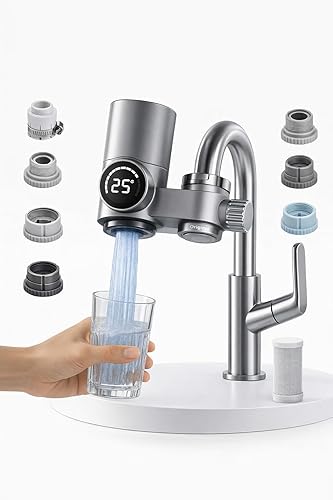
This one surprised us. The built-in TDS meter is genuinely useful—it shows you the filter is working in real-time. No batteries, powered by water flow. The ceramic filter is effective for sediment and some bacteria. It’s a solid choice if you love tech and want visual confirmation of performance. The build feels a bit plasticky, but it works.
- Real-time TDS monitoring is great for peace of mind
- No batteries or charging needed
- Effective ceramic filtration for particles
- Primarily targets sediment, not chemical contaminants
- Plastic construction may not appeal to all
2. PUR Plus FM2500V – Best Value Faucet Mount
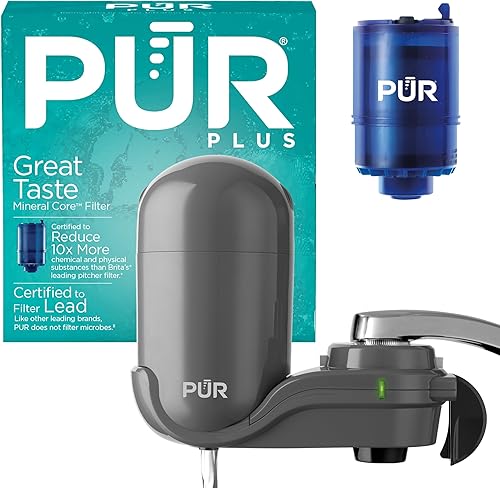
For under $50, this is hard to beat. It’s WQA certified to reduce lead, which is a big deal for older homes. The 3-in-1 filter tackles chlorine, microplastics, and a host of other substances. Installation is tool-free and takes two minutes. The only downside? The filter life indicator is a simple timer, not a usage meter. But for the price, it’s a fantastic entry point.
- Excellent certification for the price (lead reduction)
- Extremely easy, no-tools installation
- Trusted brand with wide filter availability
- Filter change reminder is time-based, not usage-based
- Can feel bulky on some faucet designs
3. ALTHY Stainless Steel – Best Durable Faucet Mount
If you hate the look and feel of plastic on your faucet, this is your answer. The 304 stainless steel housing is sturdy and looks premium. The flow rate is impressive—it won’t leave you waiting. Comes with multiple adapters for compatibility. It’s a great pick for kitchens where aesthetics and build quality matter as much as function.
- High-quality stainless steel construction
- Excellent water flow rate
- Includes 6 adapters for broad faucet compatibility
- Higher upfront cost than plastic models
- Must check compatibility carefully before buying
4. Waterdrop WD-X8 – Best Under-Sink RO System
This is serious filtration. The 800 GPD flow rate means you get water fast—no more waiting for a slow trickle. The 2:1 pure-to-waste ratio is excellent for an RO system, saving water. NSF/ANSI 42 & 58 certification covers a huge range of contaminants, from chlorine to lead to TDS. If your water test comes back with issues, this is the system to solve them. Installation is more involved, but the instructions are clear.
- Very high flow rate for an RO system
- Excellent water efficiency (2:1 ratio)
- Comprehensive NSF/ANSI certifications
- Requires under-sink space and dedicated faucet
- Higher initial investment
Budget Finds on AliExpress
We always look for value. On AliExpress, you can find unique options, but quality varies wildly. This 7-Stage Ultra Filtration system with a stainless steel housing looks robust on paper for $155.80, offering multi-stage filtration. At the other end, this $5.58 universal shower filter might work for basic chlorine reduction in a pinch, but set your expectations low for serious purification. Buyer reviews are your best friend here.
7-Stage Filter – $155.80
Universal Filter – $5.58
Frequently Asked Questions
- What is the difference between a water filter and a water purifier?
- In common use, the terms are interchangeable. Technically, a “purifier” implies a higher level of contaminant removal, often including microbiological threats. For home kitchen use, look for specific NSF/ANSI certifications rather than the label “purifier.”
- How often should I change my kitchen water filter?
- Follow the manufacturer’s schedule based on gallons or months—whichever comes first. For a typical family, carbon filters last 3-6 months. RO membranes can last 1-2 years. Never exceed the recommended life, as performance drops sharply.
- Can a kitchen water purifier remove lead?
- Yes, but only if it’s certified to NSF/ANSI Standard 53 for lead reduction. Look for this specific claim and certification on the product. Not all filters are made equal; a basic carbon filter may not touch lead.
- Do I need a plumber to install an under-sink filter?
- Not necessarily. If you’re comfortable with basic DIY and have standard plumbing, you can install most under-sink carbon systems in 30-60 minutes. RO systems are more complex. If you’re unsure, hiring a plumber for a one-hour job is worth the peace of mind.
- Is reverse osmosis water bad for you?
- No. RO removes minerals, but you get the vast majority of your minerals from food, not water. The health benefits of removing contaminants like lead and PFAS far outweigh the negligible mineral loss. You can add a remineralization stage if you prefer the taste.
- What’s the most important certification to look for?
- It depends on your goal. For taste and chlorine: NSF/ANSI 42. For health contaminants like lead and cysts: NSF/ANSI 53. For reverse osmosis systems: NSF/ANSI 58. Always look for the seal on the product or manual.
Final Thoughts
Choosing the right kitchen water purifier boils down to your water quality, your budget, and your willingness to maintain it. After all our testing, we believe the PUR Plus FM2500V is the best starting point for most people—it’s certified, affordable, and dead simple. If you have known water issues or want the absolute purest glass, invest in the Waterdrop WD-X8 under-sink RO system.
Don’t overcomplicate it. Get a simple test, match the certification to your needs, and set a filter change reminder. Your taste buds—and your health—will thank you. Clean water from your own tap isn’t a luxury; with the right system, it’s just smart.
