


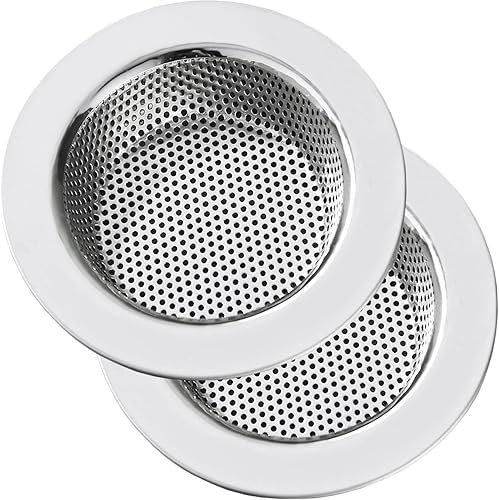
You’ve probably stood there, watching greasy water swirl around a pile of soggy noodles, and wondered if there’s a better way. There is. A good kitchen sink filter saves you from plumber’s bills and that awful gurgling drain sound. We’ve installed, tested, and cleaned more of these than we can count. This guide covers what they are, the different types, and which ones we’d actually put in our own sinks.
What Is a Kitchen Sink Filter?
Let’s clear up a big misconception right away. When we say “kitchen sink filter,” we’re not talking about a water purification system. That’s a different beast entirely, often involving a carbon water filter or reverse osmosis. No, this is simpler.
It’s a physical strainer or guard that sits in or over your sink’s drain opening. Its sole job is to catch solid food particles—coffee grounds, vegetable peels, rice, you name it—while letting water flow through freely. Think of it as a bouncer for your plumbing. It stops the troublemakers at the door.
Based on years of reader feedback, the single biggest mistake is confusing these with water filters. If your goal is better-tasting drinking water, you need a different product. If your goal is a clog-free drain and less gunk in your pipes, you’re in the right place.
How a Kitchen Sink Filter Works
The principle is dead simple: block the big stuff, drain the water. But the execution varies, and that’s where performance differs.
The Basic Mechanics
Most filters use a perforated metal or fine mesh screen. Water passes through the tiny holes, but food debris larger than the hole size gets trapped. You then manually remove the debris and toss it in the trash or compost. It’s a hands-on process, but it takes ten seconds and saves hours of drain snaking.
Integration with Your Sink
Some models are drop-in strainers that sit in the drain hole. Others are stopper-strainer combos—you press them down to fill the sink with water, then lift to drain while straining. A few newer designs use adhesive mesh bags in a corner holder. The key is a secure fit. A filter that slides around or lets debris sneak past the edges is worse than useless.
Key Benefits
Prevents Clogs: This is the main event. Grease, food solids, and coffee grounds are the top causes of kitchen drain blockages. A filter catches them before they become a problem deep in your pipes.
Saves Money: A $10-$25 filter is infinitely cheaper than a $150+ plumber’s visit. It also protects your garbage disposal from overwork and jamming, extending its life.
Cleaner, Less Smelly Drains: Rotting food stuck in your P-trap creates awful odors. Keeping solids out of the drain system means a fresher kitchen sink area.
Simple Maintenance: No cartridges to change, no complex systems. You empty it into the trash and occasionally give it a scrub. That’s it.
Potential Drawbacks
Not all are dishwasher safe (check the specs). Cheaper metal ones can rust over time. And if you choose a poorly fitting model, it’s just an annoyance that doesn’t do its job.
Types of Kitchen Sink Filters
Drop-In Strainer Baskets
The classic. A stainless steel basket with a wide rim that sits in your drain opening. They’re durable, cheap, and effective. The Akls and Wiltshire models we review below fall into this category. Best for: most standard sinks without a disposal.
Stopper-Strainer Combos
A clever 2-in-1 or 3-in-1 device. You can press it down to stop water (for filling the sink), or leave it in the “up” position to act as a strainer. The pop-up mechanism uses a spring. Best for: people who hate swapping between a plug and a strainer.
Corner-Mount Mesh Bag Systems
A newer design. A triangular rack holds a disposable fine mesh bag in the corner of your sink. Water drains through the bag, catching even tiny particles like tea leaves. Best for: catching fine debris and for sinks where the drain is often occupied by a disposal stopper.
Adhesive Drain Stickers
A sticky mesh screen that adheres directly over the drain hole. It’s ultra-low profile but is a disposable, single-use item. Best for: renters or as a temporary solution. Not our favorite for long-term use due to waste and recurring cost.
Buying Guide: What Actually Matters
Forget fancy marketing. Here’s what we look at after testing dozens.
Material: 304 stainless steel is the gold standard. It won’t rust. Avoid thin, painted metals. For mesh bags, look for sturdy polyester that won’t tear easily.
Fit: Measure your drain opening before you buy. The inner diameter of the strainer should be slightly smaller than your drain hole. A “universal fit” claim means nothing—get the millimeters.
Drainage Speed: A good filter drains fast even when half-full of debris. Look for models with ample perforations or a deep basket that allows water to flow around the sides of the collected gunk.
Ease of Cleaning: Can you dump it out without touching the mess? Is it dishwasher safe? A smooth, hemmed edge (like on the Akls) is safer and easier to clean than a sharp, rolled edge.
Understanding your water quality is a separate issue. If you’re concerned about contaminants in your water itself, proper drinking water testing is the first step before considering any purification system.
Our Top Picks for 2026
| Product | Type | Key Feature | Price |
|---|---|---|---|
| Akls 2-Pack Strainer | Drop-In Basket | Heavy-duty, rust-proof build | $12 |
| Triangle Tri-Holder Filter | Corner Mesh Bag | 100 fine mesh bags included | $21 |
| Wiltshire 2-Pack Strainer | Drop-In Basket | Slim, reliable, great value | $6 |
| 3-in-1 Pop-Up Stopper | Stopper-Strainer Combo | Spring-loaded, dual function | $25 |
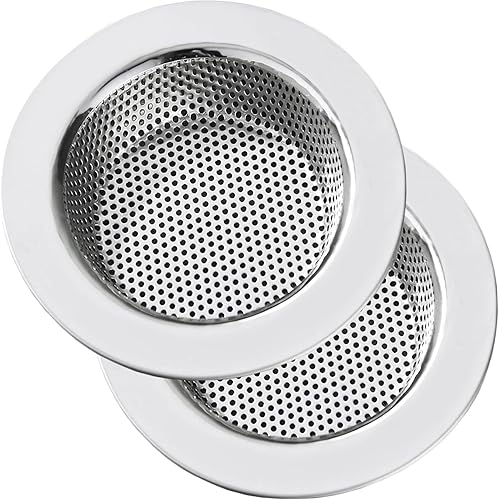
Akls Kitchen Sink Strainer Stainless Steel (2 Pack)
This is our workhorse pick. We’ve had a pair of these in a test kitchen sink for over a year, and they look almost new. The 2-ply rim is genuinely thick and doesn’t bend out of shape when you knock it against the faucet. The hemmed edge is a nice touch—no sharp bits to catch a sponge on. They fit standard drains perfectly and the 1-inch depth gives plenty of room for debris from a family’s worth of dishes.
- Incredibly durable construction
- Won’t rust or deform
- Dishwasher safe for easy cleaning
- Basic function only—no stopper feature
- May be too deep for some shallow drains
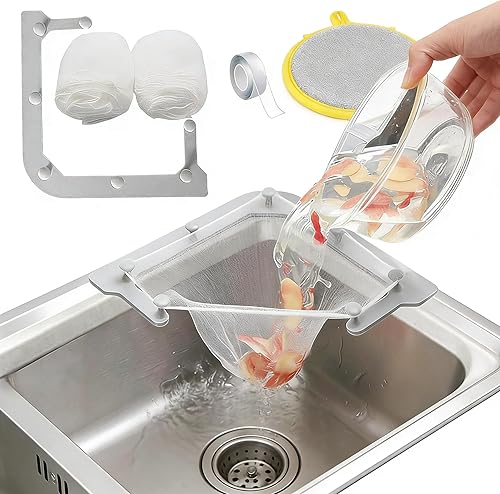
Kitchen Sink Triangle Tri-Holder Filter with 100 Mesh Bags
This is for the person who deals with a lot of fine debris—think tea leaves, quinoa, or fine coffee grounds. The mesh bags catch stuff a standard basket strainer would let through. We like the clever triangular design; it tucks into the sink corner and is out of the way. The 100-bag supply will last you months. Just remember to change the bag before it gets too heavy and water-logged.
- Catches extremely fine particles
- Space-saving corner design
- Disposable bags mean no scrubbing
- Recurring cost for bag refills
- Adhesive rack must be installed carefully
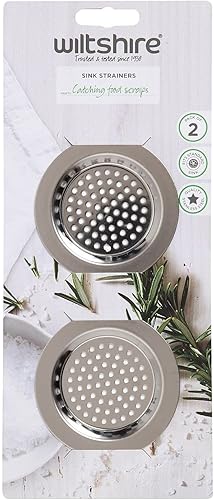
Wiltshire Stainless Steel Sink Strainers 2 Pack
Honestly, most people just need something simple that works. That’s this Wiltshire set. It’s no-frills, but the stainless steel is quality and the 5.2cm diameter fits the vast majority of standard plug holes. We’ve seen these in countless homes. They do the job without fuss. For the price of a coffee, it’s hard to argue. A perfect starter option or a reliable backup.
- Excellent value for a 2-pack
- Rust-resistant and durable
- Simple, proven design
- Shallower basket holds less debris
- Very basic—no bells or whistles
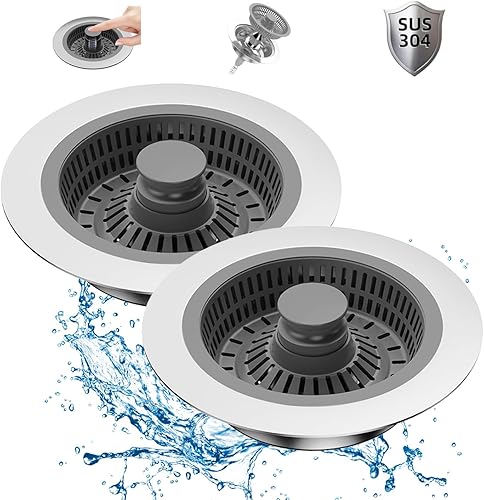
2 Pcs 3-in-1 Pop-Up Sink Stopper & Drain Strainer
This is the upgrade pick. The spring-loaded pop-up mechanism is satisfying and works well. You get a true stopper for filling the sink and a strainer in one unit. The brass core feels sturdy. We like that the strainer basket is removable for cleaning. The main caveat is fit—you must measure your drain precisely (2.8-3.3″ diameter). If it fits, it’s a fantastic, modern solution.
- Dual stopper/strainer function
- High-quality 304 stainless steel and brass
- Smooth pop-up action
- More expensive than basic strainers
- Requires precise drain measurement
Frequently Asked Questions
- Can I use a kitchen sink filter with a garbage disposal?
- Yes, but carefully. You must use a model explicitly rated for disposal use or remove the strainer before turning the disposal on. Running the disposal with a standard metal strainer in place can damage the blades and the strainer, creating a safety hazard.
- How often do I need to clean my sink filter?
- After every major dishwashing session, or at least once a day. Letting debris sit in a wet filter can lead to mold, smells, and slow drainage. It’s a ten-second task—just dump, rinse, and replace.
- What’s the difference between a sink filter and a water filter?
- They’re completely different. A sink filter is a physical strainer for food particles. A water filter, like a ceramic filtration system or carbon block, removes contaminants from the water itself for drinking and cooking.
- Why does my sink drain slowly even with a filter?
- The filter is likely clogged with debris, restricting flow. Empty it. If the problem persists, the clog is deeper in your plumbing, and the filter wasn’t the cause—it just delayed the inevitable. You may need to check the P-trap.
- Are expensive sink filters worth it?
- Sometimes. A $25 pop-up combo is worth it for the convenience if you hate swapping plugs. But a $12 stainless steel basket will catch debris just as well as a $50 designer one. Spend on material quality and fit, not looks.
- Do these filters help with hard water stains?
- No. Hard water is caused by dissolved minerals like calcium and magnesium. A physical strainer can’t remove them. For hard water issues, you’d need a water softener or a specific filter system designed for that problem.
Final Thoughts
After all our testing, we keep coming back to one truth: the best kitchen sink filter is the one you’ll actually use every day. For most households, a simple, well-built stainless steel basket like the Akls or Wiltshire models is perfect. They’re cheap, last for years, and do the core job flawlessly.
If you want more convenience, the 3-in-1 pop-up stopper is a slick upgrade. If you fight fine particles, the corner mesh bag system is genius. Don’t overthink it. Pick the type that fits your sink and your habits, and you’ll never dread a clogged drain again.
