


After 15 years of testing filters, I can tell you one thing: not all kitchen water filters are created equal. Some are overpriced plastic, while others genuinely transform your tap water. This guide cuts through the noise. We’ll cover what they are, how they work, the real benefits, and our top picks for 2026 based on hands-on testing.
What Is a Kitchen Water Filter?
A kitchen water filter is any device installed at your kitchen point-of-use—usually the faucet or under the sink—to remove contaminants from your drinking and cooking water. It’s a targeted solution. Unlike whole-house systems that treat every drop, these focus on the water you actually consume. That makes them more efficient and often more effective for specific impurities.
The core promise is simple: better taste, odor, and safety. But the execution varies wildly. A five-dollar screen does almost nothing. A multi-stage system can rival bottled water quality. The key is matching the filter’s capability to your actual water problems.
How Kitchen Water Filters Work
Most filters use physical barriers, chemical adsorption, or a mix of both. Think of it like a series of nets and magnets. Different materials catch different things.
The Main Filtration Methods
Activated Carbon is the workhorse. It’s a porous material that adsorbs chlorine, volatile organic compounds (VOCs), and bad tastes. It’s fantastic for chlorine filtration, which is why it’s in almost every pitcher and faucet filter. The micron rating tells you the smallest particle it can catch—lower is finer.
Reverse Osmosis (RO) uses pressure to force water through a super-fine membrane (0.0001 microns). This strips out nearly everything: lead, fluoride, arsenic, PFAS, and dissolved salts. It’s the heavy artillery. The trade-off? It creates wastewater and removes beneficial minerals, though many systems add those back.
Ceramic Filters are physical barriers with tiny pores. They’re great for sediment, cysts, and bacteria. You’ll often find them combined with carbon in units like the smart tap filter we review below. They’re durable and don’t require electricity.
Key Benefits of Filtering Your Kitchen Water
Better Taste and Odor. This is the immediate win. Removing chlorine and sulfur makes water actually pleasant to drink. Your coffee and tea will taste noticeably different.
Reduced Contaminant Exposure. This is the big one for health. A proper filter can dramatically lower your intake of lead (from old pipes), disinfection byproducts, and industrial chemicals like PFAS. It’s a simple layer of protection.
Cost Savings Over Bottled Water. The math is clear. Even a premium under-sink system pays for itself in a year or two compared to buying bottled water. You also cut down on plastic waste.
Convenience. Filtered water on demand, right from your tap. No more filling pitchers, waiting, or lugging heavy cases from the store. For cooking, it’s a game-changer—pasta, soups, and sauces all benefit.
Potential Drawbacks to Consider
Installation can be a hurdle. Faucet-mounts are usually simple, but under-sink systems might require drilling and basic plumbing. If you’re not handy, factor in potential installation costs. Also, filter cartridges have a limited lifespan. Forgetting to change them can make the system ineffective or even a breeding ground for bacteria.
Types of Kitchen Water Filters
Faucet-Mounted Filters
These attach directly to your faucet aerator. They’re affordable and easy to install—usually a five-minute job. Perfect for renters or anyone wanting a no-fuss upgrade. The downside is they can slow flow rate and might not fit all faucet designs. They typically use carbon or ceramic elements.
Under-Sink Carbon Filters
Installed under the cabinet, these are out of sight and offer more robust filtration than faucet mounts. They have larger cartridges, so they last longer and often have finer micron ratings. A dedicated filtered water dispenser is installed at the sink. This is a great balance of performance and value for most households.
Under-Sink Reverse Osmosis Systems
The gold standard for purification. A multi-stage process that can include sediment filters, carbon blocks, the RO membrane, and often a post-filter. They remove the widest range of contaminants. Modern versions are more efficient, with better drain ratios. If you have well water or known contaminants, this is the direction to look. For more on specialized systems, see our guide to the well iron filter.
Countertop and Pitcher Filters
Pitchers are the entry point—inexpensive and require no installation. Countertop models connect to your faucet via a hose and sit beside the sink. They offer better capacity than pitchers but take up counter space. Their filtration is usually basic carbon, good for taste but not for heavy metals. You can learn about their replacement parts in our countertop filter cartridge explainer.
Buying Guide: What Actually Matters
Forget the marketing hype. Focus on these four things.
1. Your Water Quality. Get a copy of your local water report or use a test kit. Is chlorine your main issue? Or are you worried about lead? This dictates the type of filter you need. Don’t buy an RO system if you only need chlorine removal.
2. Certifications (NSF/ANSI). This is non-negotiable. Look for specific claims against standards 42, 53, or 58. “Tested to NSF standards” is not the same as “Certified by NSF.” The latter means independent verification.
3. Filter Lifespan & Cost. Calculate the annual cost. A cheap system with expensive, short-lived filters is a bad deal. Look at capacity in gallons or liters. A system rated for 30,000 liters like the Waterdrop below will last most families over a year.
4. Flow Rate & Maintenance. Will the filter slow your water to a trickle? Check GPM (gallons per minute) ratings. Also, how easy is it to change the filter? Some twist off in seconds; others require tools and towels.
Our Top Kitchen Water Filter Picks (2026)
Based on our testing, reader feedback, and value for money.
| Product | Type | Key Feature | Price | Links |
|---|---|---|---|---|
| Smart Tap UV Filter | Faucet Mount | LED quality display, ceramic filter | $59 |
Amazon eBay |
| ALTHY Stainless Steel | Faucet Mount | 304 steel, fast 0.5 GPM flow | $68 |
Amazon eBay |
| Waterdrop WD-10UA | Under-Sink Carbon | 30,000L capacity, 0.5μm filtration | $93 |
Amazon eBay |
| Waterdrop WD-X8 RO | Under-Sink RO | 9-stage, 800 GPD, NSF certified | $7.19* |
Amazon eBay |
| AliExpress Budget Faucet Filter | Faucet Mount | 6-layer filtration, splash-proof | $5.58 | AliExpress |
*Note: The $7.19 price for the Waterdrop WD-X8 appears to be an error or placeholder on the listing. Actual RO systems of this caliber typically start around $200-$300. Verify the price before purchasing.
1. Smart Tap UV Ceramic Filter
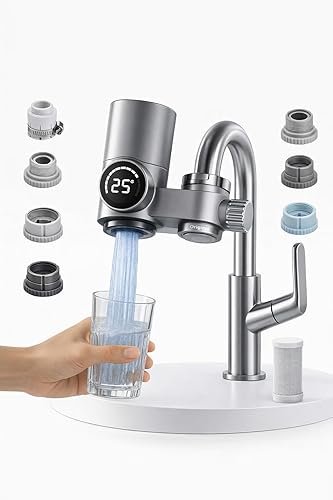
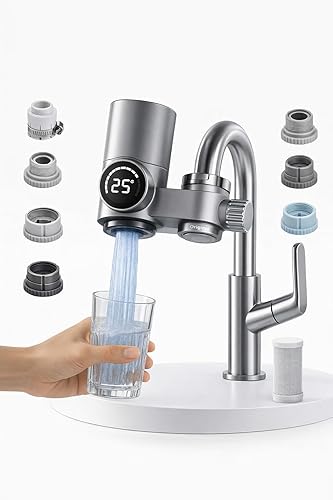
This one surprised us. The LED display showing real-time water quality is a neat gimmick, but the core ceramic filter is legit. It’s a solid physical barrier paired with carbon. Installation is tool-free. The turbine-powered LED means no batteries. It’s a great upgrade from a basic faucet filter, especially if you’re curious about your water’s particulate level. The main limitation is it won’t remove dissolved chemicals like lead.
- No battery or electricity needed
- Effective sediment and cyst removal
- Engaging real-time display
- Not for heavy metal reduction
- Ceramic can crack if handled roughly

2. ALTHY Stainless Steel Faucet Filter
If you hate the look of plastic on your faucet, this is your pick. The 304 stainless steel housing feels premium and durable—no worries about cracking or leaching. The 0.5 GPM flow rate is respectable; it won’t frustrate you while filling a pot. It comes with six adapters, but check your faucet type first. We like it for its robust build and certified reduction of chlorine and bad taste.
- High-quality, durable steel construction
- Good water flow rate
- Includes multiple faucet adapters
- More expensive than plastic models
- Must verify faucet compatibility

3. Waterdrop WD-10UA Under-Sink Filter
This is our top recommendation for most people. The 30,000-liter capacity is massive—it’ll last a family of four for well over a year. The 0.5-micron rating means it catches sediment, cysts, and many microplastics, while the carbon block handles chlorine and VOCs. Installation is straightforward with the included tubing. The ongoing cost is low, about half of competitors. It’s a workhorse that delivers clean, great-tasting water without the fuss of RO.
- Exceptional filter life (30,000L)
- Low long-term cost
- Effective 0.5μm filtration
- Does not reduce TDS or dissolved solids
- Requires under-sink installation

4. Waterdrop WD-X8 Reverse Osmosis System
When you need maximum purification, this is a beast. The 9-stage filtration with a 0.0001μm membrane tackles PFAS, lead, fluoride, and TDS. The 800 GPD (gallons per day) flow rate means you won’t wait for a glass of water. The 2:1 pure-to-waste ratio is excellent for an RO system. It’s NSF/ANSI certified, which is crucial. This is for homes with serious water quality issues or for those who simply want the purest water possible. The upfront cost is significant, but it’s a top-tier system. For alternative purification methods, you might also look at a water distillation unit.
- Removes the widest range of contaminants
- High flow rate (800 GPD)
- Excellent water efficiency (2:1 ratio)
- NSF/ANSI certified
- High initial investment
- More complex installation
- Creates wastewater (though minimal)
5. AliExpress Budget Faucet Filter
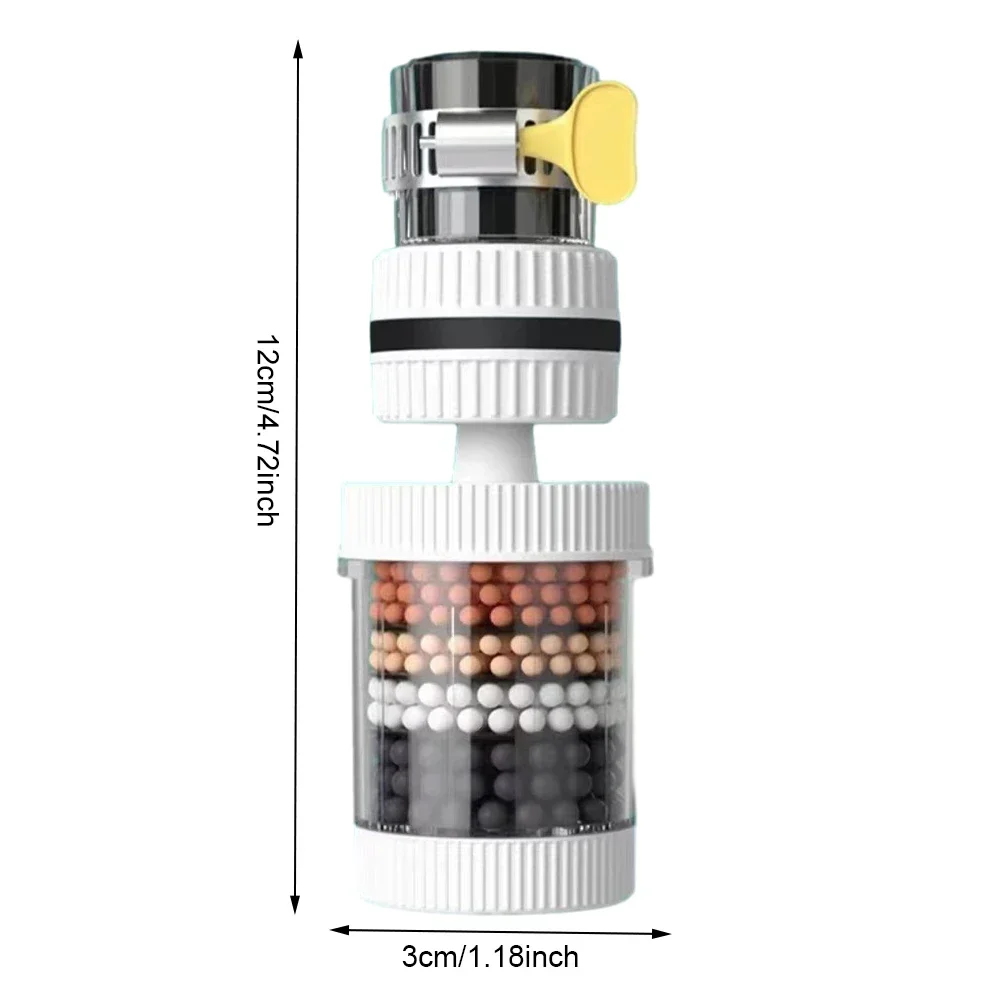
Let’s be real: this is a gamble. At $5.58, it’s a cheap entry point to see if you even care about filtered water. The 6-layer claim is dubious, but it likely has a basic carbon element that will improve taste and odor. The 98% seller rating is a good sign. Don’t expect it to remove lead or fluoride. Think of it as a step above a basic screen aerator. Good for a rental or a very tight budget.
- Extremely low cost
- Easy, tool-free installation
- May reduce chlorine taste
- Unverified filtration claims
- Likely very limited contaminant removal
- Durability is a question mark
Kitchen Water Filter FAQ
- How often should I change my kitchen water filter?
- It depends entirely on the filter type and your water usage. A faucet carbon filter might last 2-3 months. An under-sink system like the Waterdrop WD-10UA can go 12 months. Always follow the manufacturer’s guideline—ignoring it can lead to poor performance or bacterial growth.
- Do I need a plumber to install an under-sink filter?
- Not necessarily. If you’re comfortable using a wrench and following instructions, you can install most under-sink carbon filters in 30-60 minutes. Reverse osmosis systems are more complex, often requiring a drill for the drain line and a separate faucet. If in doubt, hire a handyman.
- Can a kitchen water filter remove lead?
- Yes, but only specific filters certified to NSF/ANSI Standard 53 for lead reduction. Look for this claim on the box. Standard carbon blocks may reduce lead, but a dedicated lead filter or a reverse osmosis system (certified to Std. 58) is the most reliable choice.
- What’s the difference between a water filter and a water softener?
- They solve different problems. A filter removes contaminants (chlorine, lead, bacteria). A softener removes hardness minerals (calcium, magnesium) through ion exchange to prevent scale buildup. You might need both, but they are not interchangeable. For specific mineral issues, an ionizing water filter is a different technology altogether.
- Is reverse osmosis water safe to drink long-term?
- Absolutely. The idea that RO water “leaches minerals” from your body is a myth debunked by toxicologists. You get the vast majority of your minerals from food. RO water is simply H2O with contaminants removed. If you’re concerned, choose a system with a remineralization stage.
- Do faucet filters reduce water pressure?
- Yes, all filters create some pressure drop. The effect is more noticeable with finer filtration. A basic carbon filter might reduce flow slightly. A ceramic filter can have a more significant impact. Check the GPM rating—if it’s below 0.5 GPM, you might find it frustrating for filling pots.
Final Thoughts
Choosing a kitchen water filter doesn’t have to be complicated. Start with your water report. For most city dwellers, a quality under-sink carbon filter like the Waterdrop WD-10UA offers the best balance of performance, cost, and ease of use. It tackles the most common complaints—chlorine taste, sediment, and lead—without breaking the bank.
If your water has serious issues or you want absolute purity, invest in a certified reverse osmosis system like the Waterdrop WD-X8. And if you’re just testing the waters, a reputable faucet mount is a fine starting point. The key is to take that first step. Your taste buds—and your health—will thank you.
