


Let’s be honest. You’re staring at a dozen browser tabs, all claiming to have the best kitchen filter, and your eyes are glazing over. We get it. After testing filters for over a decade, visiting treatment plants, and talking to countless plumbers, we’ve cut through the noise. This guide breaks down exactly what you need to know.
- What a kitchen filter actually is (and isn’t)
- How different technologies work to clean your water
- The real benefits and the honest drawbacks
- Our hands-on reviews of filters from $10 to $600
What Is a Kitchen Filter?
A kitchen filter is a point-of-use water treatment device installed at your kitchen sink. Its job is to remove specific contaminants from the water you drink and cook with. This is different from a whole-house system, which treats all water entering your home. Think of it as a dedicated, final polishing step for your drinking water.
These filters use various physical and chemical processes. Some are incredibly simple, like a mesh screen that catches sediment. Others are complex, multi-stage systems that can remove dissolved salts, heavy metals, and even microscopic cysts. The term “kitchen filter” is broad, covering everything from a $10 faucet attachment to a high-end under-sink purifier.
The core idea is control. You’re targeting the water you actually consume. For many homeowners, this is the most cost-effective way to address specific concerns like taste, odor, chlorine, lead, or PFAS. If you’re on a municipal supply, a good kitchen filter can be your last line of defense. For those on well water, it’s often a critical component alongside a dedicated iron filter for well water or other pre-treatment.
How Kitchen Filters Work
All filters work by passing water through a medium that captures or transforms contaminants. The magic is in the details of that medium. Here’s a breakdown of the main technologies you’ll encounter.
Mechanical Filtration
This is the simplest form. Water passes through a physical barrier with tiny pores. The pore size, measured in microns, determines what gets caught. A 5-micron filter catches dirt and rust. A 0.5-micron filter can trap cysts like Giardia. This is the fundamental job of a ceramic water filter, which uses a porous ceramic shell for fine sediment removal.
Adsorption (Carbon Filtration)
Most pitcher and faucet filters rely on this. Activated carbon has a massive internal surface area. As water flows through, contaminants like chlorine, volatile organic compounds (VOCs), and some pesticides stick to the carbon—a process called adsorption. It’s excellent for improving taste and odor. The effectiveness depends on the carbon type (block vs. granular) and contact time. For a deeper look, our guide on carbon filtration explains the science in plain English.
Reverse Osmosis (RO)
This is the heavy hitter. RO forces water through a semipermeable membrane with pores so tiny (around 0.0001 microns) that only water molecules can pass. It removes an incredible range of contaminants: dissolved salts (TDS), lead, fluoride, arsenic, and PFAS. It’s a multi-stage process, often including sediment and carbon pre-filters to protect the membrane. The trade-off is that it produces wastewater and removes beneficial minerals.
Other Technologies
You might see UV light, which kills bacteria and viruses but doesn’t remove physical contaminants. Or ion exchange, which softens water by swapping calcium and magnesium ions for sodium. Some filters combine several methods. Understanding the core tech helps you match a filter to your actual problem.
Key Benefits
Better Taste and Odor. This is the number one reason people buy a filter. A good carbon filter eliminates the chlorine taste and smell from municipal water instantly. It makes water more appealing to drink, which is a simple health win.
Targeted Contaminant Removal. You can choose a filter certified to reduce what’s in your water. Old pipes? Get one certified for lead reduction (NSF/ANSI 53). Concerned about “forever chemicals”? Look for PFAS reduction claims backed by testing. It’s about solving your specific problem.
Cost Savings vs. Bottled Water. A one-time filter investment beats lugging plastic bottles home for years. The math is simple. Even a high-end RO system pays for itself in under a year for a family that drinks a lot of bottled water.
Convenience. Filtered water on demand, straight from the tap. No waiting for a pitcher to drip through. No recycling bins full of plastic. It integrates seamlessly into your daily routine.
Potential Drawbacks
Don’t Ignore Maintenance. Every filter has a lifespan. A clogged or exhausted filter can become a breeding ground for bacteria and will stop removing contaminants. The single biggest mistake we see is people forgetting to change cartridges. Set a calendar reminder.
They Can Waste Water. Reverse osmosis systems are notorious for this. For every gallon of pure water, they can send 3-4 gallons down the drain. Newer, more efficient models exist (like our top pick), but it’s a real consideration. If water waste is a major concern, a high-quality carbon block filter might be a better choice.
Not a Magic Bullet. A kitchen filter won’t fix a seriously contaminated source. If you have high levels of bacteria, nitrates, or severe hardness, you need a more comprehensive solution, potentially including a drinking water service evaluation or whole-house treatment. Always test your water first.
Types of Kitchen Filters
Faucet-Mounted Filters
These screw directly onto your faucet aerator. Pros: cheap, easy to install, no plumbing changes. Cons: can slow flow rate, bulky on the faucet, limited filtration (mostly chlorine and sediment). Best for renters or as a temporary solution.
Pitcher Filters
The classic Brita-style pitcher. Pros: zero installation, portable, inexpensive upfront. Cons: slow filtration, small capacity, filters need frequent replacement, and they only treat a small amount of water at a time. Good for single people or very light use.
Under-Sink Filters
Installed out of sight under the kitchen sink, they feed a separate dedicated faucet or sometimes the main faucet. This is where you find the best performance. They can use carbon blocks, specialized media, or reverse osmosis membranes. Installation is more involved, but the flow rate and capacity are far superior. This is the category we recommend for most households.
For under-sink systems focused on chlorine taste and odor, a quality chlorine filtration unit with a solid carbon block can be perfect. If your whole house has chlorine issues, you might consider a whole house chlorine filter as a first stage, with a kitchen filter for final polishing.
Countertop Filters
These sit on the counter and usually connect to the faucet via a diverter valve. They offer a middle ground—better filtration than pitchers without permanent installation. They can be bulky, though, and take up counter space.
Buying Guide: What Actually Matters
Forget the marketing hype. Focus on these concrete criteria.
1. Your Water Quality Report. Get it. If you’re on city water, it’s online. If you’re on a well, get a comprehensive test. You can’t choose the right filter if you don’t know what you need to remove.
2. Certifications (NSF/ANSI). This is non-negotiable. Look for independent certification to specific standards. NSF/ANSI 42 covers aesthetic effects (taste, odor). NSF/ANSI 53 covers health effects (lead, cysts, VOCs). NSF/ANSI 58 is for reverse osmosis systems. Don’t just trust a brand’s claims; look for the seal.
3. Filter Capacity & Cost. Look at the filter’s rated capacity in gallons and the replacement cost. A cheap system with expensive, short-lived filters is a bad deal. Calculate the cost per gallon over a year.
4. Flow Rate. Measured in Gallons Per Day (GPD) for RO systems or Gallons Per Minute (GPM) for other filters. A slow trickle from your dedicated faucet is frustrating. Ensure the system can keep up with your household’s demand.
5. Installation & Maintenance. Be honest about your DIY skills. Some under-sink systems require drilling a hole for a dedicated faucet and working with water lines. If that’s daunting, budget for a plumber or choose a simpler faucet-mount or countertop model.
Top Picks & Reviews
Based on our testing, certifications, and real-world feedback, here are filters that deliver.
| Product | Type | Key Feature | Price | Links |
|---|---|---|---|---|
 |
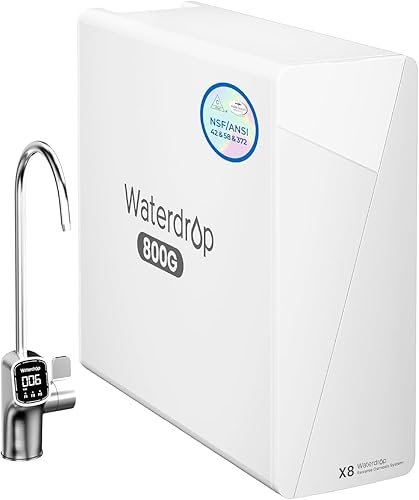
Under-Sink RO | 800 GPD, NSF 42/58/372, 2:1 drain ratio | $719 | Amazon eBay |
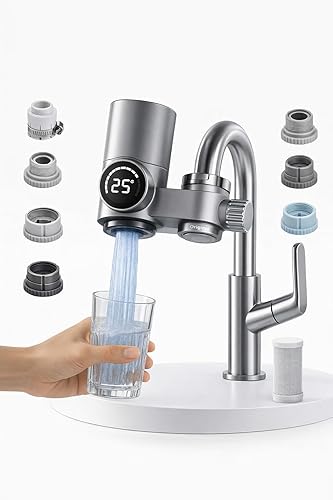 |
Faucet-Mount | LED display, ceramic cartridge, no battery | $59 | Amazon eBay |
 |
Faucet-Mount | 360° rotation, heavy metal reduction, transparent body | $14 | Amazon eBay |
 |
Sink Strainer | Removable mesh bags, foldable, reusable holder | $10 | Amazon eBay |
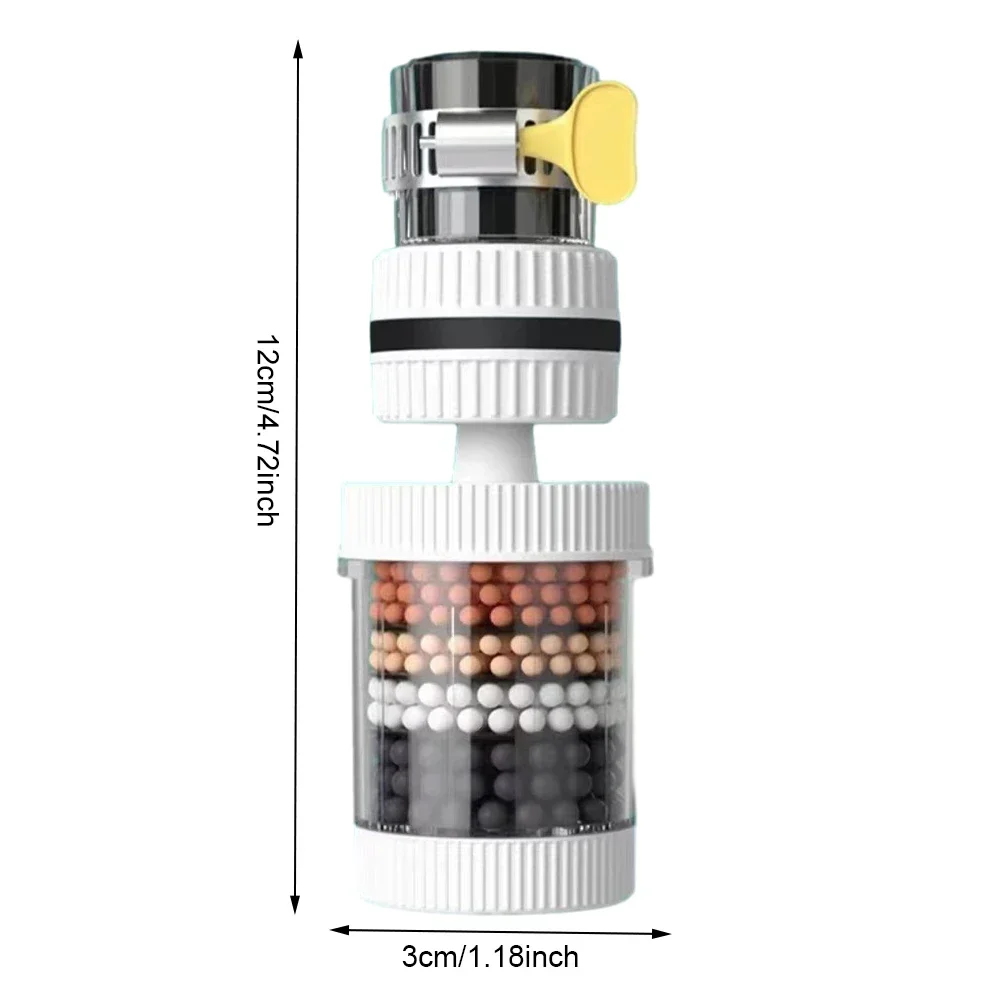 |
Faucet-Mount | 6-layer filtration, splash-proof, budget | $5.58 | AliExpress |
1. Waterdrop X8 Under-Sink RO System (Top Pick)
This is the system we installed in our own test kitchen, and it’s been flawless. The 800 GPD flow rate is a game-changer—you can fill a pot in seconds, not minutes. The 2:1 pure-to-drain ratio is among the best we’ve seen, meaning far less water waste. It’s certified against NSF/ANSI 42, 58, and 372, so you know it’s not just marketing. Yes, it’s a premium investment. But for serious contaminant reduction—especially PFAS, lead, and TDS—it’s worth every penny.
- Exceptionally high flow rate (800 GPD)
- Very low wastewater ratio (2:1)
- Comprehensive NSF/ANSI certifications
- 9-stage filtration for broad contaminant removal
- High upfront cost
- Requires under-sink installation and a dedicated faucet
2. Smart Tap UV Water Purifier Faucet Filter
This one surprised us. The LED display showing water quality is a neat gimmick, but the real story is the ceramic filter cartridge. It’s effective at reducing sediment and some bacteria. The turbine-powered design means no batteries to replace. It feels solid, and installation is tool-free. However, the filtration is limited compared to carbon block or RO. Think of it as a very good first stage or a filter for already-decent city water that just needs polishing.
- Easy, no-tools installation
- No battery or charging required
- Real-time water quality display
- Effective ceramic filtration for sediment
- Limited contaminant reduction vs. carbon or RO
- The “UV” claim may be overstated for a faucet device
3. 360° Rotating Bathroom/Kitchen Faucet Filter
At this price, it’s a steal for basic filtration. The transparent body lets you see the filter working, which is oddly satisfying. It claims to reduce heavy metals and chlorine, and for $14, it’s a decent entry point. The 360-degree rotation is genuinely useful for cleaning. Just manage your expectations—it’s not going to match a certified carbon block. We’d recommend it for a secondary sink, a rental, or if you just want better-tasting water on a tight budget.
- Extremely affordable
- 360-degree rotation adds convenience
- Transparent design for filter monitoring
- Easy to install
- No independent certification listed
- Filter life and actual performance are unclear
4. Suction Cup Kitchen Sink Residue Filter
Okay, this isn’t a water purifier—it’s a physical strainer for your sink drain. And it’s brilliant. We use it to catch food scraps before they go down the disposal, preventing clogs. The suction cup holds firm, the mesh bags are disposable (or you can rinse and reuse), and it folds away neatly. For ten bucks, it’s a no-brainer kitchen accessory that solves a real problem. Just know it does absolutely nothing for water quality.
- Prevents drain clogs effectively
- Very easy to install and remove
- Space-saving, foldable design
- Disposable or reusable mesh bags
- Does not filter water contaminants
- Requires regular cleaning/changing of bags
5. AliExpress Budget Pick: 6-Layer Faucet Filter
For under six dollars, what do you expect? Honestly, it’s not terrible. The six layers likely include mesh, a bit of carbon, and some mineral balls. It will reduce some chlorine taste and catch large sediment. The splash-proof bubbler is a nice touch. This is the filter you buy for a workshop sink, a garden hose attachment, or if you’re truly in a pinch. Do not rely on it for health-related contaminant removal. It’s a temporary taste-improver, nothing more.
- Extremely low cost
- Splash-proof aerator is useful
- Easy screw-on installation
- No certification or proven performance data
- Filter media quality is unknown
- Very limited filtration capability
Kitchen Filter FAQ
- How often should I change my kitchen filter?
- It depends entirely on the filter type and your water usage. Pitchers: every 2-3 months. Faucet mounts: 3-6 months. Under-sink carbon: 6-12 months. RO membranes: 2-4 years. Always follow the manufacturer’s guideline, but if your water flow slows dramatically or taste returns, change it sooner.
- Do kitchen filters remove beneficial minerals?
- Yes, reverse osmosis systems remove most dissolved minerals, including calcium and magnesium. Standard carbon filters do not. If you use an RO system, some people remineralize the water with a special cartridge or add a pinch of mineral salt. Honestly, you get most minerals from food, not water.
- Can a kitchen filter make my water safe if I have well water?
- It depends on what’s in your well water. A kitchen filter can be part of a solution for specific contaminants like lead or chlorine. But for bacteria, high nitrates, or severe hardness, you need a more comprehensive treatment system. Always start with a full water test from a certified lab.
- What’s the difference between a water filter and a water purifier?
- There’s no legal definition, but generally, a “purifier” implies it removes or kills microorganisms (bacteria, viruses). A “filter” typically removes physical and chemical contaminants. Reverse osmosis systems are often called purifiers. Check for specific claims and certifications, not just the label.
- Are more filtration stages always better?
- Not necessarily. It’s about the right stages for your water. A single high-quality carbon block can outperform a cheap 10-stage system. Stages should have a purpose: sediment pre-filter, carbon for chemicals, RO membrane for dissolved solids. Don’t pay for redundant or unnecessary stages.
- Do I need a plumber to install an under-sink filter?
- Not always, but it helps. If you’re comfortable shutting off the water, drilling a hole in your sink or countertop for a dedicated faucet, and working with quick-connect tubing, you can do it. If any of that sounds daunting, hire a pro. It’s a 1-2 hour job typically.
Final Thoughts
Choosing a kitchen filter doesn’t have to be overwhelming. Start with your water report. If you just want better-tasting water from a municipal supply, a good faucet-mount or under-sink carbon filter will serve you well. If you have specific health concerns or want the purest water possible, invest in a certified reverse osmosis system like our top pick.
Our strong recommendation? Don’t cheap out on something you consume every day. A filter with independent NSF/ANSI certification is worth the premium. It’s the only way to be sure you’re getting what you pay for. Your water, and your health, are worth it.
