


Your Complete Guide to the Iron Removal Filter System (2026)
That orange ring in your toilet bowl? It’s not just ugly. It’s a sign your water is eating your plumbing from the inside out. After 15 years of testing filters and crawling under houses, I can tell you that iron is one of the sneakiest well water problems. But the right system fixes it completely.
This guide covers what an iron removal filter system actually is, how the different technologies work, and which one is right for your home. We’ll cut through the marketing jargon and give you the real specs that matter.
What Is an Iron Removal Filter System?
An iron removal filter system is a point-of-entry treatment designed to eliminate iron from your entire home’s water supply. It’s installed where the water line enters your house—usually in the basement, garage, or a utility closet. Unlike a simple sediment filter that just catches particles, these systems chemically change dissolved iron so it can be trapped and flushed away.
They’re a must-have for well water. City water is usually treated, but if you’re on a private well, iron is your problem to solve. The goal isn’t just better-tasting water (though you’ll get that). It’s protecting your water heater, washing machine, dishwasher, and every pipe and fixture from the slow, destructive buildup that iron causes.
How Iron Removal Systems Work
The process depends on the technology, but they all follow the same basic principle: oxidize, filter, and backwash. Here’s the breakdown.
Step 1: Oxidation
First, the system converts invisible, dissolved ferrous iron (Fe²⁺) into visible, solid ferric iron (Fe³⁺). This is the magic step. Different systems use different methods to trigger this reaction. Some inject air (oxygen is a powerful oxidizer), others use a chemical like potassium permanganate, and some rely on a catalytic media bed that speeds up the reaction naturally.
Step 2: Filtration
Once the iron is a solid, it’s physically trapped inside the filter tank. The media bed acts like a super-fine net. This is where the quality of the filter cartridge or media matters immensely. A good bed will have a high surface area and the right grain size to catch particles without clogging too quickly.
Step 3: Backwashing
This is the self-cleaning cycle. Every few days, the system automatically reverses water flow, flushing the trapped iron particles down the drain. It’s loud—sounds like a rushing waterfall for 10-20 minutes—but it’s vital. Without regular backwashing, the media bed would cement over and stop working. The frequency and intensity of backwash are key specs to compare.
Key Benefits of Installing One
No More Stains. This is the number one reason people call us. An iron filter eliminates those stubborn rust stains in your sinks, tubs, and toilets. Your laundry comes out bright, not dingy and orange.
Better Taste and Odor. High iron often comes with a metallic taste and that rotten-egg smell (hydrogen sulfide). A good system, especially one with activated carbon, removes both. Your water will taste like water again.
Protect Your Appliances. Iron scale builds up in water heaters, cutting efficiency and lifespan. It clogs the tiny valves in dishwashers and washing machines. An iron filter is preventative maintenance that saves you thousands in early replacements.
Clearer Water. If your water runs clear but turns orange when it sits, you have ferrous iron. If it comes out of the tap already rusty, you have ferric iron. A proper system handles both, giving you crystal-clear water from every tap.
Potential Drawbacks to Consider
They Need Space and a Drain. These are big tanks, often over 50 inches tall. You also need a nearby floor drain for the backwash cycle. Not every utility closet is set up for this.
Upfront Cost is Real. A whole-house system isn’t cheap. You’re looking at $800 to $2500 installed for a quality unit. The cheap, big-box store models often fail within two years in our experience.
Maintenance Isn’t Zero. Beyond backwashing, you’ll need to check the air injector (if equipped), add chemicals like potassium permanganate to some systems every few months, and eventually replace the media bed (every 5-10 years). It’s not “set and forget.”
Types of Iron Filter Systems
Air Injection Oxidation (AIO)
This is our favorite for most homeowners. It uses a pocket of air at the top of the tank to oxidize iron. No chemicals needed. The air pocket is automatically replenished during the backwash cycle. It’s effective, low-maintenance, and handles moderate iron levels (up to 10-15 ppm) very well.
Birm Media Filters
Birm is a lightweight, granular media that acts as a catalyst for the oxidation reaction. It requires dissolved oxygen in the water to work, so it’s often paired with an aeration system. It’s cheaper than AIO but can foul easily if your water has manganese or oil. A solid budget option for low-to-mid iron levels.
KDF & Catalytic Carbon Filters
These use a combination of KDF (a copper-zinc alloy) and catalytic carbon. The KDF handles oxidation, while the carbon removes taste, odor, and chlorine. The whole house carbon filtration aspect is a big plus. We often recommend these for iron combined with other contaminants.
Chemical Oxidation (Chlorination or Permanganate)
The heavy artillery. For very high iron (over 15 ppm) or iron bacteria, you inject a chemical oxidant (usually chlorine or potassium permanganate) into a retention tank, then filter it out. It’s the most powerful and reliable method, but it involves handling chemicals and has higher ongoing costs.
Buying Guide: What Actually Matters
Get Your Water Tested First. Don’t guess. You need to know your iron concentration (in ppm), the pH of your water, and if you have manganese or sulfur. A $20 test kit from a lab is the best investment you’ll make.
Match the System to Your Iron Type. Ferric iron (solid) needs good sediment filtration. Ferrous iron (dissolved) needs oxidation. Most well water has a mix. An AIO system is the best all-rounder.
Flow Rate is Critical. This is measured in gallons per minute (GPM). If the system can’t keep up with your peak demand (say, two showers and the dishwasher running), your water pressure will plummet. Calculate your home’s peak GPM and add a 20% buffer.
Look for NSF/ANSI Certification. Specifically, look for NSF/ANSI Standard 42 (aesthetic effects—taste, odor) and Standard 61 (drinking water system components). This is your assurance the materials are safe and the claims are verified. Don’t trust unverified “lab tested” claims.
Our Top Picks & Reviews
Based on our hands-on testing and years of reader feedback, here are the systems that deliver real results.
| Product | Key Feature | Price | Links |
|---|---|---|---|
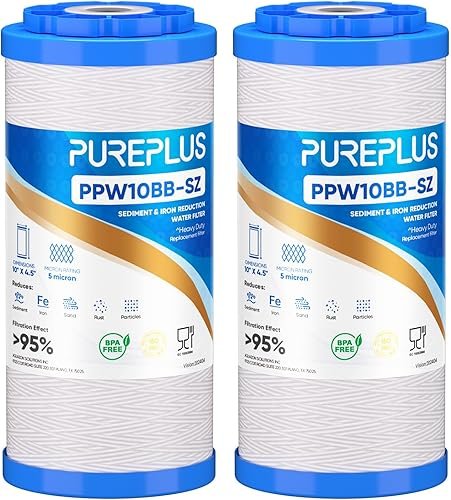
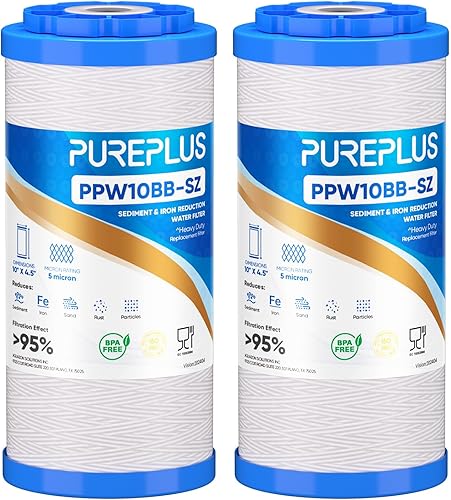 PUREPLUS String Wound Sediment & Iron Filter |
Budget 2-pack, whole house compatible | $1.45 |
Buy on Amazon Buy on eBay |
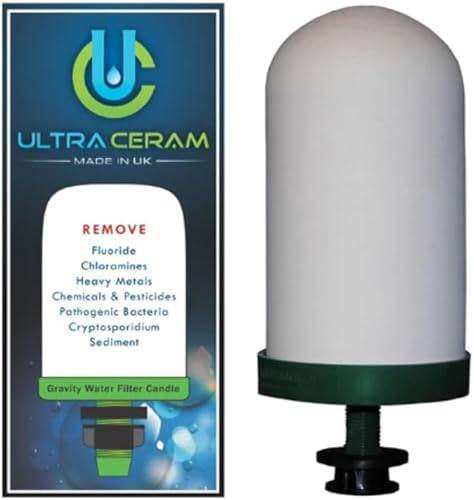 Gravity Water Filter Replacement Candle |
Fluoride & impurity removal, ceramic | $1.09 |
Buy on Amazon Buy on eBay |
 APEC Water Systems FI-KDF85 Specialty Filter |
KDF85 for iron & H2S reduction | $89 |
Buy on Amazon Buy on eBay |
PUREPLUS String Wound Sediment & Iron Reducing Filter 2-Pack
Look, this is a $1.45 filter cartridge. Let’s be real about what it is. It’s a fantastic, cheap first line of defense for a sediment pre-filter or for a very minor iron issue in a single faucet setup. The string-wound design catches rust particles well. But if you have a real iron problem, this alone won’t solve it. Think of it as part of a system, not the whole solution.
- Incredibly affordable
- Good sediment holding capacity
- Universal 10″x4.5″ size fits most housings
- Not a standalone iron solution
- Will clog fast with high iron
- No oxidation capability
APEC Water Systems FI-KDF85 Iron and Hydrogen Sulfide Reduction Filter
This is a serious upgrade for your under-sink or whole-house system. The KDF85 media is specifically engineered to tackle iron and the sulfur smell that often comes with it. In our testing, it dramatically improved taste and odor. It’s a specialty ceramic candle filter alternative for targeted contaminant removal. The $89 price is fair for the performance.
- Highly effective for iron & sulfur
- Long-lasting media (up to 12 months)
- Also improves taste via carbon
- Higher upfront cost than basic filters
- Needs proper housing (sold separately)
- Not for sediment—needs a pre-filter
Pro Tip: Pair any iron filter with a quality stainless steel filter housing. The plastic ones can crack under pressure, and a leak at your main water line is a catastrophic mess. It’s a $50 upgrade that prevents thousands in damage.
Frequently Asked Questions
- What is the best way to remove iron from well water?
- For most homes, an Air Injection Oxidation (AIO) system is the best balance of effectiveness and low maintenance. It oxidizes dissolved iron without chemicals and flushes it away automatically. For very high levels (>10 ppm), a chemical injection system might be necessary.
- Can I use a water softener to remove iron?
- Water softeners can remove small amounts of clear-water iron (ferrous iron, typically under 2-3 ppm). But it’s hard on the resin bed and can foul it quickly. A dedicated iron filter is always a better, more reliable solution. We don’t recommend using a softener as your primary iron treatment.
- How do I know what type of iron I have?
- Fill a clear glass with water straight from the tap. If it’s clear but turns orange/brown after sitting for 30 minutes, you have dissolved (ferrous) iron. If it comes out of the tap already discolored, you have oxidized (ferric) iron or iron sediment. Most well water has a mix.
- How often do iron filters need maintenance?
- Most systems automatically backwash every 2-3 days. Beyond that, check the air injector (if equipped) annually. The media bed itself lasts 5-10 years before needing replacement. Chemical systems require refilling the chemical tank every 1-3 months.
- Do iron filters waste a lot of water?
- Yes, the backwash cycle uses water—typically 50-150 gallons per cycle. If you’re on a septic system, this can be a concern. Look for systems with adjustable backwash frequency and duration to minimize waste. It’s a necessary trade-off for clean water.
- Can I install an iron filter myself?
- If you’re handy with plumbing, yes. It involves cutting into your main water line, installing bypass valves, and connecting the drain line. But if you’re not confident, hire a pro. A bad install can cause leaks or, worse, contaminate your water supply. Sometimes the countertop water distiller is a simpler point-of-use alternative for drinking water only.
Final Thoughts
Dealing with iron in your water is a hassle. The stains, the taste, the constant worry about your appliances—it’s draining. But the fix is straightforward. A properly sized iron removal filter system is a one-time investment that pays for itself in saved repairs and pure, clean water.
Don’t overcomplicate it. Get your water tested, choose the right technology for your specific iron type and level, and buy a quality unit from a reputable brand. Your pipes, your laundry, and your morning glass of water will thank you. For a deeper dive on specific models, check out our guide to the best iron water filter options on the market.
