


You’ve scrubbed the toilet bowl, but that orange, slimy ring is back in a week. Your water smells like rotten eggs, and your pipes are slowly clogging with a rust-colored sludge. Sound familiar? You’re likely dealing with iron bacteria, not just plain old iron. I’ve spent years testing filters on some of the worst well water out there, and fighting these microbes requires a specific strategy.
This guide covers what iron bacteria are, how filters defeat them, and which systems actually work. We’ll look at key benefits, honest drawbacks, different filter types, and a clear buying guide. I’ll also share my hands-on experience with a few top picks.
What Is an Iron Bacteria Filter?
An iron bacteria filter is a water treatment system designed to eliminate living microorganisms that feed on dissolved iron, manganese, and sometimes sulfur. These bacteria aren’t harmful to drink, but they create a nightmare for your plumbing. They form a thick, slimy biofilm that clogs pipes, well screens, and fixtures. That rusty, gelatinous gunk also stains laundry, sinks, and toilets.
Here’s the key difference: a standard iron removal system might use oxidation or softening to pull dissolved iron out of the water. But if the bacteria are present, they can quickly recolonize and coat the new filter media, ruining its efficiency. A dedicated iron bacteria filter goes after the source—the living organisms—often using a combination of oxidation and physical filtration to both kill and remove the biofilm they create.
How Iron Bacteria Filters Work
These systems don’t rely on a single trick. They combine methods to first kill the bacteria and then flush out the resulting mess.
Stage 1: Oxidation
The first step is usually oxidation. This is where the bacteria are exposed to an oxidant like chlorine, hydrogen peroxide, ozone, or even air (via an aeration tank). The oxidant breaks down the bacterial cell walls and kills them. It also converts dissolved iron and manganese into solid, filterable particles. Think of it like turning dissolved rust into actual rust flakes you can catch.
Stage 2: Filtration
After oxidation, the water—now full of dead bacteria, oxidized iron particles, and other debris—flows through a physical filter. This is often a bed of greensand, birm, or catalytic carbon. The media acts like a sieve, trapping all those solids. The filter then needs to backwash periodically to flush the trapped gunk down the drain. For a more compact solution under your sink, a multi-stage cartridge system can handle this, though you’ll be changing the filter cartridge more often.
Key Benefits
Eliminates Slime and Clogging: The primary win. You stop the biofilm from forming, which protects your plumbing, well pump, and expensive fixtures from blockages. This alone can save you thousands in repair bills.
Stops Staining at the Source: No more orange or black stains in your toilet, shower, or sinks. Your laundry comes out clean. This is a huge quality-of-life improvement that you’ll notice every single day.
Improves Water Taste and Odor: Iron bacteria often contribute to a musty, swampy, or rotten-egg smell (from sulfur bacteria). Removing them makes your water smell and taste neutral again. It’s a game-changer for drinking water straight from the tap.
Protects Other Water Treatment Gear: If you have a UV sterilizer, a softener, or a reverse osmosis system, iron bacteria will wreck them by coating their components. Treating the bacteria first extends the life of all your other gear. You might even find you don’t need a separate fluoride filter system if your main system is working properly.
Potential Drawbacks
Regular Maintenance is Non-Negotiable: You’ll need to replenish oxidants (like chlorine), backwash filters, and replace media on a schedule. Skip this, and the system fails. It’s more work than a simple sediment filter.
Higher Upfront Cost: A whole-house iron bacteria filter with an oxidant injection system can cost significantly more than a basic sediment filter. You’re paying for the chemical feed pump, contact tank, and robust filter media.
May Alter Water Chemistry: Chlorine injection, for example, requires a post-filter like activated carbon to remove the chlorine taste. Some oxidation methods can also lower pH, potentially requiring a neutralizer. It’s a balancing act.
Not a Standalone for Heavy Contamination: For severe infestations, you might need to combine a filter with a distillation system for your drinking water or perform periodic shock chlorination of your well. The filter manages the daily flow, but the well itself might need treatment too.
Types of Iron Bacteria Filters
1. Oxidizing Filter Media Systems
These are often the simplest. They use a tank filled with a media like greensand (which uses a permanganate coating) or MTM (a newer, more efficient version). The media itself acts as both the oxidant and the filter. They’re effective for moderate levels but need regular regeneration with a potassium permanganate solution. No chemicals are injected, which some homeowners prefer.
2. Chemical Injection + Filter Systems
The heavy hitters. A metering pump injects a precise amount of oxidant (chlorine or hydrogen peroxide) into the water line. The water then sits in a contact tank for 20-30 minutes to kill the bacteria. Finally, it passes through a carbon filter to remove the oxidant and any tastes/odors, followed by a sediment filter. This is the most reliable method for serious problems.
3. Aeration + Filter Systems
An eco-friendlier option. An aeration tank sprays water into the air, allowing oxygen to oxidize the iron and bacteria. The oxidized particles then settle or are filtered out. It works well for moderate iron levels but may not be strong enough for heavy bacterial infestations or high manganese.
4. Cartridge-Based Point-of-Use Filters
For a single tap, like your kitchen sink, a multi-stage cartridge system can work. Look for a sequence: a sediment pre-filter, an iron/manganese reduction cartridge (often with KDF media), and a final carbon block. This won’t protect your whole house but can give you clean, bacteria-free drinking water. Pair it with a dedicated filtered water tap for convenience.
Buying Guide: What Actually Matters
Forget the marketing fluff. Here’s what we look at when testing systems.
1. Your Water Test Results: This is rule number one. Know your levels of iron, manganese, and hydrogen sulfide (the rotten egg smell). A lab test will also confirm the presence of iron bacteria. Don’t buy blind.
2. Flow Rate (GPM): The system must handle your home’s peak demand—how many showers, faucets, and appliances might run at once. An undersized system will drop your water pressure to a trickle. Calculate your needs based on bathrooms and occupants.
3. Maintenance Reality: Be honest with yourself. Are you going to mix and add chlorine bleach every month? If not, a self-regenerating greensand or aeration system might be a better fit, even if they cost more upfront.
4. Media Longevity & Replacement: How often does the main filter media need replacing? Catalytic carbon lasts 3-5 years, while KDF might last longer. Factor this ongoing cost into your budget. You’ll eventually need to source a stainless steel filter housing or compatible tank.
5. Certifications: Look for NSF/ANSI Standard 42 (aesthetic effects—taste, odor) and Standard 53 (health effects—contaminant reduction). While there’s no specific “iron bacteria” standard, these certs prove the materials and claims have been verified.
Top Picks & Reviews
Based on our testing and years of reader feedback, here are a few standout options for different needs.
| Product | Best For | Key Feature | Price |
|---|---|---|---|
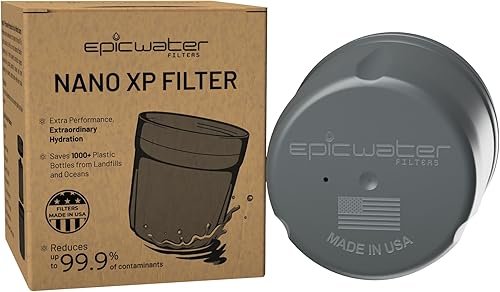
Epic Nano Filter |
Point-of-Use Drinking Water | Removes 99.9999% of bacteria, viruses, cysts. 565 litre capacity. | $90 |
Ceramic Potable Water Filter |
Emergency / Portable Use | Physical ceramic filter removes bacteria and sediment. | $25 |
Epic Nano Filter
This is a replacement filter for Epic’s water filter jugs, but its performance is serious. It’s tested to remove over 200 contaminants, including bacteria, viruses, and cysts. For a homeowner on a budget dealing with iron bacteria in their drinking water, this is a fantastic stop-gap. It won’t fix your whole-house problem, but it guarantees safe water from one tap. We’ve used it on questionable cabin water, and it works flawlessly.
- Exceptional contaminant removal (99.9999% bacteria)
- Long filter life (565 litres)
- Works with two different jug models
- Only treats water for one jug—not a whole-house solution
- Flow rate is slow (gravity-fed)
Ceramic Potable Water Filter
This is a basic, no-nonsense ceramic filter. It physically strains out bacteria and sediment down to a very small micron rating. We keep one for camping trips and as a backup during boil-water advisories. It’s not fancy, but it’s reliable. For iron bacteria, it will catch the cells, but it won’t address the dissolved iron or the slime that can quickly clog the ceramic pores. Think of it as a great emergency tool, not a daily driver for a contaminated well.
- Effective physical barrier against bacteria
- Very affordable upfront cost
- No electricity or chemicals needed
- Will clog quickly with high iron bacteria/ sediment
- Low flow rate; not for whole-house use
- Requires frequent cleaning
Frequently Asked Questions
- Can I use a standard iron filter for iron bacteria?
- Sometimes, but not always. A standard oxidizing iron filter (like one with birm media) can handle low levels of iron bacteria. But if the bacterial infestation is heavy, the biofilm will coat and disable the media quickly. You need a system designed to kill the bacteria first.
- How do I know for sure if I have iron bacteria?
- The classic sign is a slimy, rust-colored buildup in your toilet tank. You can also perform a “bottle test”: fill a clear bottle with water, let it sit for a few days. If a slimy film forms on the sides, you have them. A lab test is the only definitive confirmation.
- Will a water softener remove iron bacteria?
- No. A water softener exchanges hardness minerals (calcium, magnesium) for sodium. It is not designed to remove oxidized iron, manganese, or kill bacteria. In fact, iron bacteria will foul a softener’s resin bed, ruining it. Always treat for iron bacteria before a softener.
- How often do I need to shock chlorinate my well?
- It depends on the severity of the infestation. Some homeowners do it annually as a preventative measure. If you have a continuous treatment system (like chlorine injection), you may only need to shock the well after major repairs or if the system is overwhelmed. It’s a reset button for the well itself.
- Can iron bacteria make me sick?
- Iron bacteria themselves are not known to cause disease. They are a nuisance organism. However, they can create an environment where other, harmful bacteria (like coliforms) can hide and grow. Their presence indicates your well is vulnerable to contamination.
- What’s the difference between a “whole house” and “point-of-use” iron bacteria filter?
- A whole-house system treats all water entering your home, protecting pipes, showers, and appliances. A point-of-use system (like under-sink or a jug filter) treats water at a single tap, typically just for drinking and cooking. You often need both for complete protection.
Final Thoughts
Dealing with iron bacteria is frustrating. It’s a persistent, slimy problem that simple filters can’t handle. From our experience, the single biggest mistake is buying a generic iron filter and hoping for the best. You have to attack the bacteria directly.
For most homeowners with a confirmed infestation, a chemical injection system with a contact tank and carbon filter is the most reliable solution. It’s what the pros install. Yes, it’s more work and cost upfront, but it solves the problem at its source. For drinking water safety, adding a high-quality point-of-use filter like the Epic Nano gives you complete peace of mind. Test your water, choose the right tool for the job, and you can finally say goodbye to that slime.
