


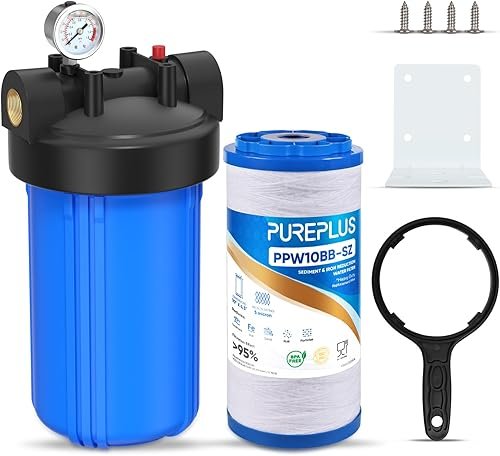
Seeing rusty streaks in your toilet? Tasting metal in your morning coffee? You’re dealing with iron, and it’s a headache. We’ve spent years testing systems, from simple cartridges to whole-house beasts. This guide cuts through the noise. We’ll cover how iron filtration actually works, the real pros and cons, and which systems won’t waste your money.
What Is Iron Water Filtration?
Iron water filtration is the process of removing iron from your water supply. It’s not just about taste. Dissolved ferrous iron (clear water iron) turns into insoluble ferric iron when exposed to air, creating those stubborn orange stains on fixtures, laundry, and dishes. High levels can also promote bacteria growth, leading to slimy buildup in pipes and a rotten egg odor.
This isn’t a problem limited to rusty old wells. Even some municipal systems have trace iron. The goal of an iron filter is to target and eliminate these particles before they reach your tap. It’s a specific solution for a common, frustrating issue.
How Iron Water Filtration Works
Most systems don’t just “filter” iron like a sieve. They change its chemical form so it can be trapped. The method depends on the type of iron you have.
Oxidation & Filtration
This is the most common approach. The system first oxidizes dissolved iron, turning it into a solid particle. Air, chlorine, or a chemical oxidizer like manganese dioxide (in greensand or Birm media) does this job. Then, the water passes through a pleated filter cartridge or a bed of granular media that physically catches these now-solid rust particles.
Adsorption & Ion Exchange
Some specialty media, like KDF85, work through a redox reaction. They essentially swap electrons with the iron, converting it into a form that gets trapped in the media bed. This can also help with hydrogen sulfide (the rotten egg smell). It’s a different chemical process but achieves a similar end result.
Key Benefits of Removing Iron
No More Stains: This is the big one. Say goodbye to orange rings in toilets, rust-colored streaks on sinks, and dingy laundry. Your fixtures will stay cleaner, longer.
Better Taste & Odor: That metallic tang in your water? Gone. If you also have hydrogen sulfide, a good filter will eliminate the sulfur smell, making your water pleasant to drink and cook with.
Protects Appliances & Pipes: Iron sediment clogs water heaters, washing machines, and icemaker lines. It can also coat the inside of pipes, reducing flow over time. Filtration extends the life of your plumbing and appliances.
Clearer Water: You’ll notice the difference in a glass of water. No more orange tint or cloudy appearance.
Potential Drawbacks & Considerations
Regular Backwashing: Most whole-house iron filters need to rinse themselves clean periodically. This uses water and requires a drain line. It’s automated, but you need to account for it during installation.
Media Replacement: The filter media inside doesn’t last forever. Depending on your water quality and usage, you might need to replace it every 3 to 10 years. This is an ongoing cost.
Pre-Treatment May Be Needed: If your water has high levels of manganese or very high iron (over 10-15 ppm), you might need a pre-treatment step like aeration or chemical injection before the filter. Complexity adds cost.
pH Matters: Many oxidizing filters work best with a pH above 6.8 or 7.0. If your water is acidic, you may need to raise the pH first, adding another stage to your system.
Types of Iron Filtration Systems
Air Injection Oxidation (AIO) Filters
These are popular for a reason. The system injects a bubble of air into the top of the tank, oxidizing the iron as water passes through. A bed of media like Birm or a manganese dioxide blend then catches the particles. They’re effective for moderate levels (up to about 10-15 ppm) and don’t usually require chemicals.
Greensand & Birm Filters
Greensand has been around for decades. It uses a manganese dioxide coating to oxidize and filter iron. Birm is a lighter, more modern alternative that acts as a catalyst for oxidation. Both need proper backwashing. Greensand can handle higher levels but may require occasional regeneration with potassium permanganate.
KDF & Catalytic Carbon Filters
These are often found in replacement filter cartridge formats for whole-house housings. Media like KDF85 (used in the APEC filter we review below) use a redox process. They’re good for lower concentrations and can also tackle chlorine and some heavy metals. They’re a solid choice for combined issues.
Reverse Osmosis (RO) Systems
For drinking water only, a dedicated RO system under your sink can remove iron along with a host of other contaminants. It’s not practical for whole-house use due to low flow and waste water, but it’s the gold standard for a single tap. You can learn more about how it compares in our guide on distilled vs filtered water.
Iron Filter Buying Guide
1. Test Your Water: Non-negotiable. Get a lab test that specifies iron type and concentration. Also check pH, hardness, and manganese.
2. Match System to Iron Level: A simple cartridge filter might work for 1-2 ppm. For 3-10 ppm, look at AIO or Birm. Above 10 ppm, you likely need a robust greensand or a multi-stage approach.
3. Consider Flow Rate: Calculate your peak demand (how many bathrooms, appliances running at once). The system’s rated flow rate in gallons per minute (GPM) must meet this. Undersizing leads to pressure drops.
4. Check Maintenance Needs: How often does it backwash? What’s the media lifespan? Is regeneration with chemicals needed? Be honest about what you’re willing to do.
5. Look at Certifications: NSF/ANSI Standard 42 is for aesthetic effects (taste, odor, color). Standard 53 is for health effects (lead, cysts). While not all iron filters are certified, it’s a mark of quality testing. For a dedicated drinking water solution, a certified fluoride filter system often also reduces iron.
6. Housing Size: For cartridge-based systems, a larger 4.5″x10″ or even a 20 inch filter housing will have much higher capacity and flow than a standard 2.5″x10″ size, meaning fewer changes and better pressure.
Our Top Iron Filter Picks (2026)
| Product | Best For | Price |
|---|---|---|
 PUREPLUS 1-Stage (B0B5DSTW9F) |
Budget-friendly sediment & light iron pre-filtration | $1.74 |
 PUREPLUS 1-Stage (B0BYYQ747X) |
Entry-level well water with easy maintenance | $1.87 |
 APEC FI-KDF85 Specialty Filter |
Targeted iron & sulfur reduction in a cartridge | $89 |
 Waterdrop WD-X8 RO System |
High-purity drinking water, removes iron & more | $7.19 |
PUREPLUS 1-Stage Whole House Filter (B0B5DSTW9F)
Look, at this price, it’s basically a disposable housing. We see this as a starter experiment. It lets you test different 10″x4.5″ iron-reducing cartridges without a huge investment. The build quality is basic, and the warranty is thin. But for someone on a tight budget wanting to tackle minor rust staining, it’s a starting point. Just don’t expect it to handle serious iron problems.
- Extremely low entry cost
- Uses universal, affordable cartridges
- Good for sediment pre-filtration
- Very basic construction
- Not for high iron or flow rates
- Limited manufacturer support
APEC FI-KDF85 Specialty Filter
This is a serious cartridge for targeted problems. The KDF85 media is specifically designed for iron and hydrogen sulfide reduction. We’ve used this in setups where the main issue is that rotten egg smell combined with moderate iron (under 5 ppm). It fits standard 10″ housings and lasts a decent while. It’s not a whole-house solution on its own for high iron, but as a dedicated stage, it’s effective and well-made.
- Specialized KDF85 media for iron & sulfur
- Also improves taste and odor
- Fits standard 10″ filter housings
- Not for whole-house high iron alone
- Higher upfront cost than basic cartridges
- Requires a pre-filter for sediment
Waterdrop WD-X8 Reverse Osmosis System
This is our top pick for drinking water. If your main worry is iron in the water you consume and cook with, an RO system like this is unbeatable. The 9-stage filtration, including a 0.0001-micron membrane, removes virtually all dissolved iron, plus lead, fluoride, and PFAS. The 800 GPD flow rate means you won’t wait for a glass of water. It’s certified to NSF/ANSI 42 & 58, which is a big trust signal. Yes, it’s an under-sink install, but for pure, safe water, it’s worth it.
- Removes 99%+ of iron and contaminants
- High 800 GPD flow, low 2:1 drain ratio
- NSF/ANSI 42 & 58 certified
- Only treats drinking/cooking water
- Professional install recommended
- Higher upfront and maintenance cost
Iron Filtration FAQ
- What is the best way to filter iron out of well water?
- It depends on the iron level. For low concentrations (1-3 ppm), a cartridge with iron-reducing media may suffice. For moderate levels (3-10 ppm), an air injection oxidation (AIO) system is often the best balance of effectiveness and cost. Always test your water first.
- Do iron filters really work?
- Yes, when properly matched to your water chemistry. A filter designed for 5 ppm of iron will fail if you have 15 ppm. The single biggest mistake is buying without testing. The right system, correctly installed, will eliminate stains and taste issues.
- How often should you change an iron filter cartridge?
- For standard 10″ cartridges, expect 3-6 months depending on your iron level and water usage. Larger 20″ housings can last 6-12 months. When you see staining return or flow decrease, it’s time. Always keep a replacement filter cartridge on hand.
- Can a reverse osmosis system remove iron?
- Absolutely. RO membranes are excellent at removing dissolved iron. However, they are point-of-use systems for drinking water only. They cannot handle the flow needed for showers, laundry, and toilets. You need a whole-house filter for those applications.
- What are the signs of too much iron in water?
- Look for orange-brown stains in toilets, sinks, and bathtubs. Your laundry may come out with rust-colored spots. The water might have a metallic taste. In severe cases, you’ll notice orange sediment in glasses or a slimy coating in toilet tanks (from iron bacteria).
- Is it safe to shower in water with high iron?
- It’s not a major health risk, but it’s unpleasant. It can dry out skin and hair, and cause that “rust ring” in the tub. More importantly, the iron can stain your shower walls and fixtures permanently over time. Filtration is recommended for comfort and home maintenance.
Final Thoughts
Dealing with iron water is a marathon, not a sprint. The cheapest upfront option often costs more in replacements and frustration. From our testing, the clear path is: test your water, choose a system type that matches your iron level, and invest in quality. For whole-house problems, an AIO system is our usual recommendation. For pristine drinking water, pair it with a quality RO system like the Waterdrop X8.
Don’t just live with the stains. A proper iron filtration system protects your home, improves your water’s taste, and saves you scrubbing time. It’s a worthwhile upgrade for any homeowner tired of fighting rust.
