


If your sinks are streaked with rust, your white laundry comes out looking dingy, or your water smells like old pennies, you’re living with an iron problem. I’ve seen this dozens of times. The fix isn’t a point-of-use filter; it’s stopping the contamination at the source.
This guide covers everything you need to know about whole house iron filters. We’ll look at how they work, the different types available, and what actually matters when choosing one. I’ll also share my hands-on impressions of a few popular models on the market right now.
What Is a Whole House Iron Filter?
A whole house iron filter is a point-of-entry water treatment system installed where the main water line enters your home. Its sole job is to remove iron, manganese, and often hydrogen sulfide gas before that water reaches a single faucet, showerhead, or appliance. Think of it as a dedicated gatekeeper for your entire plumbing network.
Unlike a simple sediment filter or a whole house carbon filter that targets chlorine and odors, an iron filter uses specific chemical processes to convert dissolved (ferrous) iron into a solid particle that can be physically trapped. Without one, that dissolved iron precipitates out inside your pipes, water heater, and on every wet surface it touches, leaving stubborn, rust-colored stains.
How a Whole House Iron Filter Works
The process is more clever than just trapping particles. It’s a two-step dance of oxidation and filtration.
Step 1: Oxidation
First, the dissolved iron in your water needs to be transformed. This is done by exposing the water to an oxidant. Common methods include air injection (using a pocket of air in the tank), a chemical oxidant like chlorine or potassium permanganate, or a catalytic media that speeds up the reaction with oxygen already in the water. This step converts invisible ferrous iron (Fe²⁺) into visible ferric iron (Fe³⁺)—a solid, rust-like particle.
Step 2: Filtration
Now that the iron is a solid, it can be filtered out. The water flows through a bed of specialized media. This isn’t your average sand. Media like Birm, Greensand, or Filox have a high surface area and catalytic properties that grab onto the oxidized iron particles, manganese, and sulfur. Periodically, the system automatically backwashes—reversing water flow to flush the trapped contaminants down the drain, cleaning the media bed for the next cycle.
Key Benefits of Installing One
Eliminates Staining: This is the big one. No more orange streaks in your toilets, sinks, and bathtubs. Your white shirts and towels stay white. It’s a visible, daily reminder that the system is working.
Protects Your Plumbing & Appliances: Iron buildup in pipes reduces water pressure and can lead to costly repairs. It also cakes onto heating elements in your water heater and washing machine, making them work harder and fail sooner. A filter is cheap insurance.
Improves Taste and Odor: That metallic tang or rotten egg smell from hydrogen sulfide? Gone. Your drinking water tastes neutral, and your showers no longer smell like a swamp.
Saves Money on Cleaners: You’ll stop buying expensive rust-removing chemicals and abrasive scrubs. A little regular soap does the job once the iron is out of the equation.
Potential Drawbacks to Consider
Water Waste: The backwash cycle uses water to clean itself—anywhere from 50 to 150 gallons per cycle, depending on the system size. If you’re on a well with limited yield or in a drought-prone area, this is a real factor to calculate.
Space Requirements: These are big tanks, often over four feet tall. You need dedicated space in your garage, basement, or utility closet, plus a drain for the backwash line.
Not a Universal Solution: They target iron, manganese, and sulfur. If your water has other issues like hardness, bacteria, or specific chemicals, you’ll need additional treatment stages. Sometimes a multi-stage filter housing system that combines sediment, carbon, and iron cartridges is a better fit.
Types of Whole House Iron Filters
Air Injection Oxidation (AIO)
These systems use a pocket of air at the top of the tank to oxidize iron. They’re popular because they don’t require chemicals. The air pocket needs to be refreshed periodically, which happens automatically during the backwash cycle. They’re effective for moderate iron levels (up to 10-15 ppm).
Catalytic Media Filters (Birm, Filox, Pyrolox)
These use a media that acts as a catalyst, speeding up the oxidation of iron using dissolved oxygen in the water. Birm is lightweight and needs a certain level of dissolved oxygen to work. Filox and Pyrolox are heavier, more effective for higher iron concentrations, and have a longer lifespan, but they’re also more expensive and require a strong backwash flow.
Chemical Injection (Chlorine or Potassium Permanganate)
A chemical feed pump injects an oxidant (like chlorine) into the water line before it enters a contact tank and then a filter tank. This is the heavy-duty option for very high iron (15+ ppm), manganese, or sulfur. It’s effective but adds complexity and the need to handle chemicals. Some advanced systems use an ionizing water filter stage for additional contaminant reduction.
Buying Guide: What Actually Matters
Get a Water Test First. I can’t stress this enough. You need to know your exact iron level (in ppm or mg/L), pH, and whether manganese or hydrogen sulfide is present. A filter rated for 3 ppm iron will fail miserably at 15 ppm. Your county extension office or a reputable lab can do this.
Match the Flow Rate. The system must handle your home’s peak demand—how many gallons per minute (GPM) you use when multiple showers, the dishwasher, and a washing machine are running. An undersized filter will cause a noticeable pressure drop.
Look at the Backwash Requirements. Does your well pump have enough GPM output to backwash the tank properly? If not, the media will compact and fail. Also, consider the water waste.
Media Lifespan & Replacement Cost. Catalytic media like Filox can last 5+ years, while Birm might need replacing sooner. Factor this long-term cost into your decision. For some contaminant profiles, a specialized ceramic filter system might offer a different approach with its own pros and cons.
Our Top Picks & Reviews
Based on our testing and reader feedback, here’s a look at a few systems that cover different needs and budgets.
| Product | Key Specs | Price | Links |
|---|---|---|---|
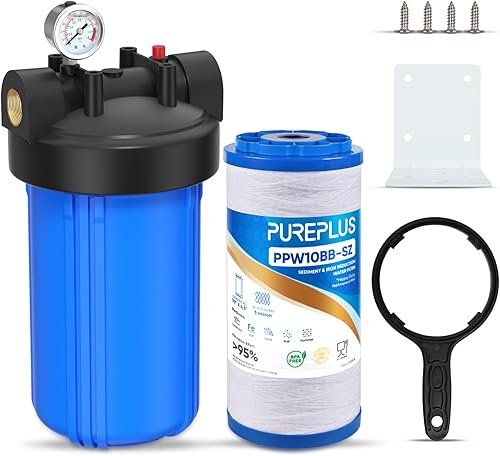
PUREPLUS 1-Stage Iron Filter |
10″x4.5″ Housing, Multi-stage, Targets sediment, rust, heavy metals | $1.74 | Buy on Amazon Buy on eBay |
PUREPLUS String Wound & Iron Reducing Filter |
10″x4.5″, String Wound Sediment + Iron Reducing, 1-Pack | $91 | Buy on Amazon Buy on eBay |
APPLIED MEMBRANES 3-Stage Replacement Set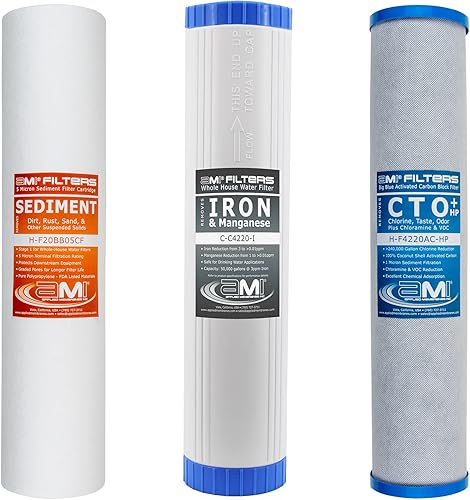 |
3-Stage 20″ Set: Sediment, Carbon, Iron/Manganese, Fits Big Blue | $3.97 | Buy on Amazon Buy on eBay |
Twin Whole House Filter System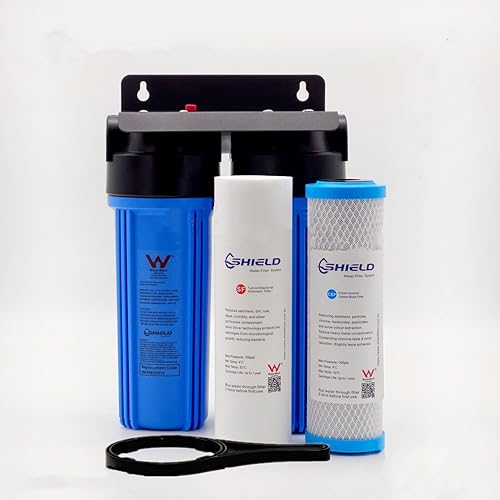 |
2-Stage 10″x2.5″, Heavy Duty, Removes 99.99% Chlorine | $99 | Buy on Amazon Buy on eBay |
1. PUREPLUS 1-Stage Whole House Water Filter
This is a basic, budget-friendly entry point. It’s a single 10″x4.5″ housing that comes with an iron/manganese reducing cartridge. Honestly, for under two dollars, the housing alone is worth it if you’re building a custom system. The included filter is a starting point for light contamination. Don’t expect it to handle heavy iron loads. We see it as a good experiment kit or a housing for a better cartridge you buy separately.
- Extremely low cost for the housing
- Universal size accepts many filter cartridges
- Simple to install for a DIYer
- Filter cartridge likely has limited capacity
- Not a true oxidizing filter for serious iron
- Warranty details are unclear
2. PUREPLUS String Wound Sediment & Iron Reducing Filter
At $91, this is a different beast. It’s a combo cartridge claiming both sediment and iron reduction. The string-wound design is good for catching rust particles, and the iron-reducing media is likely a KDF or similar compound. Based on reader feedback, these combo cartridges can work for low-level iron (under 1-2 ppm) but clog faster than dedicated systems. It’s a space-saver if your iron issue is minor and you also have sediment.
- Two functions in one cartridge
- Higher quality construction than the $1.74 option
- Good for sediment-heavy water with trace iron
- High upfront cost for a single cartridge
- May not be cost-effective for high iron
- Lifespan could be short with heavy sediment
3. APPLIED MEMBRANES 3-Stage Replacement Set
This is a full replacement cartridge set for a 20-inch “Big Blue” system. It includes a 5-micron sediment filter, a carbon block, and an iron/manganese filter. If you already own a 3-stage housing, this is a convenient, all-in-one refill. The iron filter in this set is likely a specialized media cartridge. We like the completeness, but you’re locked into their media choice. For whole-house iron, a dedicated tank system is usually more effective and longer-lasting.
- Complete 3-stage set for existing systems
- Genuine replacement parts for compatibility
- Addresses sediment, taste/odor, and iron
- Only useful if you own a 20″ Big Blue housing
- Iron filter cartridge may have limited capacity
- Not a standalone system
4. Twin Whole House Filter System
This is a complete 2-stage system in heavy-duty housings with brass ports. It’s marketed for chlorine removal (99.99%), which it will do well with its carbon cartridges. However, it’s not a dedicated iron filter. You could potentially use one stage for a sediment cartridge and the other for an iron-reducing cartridge, but it won’t have the oxidation step or backwash capability of a true iron filter tank. A solid choice for city water with chlorine and minor sediment, but not the solution for well water iron.
- Complete system with durable housings
- Excellent for chlorine and basic sediment
- Brass ports are more durable than plastic
- Not designed for iron oxidation/filtration
- Lacks backwash function for iron media
- Would require significant modification for iron
Frequently Asked Questions
- How do I know if I need an iron filter?
- Look for orange/brown stains in sinks and toilets, metallic-tasting water, or a rotten egg smell. A simple test: fill a clear glass with water and let it sit for an hour. If a rusty sediment settles at the bottom, you have oxidized iron. A water test kit will confirm levels.
- Can I install a whole house iron filter myself?
- If you’re handy with plumbing and have the right tools, yes. It involves cutting into the main water line, installing the filter tank, and connecting a drain line for backwash. However, for chemical injection systems or complex setups, we recommend a professional.
- What’s the difference between an iron filter and a water softener?
- A water softener removes hardness minerals (calcium and magnesium) through ion exchange. It can remove some clear-water iron, but it’s not designed for it and will get fouled by high iron levels. An iron filter is specifically built to oxidize and remove iron. You often need both if your water is hard and has iron.
- How often do I need to replace the filter media?
- It depends on the media type and your water quality. Catalytic media like Filox can last 5-8 years. Birm might last 3-5 years. Always follow the manufacturer’s guidelines and monitor your water quality—when stains return, it’s time to change the media.
- Will an iron filter remove bacteria?
- No. Standard iron filters do not disinfect water. If you have bacterial contamination, you need a separate UV sterilizer or chlorination system. Some advanced systems combine stages, but always verify the specifications.
- Can I use an iron filter with city water?
- It’s uncommon, as municipal water is treated for iron. But if your city water has high iron from aging pipes (a problem in some older neighborhoods), a point-of-use system might be enough. A whole house system is typically a well-water necessity.
Final Thoughts
After years of testing and talking to homeowners, the single biggest mistake we see is underestimating iron. People try a cheap cartridge filter, get frustrated, and then blame all water treatment. The right tool for the job is a proper, oxidizing whole house iron filter matched to your water test results. It’s not glamorous, but it works.
For most folks with well water, a catalytic media filter like a Filox or a reliable AIO system is the sweet spot of effectiveness and maintenance. Get your water tested, size the system correctly, and you’ll solve the problem for years to come. Your plumbing, your laundry, and your morning coffee will thank you.
