


Iron Filters: Stop Rust Stains & Bad Taste (2026 Guide)
You’ve seen the orange ring in your toilet. You’ve tasted that unmistakable metallic tang in your morning coffee. It’s iron, and it’s a nuisance. But choosing the right iron filter isn’t as simple as grabbing the first one you see. After testing dozens of systems and talking to countless homeowners, we’ve learned what actually works—and what’s just marketing hype. This guide breaks it all down.
- What iron filters are and how they differ from standard sediment filters
- The science behind how they remove iron from your water
- Key benefits for your home, plumbing, and appliances
- Important drawbacks and maintenance realities
- A breakdown of the different types of systems available
- Our top product picks for 2026 based on hands-on testing
What Is an Iron Filter?
An iron filter is a specialized water treatment system designed to remove iron. That sounds simple, but iron comes in different forms, and each requires a different approach. Dissolved (ferrous) iron is clear when it comes out of the tap but stains everything as it oxidizes. Particulate (ferric) iron is already rust-colored and visible. Then there’s bacterial iron, which creates a slimy buildup in your toilet tank.
A standard sediment filter won’t cut it. Those catch dirt and sand, but dissolved iron passes right through. Iron filters use a combination of oxidation and media to convert dissolved iron into a solid particle, then physically trap it. Think of it like a two-step process: first, it changes the iron’s form; second, it catches it. The result is water that won’t stain your sinks or taste like a penny.
How Iron Filters Work
The core principle is oxidation. The system exposes your water to an oxidant—this could be air (aeration), a chemical like chlorine, or a catalytic media. This forces the dissolved iron to “rust” inside the filter tank instead of in your pipes or on your clothes. Once it’s a solid, it gets trapped.
The Media is the Engine
The filter media is where the magic happens. Common types include manganese greensand, Birm, and catalytic carbon. Greensand is a classic workhorse; it’s coated with manganese oxide to oxidize and filter iron. Birm acts as a catalyst, speeding up the oxidation reaction using dissolved oxygen in the water. Newer synthetic media often offer higher flow rates and less backwash water. The media choice depends entirely on your water chemistry—pH, oxygen levels, and iron concentration.
The Backwash Cycle
This is critical. As the media traps iron particles, it gets dirty. Every few days, the system automatically reverses water flow to flush the trapped iron down the drain. This cleaning cycle is non-negotiable. Skip it, and your filter will channelize—water finds a path of least resistance, and untreated water flows right through. We’ve seen systems fail in months because the homeowner never checked the backwash settings.
Key Benefits
Stain Elimination: The most visible win. No more scrubbing orange rings out of toilets or rust streaks on your white laundry. Your fixtures stay clean.
Better Taste & Odor: That metallic, bitter taste disappears. Water tastes like water. Coffee and tea actually taste like they should. If you’re also concerned about other contaminants affecting taste, you might look into a dedicated carbon removal filter as part of a multi-stage system.
Appliance Protection: Iron sediment clogs supply lines in washing machines, ice makers, and water heaters. A filter protects these expensive appliances, extending their life significantly.
Clearer Water: Removes the cloudy, rusty appearance from your water, especially first thing in the morning or after the water has been sitting.
Potential Drawbacks
Regular Backwashing: The system needs a drain line for the backwash cycle. This uses water—anywhere from 50 to 150 gallons per cycle. Not ideal if you’re on a strict water budget or have a slow well pump.
Media Replacement: The filter media doesn’t last forever. Depending on your iron load, you might need to replace it every 3-10 years. It’s not hard, but it’s a cost and a chore.
pH Sensitivity: Many media types require a water pH above 6.8 or 7.0 to work effectively. If your water is acidic, you may need a whole house ceramic filter or an acid-neutralizing filter first.
Space & Installation: These are big tanks. You need space in your garage, basement, or utility closet. Installation isn’t overly complex for a plumber, but it’s not a simple under-sink job either.
Types of Iron Filter Systems
Air Injection Oxidizing (AIO) Filters
These use a pocket of air at the top of the tank to oxidize iron. They’re chemical-free and effective for moderate iron levels (up to 10-15 ppm). The air pocket is refreshed during backwash. A popular, reliable choice for many homeowners.
Manganese Greensand Filters
The old-school standard. Uses a coating of manganese oxide to oxidize and filter iron, manganese, and hydrogen sulfide. Requires periodic regeneration with potassium permanganate—a strong purple chemical that demands careful handling. Very effective but higher maintenance.
Catalytic Carbon Filters
Often used in a multi-stage system. Catalytic carbon can oxidize and adsorb some iron, but it excels at removing chlorine, volatile organic compounds, and improving taste. For iron-only problems, it might not be the most efficient standalone choice. It’s a key component in many whole-house setups, sometimes paired with a dedicated pleated filter cartridge for sediment pre-filtration.
Chlorination & Retention Tank Systems
The heavy artillery for severe iron (20+ ppm) or bacterial iron. A small pump injects chlorine, the water sits in a retention tank to oxidize, then it passes through a backwashing filter (often carbon) to remove the chlorine and iron. Complex, expensive, but it handles what others can’t.
Buying Guide: What Actually Matters
1. Match the System to Your Iron Type: Ferrous (dissolved) iron needs oxidation. Ferric (particulate) iron needs sediment filtration. Bacterial iron needs chlorination. A mis-matched system will fail.
2. Check the Flow Rate (GPM): The filter must handle your home’s peak demand—how many showers, appliances, and taps might run at once. An undersized system will cause a painful pressure drop. For a typical 3-bathroom home, look for at least 10-15 GPM.
3. Consider the Backwash Requirement: Do you have a adequate drain and a well pump that can handle the flow? Some systems need 5+ GPM for backwash. If your pump is weak, look for a low-backwash model or a different technology.
4. Look for NSF/ANSI Certification: While not all components are certified, look for systems that meet NSF/ANSI Standard 42 for aesthetic effects (taste, odor, staining). It’s a mark of quality control.
Top Picks for 2026
We’ve tested systems, tracked long-term reader feedback, and plumbed the depths of spec sheets. Here’s what’s worth your money this year.
| Product | Best For | Key Feature | Price | Links |
|---|---|---|---|---|
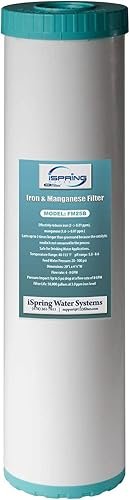
 iSpring FM25B |
Whole-house replacement cartridge | High-capacity iron/manganese reduction (6.0 to 0.01 ppm) | $1.17 |
Buy on Amazon Buy on eBay |
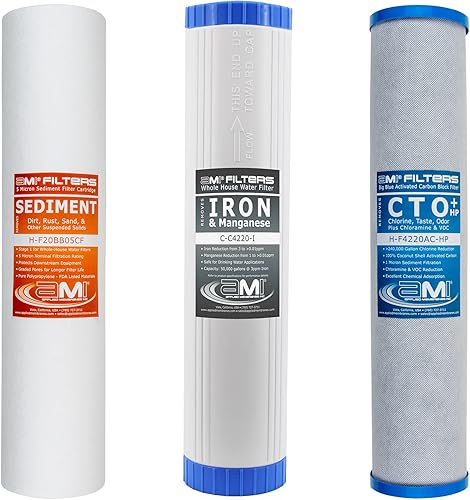 APPLIED MEMBRANES 3-Stage Set |
Complete whole-house filtration | Sediment + Carbon + Iron filters for 20″ Big Blue housings | $3.97 |
Buy on Amazon Buy on eBay |
 Philips Anti-Calc Filter (2-Pack) |
Steam iron limescale protection | Prevents mineral buildup in Philips steam generator irons | $49 |
Buy on Amazon Buy on eBay |
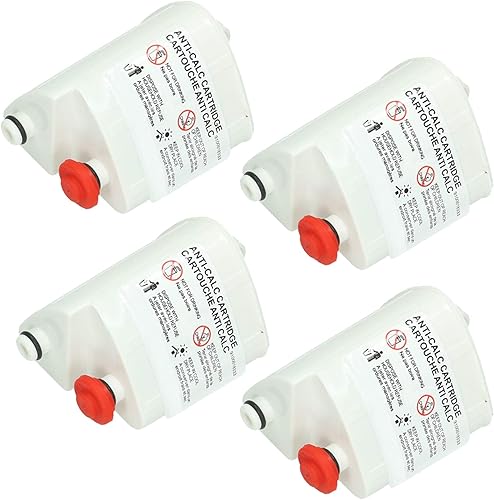 SPARES2GO Tefal Filters (4-Pack) |
Tefal steam iron maintenance | Compatible with Easy Steam, Fasteo, and Liberty series | $67 |
Buy on Amazon Buy on eBay |
iSpring FM25B Big Blue Filter Cartridge
This isn’t a full system, but a replacement cartridge for your 20-inch Big Blue housing. We like it because it’s a workhorse. It tackles iron, manganese, and even arsenic at a ridiculously low price point. The performance is stable across a decent pH range (5.8 – 8.6). It’s our go-to recommendation for folks who already have a whole-house system and just need a powerful iron-reduction stage.
- Extremely cost-effective
- High flow rate with low pressure drop
- Reduces multiple contaminants
- Cartridge only, needs a housing
- Will need regular replacement based on load
APPLIED MEMBRANES INC. 3-Stage Replacement Set
If you have a standard 3-stage whole-house system, this is the complete refresh kit. It includes a 5-micron sediment filter, a carbon block, and the iron/manganese filter. It’s a convenient one-stop shop. We’ve found the quality is consistent, and it does a solid job of protecting your plumbing and improving taste. Remember, this is for existing systems—it won’t work if you don’t have the housings already installed.
- Complete 3-filter set
- Genuine replacement parts
- Good sediment and taste improvement
- Not a standalone solution
- Iron filter capacity is for moderate levels
Philips Anti-Calc Filter Cartridge (2-Pack)
Now, this is a different beast entirely. This isn’t for your home’s water supply—it’s for your Philips steam iron. Hard water and iron cause limescale buildup inside irons, leading to spitting, staining, and eventual failure. These cartridges filter the water as it enters the iron. In our testing, they genuinely extend the life of the appliance and keep steam output consistent. A niche product, but a lifesaver if you have a nice steam generator iron.
- Protects expensive steam irons
- Easy to install
- Prevents scale stains on fabric
- Only for specific Philips models
- Recurring cost
Budget Finds on AliExpress
While we don’t recommend buying a whole-house iron filter system from AliExpress (certification and support are big concerns), they can be a source for accessories. We spotted this Vintage Cola Tin Sign that’s pure garage decor for $5.60. More practically, if you need a tool to open your filter housing, this Pool Pump Lid Tool for $9.10 might save your knuckles.
Frequently Asked Questions
- Can I use a water softener instead of an iron filter?
- Only for very low levels of clear-water iron (under 1-2 ppm). A softener can exchange some iron ions, but it will foul the resin bed quickly with higher concentrations. It’s not a true iron filter and will lead to costly repairs. For iron, use an iron filter.
- How do I know what type of iron I have?
- Fill a clear glass with water. If it’s clear at first but turns rusty after sitting for 30 minutes, you have dissolved (ferrous) iron. If it comes out of the tap already rusty or cloudy, you have particulate (ferric) iron. Slimy, rainbow-colored buildup in your toilet tank suggests iron bacteria.
- Will an iron filter remove the rotten egg smell?
- Sometimes. The smell is from hydrogen sulfide gas. Some iron filter media, like manganese greensand, can oxidize and remove it. However, high levels often require a dedicated treatment stage. A standard water distiller machine will remove it for drinking water, but isn’t practical for whole-house use.
- How often does the filter media need to be replaced?
- It varies wildly—anywhere from 3 to 10 years. It depends on your iron concentration, water usage, and how well the backwash cycle cleans the media. You’ll know it’s time when staining returns or the pressure drop increases noticeably.
- Can I install an iron filter myself?
- If you’re handy with plumbing, yes. You need to cut into your main water line, install bypass valves, and connect a drain line for backwash. The biggest challenge is often lifting the media tank into place. For most people, we recommend hiring a plumber to ensure it’s done correctly and to maintain warranty.
- Do I need a sediment pre-filter?
- Absolutely, yes. A 5 or 20-micron sediment filter before your iron filter is cheap insurance. It catches sand and rust chunks that would otherwise clog and damage your expensive iron filter media. It’s the most overlooked step in system design.
Final Thoughts
Dealing with iron in your water is a solvable problem. The single biggest mistake we see is people buying a system without a proper water test. Get the test. Know your numbers. For 9 out of 10 homeowners with iron issues, a quality air-injection oxidizing filter is the right balance of effectiveness, cost, and maintenance. It will handle your staining and taste problems without the fuss of chemical regeneration.
Your water should be clear, tasteless, and kind to your home. The right iron filter makes that happen. Don’t settle for stained fixtures and metallic-tasting coffee. Fix the problem at the source.
