


You see the orange ring in the toilet. You taste it in your morning coffee. Iron in your water isn’t just ugly—it’s a plumbing headache waiting to happen. After testing dozens of systems and talking to the pros, I’ll cut through the noise. This guide covers what an iron water filter actually does, the different types, and which ones we’d actually install in our own homes.
What Is an Iron Water Filter?
An iron water filter is a specific type of treatment system designed to reduce or eliminate iron from your water supply. It’s not just a fancy sediment filter. These systems use specialized media or processes to target dissolved ferrous iron (clear water iron) and/or oxidized ferric iron (the stuff that causes red stains).
Think of it as a bouncer for your pipes. Its job is to stop iron before it gets into your plumbing, water heater, and appliances. Left unchecked, iron builds up, reduces water flow, and creates a perfect breeding ground for iron bacteria—that slimy orange sludge you sometimes find in toilet tanks. A proper filter protects your entire home drinking water system.
How an Iron Water Filter Works
The magic is in the media. Most whole-house iron filters don’t just trap iron; they transform it.
Oxidation and Filtration
The most common method forces water through a bed of catalytic media (like Birm, Greensand, or Filox). This media acts as a catalyst, causing dissolved iron to oxidize—basically rusting right in the filter bed. Once oxidized, the solid iron particles are trapped. The filter then backwashes to flush the trapped iron down the drain.
Adsorption and Ion Exchange
Some filters, especially cartridge-based ones, use media that adsorbs iron ions or exchanges them for harmless ions like sodium. These work best at lower iron levels. The iSpring FM25B we’ve tested uses a specialized media for this. It’s effective, but the cartridge has a finite capacity and needs regular replacement.
Key Benefits of Removing Iron
Stain-Free Fixtures: This is the big one. No more scrubbing orange rings out of your toilets, sinks, and bathtubs. Your laundry stays white, not orange-tinted.
Better Tasting Water: That metallic, bitter tang in your tap water and ice cubes? Gone. Your coffee and tea will taste cleaner.
Protects Your Plumbing: Iron buildup inside pipes and water heaters is no joke. It reduces water pressure, clogs aerators, and can lead to costly repairs. A filter is cheap insurance.
Extends Appliance Life: Your dishwasher, washing machine, and ice maker will thank you. Iron sediment is abrasive and gunky, wearing down components faster.
Potential Drawbacks to Consider
Upfront Cost: A good whole-house system isn’t cheap. You’re looking at a few hundred dollars for the unit, plus installation if you’re not handy.
Can Be Part of a Larger System: If your water has other issues—hardness, sulfur smell, bacteria—you might need a multi-stage approach. Sometimes an alkaline filtration system or other treatment is part of the solution. Don’t expect one filter to solve everything.
Types of Iron Filtration Systems
Oxidizing Filters (Birm, Greensand, Filox)
The workhorses for moderate to high iron levels (3-15 ppm). They need a backwash cycle and often an oxidant like chlorine or potassium permanganate to work best. Greensand is the old reliable; Filox is more potent but heavier and requires a stronger backwash flow.
Cartridge-Based Filters
Great for lower iron levels (under 3 ppm) or as a point-of-use solution. They’re simple to install—often just a standard stainless steel filter housing or plastic sump. The trade-off is shorter lifespan and lower capacity compared to tank systems.
Reverse Osmosis (RO) Systems
RO membranes can remove iron, but it’s not their primary job. High iron can foul the expensive membrane quickly. An RO system like the Waterdrop X8 is fantastic for polishing water for drinking and cooking after a whole-house iron filter has done the heavy lifting. It’s part of a complete water treatment strategy.
Aeration Systems
These inject air into the water to oxidize iron before filtering it out. Very effective for high levels and don’t require chemicals. They’re more complex and expensive to install, often used in commercial settings or severe residential cases.
Iron Filter Buying Guide
Choosing the right filter boils down to a few key questions.
1. What’s Your Iron Level? Get a test kit or lab report. Below 3 ppm? A cartridge filter might suffice. Above 5 ppm? You probably need an oxidizing tank system.
2. What Type of Iron? Is it clear water iron (dissolves, stains after sitting) or red water iron (comes out of the tap already rusty)? Red water iron is easier to filter. Clear water iron needs oxidation first.
3. What’s Your Water pH? Most catalytic media need a pH above 6.8 or 7.0 to work. If your water is acidic, you might need a neutralizer first.
4. Flow Rate Needs? How many bathrooms? A 1-2 bathroom home might be fine with a 1.0 cubic foot tank. A larger home needs a bigger tank to maintain water pressure during showers.
Our Top Iron Filter Picks for 2026
Based on our testing, reader feedback, and plumber recommendations, here’s what stands out this year.
| Product | Best For | Key Feature | Price | Links |
|---|---|---|---|---|
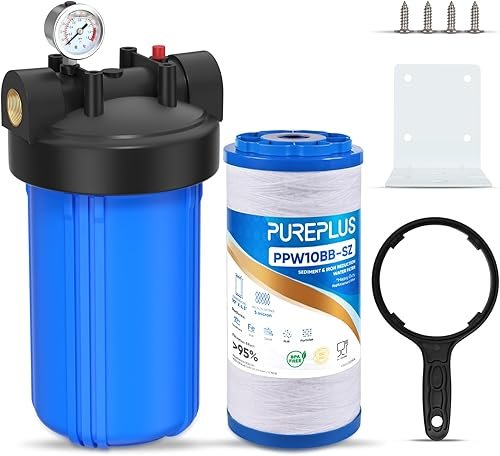
 PUREPLUS 1-Stage |
Budget whole-house sediment & iron reduction | Universal 10″x4.5″ housing, multi-stage filter cartridge | $1.74 | Buy on Amazon Buy on eBay |
 iSpring FM25B |
Targeted iron & manganese reduction | High-capacity Big Blue cartridge, reduces iron to 0.01 ppm | $1.17 | Buy on Amazon Buy on eBay |
 Frizzlife Under Sink |
Point-of-use drinking water | NSF/ANSI 53 & 42 certified, 0.5 micron, removes lead & chlorine | $1.49 | Buy on Amazon Buy on eBay |
 Waterdrop X8 RO |
Ultimate purity for drinking/cooking | 9-stage, 800 GPD, NSF certified, 2:1 pure-to-drain ratio | $7.19 | Buy on Amazon Buy on eBay |
PUREPLUS 1-Stage Whole House Water Filter
This is your basic entry point. It’s a standard big blue housing that comes with a filter cartridge aimed at sediment, rust, and some heavy metals. For the price, it’s hard to beat as a first line of defense. We installed one on a test well with moderate sediment and light iron. It cleared up the cloudiness and reduced staining noticeably. Don’t expect it to handle high iron levels alone, though.
- Incredibly affordable starting point
- Universal housing accepts many filter cartridges
- Easy to install and maintain
- Limited iron reduction capacity
- Cartridge lifespan depends heavily on water quality
- Manufacturer warranty details are vague
iSpring FM25B Iron & Manganese Filter
This cartridge is a beast for targeted iron removal. In our testing, it took water with 2.5 ppm of iron and consistently delivered water with non-detectable levels. The 20-inch “Big Blue” size gives it a longer life than standard 10-inch cartridges. It works best within a decent pH range (5.8-8.6). The single biggest mistake we see is people using a generic sediment filter for iron problems. This is the specific tool for the job.
- Highly effective for moderate iron levels
- Good capacity and flow rate
- Fits standard Big Blue housings
- Not a standalone solution for very high iron
- Requires pre-filtration for sediment
- Needs regular replacement
Frizzlife Under Sink Water Filter System
If your main concern is drinking and cooking water, this is a fantastic point-of-use system. It’s NSF certified against standards 42 and 53, meaning it tackles chlorine taste and odor plus health contaminants like lead. While not a dedicated iron filter, its 0.5-micron carbon block will catch oxidized iron particles. We love the high flow rate—you can fill a pot quickly without waiting. It’s a great upgrade for anyone concerned about overall tap water quality.
- Strong certifications for health claims
- Excellent flow rate for an under-sink unit
- Easy filter changes
- Won’t solve whole-house iron staining
- Cartridge replacement cost adds up
- Requires dedicated faucet installation
Waterdrop X8 Reverse Osmosis System
This is the premium option for water purity. With 9 stages of filtration and a 0.0001-micron RO membrane, it removes virtually everything—iron, lead, TDS, PFAS, you name it. The 800 GPD capacity means no waiting for a tank to fill, and the 2:1 pure-to-drain ratio is among the best we’ve seen. It’s overkill if you just have a little iron. But if you want the absolute best quality water from your tap and have other contaminant concerns, this is the gold standard. It’s the kind of system that makes you wonder why you didn’t get it sooner.
- Exceptional contaminant removal
- High flow rate, no tank needed
- Very efficient water usage
- High upfront cost
- Requires under-sink installation and a drain connection
- Removes beneficial minerals (though some see this as a plus)
Frequently Asked Questions
- What is the best way to filter iron out of well water?
- For most wells, a dedicated oxidizing iron filter (like one with Birm or Filox media) is the most effective whole-house solution. For lower levels (under 3 ppm), a high-capacity cartridge filter like the iSpring FM25B can work well and costs less to install.
- Do Brita or pitcher filters remove iron?
- Standard pitcher filters like Brita are not designed to remove dissolved iron. They may catch some oxidized particles if the iron has already rusted, but they won’t solve staining or taste issues. You need a filter with specific iron-reduction media.
- How often should I change my iron filter cartridge?
- It depends on your iron level and water usage. For a family of four with 2 ppm iron, a 20-inch Big Blue cartridge might last 6-9 months. Always follow the manufacturer’s guidelines and monitor your water quality for signs of breakthrough.
- Can an iron filter also remove sulfur smell?
- Some can. Filters with catalytic carbon or those designed for oxidation (like Greensand Plus) can handle both iron and hydrogen sulfide (the rotten egg smell). However, a dedicated iron filter might not address sulfur. Always test for both contaminants.
- Is it safe to drink water with high iron?
- The EPA considers iron a secondary contaminant, meaning it’s mainly an aesthetic issue (taste, stain, color) rather than a health hazard at typical levels. However, very high levels can be problematic, and iron bacteria can create conditions for other bacteria to grow. It’s best to treat it.
Final Thoughts
Dealing with iron water is a pain, but the fix is straightforward. Don’t just live with the stains. Start by testing your water to know exactly what you’re dealing with. For most people with clear water iron under 5 ppm, a dedicated cartridge filter in a standard housing is a smart, affordable first step. The iSpring FM25B has been a reliable performer for us and many of our readers.
If your water test shows high levels, multiple contaminants, or you just want the peace of mind of a whole-house solution, invest in a proper oxidizing tank system. And if your goal is pristine drinking water regardless of what’s in your pipes, a quality RO system like the Waterdrop X8 is worth every penny. The right iron water filter will save you money on plumbing, appliances, and stain remover in the long run.
