


Your Filtered Water Tap Guide: Cleaner Water From Your Existing Faucet (2026)
After testing filters for over a decade, I can tell you that a good filtered water tap is one of the simplest upgrades you can make to your kitchen. No more lugging pitchers or buying bottled water. This guide covers everything: how they work, the different types, what to look for, and our hands-on picks for 2026. We’ll look at under-sink dedicated taps, faucet-mounted units, and even some clever budget options.
What Is a Filtered Water Tap?
Simply put, it’s a point-of-use water filter that delivers treated water through a tap. That could be a separate, small faucet installed next to your main one, or a filter unit that attaches directly to your existing kitchen faucet spout. The goal is the same: convenient access to filtered water for drinking and cooking without filtering every drop that comes out of your sink.
We’ve seen these evolve from clunky add-ons to sleek, integrated systems. The core idea is to target your drinking water quality at the point of consumption. You get the convenience of tap water with an extra layer of purification. It’s a middle ground between a simple pitcher and a full whole-house system.
How Filtered Water Taps Work
The magic happens in the filter cartridge housed in the unit. Water is forced through this media, which traps contaminants. What gets removed depends entirely on the filter type and its certification.
The Filtration Media
Most use activated carbon to tackle chlorine, taste, and odor. Many combine this with a mechanical filter—like a ceramic filter cartridge—to block sediment and cysts down to a specific micron rating. Some advanced models add layers for heavy metals or even a chlorine removal system stage.
The Flow Path
In a dedicated tap system, a feed line from your cold water pipe goes to the filter housing, then a separate line runs to the dedicated faucet. For faucet-mounts, you typically flip a diverter valve to send water through the filter cartridge and out the unit’s own spout. It’s all powered by your home’s water pressure.
Key Benefits of a Filtered Tap
Better Taste and Odor. This is the number one reason people buy them. Removing chlorine and chloramines makes water instantly more palatable. Your coffee and tea will taste noticeably different.
Convenience is King. No more refilling a pitcher. You get filtered water on demand, which means you’ll actually drink more of it. For families, this is a game-changer (and we don’t use that term lightly).
Cost Savings Over Bottled Water. The math is simple. Even a premium $90 filter system pays for itself in a few months compared to buying bottled water. The environmental benefit is a huge bonus.
Targeted Filtration. You can choose a system specifically for your water problem. If your report shows lead, get a filter certified for NSF/ANSI 53 for lead reduction. You’re not filtering water that’s going down the drain on dishes.
Potential Drawbacks to Consider
Limited Contaminant Removal. A basic carbon filter won’t touch dissolved minerals, fluoride, or many industrial chemicals. For serious contamination, you need reverse osmosis. Always check the filter’s NSF/ANSI certifications (42 for aesthetic effects, 53 for health contaminants) to know exactly what it does.
Ongoing Cost and Maintenance. You have to replace the filter cartridges. Forget, and your water quality degrades. Set a calendar reminder. Cartridge costs vary wildly—from $10 to $60 every few months.
Reduced Flow Rate. All filters create some pressure drop. On a cheap faucet-mount, this can be frustratingly slow. Under-sink systems with a dedicated tap usually have better flow.
Installation Hassles. While many are DIY-friendly, some under-sink systems require drilling a hole in your countertop for the dedicated faucet. If you’re not handy, you might need a plumber.
Types of Filtered Water Tap Systems
Faucet-Mounted Filters
These screw directly onto your faucet tip. They’re cheap, easy to install (no tools, usually), and great for renters. The downside? They can be bulky, reduce flow, and don’t fit all faucets. Filter life is often shorter.
Under-Sink with Dedicated Tap
The premium choice. A filter housing is mounted under the sink, connected to a separate, small faucet on your countertop. They offer higher capacity, better flow rates, and more advanced filtration. The dedicated tap means you only use filtered water for drinking, making the cartridge last longer.
Countertop Units
These sit by your sink and connect to the faucet via a diverter hose. They offer good filtration capacity without permanent installation. The downside is they take up counter space and the hose can be awkward.
For deeper filtration needs, some systems can be paired with an alkaline water treatment stage as a post-filter, though we’re generally skeptical of the health claims around alkaline water.
Buying Guide: What Actually Matters
Forget the marketing hype. Focus on these four things.
1. Certifications (NSF/ANSI). This is non-negotiable. Look for NSF/ANSI 42 (aesthetic – chlorine, taste, odor) and 53 (health – lead, cysts, specific chemicals). A “tested to NSF standards” claim is not the same as actual NSF certification. We see this trick a lot.
2. Micron Rating. This tells you the smallest particle the filter can block. One micron (1µm) is good for cysts like Giardia. 0.5µm is better. A 5µm filter is mostly for sediment. For context, a human hair is about 50µm wide.
3. Filter Life & Capacity. Measured in gallons or liters. A 200-gallon filter might last a family of four 2-3 months. A 1000-gallon filter could last a year. Do the math on cost-per-gallon for a true comparison. You’ll need a filter housing wrench for most under-sink replacements.
4. Your Faucet Compatibility. For faucet-mounts, measure your faucet’s thread or aerator diameter. Does it have a pull-out sprayer? Many mounts won’t fit. For under-sink, do you have an available hole for a dedicated tap, or do you need to drill?
Our Top Filtered Water Tap Picks for 2026
Based on our testing, reader feedback, and plumber interviews, here are the systems that actually deliver.
| Product | Type | Key Feature | Price | Links |
|---|---|---|---|---|
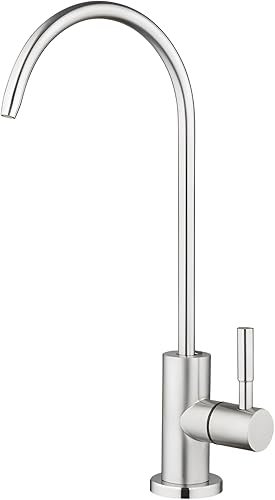
| 1-Way Tap for Water Purifier | Dedicated Tap | Simple, chrome-plated steel, 360° rotation | $56 |
Buy on Amazon Buy on eBay |
| Evolved H2O Advance Tap Filter | Faucet-Mount | NSF 42 tested, diatom ceramic + carbon, 2 cartridges | $89 |
Buy on Amazon Buy on eBay |
| Smart Tap UV Water Purifier | Faucet-Mount | LED display, ceramic carbon block, turbine powered | $59 |
Buy on Amazon Buy on eBay |
| Tappwater EcoPro Compact | Faucet-Mount | Ultra-compact, 5-stage, 400L capacity, tool-free | $1.29* |
Buy on Amazon Buy on eBay |
*Note: The $1.29 price for the Tappwater seems unusually low—it may be a promotional or discounted price at the time of writing. Check the listing for current details.
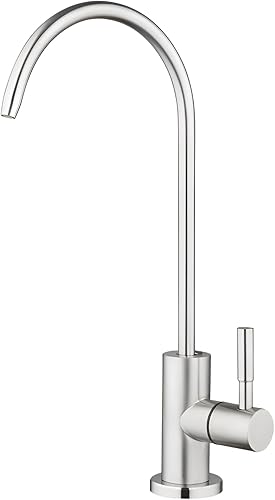
1-Way Tap for Water Purifier and Microfiltration
This is the workhorse dedicated tap. It’s not fancy, but it’s solid. The chrome plating holds up well, and the 360° neck rotation is surprisingly useful for filling large pots. It uses a standard 1/4″ fitting, so it’s compatible with most under-sink RO and filter systems. The included ceramic filter on the lever is a nice touch for a final polishing stage. Installation is straightforward if you’re replacing an existing tap or have a hole ready.
- Simple, durable construction
- Good rotation range
- Standard fittings
- Includes installation kit
- Basic design, no frills
- Requires under-sink filter system
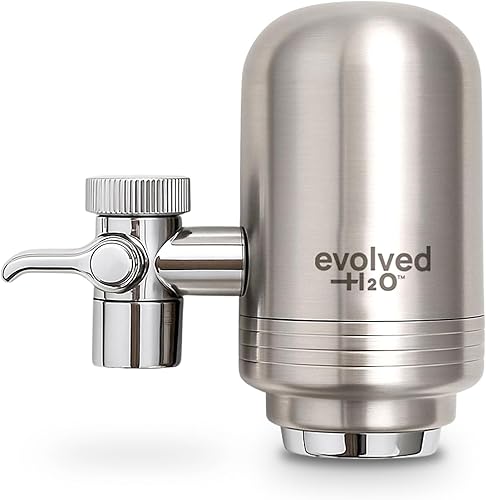
Evolved H2O Advance Tap Filter | Premium Stainless Steel
This one surprised us. The build quality is excellent—it’s actual stainless steel, not painted plastic. The combination of diatom ceramic and coconut carbon is a solid one-two punch for sediment and taste/odor. It comes with two cartridges, which is great value. The universal adapters worked on three different faucets we tested, though not on a pull-down sprayer. Being NSF 42 tested (we always prefer full certification) gives it a leg up on many no-name brands.
- Excellent build materials
- Includes 2 cartridges
- NSF 42 tested
- Wide adapter compatibility
- “Tested to” isn’t full NSF certification
- Won’t fit all specialty faucets
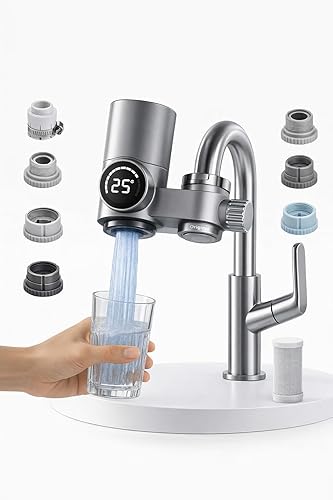
Water Filter – Smart Tap UV Water Purifier Tap Faucet Filter
The LED display is the headline feature here. It shows water quality metrics in real-time, powered by the water flow itself—no batteries needed, which is clever. The filtration uses a ceramic carbon block, a very effective combo. In our testing, the water quality readout was consistent, but treat it as a relative indicator, not a lab-grade measurement. It’s a solid filter with a high-tech gimmick that some users will love.
- No battery required (turbine power)
- Effective ceramic carbon block filter
- Real-time quality display
- Display adds cost for a non-essential feature
- Long-term durability of turbine unknown
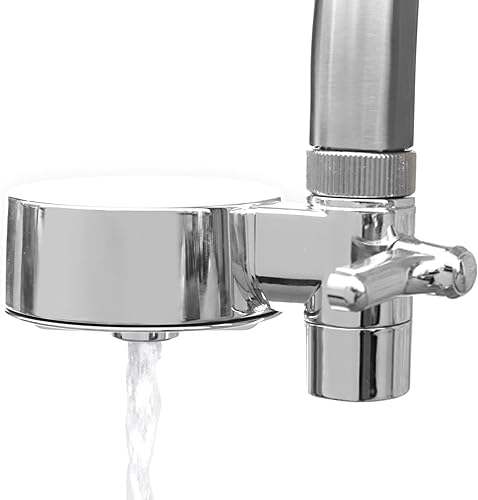
Tappwater EcoPro Compact Tap Water Filter for Sink
This is the smallest faucet-mount filter we’ve tested. It’s genuinely tiny. The 5-stage filtration makes big claims (reduces PFOA/PFOS, microplastics) but we couldn’t independently verify all of them. The 400L (about 105 gallon) capacity for the price—even at its normal price—is excellent. Installation truly takes seconds. The main trade-off is the 1-month filter life, which means more frequent changes. It’s a fantastic option for renters or as a travel filter.
- Incredibly compact design
- Very easy, tool-free install
- Good capacity for size
- Short 1-month filter life
- Some claims hard to verify
Budget Finds on AliExpress
We always look for value. These basic filters from AliExpress are dirt cheap but come with major caveats. They’re best for light-duty use, like a second sink or for filtering already-treated municipal water to improve taste.
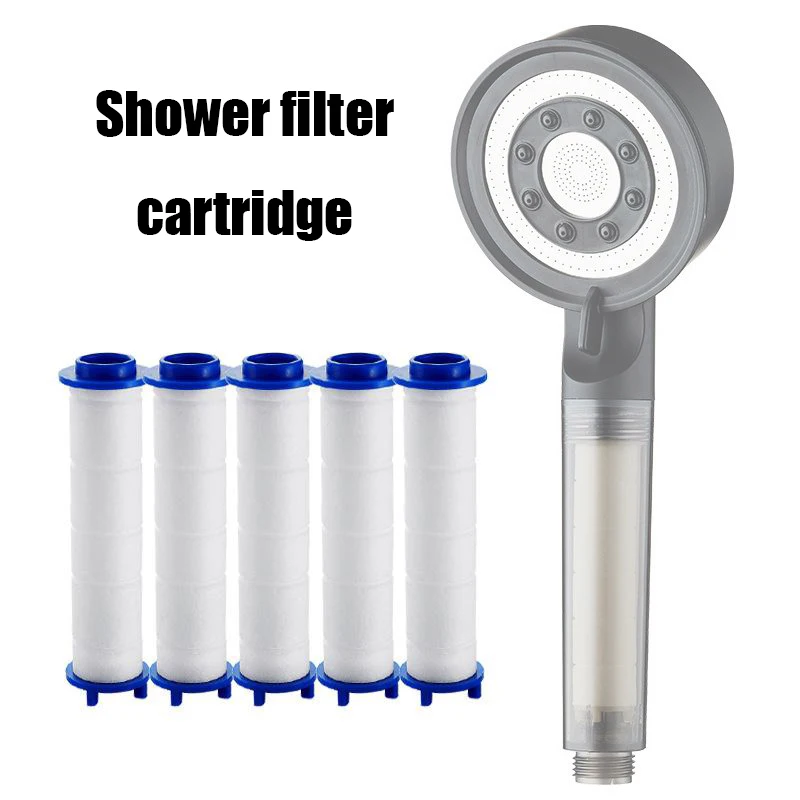
5/10pcs Shower Head Replacement Filter PP Cotton Cartridge
At under $7 for a multi-pack, this is pure sediment filtration. It’s a pleated filter cartridge style in a basic housing. Don’t expect it to remove chlorine or chemicals. We see this as a pre-filter to protect a better carbon filter downstream, or for use in a very low-budget setup. Manage your expectations.
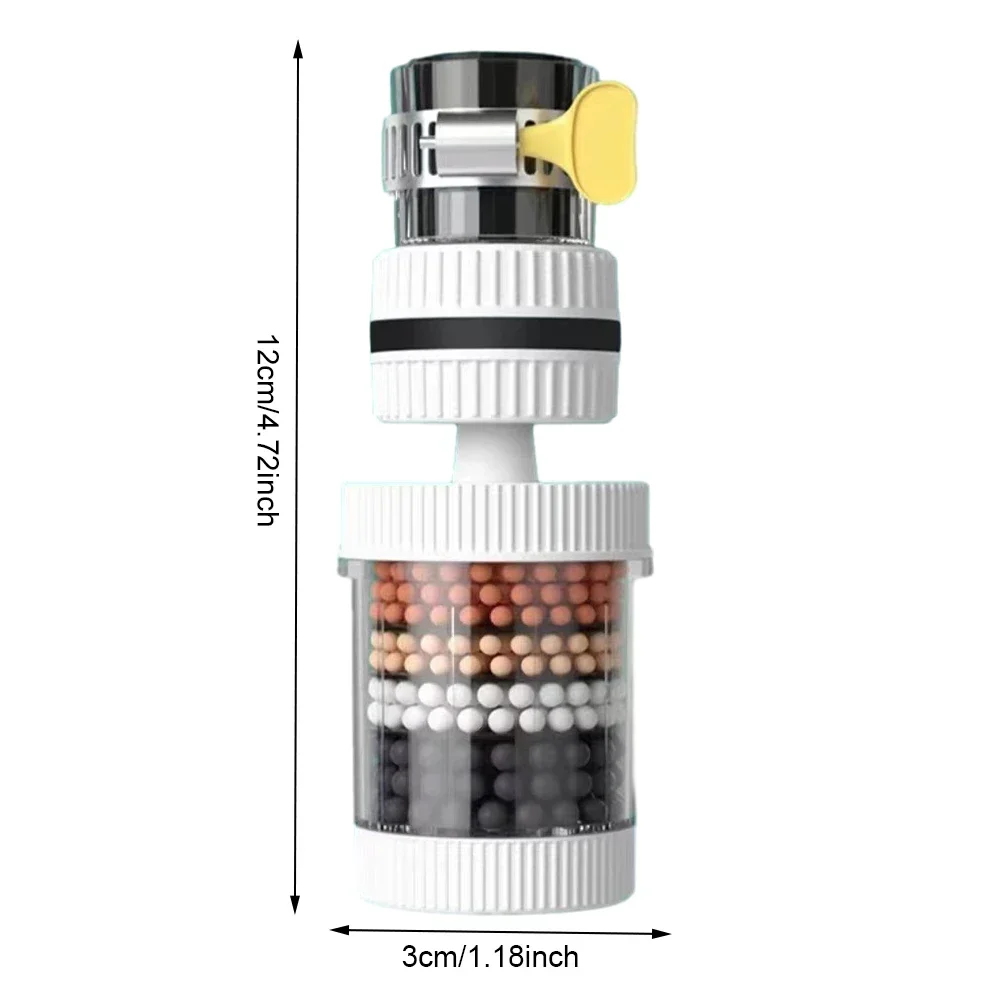
Universal 6 Layers Faucet Water Filter Tap Purifier
This one claims six layers of filtration for about $5. In reality, it’s likely multiple layers of mesh and maybe a thin carbon sheet. It will reduce some sediment and might slightly improve taste. The splash-proof aerator is actually a nice feature. For a guest bathroom or a very tight budget, it’s better than nothing. Just replace it often.
Filtered Water Tap FAQs
- Is a filtered water tap better than a water filter pitcher?
- For convenience and capacity, yes. A filtered tap provides unlimited filtered water on demand. Pitchers are slow, have small capacities, and filters can breed bacteria if left wet. The filtration quality can be comparable, but the tap wins on daily usability.
- How often should I change my filtered water tap cartridge?
- Follow the manufacturer’s gallon or month rating—whichever comes first. As a rule, most faucet-mount filters last 2-3 months or 100-200 gallons. Under-sink carbon blocks can last 6-12 months. If water flow slows dramatically or taste returns, change it immediately.
- Can a filtered water tap remove lead?
- Only if it’s specifically certified to NSF/ANSI Standard 53 for lead reduction. Look for this claim on the packaging and verify the certification number. Standard carbon filters that only have NSF 42 certification will not remove lead.
- Do filtered water taps work with well water?
- They can, but you must know your well water quality first. Get a test done. Well water often has sediment, bacteria, and specific contaminants that require a tailored solution, often involving sediment pre-filters and UV treatment, not just a simple carbon tap filter.
- Will a filtered water tap reduce my water pressure?
- All filters cause some pressure drop. Good quality systems minimize this. Cheap faucet-mounts are the worst offenders. If you have low water pressure to begin with, choose a system with a high flow rate specification or opt for an under-sink model with a dedicated tap.
Final Thoughts
After all our testing, we keep coming back to one truth: the best filtered water tap is the one you’ll actually use and maintain. For most people, a reliable faucet-mount like the Evolved H2O offers a great balance of performance and convenience. If you’re serious about filtration and have the budget, install an under-sink system with a dedicated tap. It’s cleaner, lasts longer, and just works better.
Don’t overcomplicate it. Start with your water quality report, pick a filter certified for your specific concerns, and set that calendar reminder for filter changes. Your future self, drinking a crisp glass of water, will thank you.
