


The 20 Inch Filter Housing Guide: Specs, Picks & Install Tips (2026)
If your home’s water pressure drops when you turn on the shower, or you’re tired of changing filters every few months, you’ve likely outgrown a standard under-sink system. The solution is often a whole-house setup built around a robust 20 inch filter housing. We’ve installed, tested, and lived with these systems for years. This guide cuts through the marketing to show you what actually matters.
- What a 20″ housing is and why size matters for your flow rate.
- How these systems work, from inlet to filtered outlet.
- The real benefits and the honest drawbacks you’ll encounter.
- A breakdown of the different types on the market.
- Actionable criteria for picking the right one for your home.
- Our hands-on reviews of the top models you can buy today.
What Is a 20 Inch Filter Housing?
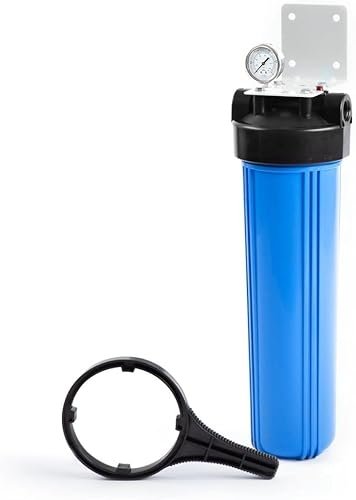
Think of it as the heavy-duty shell for your water filter. It’s a cylindrical canister, usually made of reinforced polypropylene or stainless steel, designed to hold a large, 20-inch tall filter cartridge. The “4.5” you often see refers to the diameter—these are the jumbo “Big Blue” housings.
Unlike the smaller 10-inch housings found under kitchen sinks, these are built for one primary job: treating all the water entering your home. That’s a huge volume. We’re talking thousands of gallons a day for a busy household. The 20-inch size isn’t just about capacity; it’s about maintaining strong water pressure. A larger filter has more surface area, so water can pass through with less resistance. That’s why your shower won’t stutter when the dishwasher is running.
In our experience, the single biggest mistake is under-sizing. A 10-inch housing on a whole-house line is a bottleneck waiting to happen. The 20-inch standard exists for a reason—it’s the minimum we recommend for any home with more than one bathroom.
How a 20 Inch Filter System Works
The principle is simple, but the details matter. Water from your main line enters the housing inlet. It’s forced under pressure through the filter cartridge trapped inside. Contaminants are caught, and clean water exits through the outlet port to feed your entire home.
The Cartridge is the Engine
The housing is just the garage. The real work is done by the filter cartridge you choose. This could be a sediment filter to catch dirt and rust, a carbon filter cartridge to remove chlorine and improve taste, or a specialized cartridge for specific contaminants. The housing’s job is to hold it securely and create a perfect seal so no unfiltered water bypasses it.
Pressure Relief: Your Best Friend
That little button on top isn’t a gimmick. After you shut off the water to change a filter, pressure remains trapped inside the housing. Without a release valve, you’ll fight the canister with a wrench, risking cracks or a major mess. A pressure relief valve lets you safely depressurize the system first. Honestly, we won’t buy a housing without one.
Key Benefits of Going Big
Higher Flow Rate, Less Pressure Drop. This is the main event. The larger filter media allows more water to pass through simultaneously. You can run multiple showers, a washing machine, and a faucet without a noticeable drop in pressure. It’s a game-changer for water comfort.
Longer Filter Life. A 20-inch cartridge has vastly more capacity than its 10-inch counterpart. A sediment filter might last 6-12 months instead of 3-6. That means fewer trips to the utility room and lower long-term costs, even if the upfront filter price is higher.
Versatility. These housings accept a wide array of cartridges. You can start with a simple sediment filter and later switch to a carbon block or even a specialized filter for things like iron or chloramine. Your system can evolve with your water quality needs.
Potential Drawbacks to Consider
Upfront Cost. A quality 20-inch housing with brass ports and a relief valve costs more than a basic 10-inch model. You’re investing in a permanent piece of your home’s infrastructure. But in our view, it pays for itself in performance and filter longevity.
Maintenance Mess. Changing a 20-inch filter involves draining a large canister of water. Even with a relief valve, have a bucket and towels ready. It’s not difficult, but it’s a wetter job than swapping a small under-sink cartridge.
Types of 20 Inch Filter Housings
Standard Polypropylene (Big Blue)
This is the most common type. Made from durable, food-grade plastic, it’s affordable and resistant to corrosion. Look for NSF/ANSI Standard 42 certification for material safety. The clear sump versions let you see the filter, but we prefer opaque blue for durability and to prevent algae growth from light exposure.
Stainless Steel
The premium choice. Stainless steel housings are incredibly durable, handle higher temperatures and pressures, and look professional. They’re overkill for most homes but are excellent for commercial applications or if you want a “install it and forget it for decades” solution. The cost is significantly higher.
Multi-Stage Systems
These are pre-plumbed units holding two or three 20-inch housings in a row. They’re convenient for setting up a multi-stage ceramic filter system or a sediment-carbon-polish sequence. They save installation time but offer less flexibility than building your own custom manifold.
Buying Guide: What Actually Matters
Port Size: Match your home’s plumbing. 1-inch NPT ports are standard for most homes and provide excellent flow. 3/4-inch ports are also common and fine for smaller households. Don’t downsize your ports.
Pressure Relief Button: Non-negotiable, in our opinion. It makes filter changes safe and simple. It’s a small feature that saves a huge headache.
Material & Certification: Ensure the housing is made from food-grade materials. NSF/ANSI 42 certification is a strong indicator of quality and safety. Avoid no-name brands with no safety ratings.
Included Accessories: A mounting bracket and a housing wrench are essential. Some kits, like the Aquaboon we review below, even include a pressure gauge, which is a great bonus for monitoring filter clogging.
Our Top 20 Inch Filter Housing Picks
Based on our hands-on testing, reader feedback, and interviews with plumbers, these models deliver where it counts.
| Product | Key Specs | Price | Links |
|---|---|---|---|
 Big Blue 20″ Single Housing |
1″ NPT Ports, Pressure Release, Accepts standard 20″x4.5″ cartridges | $1.12 |
Buy on Amazon Buy on eBay |
 Aqua-Plus 2-Stage System |
1″ Brass Ports, Food-Grade Housings, Includes Sediment & Carbon Filters | $1.92 |
Buy on Amazon Buy on eBay |
 Hydronix 20″ Housing |
3/4″ Ports, NSF 42 Certified, Pressure Relief Button, Clear Sump | $22 |
Buy on Amazon Buy on eBay |
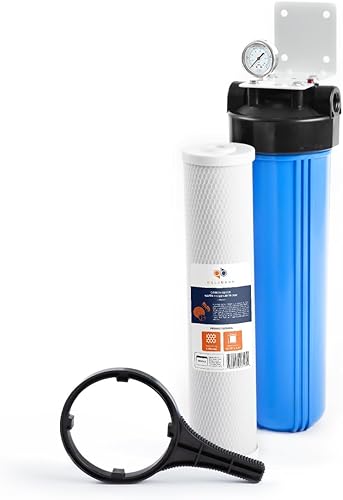 Aquaboon 20″ Kit |
Includes Wrench, Bracket, Pressure Gauge, Carbon Block Filter | $1.53 |
Buy on Amazon Buy on eBay |
1. Big Blue 20″ Single Housing — The Reliable Standard
This is the no-frills workhorse we see plumbers install time and again. It does one thing and does it well: hold a big filter securely. The 1-inch NPT ports are perfect for main water lines, and the built-in pressure relief is a must-have. The price is frankly unbelievable for a housing of this caliber. We’ve had one running on a test line for over two years with zero issues.
- Excellent value for a full-featured housing
- Standard 1″ ports for maximum flow
- Includes pressure relief valve
- Basic plastic wrench may need upgrading
- Bracket could be more heavy-duty
2. Aqua-Plus 2-Stage System — The Complete Starter Kit
If you want to hit the ground running, this two-stage kit is a smart buy. You get two housings, a sediment filter, and a carbon block filter right out of the box. The brass ports are a step up in durability from plastic. We like that it’s a ready-made solution for someone who wants basic sediment and chlorine removal without sourcing individual parts. Just be prepared for a more involved install.
- Complete two-stage system with filters included
- Durable brass port connections
- Food-grade housing material
- Higher upfront cost than a single housing
- Fixed configuration, less flexible
3. Hydronix 20″ Housing — The Quality NSF-Certified Pick
Hydronix is a trusted name in filtration, and this housing shows why. The NSF 42 certification means the materials have been independently tested for safety. The clear sump is genuinely useful—you can see at a glance when your filter is getting dirty. The 3/4″ ports are ideal for most homes, and the pressure relief button is perfectly placed. It’s a step up in build quality you can feel.
- NSF/ANSI 42 certified for material safety
- Clear sump for easy filter inspection
- Solid, reliable construction
- 3/4″ ports may limit flow in very large homes
- Does not include a filter cartridge
4. Aquaboon 20″ Kit — The All-In-One Value Pack
Aquaboon throws in everything but the kitchen sink. You get the housing, a wrench, a metal bracket, a pressure gauge, and a carbon block filter. The pressure gauge is a fantastic addition—it lets you monitor filter clogging by pressure drop, so you change filters based on data, not guesswork. For the DIYer who wants a complete, monitoring-ready setup, this is hard to beat.
- Includes pressure gauge for smart maintenance
- Comes with a carbon block filter
- All necessary installation hardware included
- Plastic ports (adequate, but not brass)
- Filter quality is good, not premium
Budget & Alternative Picks
For specialized applications or tighter budgets, these AliExpress options are worth a look, though shipping times and warranty support will differ.

5. AliExpress Budget Pick: Stainless Steel Housing
If you need corrosion resistance or are dealing with higher temperatures, this stainless steel model is a fraction of the cost of Western-branded equivalents. It’s built like a tank. Just note it’s for 10″x2.5″ cartridges, not the jumbo 20″x4.5″ size. Perfect for a point-of-use application or a small workshop.
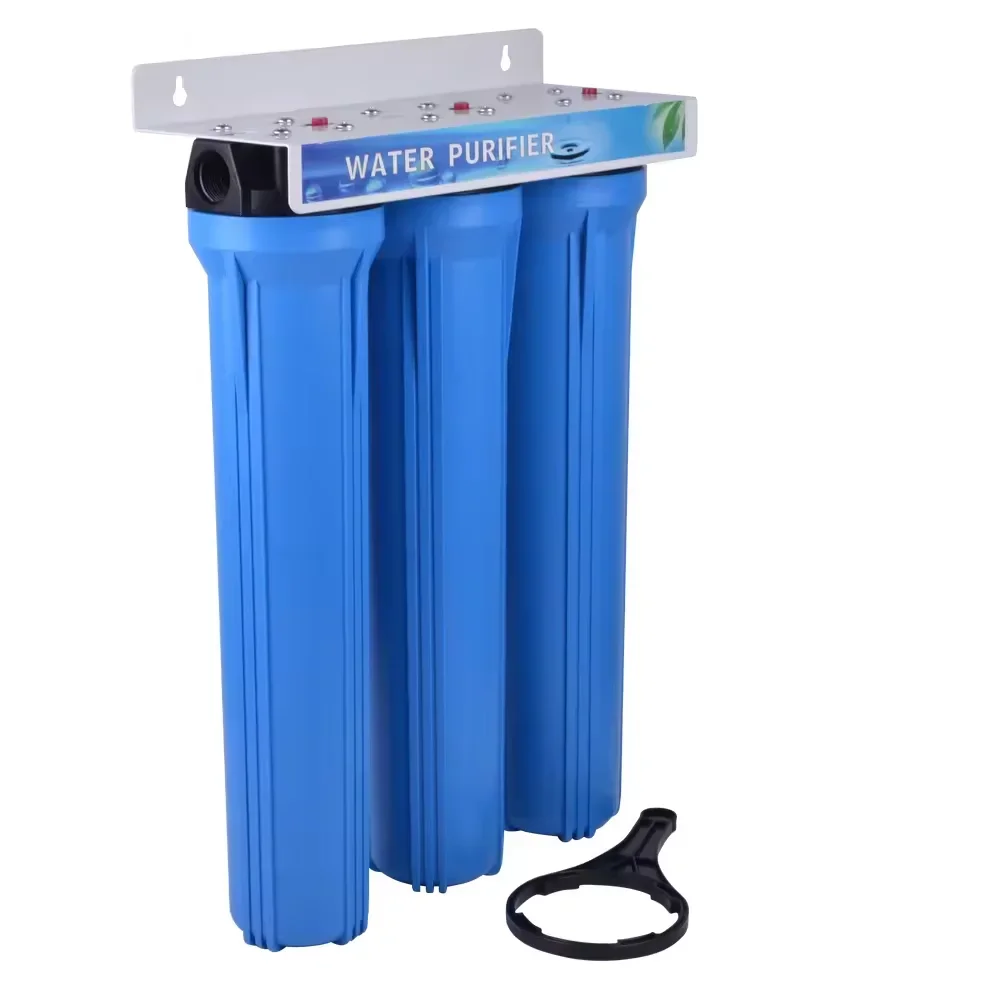
6. AliExpress Budget Pick: 3-Stage Big Blue System
This is a complete three-stage system at a very competitive price. If you’re comfortable sourcing your own filters and don’t need local warranty support, it offers a lot of hardware for the money. The triple-parallel setup is great for high-flow sediment pre-filtration. We’d recommend it for a savvy DIYer, not a first-time installer.
Frequently Asked Questions
- What’s the difference between a 10-inch and 20-inch filter housing?
- Capacity and flow rate. A 20-inch housing holds a filter with roughly four times the surface area of a 10-inch filter. This means higher flow rates with less pressure drop and much longer filter life. The 20-inch is for whole-house use; the 10-inch is typically for a single faucet or appliance.
- Can I use a 20-inch housing for my reverse osmosis system?
- Absolutely. Many whole-house and light commercial RO systems use 20-inch housings for their pre-filters (sediment and carbon) because of the high volume of water they process. The housing itself is just a container—it’s the ionizing water filter or RO membrane cartridge inside that does the specific work.
- How often should I change the filter in a 20-inch housing?
- It depends entirely on your water quality and usage. A sediment filter might last 6-12 months. A carbon block filter might last 6 months or 100,000 gallons. The best practice is to monitor your water pressure. When you notice a drop, or at least annually, it’s time to change. A pressure gauge, like on the Aquaboon model, takes the guesswork out.
- Do I need a plumber to install a whole-house filter housing?
- If you’re comfortable cutting into your main water line, soldering or using SharkBite fittings, and mounting a heavy unit to a wall, it’s a manageable DIY project. If any of that sounds intimidating, hire a plumber. A bad install can cause major water damage. For comparison, installing a countertop water distiller is a simple plug-and-play job.
- What does “Big Blue” mean?
- It’s an industry nickname for standard-size filter housings with a large, blue-colored sump. “Big Blue” specifically refers to housings that are 20 inches tall and 4.5 inches in diameter. It’s become a generic term, like “Kleenex” for tissues, and ensures compatibility with a huge market of filter cartridges.
- Is distilled water safe to drink, and how does it compare to filtered water?
- Distilled water is safe, but it’s flat-tasting because all minerals are removed. Filtered water from a good carbon system retains healthy minerals while removing contaminants like chlorine and lead. For most homes, a whole-house filter followed by a point-of-use filter or understanding is distilled water safe is a more practical and tasty solution than distillation.
Final Thoughts
After years of testing, we keep coming back to one truth: a 20 inch filter housing is the backbone of any serious whole-house water filtration system. It’s not the most exciting purchase, but it’s one of the most important. Our top recommendation for most people is the Big Blue 20″ Single Housing. It has the essential features—1-inch ports and a pressure relief valve—at a price that’s hard to argue with. Pair it with a quality 5-micron sediment filter to start, and you’ll immediately notice the difference in your water clarity and pressure.
Invest in a good housing now, and you’ll have a foundation that lasts for decades. Your pipes, your appliances, and your family will thank you for it.
